Table of Contents
- Introduction
- The Science of Low-Frequency Strength Training
- Maximizing Your Economy of Training
- The Role of Recovery and Nutrition
- Weight Loss and the "Weekend Warrior" Effect
- Overcoming the Strength Plateau
- The Importance of Longevity and Aging
- Designing Your Perfect Once-a-Week Routine
- Maintaining Consistency with the BUBS Mindset
- The Long-Term Results of Minimalist Training
- Conclusion
- FAQ
Introduction
What if we told you that spending just twenty minutes in the gym, once every seven days, could lead to a 30% increase in your strength over the next year? It sounds like the kind of clickbait you would find in the dark corners of the fitness internet, but the data tells a different story. A massive study following nearly 15,000 participants over seven years found that a minimalist approach to training—one single, high-intensity session per week—resulted in significant and sustained strength gains for the best part of a decade. For anyone who has ever felt the crushing weight of a busy schedule or the guilt of missing a third workout in a row, the question "can you workout once a week and see results" isn't just a curiosity; it’s a lifeline.
At BUBS Naturals, we are built on a foundation of adventure, wellness, and a "no-BS" approach to life. Our story is inspired by the legacy of Glen “BUB” Doherty, a Navy SEAL, hero, and adventurer who lived life to the fullest. We believe that wellness should support your life, not consume it. Whether you are a first responder, a parent juggling three schedules, or an athlete recovering from an injury, the goal is the same: to show up, do the work, and move the needle forward. We also believe in giving back, which is why we follow our 10% Rule, donating 10% of all our profits to veteran-focused charities in honor of Glen.
The purpose of this article is to dismantle the myth that fitness is an "all or nothing" game. We are going to explore the scientific research behind low-frequency training, the physiological mechanics of muscle maintenance and growth, and the specific protocols you need to follow to make a single weekly session effective. By the end of this post, you will understand how to maximize your "economy of training," why recovery becomes your greatest asset when you lift once a week, and how to integrate clean, functional supplements like our Collagen Peptides to support your body through the process. We’ll cover everything from the "Weekend Warrior" weight loss effect to the nuances of compound movements, ensuring that even if you only have one hour to give, you’re getting the most out of every second.
The Science of Low-Frequency Strength Training
When we think about building a better version of ourselves, we often default to the idea of more. More days in the gym, more sets, more reps, more sweat. However, exercise science suggests that the "minimum effective dose" for strength is much lower than most people realize. To understand how you can workout once a week and see results, we have to look at how our bodies respond to stress and recovery.
A groundbreaking study published by the New York Institute of Technology (NYIT) focused on older adults, a demographic where muscle maintenance is a critical factor for longevity. The researchers compared two groups: one that trained once a week and another that trained twice a week. Both groups performed the same single-set-to-fatigue protocol. The results showed no significant difference in strength gains between the two groups over nine weeks. Both saw improvements in their one-repetition maximum (1-RM) scores. This suggests that for many people, especially those just starting out or those focused on health and longevity, the second day of training might be "extra," while the first day provides the lion's share of the benefit.
Furthermore, a multi-year analysis of over 14,000 clients from the Dutch training company Fit20 revealed that consistent, once-weekly sessions resulted in rapid strength gains during the first year, with continued gradual improvements for up to seven years. Leg-press strength increased by nearly 70% over that period. This highlights the power of consistency over intensity frequency. While you may not be training for a world-record powerlifting total, you can absolutely build a functional, resilient body on a low-frequency schedule. To keep your mental clarity sharp during these intense sessions, many in our community start their day with MCT Oil Creamer, which provides sustained energy from coconut oil without the crash of sugar-laden alternatives.
Maximizing Your Economy of Training
If you are only going to step into the weight room once a week, your "economy of training" must be highly efficient. You don't have the luxury of "filler" exercises. You cannot spend twenty minutes on bicep curls and another twenty on calf raises. Instead, your focus must shift entirely to compound movements—exercises that involve multiple joints and work several muscle groups simultaneously.
Think of your weekly workout like a financial budget. You have a limited number of "repetition dollars" to spend. To get the best return on investment, you want to spend them on the "Big Five": the squat, the hinge (deadlift), the push (bench press or overhead press), the pull (rows or pull-ups), and the carry. These movements demand the most from your central nervous system and trigger the greatest hormonal response for muscle adaptation.
When you train this way, every set counts. Because you aren't coming back in 48 hours to hit the same muscle group, you must train with a high level of intensity. This often means taking your sets to "muscular fatigue"—the point where you can no longer complete a repetition with perfect form. This level of exertion requires proper preparation. We recommend staying on top of your mineral balance with Hydrate or Die - Lemon to ensure your muscles have the electrolytes they need to fire at maximum capacity during that high-intensity window.
The Role of Recovery and Nutrition
One of the hidden advantages of working out once a week is the massive recovery window it provides. When you train, you aren't actually "getting stronger" in the gym; you are breaking your body down. The growth and strengthening happen during the 6 days of rest that follow. For many people, high-frequency training leads to a state of chronic under-recovery, where they are constantly piling stress on top of an already fatigued system.
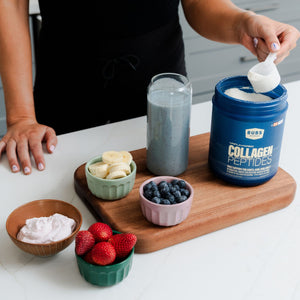
With a once-weekly schedule, your body has ample time to repair connective tissues and replenish glycogen stores. This is where high-quality supplementation becomes a game-changer. Our Collagen Peptides are specifically designed to support this recovery process. Collagen is the most abundant protein in your body, acting as the "glue" that holds your joints, ligaments, and tendons together. By incorporating these peptides into your daily routine, you are providing your body with the amino acids necessary to repair the micro-trauma caused by that intense weekly session.
Because we use grass-fed, pasture-raised hydrolyzed collagen (Types I & III), it’s incredibly easy to mix into your morning coffee or post-workout shake. Supporting your joints is vital when you are asking your body to perform heavy, compound lifts after a week of rest. We ensure every batch is third-party tested and NSF for Sport certified, so you know exactly what you’re putting into your body. This commitment to quality is part of our no-BS approach to wellness, ensuring you get the results you work for.
Weight Loss and the "Weekend Warrior" Effect
Many people assume that weight loss is only possible through daily cardio or frequent gym visits. However, a study published in the journal Obesity found that "weekend warriors"—those who condense their 150 minutes of weekly physical activity into one or two sessions—saw similar weight loss results to those who spread their workouts across the week.
The key factor isn't necessarily the frequency, but the total volume and intensity. When you engage in a heavy strength training session once a week, you increase your metabolic rate for hours, and sometimes days, afterward. This "afterburn" effect, combined with the muscle mass you maintain through lifting, helps your body burn more calories even at rest.
To support your metabolism on the days you aren't in the gym, simple daily habits make a big difference. Many of our customers use Apple Cider Vinegar Gummies as an easy way to support digestive wellness and general health. These small, consistent actions bridge the gap between your weekly workouts, keeping you aligned with your goals even when you aren't breaking a sweat.
Overcoming the Strength Plateau
A common concern with low-frequency training is the inevitable plateau. If you only lift once a week, will you eventually stop seeing progress? The answer is yes—but that is true of any program. To stay on the upward trajectory, you must apply the principle of progressive overload. This means that every single week, you must do slightly more than you did the week before. This could mean adding five pounds to the bar, performing one extra rep, or shortening your rest periods.
For those looking to push past a plateau and support their strength and power, Creatine Monohydrate is one of the most researched and effective supplements available. It helps your muscles produce energy during heavy lifting and high-intensity exercise. By adding a single scoop to your daily regimen, you provide your cells with the fuel they need to hit those "extra" reps that signal your body to grow stronger.
It's also important to listen to your body. On a once-weekly schedule, "having a bad day" at the gym can feel like a bigger setback because you don't have another session scheduled for seven days. This is where mental resilience comes in. As we say at BUBS, "Die Living." It’s about the effort you put in and the purpose behind it. Even a subpar workout is infinitely better than no workout at all.
The Importance of Longevity and Aging
As we age, we naturally lose muscle mass and bone density, a process known as sarcopenia. This decline is linked to a higher risk of injury, decreased mobility, and a lower quality of life. Research shows that higher levels of muscular strength are associated with a 31% lower risk of all-cause mortality. This is why the question "can you workout once a week and see results" is so vital—it’s not just about aesthetics; it’s about survival.
Strength training is the most effective way to combat this aging process. By putting your muscles under tension once a week, you are signaling to your body that it needs to keep that tissue. For our older adventurers, supporting bone and joint health is paramount. In addition to our Collagen Peptides, we recommend Vitamin C to support antioxidant activity and collagen formation within the body. Vitamin C acts as a co-factor for collagen synthesis, meaning the two work together to keep your connective tissues resilient.
Our dedication to this mission goes beyond supplements. By choosing BUBS, you are participating in a legacy of service. Our 10% Rule ensures that we are constantly supporting those who have served our country, honoring Glen Doherty's spirit of sacrifice and excellence. When you train to stay strong as you age, you are honoring your own potential and the gift of health.
Designing Your Perfect Once-a-Week Routine
Ready to put this into practice? A successful once-a-week routine should last between 45 and 75 minutes and cover the entire body. Here is a structure that balances intensity with efficiency:
-
Dynamic Warm-up (5-10 minutes): Focus on joint mobility. Use a foam roller or do some light bodyweight movements to get the blood flowing.
-
The Main Lift (Squat or Deadlift): 3 sets of 5-8 reps. This is your primary strength builder.
-
Upper Body Push (Bench Press or Overhead Press): 3 sets of 8-12 reps.
-
Upper Body Pull (Rows or Pull-ups): 3 sets of 8-12 reps.
-
Accessory/Core (Lunges and Planks): 2 sets of 12-15 reps.
-
The Finisher (Optional): 5 minutes of high-intensity intervals or a heavy "farmer's carry" to tax your grip and conditioning.
During this session, hydration is your best friend. Sipping on Hydrate or Die - Mixed Berry will keep your focus sharp and your muscles hydrated. Remember, since you only have one session, you want to take each set close to failure. The goal is to leave the gym feeling like you’ve truly challenged your system, knowing you have a full week to recover and grow.
Maintaining Consistency with the BUBS Mindset
The biggest hurdle to a once-a-week program isn't the science; it’s the psychology. It is very easy to say, "I'll just do it tomorrow," and before you know it, three weeks have passed. To make this work, you have to treat your weekly workout like an unshakeable appointment with yourself.
We find that ritual helps build this consistency. Maybe it’s the way you prep your morning coffee with Butter MCT Oil Creamer on workout days, or the way you pack your Collagen Peptides travel packs for a post-gym boost. These small cues tell your brain that today is the day we do the work.
At BUBS Naturals, we live by the idea that "Doing Something is Always Better than Doing Nothing." Life is unpredictable. Injuries happen, work gets crazy, and family needs come first. If you can only manage one day, own that day. Make it the best hour of your week. By focusing on simple, effective ingredients and a science-backed approach to training, you can see incredible results without letting the gym run your life.
The Long-Term Results of Minimalist Training
What happens after a year of training once a week? If the Dutch study is any indication, you’ll be significantly stronger than you are today. You’ll have more muscle mass, better bone density, and a metabolic engine that runs more efficiently. But more importantly, you’ll have built a sustainable habit.
The fitness industry often tries to sell us on extreme transformations that require extreme sacrifices. But the most "extreme" thing you can do for your health is to still be training ten, twenty, or thirty years from now. A once-a-week program is one of the most sustainable ways to ensure that fitness remains a part of your life forever.
When you combine this consistent effort with the right nutritional support—like our Collagen Peptides Collection—you are giving your body the tools it needs to thrive. Whether you are scaling a mountain, chasing your grandkids, or just trying to stay functional and pain-free, the once-a-week approach is a proven, science-backed path to success.
Conclusion
Can you workout once a week and see results? The answer is a resounding yes. From the 15,000-person Fit20 study to the focused research on aging and strength, the evidence clearly shows that high-intensity, low-frequency training can produce meaningful strength gains, support weight loss, and improve long-term health markers. By focusing on compound movements, pushing your sets to fatigue, and allowing for ample recovery, you are working with your body's natural physiology rather than against it.
We’ve explored how to maximize your "economy of training" by prioritizing movements like squats and presses, and we’ve discussed the vital role of recovery. Remember, strength is built during the rest, not the work. Supporting that recovery with clean, functional supplements like our Collagen Peptides ensures that your joints and tissues stay as strong as your muscles.
At BUBS Naturals, we are here to support your journey of adventure and wellness. Our products are born from a legacy of excellence and a commitment to helping you live your best life. Whether it’s through our 10% Rule or our dedication to NSF-certified, high-quality ingredients, we are with you every step of the way. Don’t let the "perfect" workout schedule be the enemy of a "good" one. Start your once-a-week journey today, prioritize your recovery, and feel the difference that clean, effective support can make. Explore our Collagen Peptides and see how they can become the foundation of your minimalist training success.
FAQ
1. Is once a week really enough to build muscle, or is it just for maintenance?
While more frequent training (3-4 times a week) is often better for maximizing hypertrophy (muscle size), you can absolutely build muscle on a once-a-week schedule if the intensity is high enough. The key is to reach muscular failure and ensure you are providing your body with enough protein and nutrients to repair the tissue. Adding Creatine Monohydrate to your daily routine can further support this muscle-building process by providing your cells with the energy needed for high-intensity work.
2. What should I do on the other six days of the week?
You don’t have to be sedentary! While you should avoid heavy lifting for the same muscle groups, "active recovery" is highly encouraged. This includes walking, swimming, yoga, or any light activity that keeps you moving without overtaxing your nervous system. To keep your wellness habits consistent on your off-days, we suggest incorporating Apple Cider Vinegar Gummies for digestive support and general health.
3. Will training once a week help me lose weight?
Yes, especially if those workouts are high-intensity strength sessions. Muscle is metabolically active tissue, meaning it burns more calories at rest than fat. By lifting once a week, you help preserve and build that muscle, which boosts your overall metabolism. For an extra metabolic kick, many people use MCT Oil Creamer in their morning coffee to support energy levels and satiety throughout the day.
4. Can I skip the warm-up if I'm only training once a week?
Actually, the warm-up is even more important when training once a week! Because your sessions are intense and involve heavy compound movements, your joints and connective tissues need to be properly prepared to avoid injury. Using Collagen Peptides daily helps keep those tissues resilient, but a 5-10 minute dynamic warm-up is essential to get blood flowing and improve your range of motion before you start your heavy lifts.