Table of Contents
- Introduction
- The Power of Consistency: Why Repeating Workouts Works
- Progressive Overload: The Secret to Long-Term Progress
- The Myth of Muscle Confusion
- When Should You Actually Change Your Workout?
- The Role of Micro-Progressions
- Balancing Strength Training and Cardio
- The Psychology of the Routine: Boredom vs. Discipline
- Listening to Your Body: The "De-load" Week
- How to Structure Your Week for Maximum Results
- Putting It All Together: The BUBS Philosophy
- Conclusion
- FAQ
Introduction
If you have ever stepped into a gym and felt the paralyzing weight of choice—the rows of machines, the racks of dumbbells, the endless classes on the schedule—you have likely asked yourself: is it better to stick to a plan or to keep things interesting? There is a persistent myth in the fitness world that to see results, you must "confuse" your muscles by never doing the same thing twice. Yet, if you look at the most elite athletes, from Olympic weightlifters to tactical professionals, you will see a different story. They don’t just repeat workouts; they master them.
The question of whether you have to do the same workout every week strikes at the very heart of how our bodies adapt to stress. Are we designed for total variety, or do we thrive on the predictable rhythm of a structured routine? At BUBS Naturals, we believe in a life of adventure and purpose, but we also know that adventure requires a solid foundation. That foundation is built through consistency, both in the gym and in the quality of the fuel we put into our bodies. Inspired by the legacy of Glen “BUB” Doherty—a Navy SEAL who embodied the perfect balance of elite performance and a spirit of adventure—we approach wellness with a "no-BS" mindset. We want to help you understand the science of movement so you can live a life that’s as big as your ambitions.
In this guide, we are going to dive deep into the mechanics of training. We will explore the Specific Adaptation to Imposed Demands (SAID) principle, the reality of "muscle confusion," and how to tell the difference between a physical plateau and mental boredom. You will learn why staying the course is often the fastest way to your goals, and exactly when it’s finally time to switch things up. By the end of this article, you will have a clear blueprint for how to structure your week, how to measure progress beyond the scale, and how to use supplements like our Collagen Peptides to support your body through the rigors of a consistent routine.
Whether you are a beginner looking for your first solid habit or an advanced athlete trying to break through a ceiling, the answer to the "consistency vs. variety" debate might surprise you. Together, we’ll explore how to build a routine that works for you—not just for this week, but for the long haul.
The Power of Consistency: Why Repeating Workouts Works
When we talk about fitness, we are really talking about biology. Your body is an incredible adaptation machine. When you subject it to a specific type of stress, such as lifting a heavy weight or running a mile, your body recognizes that stress as a threat to its equilibrium. To survive that stress better next time, it repairs itself to be slightly stronger, more efficient, or more resilient. This is the foundation of all physical progress.
However, this adaptation process is not instantaneous. It requires a specific, repeated stimulus. This is known as the SAID principle: Specific Adaptation to Imposed Demands. If you do a different workout every single time you hit the gym, you are essentially "greeting" your body with new information, but never giving it the chance to "learn" the language. For example, if you perform squats on Monday, but then don’t squat again for three weeks because you are busy trying "new" leg exercises, your central nervous system (CNS) never gets the chance to optimize the movement pattern. You remain a perpetual beginner at everything, rather than becoming a master of a few high-impact movements.
Sticking to the same workout every week allows for something called neural adaptation. In the first few weeks of any new routine, much of the strength you gain isn't actually from your muscles getting bigger; it’s from your brain getting better at communicating with your muscles. Your nervous system learns which motor units to fire and in what order to make the movement efficient. If you change your workout every week, you miss out on this "efficiency phase," which is where the real groundwork for muscle growth and fat loss is laid.
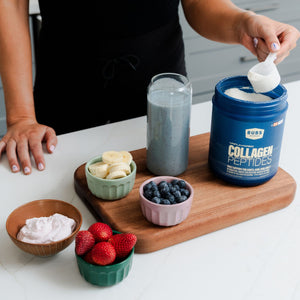
To support this consistent effort, we find that a consistent supplement routine is equally vital. Just as your muscles need repeated stimulus, your connective tissues need the right building blocks to handle that repeated load. Incorporating Collagen Peptides into your daily ritual provides the amino acids necessary to support joint health and skin elasticity, ensuring that as you get stronger, your internal "scaffolding" keeps pace.
Progressive Overload: The Secret to Long-Term Progress
If you do have to do the same workout every week, how do you keep from plateauing? The answer lies in a concept called progressive overload. This is the most important law in training. It states that for a body to continue improving, the stimulus must gradually increase over time.
You don't need a new exercise to challenge your body; you need more of the same exercise. Think of it like learning a new language. You don't read a different book every day; you read the same book until you understand the words, then you read it faster, then you move on to a more difficult book in the same language. In the gym, progressive overload looks like this:
-
Increasing the Weight: Adding five pounds to the bar.
-
Increasing the Repetitions: Doing 12 reps instead of 10 with the same weight.
-
Increasing the Volume: Adding an extra set to your routine.
-
Improving Form: Performing the move with more control and a better range of motion.
-
Decreasing Rest Time: Doing the same amount of work in less time.
By keeping your workout the same for 6 to 12 weeks, you can accurately track these variables. If your workout is a random assortment of "muscle confusion" exercises, you have no baseline to measure against. You might feel tired, but feeling tired is not the same as making progress. True progress is measurable.
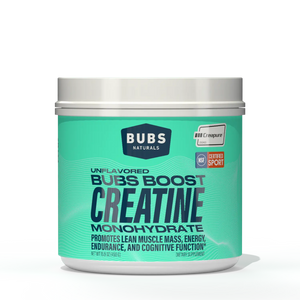
To fuel these demanding sessions where you are constantly pushing for that extra rep or extra five pounds, many of our community members rely on Creatine Monohydrate. Creatine is one of the most well-researched supplements for supporting strength and power output. By helping your muscles produce more energy during high-intensity work, it allows you to hit those progressive overload milestones more consistently. When combined with the joint-supporting benefits of Collagen Peptides, you’re creating an internal environment primed for growth and longevity.
The Myth of Muscle Confusion
The term "muscle confusion" was popularized by marketing campaigns in the early 2000s, suggesting that if the body doesn't know what's coming, it can't adapt, and therefore it must burn more calories or grow more muscle. Biologically, this is largely nonsense. Your muscles don't have "brains" that get bored; they have fibers that respond to tension, metabolic stress, and damage.
When you constantly switch your exercises, you are likely experiencing more muscle soreness (DOMS). This is because your body is unaccustomed to the new movements. However, soreness is not an indicator of a "good" workout or of muscle growth. In fact, excessive soreness can often hinder your progress because it prevents you from training with high intensity in your next session.
The real "confusion" happens in your brain. When you change your routine too often, you never get past the awkward learning phase of an exercise. This prevents you from ever lifting heavy enough weights to actually stimulate the muscle. For instance, the first time you try a Bulgarian split squat, you will likely spend more energy trying not to fall over than you will actually working your quads. By week four of doing that same exercise, your balance is locked in, and you can finally add weight and see real results.
Instead of confusing your muscles, try to "challenge" them through consistency. We take a similar approach to our products at BUBS. We don't believe in "confusing" the consumer with complex, chemical-laden formulas. We stick to simple, effective ingredients. Whether it’s our Apple Cider Vinegar Gummies for a simple daily wellness boost or our pure Collagen Peptides, we focus on what works, time and time again.
When Should You Actually Change Your Workout?
While consistency is king, you shouldn't do the exact same workout forever. Eventually, your body will become so efficient at a specific routine that the rate of progress slows down. This is the true definition of a plateau. So, how often should you change things?
For Beginners (0–12 Months of Training)
If you are new to the gym, your body is incredibly responsive. You can—and should—stick to the same basic full-body or upper/lower split for at least 8 to 12 weeks. During this time, your main goal is to master form and build a base of strength. Changing your routine too early will only slow down your progress. Focus on the "big rocks": squats, hinges, pushes, and pulls.
For Intermediate Trainees (1–3 Years of Training)
As you become more experienced, you might find that you hit a wall around the 6-to-8-week mark. At this stage, you don't necessarily need to change all your exercises, but you might benefit from changing your "rep schemes" or the variation of a lift. For example, you might switch from a back squat to a front squat, or from a flat bench press to an incline press. This provides a fresh stimulus while still allowing you to use the strength you’ve already built.
For Advanced Athletes (3+ Years of Training)
Elite athletes often use "periodization," which involves breaking their year into blocks (usually 4 to 6 weeks long). Each block has a specific focus—such as hypertrophy (muscle building), maximum strength, or power. Because their bodies are so adapted to exercise, they need more frequent changes in intensity and volume to continue seeing results.
Regardless of your level, the "switch" should always be purposeful. Don't change because you are bored; change because you have squeezed all the progress you can out of your current plan. And remember, as the intensity of your training cycles increases, so does your need for recovery. Staying hydrated with our Hydrate or Die - Lemon electrolytes can help maintain the mineral balance necessary for muscle contractions and recovery during these intense transitions.
The Role of Micro-Progressions
If you feel the itch for variety but know you need to stay consistent, "micro-progressions" are your best friend. These are small tweaks that don't change the fundamental nature of your workout but change how your body perceives the stress.
Consider the tempo of your lifts. If you usually lift a weight up for one second and down for one second, try slowing the "down" phase (the eccentric) to three seconds. This increases "time under tension" and can spark new muscle growth without you ever having to pick up a different dumbbell.
Another micro-progression is changing your grip or stance. Moving your hands two inches wider on a pull-up or narrowing your feet on a leg press can shift the emphasis to different parts of the muscle. These are subtle changes that keep the "same" workout feeling fresh and challenging.
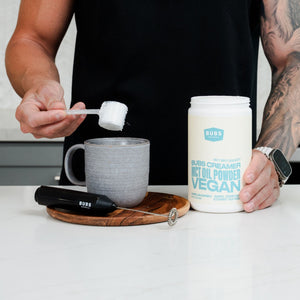
To keep your mental focus sharp for these subtle adjustments, many people find that a morning boost helps. Our MCT Oil Creamer provides healthy fats derived from coconuts, which can support mental clarity and sustained energy. When you are focused, you are better at identifying those small areas where you can improve your form or push your intensity just a little bit further.
Balancing Strength Training and Cardio
The "do you have to do the same workout" question often gets complicated when we mix strength training and cardio. The rules for these two modalities are slightly different.
For strength training, as we’ve discussed, repetition is vital for building muscle and bone density. However, for cardiovascular health, you have a bit more freedom. While your body still benefits from "progressive overload" in cardio (running faster or longer), the "movement patterns" are less complex than heavy lifting. You can swim on Tuesday, run on Thursday, and hike on Saturday without "confusing" your heart. Your cardiovascular system primarily cares about your heart rate and the duration of the effort.
That said, many people find that having a "baseline" cardio workout—like a 3-mile run at a specific pace—is helpful for tracking fitness levels. If that 3-mile run feels easier this month than it did last month, you know your aerobic capacity is improving.
One thing that remains constant regardless of the workout type is the stress placed on your joints and metabolic systems. This is why we are so passionate about our Collagen Peptides. Whether you are pounding the pavement during a run or squatting heavy in the rack, your tendons and ligaments are under load. Collagen provides the specific amino acids, like glycine and proline, that support these tissues. It's a simple, "no-BS" way to ensure that your body can handle the consistency you're asking of it.
The Psychology of the Routine: Boredom vs. Discipline
We often hear people say they want to change their workout because they are "bored." In our world, boredom is often just a mask for the "boring" work that leads to greatness. Training like a professional means embracing the monotony of the basics.
Glen "BUB" Doherty didn't become a Navy SEAL by doing whatever he felt like each morning. He followed rigorous, repeated protocols to ensure that when the time came for adventure, his body and mind were ready. At BUBS Naturals, we donate 10% of our profits to veteran-focused charities in honor of that legacy. We believe that fitness is a tool that allows you to give back and live fully.
If you find yourself getting bored with your routine, try to shift your mindset. Instead of looking for a new exercise, look for a new "level" in your current exercise. Can you make your reps look more "perfect"? Can you shorten your rest by 10 seconds? When you focus on mastery, boredom tends to disappear.
To help maintain that disciplined mindset, it helps to have small, enjoyable daily rituals. For some, it’s adding Butter MCT Oil Creamer to their coffee. For others, it's the simple act of taking Apple Cider Vinegar Gummies every morning. These small wins build the momentum you need to stick to your larger training goals.
Listening to Your Body: The "De-load" Week
While we advocate for sticking to the same workout, there is one major exception: the de-load week. Even the best plan can become too much if you don't allow for recovery. Every 4 to 8 weeks, it is wise to have a "de-load" where you still do the same workout, but you reduce the intensity.
You might lift 50% of your usual weight, or do half the number of sets. This gives your central nervous system and your joints a chance to catch up with the progress your muscles have made. It's a "reset" button that prevents burnout and injury.
During a de-load week, your nutrition becomes even more important. This is the time when your body is doing the "deep repairs." Doubling down on your Collagen Peptides and ensuring you are getting plenty of antioxidants, perhaps through a high-quality Vitamin C supplement, can support the repair of the micro-tears and oxidative stress that accumulate during a hard training cycle.
How to Structure Your Week for Maximum Results
So, what does a "same workout" week actually look like? It doesn't mean doing the exact same thing seven days a week. It means having a structured "split" that you repeat weekly. Here are a few common examples:
The Full Body Split (3 Days a Week)
Perfect for beginners or those with a busy schedule. You do the same full-body workout on Monday, Wednesday, and Friday. Because you have a full day of rest between sessions, your body has time to recover.
-
The Routine: Squat, Push-up, Row, Plank. (Repeat for 8 weeks).
The Upper/Lower Split (4 Days a Week)
Common for intermediate lifters. You do "Workout A" (Upper Body) on Monday and Thursday, and "Workout B" (Lower Body) on Tuesday and Friday.
-
The Routine: You are still doing the "same" workouts every week, but you have two distinct routines you alternate.
The Push/Pull/Legs Split (6 Days a Week)
For advanced trainees who want high volume.
-
Monday/Thursday: Pushing movements (Chest, Shoulders, Triceps).
-
Tuesday/Friday: Pulling movements (Back, Biceps).
-
Wednesday/Saturday: Legs.
In all of these scenarios, the key is that Monday’s workout this week looks exactly like Monday’s workout last week. This allows you to walk into the gym with a plan, a goal, and a way to measure success. When you have a plan, you're less likely to wander around aimlessly, and you're more likely to get the work done.
To keep your energy high throughout these different splits, don't forget the importance of electrolytes. If you're hitting the gym six days a week, your sweat loss can lead to mineral imbalances. Using a product from our Hydration Collection ensures that your muscles have the sodium, potassium, and magnesium they need to fire correctly and prevent cramping.
Putting It All Together: The BUBS Philosophy
At the end of the day, whether you do the same workout every week or every two weeks matters less than whether you are actually showing up. Fitness is a long game. It is about building a body that can handle whatever life throws at it—whether that's a mountain trail, a busy workday, or just playing with your kids.
We believe that the best results come from a blend of rigorous consistency and high-quality support. That’s why we focus on supplements that are "NSF for Sport" certified, meaning they meet the highest standards for purity and safety. When you are putting in the hard, repetitive work in the gym, you deserve to know that your supplements are working just as hard for you.
Our Collagen Peptides are the cornerstone of this support system. By providing the essential building blocks for your connective tissues, they help you stay in the game longer. And staying in the game is the whole point. We don't just want you to be fit for a month; we want you to be fit for a lifetime.
As you move forward with your training, remember that it's okay for your routine to feel "routine." That rhythm is where the magic happens. It's where the small, incremental changes add up to a complete transformation. Embrace the process, trust the science of adaptation, and keep pushing for that next small win.
Conclusion
The journey toward your fitness goals doesn't require a complex, ever-changing menu of exercises. In fact, the most direct path to strength, muscle growth, and improved performance is often through the "boring" path of repetition. By answering the question—do you have to do the same workout every week—with a resounding "mostly, yes," you free yourself from the trap of over-complication. You allow your nervous system to master movements, your muscles to experience true progressive overload, and your mind to build the discipline that carries over into every other area of your life.
We have explored how the SAID principle governs your body's response to stress and why "muscle confusion" is more of a marketing buzzword than a biological reality. We’ve looked at the appropriate timelines for changing your routine based on your experience level and how to use micro-progressions to keep your workouts challenging without losing your baseline for measurement.
Most importantly, we have highlighted that consistency in the gym must be matched by consistency in your recovery. Your body cannot adapt to the same workout week after week if it doesn't have the materials it needs to repair. This is why we are so committed to providing clean, functional supplements that support your active lifestyle. From the joint support of our Collagen Peptides to the metabolic boost of our MCT Oil Creamer, we are here to help you build a foundation that lasts.
As you look at your schedule for the coming weeks, we encourage you to find a solid plan and stick to it. Measure your progress, celebrate the small increases in weight or reps, and listen to your body when it needs a de-load. And remember, your commitment to your own health also supports a greater cause through our 10% Rule, honoring Glen “BUB” Doherty by giving back to those who have served.
Ready to see what consistency can do for you? Start by supporting your foundation. Shop our Collagen Peptides today and see how one simple scoop can make a difference in your long-term wellness journey.
FAQ
1. Won't I stop seeing results if I don't change my workout every week?
No, quite the opposite. You see results by getting better at the exercises you are already doing. As long as you are applying "progressive overload"—meaning you are gradually increasing the weight, repetitions, or intensity—your body will continue to adapt and improve. Most people stop seeing results because they stop pushing themselves on their current exercises, not because they need new ones.
2. How do I know if I am actually plateauing or just bored?
A true plateau is defined by a lack of progress in your performance metrics (like weight lifted or reps performed) for 3 to 4 weeks in a row, despite having good sleep and nutrition. If you are still getting stronger but just feel "unexcited" about the workout, that is boredom. You can combat boredom with micro-progressions, but try to stick with the plan until you hit a physical plateau before making major changes.
3. Is it okay to do the same cardio every day, or does that need a split too?
You can do the same type of cardio (like walking or light jogging) most days of the week, as it is generally lower impact than heavy strength training. However, your heart and lungs also benefit from variety. Mixing in one day of high-intensity intervals with several days of steady-state "Zone 2" cardio is a great way to improve your overall fitness. Always ensure you are replacing lost minerals with Hydrate or Die if you are doing daily cardio.
4. Can supplements help me stay consistent with a repetitive workout routine?
Absolutely. Consistency in the gym puts a consistent "demand" on your body. Supplements like Collagen Peptides help provide the "supply" of amino acids needed to keep your joints and connective tissues healthy under that repeated load. Similarly, Creatine Monohydrate can help you maintain the power output needed to keep progressing on the same lifts week after week.