Table of Contents
- Introduction
- Defining the "Workout" vs. the "Run"
- Running Frequency for Beginners (2–3 Days)
- The Intermediate Sweet Spot (4–5 Days)
- Advanced Training and High-Frequency Running (6+ Days)
- The Role of Intensity: Why You Can’t Go Hard Every Day
- Structuring Your Training Week
- The Physiology of Recovery and Supercompensation
- Adjusting for Specific Racing Goals
- The BUBS Way: Resilience and Giving Back
- Avoiding Overtraining and Listening to Your Body
- Conclusion
- FAQ
Introduction
Did you know that nearly 80% of runners experience an overuse injury at some point in their training? It is a staggering statistic that points to a common misconception in the fitness world: that more is always better. Whether you are a weekend warrior aiming for a local 5K or a seasoned marathoner chasing a Boston-qualifying time, the question of how many running workouts per week you should perform is central to your success and longevity. For some, the answer is a consistent three days of movement; for others, it is a grueling six-day schedule that tests the limits of human endurance.
At BUBS Naturals, we look at training through the lens of our founder’s legacy. Glen “BUB” Doherty was a Navy SEAL, an adventurer, and a man who lived every day with purpose. He didn’t just work out to check a box; he trained to be ready for whatever life threw at him. In his honor, we believe in a "no-BS" approach to wellness—simple, effective, and backed by science. We are here to help you find that "Goldilocks" zone: the frequency that is not too little to see progress, but not so much that you burn out.
By the end of this article, you will understand the nuances of running frequency based on your current fitness level, your specific racing goals, and your body’s unique recovery needs. We will explore the difference between "junk miles" and "quality workouts," the physiological necessity of rest, and how to fuel your body with clean supplements like our Collagen Peptides to keep your joints and connective tissues resilient. Whether you are just starting or looking to optimize an elite-level program, we are going to break down the science of the weekly schedule so you can "Die Living" every single day.
Defining the "Workout" vs. the "Run"
Before we can determine the frequency, we must define what counts as a "workout." In the running community, there is a distinct difference between an easy aerobic run and a structured workout. An easy run is designed to build your aerobic base, improve cardiovascular efficiency, and facilitate recovery. These should be performed at a pace where you can comfortably hold a conversation—what many call a "conversational pace."
A "workout," or a quality session, is a run with a specific high-intensity intention. These sessions are designed to push your physiological boundaries, improving your VO2 max, lactate threshold, and neuromuscular coordination. There are generally three types of quality workouts that runners integrate into their weekly schedules:
-
Interval Training: These are short bursts of fast running followed by periods of rest or slow jogging. They improve speed and power. For example, running 800-meter repeats on a track at a 5K race pace.
-
Tempo Runs: Often described as "comfortably uncomfortable," tempo runs are sustained efforts at a pace you could maintain for about an hour. They are the bread and butter of endurance training, helping your body become more efficient at clearing lactate.
-
The Long Run: While often done at an easy pace, the long run is a workout due to the sheer volume and the structural stress it places on the body. It teaches your muscles to endure and your body to utilize fat as a fuel source more effectively.
Understanding these distinctions is vital. If you try to make every run a "workout," you will quickly find yourself on the sidelines. Progress happens during recovery, and if you never give your body the chance to rebuild, you are simply breaking it down. This is where our mission at BUBS Naturals intersects with your training. We prioritize recovery because we know that the work you do in the gym or on the road only matters if your body can absorb it. Supporting that process with Collagen Peptides ensures that your tendons and ligaments stay as strong as your spirit.
Running Frequency for Beginners (2–3 Days)
If you are just starting your journey, the most important word in your vocabulary should be consistency. It is far better to run two or three times a week every week for three months than to run five times in one week and then quit because of pain or exhaustion. For beginners, the goal is to build a foundation.
At this stage, your musculoskeletal system—your bones, tendons, and ligaments—needs time to adapt to the impact of running. While your heart and lungs might feel ready for more, your joints often lag behind. We recommend starting with three sessions per week, with at least one full day of rest or active recovery between them. A typical beginner week might look like this:
-
Monday: 20–30 minutes of run-walk intervals.
-
Tuesday: Rest or light walking.
-
Wednesday: 20–30 minutes of run-walk intervals.
-
Thursday: Rest.
-
Friday: 30 minutes of steady-state movement (your "long" effort).
-
Saturday/Sunday: Active recovery or rest.
During these early stages, hydration is often overlooked. Beginners lose electrolytes just as quickly as elites. Mixing a packet of Hydrate or Die - Lemon into your water before or after your run can help maintain fluid balance and prevent the dreaded "post-run crash."
The focus for a beginner is not speed; it is time on feet. If you can only manage two runs a week due to a busy schedule, don't sweat it. You can still make progress by adding cross-training like cycling or swimming on the off days to build your engine without the impact. The key is to listen to your body. If you feel a "niggle" in your knee or shin, it is your body’s way of asking for a break. Honor that request.
The Intermediate Sweet Spot (4–5 Days)
For many runners, four to five days per week is the "sweet spot." This frequency allows for a significant volume of miles to build serious aerobic fitness while still providing two full days of recovery or cross-training. At this level, you are likely training for a specific goal, such as a 10K or a half marathon.
When you move to four or five days, you can start introducing more variety. This is where you transition from "just running" to "training." A balanced four-day week might include:
-
One Speed Session: Short intervals or a fartlek (speed play) to work on your "top end" gear.
-
One Tempo Session: To build your lactate threshold.
-
One Easy/Recovery Run: To keep the legs moving without adding stress.
-
One Long Run: To build endurance.
With this increased volume, your metabolic demands will rise. Many intermediate runners find that their morning coffee needs a bit more "kick" to fuel these sessions. This is a perfect time to integrate our MCT Oil Creamer. The medium-chain triglycerides provide a quick, clean energy source that supports mental clarity and physical stamina without the sugar crash associated with traditional creamers.
At five days a week, you have enough "room" in your schedule to include two quality sessions and a long run, provided they are separated by easy days. For example, a Tuesday interval session and a Thursday tempo run, with a long run on Saturday. This structure challenges the body in different ways—testing your speed on Tuesday and your threshold on Thursday—giving you a well-rounded fitness profile.
Advanced Training and High-Frequency Running (6+ Days)
Once you reach the level of running six or even seven days a week, you are entering the realm of advanced endurance athletes. This frequency is typically reserved for those training for marathons, ultramarathons, or competitive track times. At this stage, the volume of running is high, often ranging from 40 to 80 miles per week or more.
The primary benefit of running six days a week is the massive aerobic development. By running almost every day, your body becomes incredibly efficient at delivering oxygen to your muscles and clearing waste products. However, the risk of injury and overtraining increases exponentially. This is why advanced runners must be masters of "easy running." Most of those six or seven days should be very slow, allowing the body to recover for the two or three high-intensity "anchor" workouts.
Advanced runners often use "doubles"—running twice in one day—to accumulate volume while giving the body a break in between. A typical day for a high-mileage runner might start with a morning interval session followed by an easy four-mile shakeout run in the afternoon.
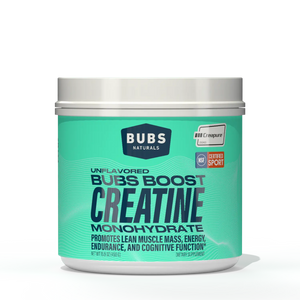
Because the physical toll is so high, advanced athletes must be meticulous about their nutrition. This is where Creatine Monohydrate can play a surprising role. While often associated with bodybuilding, creatine is highly effective for endurance athletes to support muscle power and recovery between high-intensity bouts. Furthermore, the constant pounding on the pavement means that joint support is no longer optional. Incorporating Collagen Peptides into a daily routine is standard practice for many elites to maintain the structural integrity of their ankles, knees, and hips.
The Role of Intensity: Why You Can’t Go Hard Every Day
A common pitfall for runners of all levels is the "gray zone" of intensity. This happens when your easy runs are too fast and your hard runs are too slow. If you run at a moderate-to-hard pace every time you step out the door, you will eventually hit a plateau. Your body will be too tired to perform the high-intensity work necessary for growth, but you will be under too much stress to recover properly.
Physiologically, we want to stimulate different energy systems. High-intensity intervals (above 90% of your max heart rate) improve your VO2 max. Tempo runs (around 85–88%) improve your threshold. Easy runs (below 75%) build your mitochondrial density and capillary network. To get the most out of your workouts per week, you must respect these zones.
We believe in the 80/20 rule: 80% of your running should be easy, and 20% should be hard. If you are running five days a week, that might mean only one or two sessions are truly "workouts." The rest are "support runs." This balanced approach keeps the hormone cortisol in check and prevents the chronic inflammation that leads to burnout. To support your body's natural inflammatory response and general wellness, many of our athletes also enjoy the convenience of our Apple Cider Vinegar Gummies as part of their daily health ritual.
Structuring Your Training Week
When deciding how many running workouts per week to perform, it helps to look at the week as a puzzle. Each piece—speed, endurance, recovery, and strength—must fit together without overlapping too much. A well-structured week for a performance-oriented runner might look like this:
-
Monday: Strength Training. Focus on the posterior chain—glutes, hamstrings, and calves—to bulletproof your body against injury.
-
Tuesday: Speed Work. 400m or 800m repeats. This is a high-intensity day.
-
Wednesday: Active Recovery. A very easy 30-minute run or a walk. This is the day to focus on mobility.
-
Thursday: Tempo Run. 20–40 minutes at a steady, challenging pace.
-
Friday: Rest or very light movement.
-
Saturday: Endurance Run. Your longest effort of the week.
-
Sunday: Complete Rest. Let the body and mind reset.
In this model, you have two high-intensity days and one endurance day. The other four days are dedicated to making those three days possible. If you find yourself feeling sluggish or if your heart rate is unusually high during your easy runs, it is a sign that you need to shift the balance. Perhaps you move from two high-intensity days to one until your energy returns.
Remember, the goal is to "Die Living," which means having the energy to enjoy your life outside of running. If your training is leaving you too exhausted to go on an adventure or play with your kids, you might be overdoing the frequency. We take our "10% Rule" seriously—don't just give back 10% of your profits; consider the 10% rule in your training as well. Only increase your mileage or intensity by about 10% each week to ensure your body can handle the load.
The Physiology of Recovery and Supercompensation
To understand why "more" isn't always "better," we have to look at the principle of supercompensation. When you perform a hard workout, you are essentially damaging your muscle fibers and depleting your energy stores. Immediately after the workout, your fitness level actually drops below its baseline.
It is during the rest period that your body repairs the damage and builds itself back up slightly stronger than it was before. This "bump" in fitness is supercompensation. If you run another hard workout before your body has finished the repair process, you miss the peak of the curve and begin a downward trend into overtraining.
This is why supplementation and nutrition are so critical. You are providing the raw materials for that repair. Our Collagen Peptides provide the essential amino acids like glycine and proline that are the building blocks of your connective tissues. Unlike whey protein, which is great for muscle, collagen is specifically geared toward the parts of the runner's body that take the most abuse: the joints.
By prioritizing recovery, you can actually get faster by running fewer workouts per week, provided the workouts you do perform are of high quality. An intermediate runner doing three high-quality, well-recovered sessions will almost always outperform an advanced runner doing six mediocre, fatigued sessions.
Adjusting for Specific Racing Goals
The number of running workouts per week also depends heavily on what you are training for. A sprinter's week looks nothing like a marathoner's week.
For the 5K and 10K: These races require a high degree of "anaerobic "power" and speed endurance. You might focus on two speed sessions per week—one for pure speed (shorter intervals) and one for threshold (longer intervals or tempo). Because the total mileage is lower, you can often get away with four days of running total.
For the Half Marathon and Marathon: These are aerobic monsters. The focus shifts toward volume and the "long-tempo." You might run five or six days a week, but the intensity is generally lower than a 5K plan. The "workout" here is often the long run itself, which might include miles at your goal race pace.
For the Ultramarathon: Frequency is key here to build the "toughness" of your feet and joints. Many ultra-runners run six days a week, often doing "back-to-back" long runs on Saturday and Sunday to simulate running on tired legs. In these scenarios, Hydrate or Die - Mixed Berry becomes a permanent fixture in the hydration vest to replace the massive amounts of sodium lost over several hours on the trail.
Regardless of the distance, the foundation remains the same: a mix of easy days, hard days, and rest. We encourage you to experiment with your frequency. Some runners thrive on a 10-day training cycle instead of a 7-day week, allowing more space between hard efforts. There is no one-size-fits-all answer, only the answer that works for your unique physiology and lifestyle.
The BUBS Way: Resilience and Giving Back
At the heart of everything we do at BUBS Naturals is the memory of Glen Doherty. Glen wasn't just a world-class athlete; he was a man who believed in the power of community and service. When you choose to fuel your runs with our products, you are participating in a legacy that goes far beyond fitness.
Our commitment to the "10% Rule"—donating 10% of all profits to veteran-focused charities—is our way of ensuring that every mile you run contributes to something greater. We believe that physical wellness is the springboard for a life of purpose. When your joints feel good because you’ve stayed consistent with your Collagen Peptides, and your energy is high because you’ve fueled with clean ingredients, you are better equipped to show up for your family, your work, and your community.
Running is a metaphor for life: it’s about showing up, putting in the work, and knowing when to push and when to recover. Whether you are running two days a week or six, do it with the spirit of "Die Living." Be bold, be grounded, and always remember why you started.
Avoiding Overtraining and Listening to Your Body
As you increase your weekly running workouts, the specter of overtraining looms. It is a state of chronic fatigue where your performance declines, your sleep is disrupted, and your mood sours. It is the antithesis of the wellness we strive for.
Signs that you might be doing too many workouts include:
- A resting heart rate that is 5–10 beats higher than normal in the morning.
- Persistent soreness that doesn't go away after a warm-up.
- A loss of motivation or "dreading" your runs.
- Frequent colds or a weakened immune system.
To combat this, we recommend a "pull back" week every three or four weeks. During this week, reduce your volume by 20–30% and keep all your runs easy. This allows your body to catch up on all the repairs it has been trying to make. It’s a great time to focus on your "internal" health—getting extra sleep and ensuring you are getting your daily dose of Vitamin C to support your immune system and collagen formation.
Longevity in running is about playing the long game. The runner who stays healthy and consistent for ten years will always be more successful than the one who trains like a pro for six months and then gets a stress fracture. Be patient with your progress. The road will always be there, and we want to make sure you are healthy enough to enjoy every mile of it.
Conclusion
Determining how many running workouts per week is right for you is a journey of self-discovery. It requires an honest assessment of your goals, your current fitness, and the time you can realistically dedicate to recovery. For the beginner, three days of consistent movement is a triumph. For the competitive athlete, five or six days might be the requirement for peak performance.
The most important takeaway is that your training must be sustainable. Use the 80/20 rule to balance your intensity, respect the power of the long run, and never underestimate the necessity of rest. Fueling your journey with clean, high-quality supplements is not just about performance—it’s about resilience. By integrating Collagen Peptides into your daily routine, you are giving your body the support it needs to handle the impact of those weekly miles, ensuring your joints stay healthy for years to come.
As you lace up your shoes for your next run, think about the legacy you are building for yourself. Are you running with purpose? Are you listening to your body? At BUBS Naturals, we are proud to be a part of your wellness journey, providing the "no-BS" tools you need to excel. Take the lessons of Glen Doherty to heart: live with adventure, give back to others, and always "Die Living." Now, go find your frequency and hit the road.
Ready to support your recovery and keep your joints in peak condition? Explore the science-backed benefits of our Collagen Peptides Collection and see how the BUBS difference can elevate your training.
FAQ
How do I know if I’m running too many workouts per week?
If you find that your performance is consistently declining despite working harder, or if you are experiencing persistent aches that don't resolve with rest, you may be overdoing it. A high resting heart rate and irritability are also key indicators. We recommend taking an extra rest day and focusing on recovery-supporting nutrients like those found in Collagen Peptides to help your body bounce back.
Can I still improve my fitness if I only run three days a week?
Absolutely. For many people, three days a week is the perfect frequency to build and maintain significant aerobic fitness without the high risk of injury. To maximize progress on a three-day schedule, ensure one run is an interval or tempo session and one is a longer endurance effort. You can also supplement with cross-training on off days to further improve your cardiovascular engine.
Should I take supplements like Creatine even if I’m not a "fast" runner?
Yes, Creatine Monohydrate is beneficial for runners of all speeds. It supports muscle cell energy production, which is vital for any high-intensity effort, whether that’s a sprint finish or a hilly section of a local trail. It’s a simple, single-ingredient way to support your training performance and recovery.
Is it okay to run every single day?
While some elite athletes run every day, it is generally not recommended for most runners. Rest days are when the actual physiological improvements occur. Without rest, you risk chronic inflammation and burnout. If you love moving every day, consider "active recovery" like yoga or walking on your non-running days to give your joints a break from the high-impact nature of running. Regardless of your frequency, staying hydrated with Hydrate or Die is essential for maintaining daily wellness.