Table of Contents
- Introduction
- The Biological Foundation of Adaptation
- The Case for Consistency: When Repetition is Your Best Friend
- Progressive Overload: The Law of Constant Improvement
- Strength Training vs. Cardio: Different Rules for Different Goals
- The Myth of Muscle Confusion
- How Often Should You Actually Change Your Routine?
- Signs You Are Stuck in a Workout Rut
- Fueling the Repeat Routine: Nutrition and Supplementation
- Recovery: The Real Work Happens in Between
- The BUBS 10% Rule: Purpose Beyond the Gym
- Conclusion
- FAQ
Introduction
Did you know that the average fitness enthusiast hits a plateau within just six to eight weeks of starting a new routine? It is a common phenomenon: you find a rhythm, you enjoy the exercises, and the convenience of a predictable schedule feels like a victory in itself. However, that very predictability might be the silent thief of your progress. The question of whether you can do the same workouts every week is one of the most debated topics in the fitness community. On one hand, consistency is the bedrock of any transformation. On the other hand, the human body is a master of efficiency, and once it learns how to handle a specific stressor, it stops changing.
At BUBS Naturals, we believe that wellness is an adventure, not a chore. We are inspired by the legacy of Glen “BUB” Doherty—a man who lived with purpose, intensity, and a commitment to being better every day. Whether you are a weekend warrior or a professional athlete, understanding the balance between repetitive training and strategic variety is essential for longevity. In this guide, we will explore the biological mechanisms of adaptation, the difference between "muscle confusion" and progressive overload, and how you can structure your week to ensure you never stop moving forward. By the end of this article, you will understand exactly how to manipulate your training variables to stay out of the "plateau zone" while supporting your body with the clean, functional nutrition it deserves.
The Biological Foundation of Adaptation
To understand if you can do the same workouts every week, we first have to look at why we exercise in the first place. Biologically speaking, exercise is a controlled form of stress. When you lift a weight or run a mile, you are disrupting your body’s homeostasis—the stable internal environment your body works hard to maintain.
When homeostasis is disrupted, your body views it as a threat. If you lift a heavy barbell, your muscle fibers experience microscopic tears. Your body’s response isn't just to repair those tears, but to repair them so that they are stronger than before, just in case you decide to lift that barbell again. This is called adaptation. However, if you lift that same barbell, for the same number of reps, at the same speed, every Monday for three months, your body eventually says, "I've got this." The stressor no longer disrupts homeostasis, and the adaptation stops.
This is where the concept of the "set point" comes in. Your body adjusts its baseline to match the demands of your routine. If your routine never changes, your fitness level will simply maintain that baseline. For many, maintenance is a goal, but for those of us chasing a life of adventure and peak performance, maintenance is just the beginning. To keep the body changing, we must systematically increase the stress we place upon it.
The Case for Consistency: When Repetition is Your Best Friend
While it might seem like we are arguing against doing the same workout, there is a massive caveat: you cannot improve at what you do not practice. For beginners, doing the same workout three times a week is actually the fastest way to see results. This is due to "neuromuscular adaptation." Before your muscles can physically grow larger, your brain and nervous system have to learn how to fire the correct neurons to perform the movement efficiently.
Imagine learning to play the guitar. You wouldn't play a different song every single day and expect to master any of them. You play the same scales and chords until the "motor patterns" are ingrained. The same applies to a squat or a deadlift. If you change your workout every single week, you never give your body the chance to get "good" at the movements.
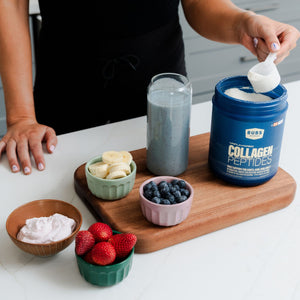
For those in this foundational stage, we often recommend sticking to a consistent program for 8 to 12 weeks. During this time, the focus isn't necessarily on changing the exercises, but on perfecting the form and supporting the structures that make those movements possible. Because repetitive movements can put a steady strain on your connective tissues, integrating Collagen Peptides into your daily ritual can be a game-changer. Our Collagen Peptides are pasture-raised and grass-fed, designed to support joint health and recovery, ensuring that your "consistency phase" doesn't turn into an "overuse injury phase."
Progressive Overload: The Law of Constant Improvement
If you want to keep the same general workout structure every week, you must embrace the law of progressive overload. This is the most important principle in all of physical training. Progressive overload simply means doing more of something over time. If you do the same exercises, you must change the variables around those exercises.
There are several ways to achieve progressive overload without completely rewriting your workout plan:
-
Increase Resistance: Add five pounds to the bar.
-
Increase Volume: Perform 12 repetitions instead of 10, or four sets instead of three.
-
Decrease Rest Time: If you usually rest for 90 seconds between sets, try resting for 60 seconds. This increases metabolic stress.
-
Improve Tempo: Slow down the "eccentric" (lowering) phase of a lift to increase time under tension.
-
Improve Range of Motion: Squatting an inch deeper with the same weight is a significant form of progress.
By focusing on these micro-progressions, you can technically "do the same workout" every week while still forcing your body to adapt. This provides the mental comfort of a routine with the physiological benefits of a varied stimulus.
Strength Training vs. Cardio: Different Rules for Different Goals
The rules for repeating workouts change depending on whether you are focusing on strength or cardiovascular endurance.
Strength Training
When you hit the weights, you are primarily targeting your muscular and skeletal systems. Lifting heavy weights causes micro-trauma to muscle fibers, which requires 24 to 48 hours to repair. This is why most fitness experts advise against training the same muscle group every single day. If you do a full-body strength routine on Monday, your body needs Tuesday to flush out lactic acid, manage oxidative stress, and facilitate protein synthesis.
For those who want to be in the gym every day, the "workout split" is the ideal solution. By doing an "Upper Body" day on Monday and a "Lower Body" day on Tuesday, you are maintaining the habit of daily exercise while giving specific muscle groups the rest they need. To help your muscles fire at their peak during these sessions, we recommend Creatine Monohydrate. It supports strength and power, helping you push through those extra reps that lead to real growth.
Cardiovascular Training
Cardio is a different animal. For most healthy individuals, doing the same cardio workout—like a 30-minute jog or a 45-minute cycle—five to seven days a week is generally safe and effective for heart health. The heart is a muscle that is designed for endurance. However, the intensity still matters.
If every cardio session is a "max effort" sprint, you will eventually burn out your central nervous system. A better approach is to vary the intensity while keeping the activity the same. You might have three "Zone 2" days where you can hold a conversation while running, and one day of high-intensity intervals. To stay fueled during these longer aerobic sessions, many of our community members use MCT Oil Creamer in their morning coffee. The medium-chain triglycerides provide a quick, sustained energy source that doesn't rely on sugar spikes, keeping you focused through the final mile.
The Myth of Muscle Confusion
You have likely heard the term "muscle confusion." The idea is that you should change your workout every single time you walk into the gym to keep your muscles "guessing." While this sounds exciting, it is largely a marketing gimmick.
Muscles don't have brains; they don't get "confused." They only respond to tension, metabolic stress, and damage. If you change your exercises too frequently, you spend all your time learning new movements and never enough time applying enough weight to those movements to cause a real change.
"Program hopping"—switching from a powerlifting plan to a yoga plan to a HIIT plan all in the span of three weeks—is the fastest way to stay exactly where you are. You might burn calories, but you won't build a better athletic foundation. The goal is systematic adaptation, not random activity. Real progress happens when you find a solid program and have the discipline to see it through, even when it starts to feel repetitive.
How Often Should You Actually Change Your Routine?
So, if "every day" is too frequent and "never" is too slow, what is the sweet spot? The answer depends on your experience level.
-
Beginners (0-1 year of lifting): Stay consistent for 8-12 weeks. Your body has so much to learn in terms of coordination that the same routine will continue to yield results for a long time.
-
Intermediate (1-3 years): Change your primary exercises or workout structure every 6-8 weeks. At this stage, your body is more efficient and will plateau sooner.
-
Advanced (3+ years): You may need to change variables every 4-6 weeks. Advanced athletes often use "periodization," where they focus on strength for a month, then hypertrophy (muscle growth) for a month, then power.
Regardless of your level, the one thing that should never change is your commitment to recovery. Every 8 to 12 weeks, regardless of your progress, you should implement a "de-load week." This is a week where you perform your same routine but at 50-60% of the usual intensity. It gives your central nervous system and joints a chance to fully recover, setting you up for a massive burst of progress in the next cycle.
Signs You Are Stuck in a Workout Rut
How do you know if your "consistent routine" has become a "stagnant rut"? Your body will usually tell you, but you have to be listening.
One of the first signs is a lack of physical progress. If you have been lifting the same 25-pound dumbbells for the same 10 reps for two months, you aren't training; you're just maintaining. Another sign is mental burnout. If the thought of your Tuesday workout makes you want to stay in bed, your brain is bored.
Physical signs can include a lack of "the pump" or a total absence of muscle soreness (though soreness is not the only indicator of a good workout). More seriously, keep an eye out for "nagging" pains. If your shoulder hurts every time you do the same bench press variation, it’s a sign that repetitive stress is catching up to you.
When these signs appear, it is time to pivot. You don't have to throw the whole plan away. Maybe you swap the barbell bench press for a dumbbell press, or the back squat for a Bulgarian split squat. These small changes change the angle of the stress on your joints while still targeting the same muscle groups. During these transitions, maintaining a strong baseline of micronutrients is vital. Our Vitamin C supplement is excellent here, as it supports collagen formation and provides antioxidant support to help manage the increased oxidative stress that comes with trying new, challenging movements.
Fueling the Repeat Routine: Nutrition and Supplementation
Whether you are doing the same workout or changing it up, your body’s ability to adapt is limited by the fuel you provide. You cannot build a mansion with a pile of straw. Clean, functional nutrition is the cornerstone of the BUBS Naturals philosophy.
Every time you exercise, you are essentially breaking yourself down so you can build yourself back up. This requires high-quality protein and healthy fats. For many, the morning starts with a ritual. We recommend adding Butter MCT Oil Creamer to your morning brew. It provides the healthy fats needed for mental clarity and sustained energy, ensuring you don't hit a wall halfway through your "standard" Wednesday session.
For those focusing on muscle retention and joint health, the Collagen Peptides Collection is an essential part of the toolkit. Collagen is the most abundant protein in the body, but our natural production slows down as we age. By supplementing with clean, third-party tested collagen, you are giving your body the amino acids it needs to keep your "machinery" running smoothly, regardless of how many times you repeat that Monday leg day.
Recovery: The Real Work Happens in Between
We often say at BUBS that you don't get stronger in the gym; you get stronger while you sleep. The workout is simply the trigger; the recovery is the actual growth. If you are doing the same high-intensity workouts every week without adequate recovery, you are headed for injury.
Active recovery is a great way to stay mobile without overtaxing your system. On your "off" days, consider a long walk, light stretching, or a restorative yoga session. Hydration is also a non-negotiable factor. Most people are chronically dehydrated, which leads to muscle cramps and decreased power output. Our Hydrate or Die - Lemon electrolytes provide the essential minerals your muscles need to fire correctly and recover faster, all without the added sugars found in traditional sports drinks.
Lastly, don't forget the role of digestive health in recovery. If your gut isn't functioning optimally, you aren't absorbing the nutrients from your food or your supplements. A simple daily habit like taking Apple Cider Vinegar Gummies can support digestive wellness, making sure all those clean proteins and fats are actually going to work for you.
The BUBS 10% Rule: Purpose Beyond the Gym
At BUBS Naturals, our mission goes beyond just selling supplements. We are a "no-BS" brand, but we are also a brand with a soul. We are named after Glen “BUB” Doherty, a Navy SEAL, hero, and friend who was killed in Benghazi, Libya, in 2012. Glen lived his life with a sense of adventure and a deep commitment to helping others.
In his honor, we have a 10% Rule: we donate 10% of all our profits to veteran-focused charities. When you choose to fuel your workouts with our Collagen Peptides or our Hydration Collection, you aren't just investing in your own health; you are helping us carry on Glen's legacy of giving back. That sense of purpose is often the best motivator when your workout routine starts to feel a bit repetitive. You aren't just doing it for the "gains"; you're doing it to be the best version of yourself for your community and for those who serve.
Conclusion
So, can you do the same workouts every week? The answer is a resounding "yes," provided you understand the nuances. For the beginner, repetition is the path to mastery. For the experienced athlete, repetition is the baseline upon which you stack progressive overload. By keeping your core exercises consistent but varying the intensity, volume, and rest periods, you can enjoy the mental benefits of a routine while still forcing your body to adapt and grow.
However, never forget that the body is a holistic system. Your workouts are only as good as your recovery and your nutrition. Whether you are sticking to a familiar routine or branching out into a new fitness adventure, support your journey with the cleanest ingredients available. Explore our Collagen Peptides Collection today to give your joints and muscles the support they need to handle whatever you throw at them, week after week.
Stay consistent, stay curious, and always remember to live with purpose. One scoop. Feel the difference. Together, we can push the limits of what’s possible while honoring a legacy of service and adventure.
FAQ
1. What happens if I never change my workout routine?
If you never change any variables in your workout, your body will eventually reach a state of complete adaptation. This means you will stop seeing improvements in strength, muscle growth, or cardiovascular endurance. While you will be able to maintain your current fitness level, you will likely hit a plateau. To avoid this, try incorporating progressive overload by slowly increasing weights or decreasing rest times while keeping the same exercises.
2. Is it better to change exercises or just increase the weight?
Both have their place, but increasing the weight (progressive overload) is generally more effective for long-term strength and muscle growth. Changing exercises too frequently can prevent you from mastering the movement and achieving deep muscular fatigue. A good rule of thumb is to keep your main "compound" lifts (like squats or presses) consistent for at least 8 weeks while varying your "accessory" movements more frequently.
3. Can doing the same workout every day lead to injury?
Yes, doing the exact same high-intensity workout every single day can lead to "overuse injuries." This happens when you put repetitive stress on the same tendons, ligaments, and muscle groups without giving them time to repair. To support your connective tissues during consistent training, consider using Collagen Peptides and ensuring you have at least one or two rest or active recovery days per week.
4. How do I know when it’s finally time to switch to a new program?
You should consider a new program if you have hit a plateau that lasts longer than two or three weeks despite your best efforts at progressive overload. Other signs include persistent boredom, a lack of motivation, or nagging joint pains. Most people find that changing their primary routine every 8 to 12 weeks provides the perfect balance between consistency and variety to keep results coming.