Table of Contents
- Introduction
- The Reality of Your Body Three Weeks After Birth
- Navigating Medical Guidelines and Personal Readiness
- Safe Movements for the Three-Week Mark
- Rebuilding from the Inside Out: The Role of Collagen
- Understanding and Managing Diastasis Recti
- The Mental Game: Patience as an Athletic Virtue
- Fuelling the Fourth Trimester
- When to Gradually Increase Intensity
- Supporting the Journey with Purpose
- Conclusion
- FAQ
Introduction
Did you know that during pregnancy, your uterus expands to roughly 500 times its original size, and your heart works 30% to 50% harder to pump blood for both you and your baby? Giving birth is frequently compared to running a marathon, but the reality is more intense—it is a physiological feat that requires an unparalleled level of recovery. By the time you reach three weeks postpartum, the initial "newborn haze" might be lifting just enough for you to feel a flicker of your old self. For many of us who value an active lifestyle and the pursuit of wellness, that flicker often manifests as a question: Can you workout 3 weeks postpartum? While the desire to return to the gym or the trail is a sign of your resilient spirit, the answer is nuanced and deeply rooted in the science of healing.
At BUBS Naturals, we are built on the legacy of Glen “BUB” Doherty—a man who lived for adventure, high-performance, and service. We believe that the ultimate adventure is taking care of your body so it can take care of you, especially during life’s most demanding transitions. This blog post is designed to help you navigate those delicate early weeks of motherhood with a science-backed approach to movement. We will explore the physiological changes still occurring at the 21-day mark, the difference between "movement" and "exercise," and how to support your body’s natural rebuilding process through clean, functional nutrition. By the end of this article, you will have a clear understanding of what is safe, what should wait, and how to lay a foundation for long-term strength that honors your body's incredible achievement.
Whether you were a competitive athlete before pregnancy or simply enjoy a daily walk to clear your head, the postpartum period is a time for a "no-BS" assessment of your health. We’re going to look at the guidelines from major health organizations, the role of core and pelvic floor rehabilitation, and why supporting your connective tissues with products like our Collagen Peptides is a vital part of the recovery puzzle. Our mission is to empower you to feel your best, so you can show up fully for yourself and your new little teammate. Let’s dive into the reality of the three-week mark and how to approach it with purpose and patience.
The Reality of Your Body Three Weeks After Birth
To understand if you can workout 3 weeks postpartum, we first have to look at what is happening under the surface. At twenty-one days, your body is in the thick of a massive hormonal and structural reorganization. Even if you feel "good," your internal systems are still doing heavy lifting. For instance, the site where the placenta was attached to the uterine wall is an internal wound roughly the size of a dinner plate. This wound is still healing at three weeks, which is why many women still experience lochia, or postpartum bleeding. Engaging in high-intensity movement too early can disrupt this healing process, potentially leading to increased bleeding or complications.
Furthermore, your organs are still migrating back to their pre-pregnancy positions. During the nine months of gestation, your diaphragm was pushed upward, your intestines were compressed, and your rib cage expanded. At three weeks, your blood volume—which increased by nearly 50% during pregnancy—is still normalizing. This shift can affect your cardiovascular response to exercise, making you feel winded or lightheaded more easily than usual. It’s also important to remember the role of relaxin, a hormone that softens your ligaments and joints to allow for birth. This hormone can stay in your system for several months, meaning your joints are currently more "lax" and susceptible to strains or sprains if you jump into high-impact activities too quickly.
We often talk about "getting your body back," but at BUBS, we prefer the idea of moving forward with a stronger foundation. This means acknowledging that three weeks is a time for restoration, not necessarily "training." Your body has just performed a miracle; treating it with the same respect you would give an elite athlete recovering from a major injury is not just smart—it’s necessary. By focusing on internal healing and simple, clean nutrition, you set the stage for a much more successful return to the activities you love later on.
Navigating Medical Guidelines and Personal Readiness
The American College of Obstetricians and Gynecologists (ACOG) has updated its stance in recent years, moving away from the rigid "wait six weeks for everything" rule. The current consensus is that if you had a straightforward vaginal delivery without significant complications, you may be able to resume some form of light activity as soon as you feel ready. However, "ready" is the keyword. For those who underwent a C-section, the timeline is strictly different. A C-section is major abdominal surgery, involving the cutting of several layers of tissue and muscle. In this case, most healthcare providers mandate a minimum of six to eight weeks of rest before anything beyond gentle walking is considered.
Even for vaginal births, "working out" at three weeks doesn't mean hitting a CrossFit WOD or going for a 5-mile run. Most midwives and doctors suggest that the three-week mark is best suited for rehabilitative movements. This is a "rehab phase" rather than a "fitness phase." If you experienced tearing or required stitches, your body is still knitting that tissue back together. High-impact movement or even heavy lifting (including carrying a heavy car seat) can put undue pressure on the perineum and pelvic floor, potentially slowing down your recovery or leading to long-term issues like pelvic organ prolapse.
Before you lace up your sneakers, we always recommend a conversation with your healthcare provider. But beyond the clinical "all-clear," you need to listen to your own internal cues. Are you getting enough sleep? (Likely not.) Are you eating enough to support healing and potentially breastfeeding? Are you hydrated? If you are running on two hours of broken sleep, a high-intensity workout will only spike your cortisol levels and further deplete your energy reserves. Instead, consider how you can support your vitality from the inside out. Starting your morning with a scoop of Collagen Peptides in your coffee or tea can provide the essential amino acids needed to support the very tissues that are currently trying to repair themselves.
Safe Movements for the Three-Week Mark
When people ask "can you workout 3 weeks postpartum," they are often looking for a green light to sweat. At this stage, the most effective "workout" you can do is one that focuses on your deep core and pelvic floor. These muscles were under immense pressure for months and may now feel "disconnected." Rather than traditional abs exercises like crunches—which can actually worsen conditions like diastasis recti—you should focus on breathwork and gentle activation.
The Power of 360 Breathing
One of the most foundational movements you can do at three weeks is diaphragmatic breathing, often called 360 breathing. This isn't just "taking a breath"; it's a functional exercise that re-coordinates your diaphragm, core, and pelvic floor.
- Sit or lie down comfortably with your hands on your lower ribs.
- Inhale deeply through your nose, feeling your ribs expand outward in all directions (front, sides, and back).
- As you exhale through your mouth, imagine gently drawing your pelvic floor up and your belly button toward your spine.
This simple practice helps "wake up" the deep transverse abdominis muscles without putting strain on your healing tissues.
Walking for Mental and Physical Health
Walking is the gold standard for early postpartum movement. It improves circulation, which helps with healing, and the fresh air is often the best medicine for the mental fog that accompanies new motherhood. Start small—maybe just a ten-minute stroll around the block. If you feel any heaviness in your pelvic floor or an increase in bleeding, that is your body telling you to head home and rest.
Hydration is critical during these walks, especially if you are breastfeeding. We recommend keeping a bottle of Hydrate or Die - Lemon nearby. Our electrolyte formula provides the sodium, potassium, and magnesium your muscles need to function correctly without the added sugars found in traditional sports drinks. Staying hydrated helps maintain your energy levels and supports the fluid balance your body is working hard to regulate.
Rebuilding from the Inside Out: The Role of Collagen
At BUBS Naturals, we often say that "Nature is the best chemist." When it comes to postpartum recovery, your body is essentially trying to rebuild its structural integrity. Your skin, joints, ligaments, and even the lining of your uterus rely on collagen to stay strong and elastic. During pregnancy, your body’s collagen stores are often depleted as they are diverted to support the growing baby and the expansion of your own tissues.
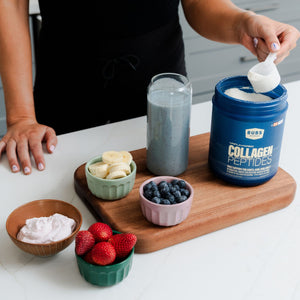
This is why we are so passionate about our Collagen Peptides. By incorporating a high-quality, pasture-raised collagen supplement into your daily routine, you are providing your body with the specific building blocks—like glycine and proline—it needs to support tissue repair. Our collagen is unflavored and dissolves instantly, making it an easy addition to your morning routine. It’s a simple, "no-BS" way to support your joints as they recover from the effects of relaxin and to promote the healing of any stretched abdominal tissues.
When you're three weeks postpartum, every bit of nutrition matters. You aren't just eating for one (or two, if breastfeeding); you are eating for recovery. Supplementing with Collagen Peptides helps ensure you’re getting the protein necessary for cellular repair without having to prep a massive meal when you’re already exhausted. It’s about making the road to your next adventure a little smoother.
Understanding and Managing Diastasis Recti
A common concern for many new moms is diastasis recti, which is the separation of the "six-pack" muscles (rectus abdominis) to accommodate the growing uterus. Research suggests that up to 60% of women have some degree of abdominal separation at six weeks postpartum, which means at three weeks, it is almost a guarantee for many. This isn't a "broken" stomach; it's a natural adaptation. However, how you move at the three-week mark determines how well that tissue heals.
This is the primary reason why "standard" workouts are often discouraged so early. If you perform a crunch or a plank while your abdominal wall is still compromised, you can create "coning" or "doming," where the internal pressure pushes against the weakened connective tissue (the linea alba). This can actually delay the closing of the gap and lead to lower back pain or pelvic instability.
Instead of traditional core work, focus on "rehab" moves like the Pelvic Tilt or the Cat-Cow. These movements gently stretch the spine and encourage the core to engage in a supported, low-pressure way. Supporting your connective tissue is equally important here. Since the linea alba is made of collagen, ensuring you have adequate levels of Vitamin C is essential, as Vitamin C is a critical cofactor in collagen synthesis. Together with our Collagen Peptides, you’re giving your abdominal wall the best chance to regain its tension and strength.
The Mental Game: Patience as an Athletic Virtue
For those of us who identify as athletes or "active people," being sidelined for weeks can be a mental struggle. We use exercise to manage stress, find clarity, and feel like ourselves. At three weeks postpartum, you might feel like your identity has been swallowed by diapers and feeding schedules. The "itch" to workout is often a desire to reclaim a piece of your old self.
However, we want to challenge you to view this time through the lens of longevity. Glen "BUB" Doherty didn't just train for the moment; he trained for a life of service and adventure. In the same way, your postpartum recovery is a long-term play. If you push too hard at three weeks and cause an injury or a setback like a pelvic floor issue, you might be sidelined for much longer.
True mental toughness in the fourth trimester is the ability to slow down when every instinct tells you to speed up. It’s about finding small wins. Maybe your "win" today isn't a PR on the squat rack, but successfully completing your 360 breathing and taking a 15-minute walk. To help keep your mental focus sharp during these sleep-deprived days, many moms find that a clean source of energy is a lifesaver. Our MCT Oil Creamer provides healthy fats that the brain can use for immediate energy, helping to cut through the "mom brain" and keep you grounded as you navigate this transition.
Fuelling the Fourth Trimester
Nutrition is often the most overlooked part of the postpartum "workout" plan. When you're wondering "can you workout 3 weeks postpartum," you should also be asking "am I eating to support a workout?" Your caloric needs are significantly higher right now, especially if you are lactating.
Beyond just calories, the quality of your nutrients dictates the speed of your recovery. Inflammation is a natural part of the immediate post-birth process, but we want to manage it so it doesn't become chronic. This means focusing on whole foods, plenty of healthy fats, and clean protein. A morning ritual that supports this could look like a balanced smoothie or a cup of coffee boosted with our Butter MCT Oil Creamer. This provides sustained energy without the crash, which is vital when you don't know when your next nap might be.
For digestive wellness—which can be a bit sluggish after birth—many women turn to apple cider vinegar. However, drinking straight ACV isn't always appealing. Our Apple Cider Vinegar Gummies offer a convenient way to support your gut health and metabolism with "the Mother" included, all in a simple, tasty format that fits into the busiest of mornings.
When to Gradually Increase Intensity
As you move past the three-week mark and toward the traditional six-week checkup, you can slowly start to layer in more "functional" strength movements. These are exercises that mimic the movements you’re already doing as a mom:
-
Squats: Think of sitting down and standing up from a chair while holding your baby.
-
Lunges: Similar to the movement of picking up toys off the floor.
-
Single-Arm Rows: Mimicking the action of pulling a stroller out of the trunk.
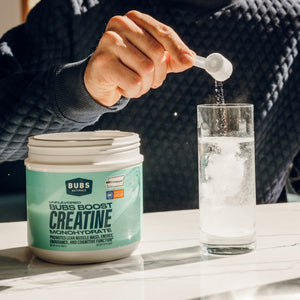
The goal here is not hypertrophy or max power; it’s stability. You are retraining your body to move as a cohesive unit again. Once you reach the three-month mark, and assuming you have no symptoms of pelvic floor dysfunction, you can start talking to your coach or trainer about reintroducing higher-impact work. For those looking to regain muscle mass and strength later in the journey, our Creatine Monohydrate is an excellent, single-ingredient supplement to support training performance and muscle recovery once you are cleared for more intense lifting. But at three weeks? Keep the weights light and the focus on your internal connection.
Supporting the Journey with Purpose
At BUBS Naturals, our commitment to wellness goes beyond just providing the cleanest supplements on the market. We are a mission-driven brand. In honor of Glen “BUB” Doherty, we donate 10% of all our profits to veteran-focused charities. When you choose to support your recovery with BUBS, you are also contributing to a legacy of sacrifice and service. We believe that this sense of purpose is a vital part of health. Knowing that your self-care routine is also helping someone else can provide an extra boost of motivation on the days when motherhood feels particularly challenging.
We take our "no-BS" approach seriously. All our products, from our Collagen Peptides to our Vitamin C, are rigorously tested and held to the highest standards. We don't use fillers, artificial sweeteners, or "mystery" ingredients. You deserve the best, especially during a time as transformative as the postpartum period. By choosing simple, effective, and science-backed ingredients, you are giving your body the respect it deserves after the incredible feat of childbirth.
Conclusion
So, can you workout 3 weeks postpartum? The answer is a gentle "yes" to movement, but a cautious "not yet" to traditional, high-intensity exercise. At twenty-one days, your body is a masterclass in biological rebuilding. It is a time to prioritize 360 breathing over crunches, gentle walks over sprints, and restorative nutrition over restrictive dieting. Your "workout" right now is the work of healing.
By focusing on your deep core, honoring your pelvic floor, and supporting your connective tissues with high-quality supplements, you aren't "falling behind"—you are building a indestructible foundation. Remember that this phase is temporary, but how you treat your body now will impact your physical health for years to come. Be patient, stay hydrated with Hydrate or Die - Mixed Berry, and keep your focus on long-term wellness.
We are here to support you every step of the way. Whether it’s through the sustained energy of our MCT Oil Creamer or the structural support of our Collagen Peptides, BUBS Naturals is dedicated to helping you live a life of adventure and purpose. You’ve just completed the greatest marathon of all; now, let the recovery be your next great achievement. Shop our Collagen Peptides today and see how the BUBS difference can support your journey back to your strongest self.
FAQ
1. What are the signs that I am overdoing it during a workout 3 weeks postpartum?
The most common signs that you need to scale back are an increase in postpartum bleeding (lochia), pelvic pain, or a feeling of "heaviness" in the pelvic floor. If your bleeding becomes bright red again after it had begun to taper off or turn pink/brown, it’s a clear signal from your body that you are exerting yourself too much. Other signs include sharp abdominal pain, dizziness, or extreme fatigue that lasts well after your movement session. Always listen to these cues and consult your doctor if they persist.
2. Is it safe to take collagen and MCT oil while breastfeeding?
While our Collagen Peptides and MCT Oil Creamer are made with clean, simple, natural ingredients, we always recommend that breastfeeding mothers consult with their healthcare provider or a lactation consultant before adding any new supplement to their routine. Generally, collagen is a protein already found in the diet, and MCTs are healthy fats found in coconut oil, but your specific health needs and your baby’s sensitivities should always be the priority.
3. Can I start running at 3 weeks postpartum if I ran throughout my pregnancy?
Even if you were a "marathon mama," most pelvic health physical therapists and OB/GYNs recommend waiting at least 12 weeks before returning to high-impact activities like running. At 3 weeks, your pelvic floor and the ligaments supporting your organs are still very lax due to pregnancy hormones. The repetitive impact of running can increase the risk of pelvic organ prolapse or urinary incontinence. Focus on walking and low-impact strength work first to ensure your "foundation" is ready for the impact of running later on.
4. How does hydration affect my recovery and energy levels in the early weeks?
Hydration is paramount for several reasons: it supports milk production if you are breastfeeding, helps your kidneys process the extra fluid your body is shedding post-pregnancy, and maintains energy levels. Dehydration can often manifest as "brain fog" or extreme fatigue, which are already challenges for new moms. Using a sugar-free electrolyte like Hydrate or Die - Lemon ensures that you are replacing the essential minerals that keep your muscles and nervous system functioning optimally, helping you feel more balanced as you navigate these early weeks.