Table of Contents
- Introduction
- Understanding the Biology of Creatine
- The Physical Benefits of Supplementation
- Creatine for Cognitive Health and Mental Clarity
- Healthy Aging and Sarcopenia
- Dispelling Common Myths and Concerns
- Quality Matters: The BUBS Difference
- How to Successfully Supplement
- A Day in the Life: Integrating BUBS into Your Routine
- The Science of Recovery and Longevity
- Conclusion
- FAQ
Introduction
Did you know that creatine is one of the most researched dietary supplements in history, with over 500 peer-reviewed studies backing its safety and efficacy? Despite this mountain of evidence, many people still view it through a narrow lens, imagining it solely as a tool for massive bodybuilders or elite powerlifters. The truth is far more interesting. From supporting cognitive function in busy professionals to helping seniors maintain their independence through muscle preservation, the applications for this simple compound are vast. At BUBS Naturals, we believe that understanding the science behind your supplements is the first step toward a life lived with purpose and vitality.
Whether you are a weekend warrior, a high-level athlete, or someone simply looking to support their overall wellness as they age, you have likely asked yourself: should I supplement creatine? It is a question that deserves a deep, nuanced answer. This guide will move beyond the locker room myths to explore how creatine works at a cellular level, who stands to benefit most, and why the quality of your supplement is just as important as the workout it fuels.
Our mission is rooted in the legacy of Glen “BUB” Doherty—a Navy SEAL, adventurer, and dedicated friend. He lived a life of high performance and even higher standards. In that spirit, we approach our supplements with a "no-BS" mentality. We prioritize clean, functional ingredients that are rigorously tested so you can focus on the adventure ahead. By the end of this article, you will have a clear understanding of the biological role of creatine, its impact on physical and mental performance, and how to seamlessly integrate it into your daily routine. Together, we’ll dive into the data to see how this powerful molecule can support your unique journey.
Understanding the Biology of Creatine
To answer the question "should I supplement creatine," we first have to understand what it actually is. Creatine is not a lab-created drug or a synthetic steroid; it is a nitrogenous organic acid that occurs naturally in vertebrates. Our bodies produce it endogenously—meaning we make it ourselves—primarily in the liver, kidneys, and to a lesser extent, the pancreas. It is synthesized from three specific amino acids: arginine, glycine, and methionine.
Once produced or consumed through diet, about 95% of the body's creatine is stored in the skeletal muscles in the form of phosphocreatine. The remaining 5% is found in the brain, heart, and testes. This distribution is a major clue to its primary function: providing rapid energy for cells with high metabolic demands.
At the heart of our physical movement is a molecule called Adenosine Triphosphate, or ATP. Think of ATP as the "energy currency" of your cells. When you perform a high-intensity movement—like sprinting for a bus or lifting a heavy weight—your muscles burn through their ATP stores in seconds. As ATP is used, it loses a phosphate molecule and becomes Adenosine Diphosphate (ADP). For the muscle to keep working at that high intensity, it needs to turn that ADP back into ATP quickly. This is where creatine comes in. It "donates" its phosphate group to the ADP, rapidly regenerating the ATP and allowing your muscles to continue performing at a high level for those critical extra seconds.
While our bodies make about one gram of creatine a day, and we get a bit more from protein-rich foods like red meat and seafood, these levels often only fill our muscle stores to about 60-80% capacity. By choosing to supplement creatine, we can saturate those stores, ensuring our "energy tanks" are full and ready for whatever challenge comes our way.
The Physical Benefits of Supplementation
The primary reason most people consider creatine is for its well-documented effects on physical performance. Because it aids in the rapid regeneration of ATP, it is exceptionally effective for activities that require short, explosive bursts of power. This includes weightlifting, sprinting, high-intensity interval training (HIIT), and even sports like soccer or basketball that involve repeated sprints.
Research consistently shows that when people supplement with Creatine Monohydrate, they often see an increase in strength, power output, and total work volume. This doesn't mean the creatine is "growing" the muscle itself—rather, it allows you to train harder. If you can squeeze out two extra reps on every set of squats because your energy stores are topped off, those extra reps lead to greater mechanical tension and metabolic stress, which are the primary drivers of muscle growth over time.
Beyond the immediate "burst" energy, creatine also plays a role in muscle recovery. It has been shown to help reduce muscle cell damage and inflammation following exhaustive exercise. This means you might feel less "beat up" after a heavy session, allowing you to return to your training more quickly. For those of us living active lifestyles, consistency is the key to progress, and any tool that supports recovery is a valuable asset.
To maximize these physical benefits, many athletes combine their creatine with other foundational supplements. For example, maintaining structural integrity is just as important as generating power. Integrating Collagen Peptides into your post-workout routine can support the health of your joints, tendons, and ligaments, ensuring that as your muscles get stronger, your "frame" is strong enough to support that new power.
Creatine for Cognitive Health and Mental Clarity
While the muscles get most of the glory, the brain is another high-energy organ that relies heavily on ATP. Recent research has begun to explore how creatine supplementation impacts cognitive function, and the results are promising. Just as your muscles need rapid energy during a sprint, your brain needs rapid energy during complex mental tasks, periods of high stress, or when you are sleep-deprived.
Studies have suggested that creatine supplementation can help support short-term memory and reasoning, particularly in individuals who are under metabolic stress. If you’ve ever felt "brain fog" after a night of poor sleep or during a grueling work project, your brain’s ATP levels may be struggling to keep up. Supplementing can help provide that extra bit of "mental fuel" needed to maintain focus and clarity.
This is especially relevant for vegetarians and vegans. Since the primary dietary sources of creatine are meat and fish, those following plant-based diets often have lower baseline levels of muscle and brain creatine. Research has shown that vegetarians often experience a more significant cognitive "boost" from supplementation than meat-eaters, as their baseline stores have more room to be filled.
At BUBS, we advocate for a holistic approach to wellness. We know that mental performance is just as critical as physical performance. To further support mental clarity throughout the day, many in our community add an MCT Oil Creamer to their morning coffee. The medium-chain triglycerides provide a quick source of ketone energy for the brain, which, when paired with the ATP-supporting benefits of creatine, creates a powerful foundation for a productive, focused day.
Healthy Aging and Sarcopenia
One of the most compelling reasons to answer "yes" to "should I supplement creatine" involves the aging process. As we get older, we naturally begin to lose muscle mass and strength—a condition known as sarcopenia. This loss of muscle isn't just about aesthetics; it’s about functionality, balance, and independence. Muscle is our "metabolic armor," protecting our bones and helping us manage blood sugar.
Clinical trials have shown that when older adults combine creatine supplementation with a consistent resistance training program, they experience greater gains in muscle mass and bone mineral density compared to those who only exercise. This combination helps preserve the "fast-twitch" muscle fibers that are often the first to go as we age, which are crucial for preventing falls and maintaining the ability to perform daily tasks like carrying groceries or climbing stairs.
Furthermore, the neuroprotective qualities of creatine are being studied for their potential to support long-term brain health. While more research is needed, the current data suggests that maintaining high levels of brain creatine may support the resilience of nerve cells. Aging gracefully isn't just about living longer; it's about living better, with the strength and mental acuity to enjoy every adventure.
To support this long-term wellness goal, we also recommend focusing on overall antioxidant support. Adding Vitamin C to your daily regimen can help support collagen formation and provide antioxidant activity, which works alongside creatine to keep your body’s systems functioning optimally as the years go by.
Dispelling Common Myths and Concerns
Despite its status as a research darling, several myths about creatine persist. Let’s clear the air with some facts.
First, the "steroid" myth. Creatine is not an anabolic steroid. It has no impact on your hormones like testosterone or estrogen. It is a legal, natural compound found in food and produced by your own body. It is permitted by all major sporting bodies, including the International Olympic Committee and the NCAA.
Second, the concern over kidney damage. For healthy individuals with no underlying kidney disease, multiple long-term studies have shown that daily creatine supplementation at recommended doses (3-5 grams) does not negatively affect kidney function. It can slightly raise creatinine levels in blood tests, but this is simply a byproduct of having more creatine in your system, not a sign of kidney distress. However, as with any supplement, if you have a history of kidney or liver issues, you should consult with your healthcare provider before starting.
Third, the "water weight" issue. Some people worry that creatine will make them look bloated or "soft." While it’s true that creatine causes some water retention, that water is stored inside the muscle cells (intracellular), not under the skin (subcutaneous). This intracellular hydration actually makes the muscles look fuller and creates a more favorable environment for protein synthesis. Any initial weight gain is typically just a few pounds of water and usually stabilizes after the first week or two.
Finally, the myth of hair loss. This concern stemmed from a single small study in 2009 involving rugby players that showed an increase in DHT (a hormone linked to hair loss). However, many subsequent studies have failed to replicate these results, and there is no direct evidence that creatine causes hair to fall out. For the vast majority of users, it remains one of the safest and most effective tools in the cabinet.
Quality Matters: The BUBS Difference
If you’ve decided that you should supplement creatine, the next step is choosing the right product. Not all supplements are created equal. The market is flooded with "blends" that contain unnecessary fillers, artificial sweeteners, and low-quality ingredients. At BUBS Naturals, we do things differently.
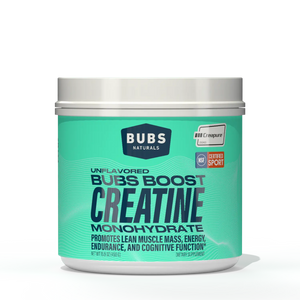
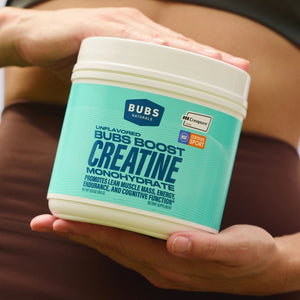
Our Creatine Monohydrate is exactly what it says on the label: 100% pure, pharmaceutical-grade creatine monohydrate. We don’t add flavors, colors, or "proprietary blends." Why monohydrate? Because it is the most studied and proven form of creatine on the planet. Other versions, like creatine HCL or nitrate, often claim better absorption but lack the decades of data supporting their efficacy.
Crucially, our creatine is NSF Certified for Sport. This is the gold standard in third-party testing. It ensures that what is on the label is actually in the tub and, just as importantly, that it is free from over 280 banned substances. Whether you are a professional athlete subject to drug testing or a health-conscious individual who wants to know exactly what they are putting in their body, this certification provides peace of mind.
Furthermore, when you choose BUBS, you aren't just buying a supplement; you are contributing to a cause. Our 10% Rule means that we donate 10% of all profits to veteran-focused charities in honor of Glen "BUB" Doherty. We believe that wellness and purpose go hand in hand. By supporting your own health, you are helping us support those who have served. This commitment to quality and community is the core of everything we do.
How to Successfully Supplement
Getting the most out of your creatine is remarkably simple, but consistency is the absolute key. Unlike a pre-workout caffeine hit, you don't feel creatine immediately. It works by gradually building up the levels in your muscles over time.
There are two main ways to start. The first is a "loading phase," which involves taking about 20 grams a day (split into four doses) for 5-7 days to saturate your muscles quickly. After that, you drop down to a maintenance dose of 3-5 grams per day. The second way is to simply start with 3-5 grams a day and stay there. While it will take a bit longer (about 3-4 weeks) to fully saturate your muscles, it is often easier on the digestive system and just as effective in the long run.
Timing is less important than consistency. Some people prefer taking it post-workout when their muscles are "primed" for nutrient uptake, while others mix it into their morning routine. The best time to take it is whenever you are most likely to remember it every single day.
Because creatine is an osmotically active substance—meaning it draws water into the muscle—it is vital to stay well-hydrated. This helps prevent minor side effects like cramping or digestive upset. For those who struggle to drink enough water, we recommend using Hydrate or Die. These electrolytes provide a sugar-free way to support effective hydration, ensuring that the water you drink actually gets to where it needs to go.
Mixing is also a breeze with our high-quality powder. It is unflavored and dissolves easily into any liquid. You can toss a scoop into your protein shake, mix it with your morning electrolytes, or even stir it into a glass of water. For a simple daily wellness habit, some of our customers enjoy taking their creatine alongside their Apple Cider Vinegar Gummies as part of a streamlined morning ritual.
A Day in the Life: Integrating BUBS into Your Routine
To see how Creatine Monohydrate fits into a busy, active lifestyle, let’s look at a typical day for a member of the BUBS community.
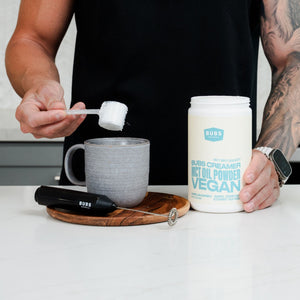
The day starts early with a focus on mental clarity. Instead of a sugary breakfast, you brew a cup of high-quality coffee and stir in a scoop of MCT Oil Creamer. This provides a steady stream of energy to power through morning meetings or creative projects.
By mid-afternoon, it’s time to head to the gym or out for a trail run. To ensure you stay hydrated and ready for the physical demands, you mix a packet of Hydrate or Die – Lemon into your water bottle. This keeps your electrolyte levels balanced as you push your limits.
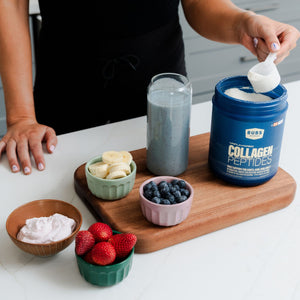
Post-workout is the time for recovery and rebuilding. You whip up a shake containing one scoop of Collagen Peptides to support your joints and one scoop of Creatine Monohydrate to replenish your ATP stores. This combination ensures that your body has the raw materials it needs to repair tissue and prepare for tomorrow’s session.
In the evening, you reflect on the day’s wins. You’ve supported your brain, your muscles, and your long-term wellness—all while contributing to a mission that honors a hero. It’s a "no-BS" approach to life: simple, effective, and driven by purpose.
The Science of Recovery and Longevity
The conversation around creatine is shifting from "how can I get bigger muscles" to "how can I live a more capable life." This shift is supported by an ever-growing body of evidence suggesting that cellular energy management is a cornerstone of healthy aging. By optimizing our phosphocreatine stores, we aren't just improving our bench press; we are supporting the very systems that allow us to interact with the world around us.
Think about the physical resilience required for an adventurous life. Whether it’s hiking a new trail, playing with grandkids, or staying sharp in a demanding career, your body’s ability to generate energy on demand is its most precious resource. Creatine acts as a buffer, a "safety net" that helps maintain that energy production when the demands of life get high.
When we combine this with the systemic support of other functional foods—like the gut-health benefits of Apple Cider Vinegar Gummies or the connective tissue support of our collagen—we create a synergistic effect. We aren't just "taking supplements"; we are building a foundation for longevity.
We often talk about the "BUBS difference" as being about our ingredients and our testing, but it's also about our philosophy. We don't believe in shortcuts or "miracle" pills. We believe in high-quality inputs that support the body's natural functions. Creatine is perhaps the best example of this: a naturally occurring molecule that, when used thoughtfully, empowers you to be the best version of yourself.
Conclusion
So, should I supplement creatine? For the vast majority of active adults, the answer is a resounding yes. The science is clear: creatine is safe, effective, and provides a wide range of benefits that extend far beyond the gym walls. From enhancing high-intensity physical performance and speeding up recovery to supporting cognitive function and aiding in healthy aging, it is a versatile tool for anyone committed to their well-being.
At BUBS Naturals, we are proud to offer a Creatine Monohydrate that meets the highest standards of purity and performance. We believe that by keeping things simple—one high-quality ingredient, rigorously tested by the NSF—we empower you to take control of your health with confidence.
As you move forward on your wellness journey, remember that the best results come from a foundation of consistent habits. Pair your supplementation with a balanced diet, regular movement, and a sense of purpose. Whether you are scaling a mountain or tackling a busy Monday, we are here to provide the clean fuel you need to succeed.
Are you ready to feel the BUBS difference? We invite you to explore our Creatine Monohydrate and see how it can support your goals. Every scoop is a step toward a stronger you and a way to honor the legacy of a hero who never settled for "good enough." Join us in living a life of adventure, wellness, and giving back.
FAQ
Does creatine cause significant water retention and bloating?
While creatine is an osmotically active substance that draws water into the body, it primarily pulls that water into the muscle cells themselves (intracellular hydration) rather than under the skin. This can lead to a slight increase in scale weight during the first week, but it generally makes the muscles look fuller rather than causing a "bloated" appearance. Most users find that any initial water shifts stabilize quickly and do not interfere with their physique goals.
Is it safe for my kidneys to take creatine every day?
For healthy individuals with no pre-existing kidney conditions, daily supplementation with 3-5 grams of Creatine Monohydrate is considered very safe. While it may lead to a slight increase in creatinine levels in blood work—which is a common marker for kidney function—this is usually a harmless result of increased creatine metabolism and not a sign of damage. However, we always recommend consulting with your doctor if you have a history of renal or hepatic issues.
Can women benefit from taking creatine without getting "bulky"?
Absolutely. Creatine does not contain hormones and will not cause "bulky" muscle growth on its own. Instead, it supports energy production, which can help women improve their strength, power, and metabolic health. It is particularly beneficial for women post-menopause to help maintain muscle and bone density. When paired with Collagen Peptides, it provides a comprehensive support system for an active, healthy lifestyle.
Do I need to do a "loading phase" when I start?
A loading phase (taking 20 grams a day for 5-7 days) is not strictly necessary, but it does help your muscle stores reach saturation faster. If you prefer a simpler approach, taking a consistent maintenance dose of 3-5 grams per day will achieve the same level of saturation within about three to four weeks. Many people choose the maintenance approach to avoid potential digestive upset that can sometimes occur with higher doses. Consistent daily use is more important than whether or not you choose to load.