Table of Contents
- Introduction
- The Science of Collagen Absorption
- Timing for Joint and Tendon Support
- Morning Rituals: Energy and Satiety
- Evening and Bedtime: Recovery and Sleep
- Support for Skin, Hair, and Nails
- How Much Collagen Should You Drink?
- Maximizing Results: Nutrition and Lifestyle
- Common Myths About Collagen Timing
- The BUBS Naturals Difference
- Setting Realistic Expectations
- How to Stay Consistent
- Conclusion
- FAQ
Introduction
Choosing the right supplement is only half the battle. Once you have a high-quality product in your kitchen, the next question is always about the "when." If you are looking to support your joints, skin, and overall recovery, you want to make sure you are getting the most out of every scoop. At BUBS Naturals, we believe that wellness should be simple and effective, and understanding the timing of your collagen intake is a great way to optimize your results.
This guide will break down the best times to drink collagen based on your specific health goals. Whether you are an athlete looking to protect your tendons or someone focused on healthy aging and skin elasticity, timing can play a supporting role. We will cover the science of absorption, the benefits of morning versus evening doses, and how to stay consistent.
The most important thing to remember is that while timing offers a slight edge, consistency is what truly moves the needle. This article explains how to align your collagen routine with your lifestyle to ensure you feel the difference.
Quick Answer: The best time to drink collagen depends on your goals: take it 60 minutes before exercise for joint and tendon support, or in the evening to benefit from its sleep-supporting amino acids. However, the most effective time is simply whenever you can remember to take it consistently every day.
The Science of Collagen Absorption
Collagen is the most abundant protein in your body. It acts as the "glue" that holds everything together, providing structure to your skin, hair, nails, bones, and connective tissues. As we age, our natural collagen production begins to slow down, often starting in our mid-twenties. This is why many people turn to supplements to fill the gap.
When you drink collagen, your body doesn't just transport that collagen directly to your skin or joints. Instead, it breaks the protein down into smaller components called peptides. These are short chains of amino acids like glycine, proline, and hydroxyproline. This process is called hydrolysis. Hydrolyzed collagen—often labeled as collagen peptides—is essentially "pre-digested" so your body can absorb it more easily. This is what we mean by bioavailability, which refers to how well and how quickly a substance enters your circulation to be used by your cells.
Because collagen peptides are already broken down, they are very easy on the digestive system. They pass through the gut lining and enter the bloodstream, where they signal your body to ramp up its own collagen production. Because of this high bioavailability, you don't necessarily need to worry about taking it on an empty stomach to avoid "competing" with other proteins, though some people prefer it that way for lighter digestion.
Timing for Joint and Tendon Support
For the athletes and weekend warriors in our community, timing is more than just a matter of convenience. If your primary goal is to support your joints, ligaments, and tendons, the "when" matters significantly. Research suggests that taking collagen about 45 to 60 minutes before you train can be particularly effective.
When you exercise, your blood flow increases to your muscles and connective tissues. By taking collagen an hour before your session, the amino acids are circulating in your bloodstream exactly when your joints are being loaded. This mechanical loading helps "pump" those nutrients into the tissues that usually have lower blood supply, like your tendons and cartilage.
To get the most out of this pre-workout window, it is helpful to pair your collagen with Vitamin C. Vitamin C is a necessary co-factor for collagen synthesis, meaning your body needs it to actually build and repair the collagen fibers. Our Vitamin C supplement provides 500 mg of this essential nutrient to help support that natural repair process.
Key Takeaway: Consuming collagen roughly one hour before physical activity leverages increased blood flow to deliver amino acids directly to the joints and tendons undergoing stress.
Morning Rituals: Energy and Satiety
Many people find that the morning is the most practical time to drink collagen. It is easy to habit-stack, which means adding a new habit to an existing one, like a daily collagen routine.
One of the benefits of morning collagen is satiety, or the feeling of being full. While collagen is not a complete protein—it lacks the essential amino acid tryptophan—it still provides 10 to 20 grams of protein per serving. Starting your day with a protein boost can help stabilize your appetite and prevent mid-morning energy crashes.
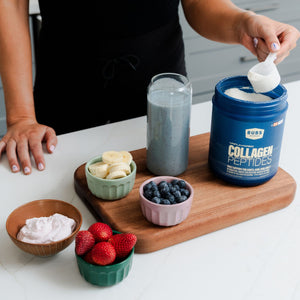
Our Collagen Peptides are unflavored and designed to mix effortlessly into hot or cold liquids. They won't change the taste of your favorite brew, making them a "no-brainer" addition to your morning routine. Whether you are heading to the office or out for an early morning ruck, a morning dose ensures you’ve checked that box before the day gets busy.
Myth: You must take collagen on an empty stomach for it to work.
Fact: While some believe an empty stomach prevents competition with other proteins, hydrolyzed collagen peptides are absorbed efficiently regardless of whether you have eaten or not.
Evening and Bedtime: Recovery and Sleep
Taking collagen in the evening is a popular choice for those focused on recovery and better rest. The reason lies in one specific amino acid: glycine. Collagen is exceptionally high in glycine, which has been shown to have a calming effect on the central nervous system. If you want a deeper dive, see our bedtime collagen timing guide.
Some studies suggest that glycine can help lower your core body temperature, which is a signal to your brain that it is time to sleep. People who take collagen before bed often report falling asleep faster and feeling more refreshed the next morning. Furthermore, your body naturally enters a "repair and recover" mode while you sleep. Providing a fresh supply of amino acids right before this restorative phase can support the maintenance of your skin and tissues.
If you enjoy a evening "wind-down" drink, try mixing collagen into a warm herbal tea or a glass of water. It is a simple way to support your body's overnight rebuilding process without needing a heavy meal or a complex supplement routine.
Support for Skin, Hair, and Nails
If you are taking collagen for aesthetic reasons, such as skin elasticity or hair strength, the specific time of day is less critical than the total daily amount. Skin cells and hair follicles are constantly regenerating, but the process is slow. You won't see results from a single dose, regardless of when you take it.
The goal for skin health is to keep a steady supply of collagen peptides in your system over a long period. Studies on skin hydration and wrinkle reduction typically look at consistent daily intake over 8 to 12 weeks. Whether you take it at 8:00 AM or 8:00 PM, the key is that you don't miss days. For a deeper look at the signs, our guide on how to tell if you need collagen is a good companion read.
Consistency allows the peptides to accumulate in the dermis—the deeper layer of your skin—where they stimulate fibroblasts. Fibroblasts are the cells responsible for producing collagen and elastin. By keeping these cells "fed," you support the underlying structure that keeps skin looking firm and healthy.
Bottom line: For skin, hair, and nail benefits, the specific clock time is irrelevant; the only "good" time is the one that ensures you take it every single day without fail.
How Much Collagen Should You Drink?
Knowing when to take it is helpful, but knowing how much is just as important. Most clinical research points to a daily dose of 10 to 20 grams of collagen peptides for general wellness, joint support, and skin health.
A single scoop of BUBS Naturals Collagen Peptides typically provides about 18 grams of protein. For most people, one scoop a day is the sweet spot. However, if you are recovering from an injury or training at a very high intensity, you might consider a second scoop.
It is also important to note that you don't have to take it all at once. If you prefer to split your dose—half a scoop in your morning coffee and half a scoop in your post-workout shake—your body will still process and use those amino acids effectively. The most important factor is reaching that daily total that supports your body's needs.
Maximizing Results: Nutrition and Lifestyle
Collagen doesn't work in a vacuum. To get the best results from your supplement, your lifestyle should support your body’s natural ability to produce and protect its collagen.
-
Prioritize Vitamin C: As mentioned, you cannot synthesize collagen without Vitamin C. Ensure your diet includes citrus, bell peppers, or a high-quality supplement.
-
Stay Hydrated: Collagen fibers need water to maintain their structure and flexibility. We recommend using our Hydrate or Die electrolytes to ensure your cells are actually holding onto the water you drink.
-
Manage Sugar Intake: High sugar consumption can lead to a process called glycation. This is where sugar molecules attach to collagen fibers, making them brittle and more likely to break down.
-
Protect from UV: Excessive sun exposure is one of the fastest ways to destroy the collagen in your skin. Wear sunblock and limit direct exposure during peak hours.
-
Stop Smoking: Smoking significantly impairs the body's ability to produce collagen and accelerates the breakdown of existing fibers, particularly in the skin and lungs.
By combining these habits with a consistent collagen routine, you create an environment where your body can thrive. It is about more than just a supplement; it’s about a comprehensive approach to how you move, eat, and recover.
Common Myths About Collagen Timing
There is a lot of misinformation in the wellness space. Let's clear up a few common misconceptions about when and how to use collagen.
Myth: Heat destroys collagen.
Many people worry that putting collagen in hot coffee will "kill" the protein. This isn't true. Collagen peptides are very heat-stable. The temperatures of standard coffee, tea, or even baking don't get high enough to damage the amino acid profile. You can safely add it to your morning brew or a hot soup.
Myth: You can't take collagen with other proteins.
Some claim that if you take collagen with a whey protein shake, the "heavy" proteins will block the collagen absorption. While it's true that amino acids share some transport pathways, your body is incredibly efficient at sorting and absorbing different nutrients. Taking them together is perfectly fine for most people.
Myth: You should only take collagen on workout days.
Your body is in a state of repair 24/7, not just on the days you hit the gym. In fact, your rest days are when the majority of tissue remodeling happens. You should take collagen every day to ensure your "repair kit" is always fully stocked.
Myth: Taking it at night will make you gain weight.
Collagen is a protein, and a single scoop typically contains around 70 calories. It is very low in fat and has zero sugar. Taking it at night is unlikely to impact your weight unless it is part of a significant calorie surplus. In fact, the satiety from the protein might help you avoid late-night snacking.
The BUBS Naturals Difference
Not all collagen is created equal. When we started us, we wanted to create products that we actually wanted to use—no fillers, no additives, and no BS. Our Collagen Peptides are sourced from grass-fed, pasture-raised bovine hides. This ensures a clean, high-quality source of Type I and Type III collagen.
We also go the extra mile with third-party testing. Our collagen is NSF for Sport certified. This is the highest standard in the industry, ensuring that what is on the label is exactly what is in the jar, with no banned substances or contaminants. This is why we are trusted by professional athletes, members of the military, and health-conscious individuals alike.
Our products are designed to be "one scoop, feel the difference." They dissolve instantly, so you aren't left with clumps at the bottom of your glass. Whether you are mixing it into a morning latte or an evening tea, it should be an easy, enjoyable part of your day.
Setting Realistic Expectations
While many people report feeling better within a few weeks, it is important to have a long-term view. Collagen is not a "quick fix" drug; it is a functional food that supports biological processes.
Most people start to notice improvements in skin hydration and joint comfort after about 4 to 8 weeks of daily use. Changes in hair and nail strength often take a bit longer—usually 12 weeks or more—because those tissues take longer to grow.
Listen to your body. If you are using it for joint pain and find that a morning dose doesn't feel like it's helping, try switching to the pre-workout window. Everyone's metabolism and lifestyle are slightly different. The "best" time for you is the one that aligns with your specific goals and your daily schedule.
How to Stay Consistent
The biggest hurdle to seeing results isn't the timing; it's the "forgetting." If you only take your collagen three times a week, you aren't going to get the full benefits. Here are a few tips to make sure you never miss a scoop:
-
Visual Cues: Keep your jar of collagen right next to your coffee maker or on the kitchen counter where you see it every morning.
-
Travel Packs: If you travel for work or have a busy schedule, keep individual packets in your gym bag or office desk.
-
Set a Reminder: Use a phone alarm or a habit-tracking app until the routine becomes second nature.
-
Batch Mix: If you drink a daily smoothie, you can pre-portion your collagen into your blender containers for the week.
By removing the friction from the process, you ensure that your body is getting the support it needs to stay strong, mobile, and resilient.
Conclusion
The best time to drink collagen is ultimately the time that allows you to be most consistent. If you want a specific edge, aim for 60 minutes before your workout for joint health or right before bed for recovery and sleep support. For everything else—skin, hair, and general wellness—simply getting your daily dose is the most important factor.
We are proud to provide clean, effective supplements that help you live a life of adventure and purpose. Every product we make is a tribute to the legacy of Glen "BUB" Doherty, a Navy SEAL who lived his life to the fullest. To honor that legacy, we donate 10% of all our profits through the 10% Rule.
When you choose us, you aren't just supporting your own health; you are contributing to a bigger mission. Take that scoop, get outside, and do the work. Your body will thank you for it.
FAQ
Does it matter if I drink collagen on an empty stomach?
For most people, it does not matter. Collagen peptides are highly bioavailable and easily absorbed whether you have eaten or not. However, if you have a sensitive stomach or experience slight bloating, taking it with a small meal or blending it into a smoothie may help.
Can I take collagen more than once a day?
Yes, you can split your daily intake into two doses. Some people prefer taking half a scoop in the morning for satiety and the other half before a workout or at bedtime for recovery. Just aim for a total daily intake of 10 to 20 grams for the best results.
Is it better to take collagen in the morning or at night?
It depends on your goal. Morning intake is great for establishing a routine and supporting appetite control throughout the day. Taking it at night may be better if you are looking to take advantage of the amino acid glycine to support sleep quality and overnight tissue repair.
How long does it take to see results from drinking collagen?
Results vary, but most studies show that it takes about 4 to 8 weeks of consistent daily use to notice improvements in skin hydration and joint comfort. For hair and nail benefits, it typically takes closer to 12 weeks due to the slower growth cycle of those tissues.