Table of Contents
- Introduction
- The Structural Foundation of the Human Body
- The Role of Amino Acids: The Building Blocks
- How Your Body Makes Collagen: The Synthesis Process
- Understanding the Different Types of Collagen
- How Collagen Works in the Skin
- Collagen’s Role in Joint and Bone Health
- The Science of Collagen Supplementation
- Why Collagen Levels Decline
- How to Support Collagen Production Naturally
- Collagen and Muscle Recovery
- Collagen for Gut Health
- Maximizing Your Results
- The BUBS Way
- Conclusion
- FAQ
Introduction
Most of us know that collagen is important for healthy skin, flexible joints, and strong hair. You see it on labels and in health food aisles everywhere. However, the actual science of how this protein functions once it enters your system is often left unexplained. Understanding the mechanics of collagen helps you move past the marketing and focus on how to actually support your body’s internal structure.
At BUBS Naturals, we prioritize education and transparency, as reflected in The BUBS Story, so you can make informed decisions about your wellness routine. This guide breaks down the biological role of collagen, how your body produces it, and what happens when you supplement with it. We will explore why this specific protein is the literal "glue" that holds your physical frame together.
By the end of this article, you will understand the specific pathways collagen takes to support your active lifestyle. Whether you are a marathon runner, a veteran staying fit, or someone looking to age gracefully, knowing the "how" behind the protein is the first step toward better results.
Quick Answer: Collagen works by providing a structural scaffold for your skin, bones, tendons, and ligaments. It functions through a process of synthesis where cells called fibroblasts use amino acids and Vitamin C to build long, tough fibers. When you take a supplement, it provides the building blocks and signals your body to increase its own natural production.
The Structural Foundation of the Human Body
To understand how collagen works, you first have to understand what it is. Collagen is the most abundant protein in the human body. It makes up about one-third of your total protein composition. Think of it as the rebar in a concrete building. While the other parts of your body provide the "fill," collagen provides the strength and the frame.
Collagen is a hard, insoluble, and fibrous protein. It is not a single string but a triple helix. Imagine three strands of rope twisted tightly together. This structure gives it incredible tensile strength. In fact, gram for gram, certain types of collagen fibers are stronger than steel. This strength allows your skin to stretch without tearing and your tendons to pull on your bones without snapping.
We find collagen in almost every tissue. It is in your skin, muscles, bones, tendons, ligaments, and even your blood vessels and digestive tract. Because it is everywhere, its health directly impacts how you feel when you wake up, how you recover from a workout, and how your skin reacts to the environment.
The Role of Amino Acids: The Building Blocks
Proteins are made of amino acids, and collagen has a very specific profile. While many proteins contain a wide variety of amino acids, collagen is unique because it is heavily concentrated in three specific ones: glycine, proline, and hydroxyproline.
-
Glycine: This is the smallest amino acid, which allows the collagen helix to pack together very tightly. It makes up about one-third of the collagen molecule.
-
Proline: This amino acid helps stabilize the triple helix structure. It is essential for the durability of the protein.
-
Hydroxyproline: This is a modified version of proline that plays a major role in the stability of the collagen fiber through hydrogen bonding.
When you consume protein, your body breaks it down into these individual amino acids. These are then sent to "work sites" throughout the body where they are reassembled into new proteins. If you lack these specific building blocks, your body struggles to maintain its structural integrity. This is why many people find that general protein intake isn't always enough to specifically support joint or skin health.
How Your Body Makes Collagen: The Synthesis Process
The production of collagen happens inside specialized cells called fibroblasts. These cells are located in your connective tissue. Their primary job is to maintain the structural integrity of the tissues by constantly secreting collagen and other essential fibers.
The process of making collagen is complex and requires several "co-factors." One of the most important is Vitamin C. Without enough Vitamin C, the enzymes that stabilize the collagen triple helix cannot function. This is why Vitamin C deficiency leads to things like scurvy, where the body's connective tissues literally start to fall apart.
The Steps of Synthesis
-
Procollagen Production: The fibroblast starts by creating a precursor called procollagen. It does this by combining the amino acids glycine and proline.
-
Hydroxylation: Vitamin C assists in adding oxygen and hydrogen to these amino acids, turning them into hydroxyproline and hydroxylysine. This makes the molecule stable.
-
Triple Helix Formation: Three of these chains wrap around each other to form the triple helix.
-
Secretion and Fibril Formation: The cell moves this procollagen into the space outside the cell. There, enzymes snip off the ends of the molecule, allowing it to link with other collagen molecules to form long, tough fibrils.
These fibrils then bundle together to form the thick fibers we call collagen. This process is constant. Your body is always breaking down old collagen and building new collagen to replace it. However, as we age, the rate of breakdown starts to outpace the rate of production.
Key Takeaway: Collagen synthesis is a biological manufacturing line. Fibroblasts take amino acids, use Vitamin C as a tool, and assemble a triple helix that eventually becomes a tough fiber. If you miss the raw materials (amino acids) or the tools (Vitamin C), the assembly line slows down.
Understanding the Different Types of Collagen
Not all collagen in your body is the same. There are at least 28 different types of collagen, but roughly 80–90% of the collagen in your body consists of Types I, II, and III. Each type has a slightly different structure and a specific job to do.
| Collagen Type |
Primary Location |
Key Function |
| Type I |
Skin, tendons, bone, teeth |
Provides incredible tensile strength and structure. |
| Type II |
Cartilage |
Acts as a shock absorber in the joints. |
| Type III |
Skin, muscles, blood vessels |
Supports the structure of hollow organs and large arteries. |
Type I collagen is the heavy lifter. It is found in almost all connective tissue and is the primary type used for structural support. It is what gives your skin its firmness and your bones their "bend" before they break.
Type III collagen often works alongside Type I. It is very common in the skin and the walls of your intestines. It provides elasticity and helps maintain the shape of your organs. Most high-quality supplements focus on a blend of Type I and Type III Collagen Peptides to provide broad structural support.
How Collagen Works in the Skin
The dermis, or the middle layer of your skin, is made of about 70-80% collagen. In this layer, collagen works alongside another protein called elastin. While elastin allows your skin to snap back into place, collagen provides the firmness that prevents sagging and deep wrinkles.
As you age, the fibroblasts in your skin become less active, and What Helps Build Collagen in Skin: Essential Insights for Radiant Skin digs deeper into why that matters. The collagen matrix, which was once a tight and organized net, begins to fragment. This fragmentation is what leads to thinner skin and the formation of fine lines.
UV radiation from the sun is a major enemy of collagen. When UV rays hit the skin, they trigger the production of enzymes that break down collagen fibers faster than usual. This is why people who spend a lot of time in the sun without protection often see premature skin aging. Collagen works by acting as the foundational layer that keeps the surface of your skin smooth and resilient.
Collagen’s Role in Joint and Bone Health
In your joints, collagen works primarily as a cushion. Type II collagen is the main component of cartilage, the slippery tissue that covers the ends of your bones. This cartilage allows your joints to move without friction. When collagen levels in the cartilage drop, you may feel stiffness or discomfort during movement.
Bones are not just made of calcium. While calcium provides the hardness, collagen provides the framework. Without collagen, your bones would be extremely brittle and would shatter easily. Collagen gives bones the flexibility to absorb impact. This is particularly important for athletes and active individuals who put repetitive stress on their skeletal system through running or weightlifting.
Myth: Collagen is only for beauty and skin health.
Fact: Collagen is a vital structural component of your bones, tendons, and ligaments. It provides the tensile strength necessary for athletic performance and injury prevention.
The Science of Collagen Supplementation
One of the most common questions is how taking a supplement actually translates to more collagen in your body. You might wonder if the collagen you eat just gets digested like any other protein. The answer lies in the form of the collagen you take.
Standard collagen molecules are too large for the body to absorb effectively. This is why we use "hydrolyzed" collagen. Hydrolysis is a process that uses water to break down the long collagen chains into much smaller pieces called peptides.
Collagen peptides are highly bioavailable. This means your body can easily absorb them through the wall of your gut and into your bloodstream. Once in the blood, these peptides do two very important things:
-
Supply Raw Materials: They provide the specific amino acids (glycine, proline, hydroxyproline) that your fibroblasts need to build new collagen.
-
Act as Messengers: This is the most fascinating part of how collagen works. When these small peptide fragments circulate in your body, your fibroblasts detect them. The cells "think" these fragments are signs that a lot of collagen has been broken down. This "tricks" the cells into ramping up their own natural collagen production.
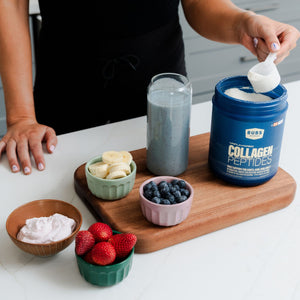
Our BUBS Collagen Peptides are designed with this bioavailability in mind. We use grass-fed, pasture-raised bovine collagen that is hydrolyzed into small, easy-to-mix peptides. This ensures that when you add a scoop to your coffee or shake, your body can actually put those amino acids to work.
Why Collagen Levels Decline
Natural collagen production starts to drop in your mid-20s. For most people, this decline is about 1% per year. While that sounds small, it adds up over decades. By the time you are 50, you may have significantly less collagen than you did in your youth.
Several lifestyle factors can accelerate this process:
-
Sugar and Refined Carbs: High sugar intake leads to a process called glycation. This is where sugar molecules attach to collagen proteins, making them stiff and brittle.
-
Smoking: Chemicals in tobacco smoke damage both collagen and elastin, leading to "smoker's wrinkles" and poor wound healing.
-
Autoimmune Issues: Certain conditions can cause the body to attack its own collagen fibers.
-
High Cortisol: Chronic stress leads to high levels of cortisol, which can break down collagen in the skin and bones.
We cannot stop the aging process, but we can manage these external factors. By protecting your existing collagen and providing your body with the nutrients it needs to make more, you can help maintain your structural health for longer.
How to Support Collagen Production Naturally
Taking a supplement is only one part of the equation. To get the most out of how collagen works in the body, you should support the entire biological process. This means looking at your diet and daily habits. To go deeper, How to Increase Collagen for Skin: Embrace Nature, Nutrition, and Supplements breaks down the bigger-picture habits.
Make sure you are getting enough Vitamin C. Since it is a required co-factor for collagen synthesis, even the best supplement won't work as well if you are deficient in this vitamin. Citrus fruits, bell peppers, and strawberries are excellent sources. We also offer a Vitamin C supplement specifically formulated to support antioxidant activity and collagen formation.
Don't ignore copper and zinc. These minerals also play roles in the cross-linking of collagen fibers. A balanced diet with nuts, seeds, and lean meats usually provides enough of these, but it is worth keeping an eye on if you are highly active.
Protect your collagen with antioxidants. Because oxidative stress from pollution and sun can break down collagen, eating a diet rich in colorful vegetables helps neutralize those damaging molecules. This keeps your "scaffold" intact for longer.
Note: Consistency is the most important factor when supporting collagen. Because the body's turnover of collagen is a slow and steady process, you are unlikely to see results from a single dose. Most people report noticing changes in their skin or joint comfort after 4 to 8 weeks of daily use.
Collagen and Muscle Recovery
While collagen is not a complete protein for muscle building, it is vital for muscle recovery. Muscles are wrapped in a layer of connective tissue called the perimysium, which is made largely of collagen. When you lift heavy weights or engage in intense exercise, you aren't just straining the muscle fibers; you are also straining that connective tissue.
Supporting this connective tissue can help you bounce back faster. For a deeper look at creatine, Creatine Monohydrate: Powering Your Performance and Wellness shows how it fits into an active routine. While the creatine supports the energy needs of the muscle, the collagen supports the framework that allows that muscle to function.
Collagen for Gut Health
The lining of your digestive tract is made of millions of tiny cells held together by collagen. Specifically, Type III collagen helps maintain the structure and "tightness" of the gut wall. This is important because it prevents unwanted particles from leaking out of the digestive system and into the bloodstream.
Amino acids like glycine are also known to support the gut lining. Glycine can help soothe the digestive tract and may support a healthy inflammatory response in the gut. For people looking to support their overall wellness from the inside out, the role of collagen in digestive health is a major benefit.
Bottom line: Collagen works beyond just skin and bones; it is a foundational element of your digestive tract's structural integrity, helping to maintain a strong and healthy gut barrier.
Maximizing Your Results
When you start focusing on your collagen health, timing can play a role. Some research suggests that taking collagen about 30 to 60 minutes before exercise may increase the delivery of amino acids to the tendons and ligaments being worked. The increased blood flow during exercise helps carry those peptides exactly where they are needed most.
Mixability also matters. If a supplement is clumpy or doesn't dissolve, you are less likely to use it every day. We designed our products to mix effortlessly into hot or cold liquids. This makes it easy to stay consistent, whether you’re adding it to your morning coffee or your afternoon hydration.
Pairing collagen with electrolytes is another smart move. Proper hydration is essential for the health of all connective tissues. Our Hydrate or Die electrolyte formula ensures your cells have the minerals they need to stay hydrated, which in turn keeps your collagen-rich tissues resilient and functional.
The BUBS Way
At BUBS Naturals, we don't just sell supplements; we live the lifestyle they support. We believe that if you want to perform at your peak, you need a foundation that won't quit on you. That is why our products are third-party tested and NSF for Sport certified. We want you to trust that what you are putting into your body is clean, effective, and backed by science.
Our approach to wellness is grounded in the legacy of Glen "BUB" Doherty. He lived a life of adventure and service, and he never took the easy way out. We apply that same standard to our ingredients. No fillers, no BS—just simple, functional nutrition designed to help you stay in the game.
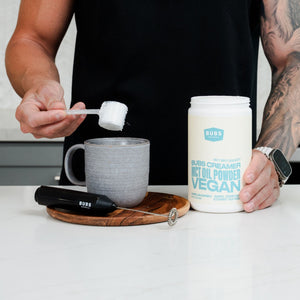
When you invest in your health through our products, you are also supporting a larger mission. We donate 10% of all profits to veteran-focused charities in BUB's honor. It’s our way of ensuring that every scoop of collagen or MCT Oil Creamer does some good for the community as well.
Conclusion
Understanding how collagen works in the body reveals why it is such a cornerstone of health. It is far more than a "beauty" supplement; it is the structural matrix of your entire physical existence. From the fibroblasts that build it to the peptides that signal its production, the science of collagen is a testament to the body’s incredible ability to maintain itself.
- Collagen provides the structural scaffold for skin, bones, and joints.
- Synthesis requires specific amino acids and Vitamin C.
- Hydrolyzed peptides act as both building blocks and messengers to the body.
- Protection from UV rays and sugar is essential for preserving your current collagen.
"The best way to maintain your health is to provide your body with the tools it needs to take care of itself."
The journey to better recovery and long-term structural health is a marathon, not a sprint. By staying consistent with your nutrition and choosing high-quality, clean ingredients, you set yourself up for a lifetime of adventure. Start supporting your body’s foundation today and feel the difference that real, science-backed nutrition can make.
FAQ
How long does it take for collagen to start working?
While individual results vary, most people notice improvements in skin hydration and joint comfort after 4 to 8 weeks of daily use. For deeper structural changes like bone density or tendon strength, it may take 3 to 6 months of consistency. The key is to provide a steady supply of peptides so your fibroblasts can stay active.
Can I get enough collagen from my diet alone?
It is possible but often difficult in the modern diet. Traditional sources of collagen include bone broth, organ meats, and animal skins—things many people do not eat daily. Supplementing with hydrolyzed peptides provides a concentrated and highly bioavailable source of the specific amino acids that are otherwise hard to find in lean muscle meats, like those in BUBS Collagen Peptides.
Does heat destroy collagen powder when I put it in coffee?
No, collagen is a very stable protein and can withstand the temperatures of a standard cup of coffee or tea. The hydrolysis process already involves heat, so adding it to your morning brew will not damage the amino acids or reduce the effectiveness of the peptides. This makes it one of the easiest supplements to incorporate into a daily routine.
Is there a "best" time of day to take collagen?
There is no strictly "wrong" time, but many people prefer taking it in the morning to establish a habit. Some athletes find benefit in taking it shortly before a workout to capitalize on increased blood flow to the connective tissues. Ultimately, the most effective time is the time that allows you to be consistent every single day, and Electrolytes: Essential for Your Active Life can help keep the rest of your routine on track.