Table of Contents
- Introduction
- The History of Creatine Discovery
- Why Synthesis Is Better Than Extraction
- The Raw Materials of Creatine
- Step-By-Step: The Manufacturing Process
- Understanding Purity and Contaminants
- Quality Control: The Gold Standard of Testing
- Creatine Monohydrate vs. Other Forms
- The BUBS Naturals Approach to Creatine
- How to Check the Quality of Your Creatine
- Realistic Expectations and Usage
- Summary of the Journey
- The Mission Behind the Molecule
- FAQ
Introduction
If you have ever stepped into a gym or scrolled through a fitness forum, you have seen the name creatine. It is one of the most researched and effective supplements on the planet. Most of us know it helps with power, muscle recovery, and energy during a heavy set of squats. However, there is often a cloud of mystery around how that white powder actually ends up in your tub.
At BUBS Naturals, we believe that knowing exactly what goes into your body is the first step toward better performance. You deserve to know if your supplements are clean, safe, and made with integrity. This guide will walk you through the entire journey of creatine from raw ingredients to the finished product. We will look at why it is synthesized in a lab rather than extracted from food and how we ensure the highest purity.
Understanding the manufacturing process helps you spot the difference between a high-quality supplement and one filled with junk. We designed this deep dive to answer your questions about the science and safety of creatine production.
The History of Creatine Discovery
Creatine was not invented in a lab by a modern supplement company. It was first identified in 1832 by a French scientist named Michel Eugène Chevreul. He found it in skeletal muscle and named it after the Greek word for meat, kreas. By the 1920s, scientists realized that consuming more creatine could increase the amount stored in our muscles.
For decades, it remained a niche interest for researchers. It did not hit the mainstream until the 1992 Barcelona Olympics. High-profile athletes began reporting that they used it to improve their performance. Shortly after, the first commercial creatine supplements hit the market.
Today, it is the gold standard for athletes. While the discovery started with meat, the way we make it today is much more efficient and controlled.
Why Synthesis Is Better Than Extraction
A common question is why we do not just extract creatine from meat. After all, red meat and fish are the primary natural sources of creatine. However, the math for extraction does not work for your health or the environment.
To get just five grams of creatine—a standard daily dose—you would need to eat about two to three pounds of raw beef. Extracting five grams from that beef in a factory would be incredibly expensive. It would also produce massive amounts of animal waste.
Synthesizing creatine in a controlled lab environment allows us to create a product that is bio-identical to what is in your body. This means the molecule is exactly the same as what your liver and kidneys produce. Lab synthesis ensures the final product is vegan, free of animal-borne contaminants, and consistently pure.
Key Takeaway: Synthetic creatine monohydrate is bio-identical to the creatine found in red meat, but it is produced in a lab to ensure purity, sustainability, and vegan-friendliness.
The Raw Materials of Creatine
If you look at a tub of our Creatine Monohydrate, the only ingredient listed is creatine monohydrate. But how does it start? The chemical synthesis of creatine requires two primary starting materials: sodium sarcosinate and cyanamide.
Sodium Sarcosinate
Sodium sarcosinate is a derivative of the amino acid glycine. It is often described as having a slightly sweet taste and is salt-like in its structure. In the world of chemistry, it acts as the foundation for the creatine molecule.
Cyanamide
Cyanamide is a white, solid organic compound. It is important not to confuse cyanamide with cyanide. While their names sound similar, they are completely different chemicals. Cyanamide is a safe reactant when used in this specific manufacturing process and is even found in common items like toothpaste.
Myth: Creatine is made from ground-up animal parts or synthetic steroids.
Fact: Modern creatine is made by reacting two organic compounds, sodium sarcosinate and cyanamide, in a strictly controlled environment. No animal parts are involved.
Step-By-Step: The Manufacturing Process
The transition from liquid chemicals to a fine, mixable powder involves several highly technical stages. Each step is designed to maximize purity and ensure the final product is safe for consumption.
1. The Reaction Phase
The process begins in a large, stainless steel reaction vessel. Technicians combine the sodium sarcosinate and cyanamide with water. The mixture is then heated and pressurized. This environment triggers a chemical reaction that bonds the molecules together, creating the creatine molecule.
2. Cooling and Crystallization
Once the reaction is complete, the liquid is cooled. As the temperature drops, the creatine begins to form solid crystals. This is the "monohydrate" part of the process. One molecule of water binds to each molecule of creatine, creating a stable, crystalline structure.
3. Centrifugation (Purification)
The mixture now looks like a slurry of crystals and liquid. To separate the pure creatine, it goes through a centrifuge. Think of a centrifuge like a high-speed spin cycle in a washing machine. It spins the mixture at incredible speeds, using centrifugal force to pull the liquid and any unreacted particles away from the solid creatine crystals.
4. Vacuum Drying
The damp crystals are then placed in a vacuum dryer. Removing the air pressure allows the remaining moisture to evaporate at lower temperatures. This is vital because high heat can cause creatine to degrade into creatinine, which is a waste product your body normally filters out.
5. Milling and Micronization
The dried crystals are often quite large and do not dissolve well in water. To fix this, the crystals are "milled." They are ground down into an ultra-fine powder. This is often measured in "mesh." Most high-quality creatine is ground to 200 mesh, resulting in a "micronized" powder. This fine texture allows the powder to stay suspended in your drink rather than clumping at the bottom.
Bottom line: Through a process of heating, cooling, spinning, and grinding, raw chemicals are transformed into a stable, pure, and highly dissolvable powder.
Understanding Purity and Contaminants
During the manufacturing process, small amounts of byproducts can form. The most common are dicyandiamide and dihydrotriazine. In low-quality manufacturing facilities, these impurities might remain in the final product.
High-quality manufacturers use multiple purification steps to ensure these levels stay near zero. When we talk about "99.9% pure" creatine, we are referring to a product that has been rigorously filtered to remove these chemical leftovers.
This is why the source of your creatine matters. Cheaply made creatine might save you a few dollars, but it may contain impurities that have no business being in your body. We prioritize a clean process to ensure that what you see on the label is exactly what you get.
Quality Control: The Gold Standard of Testing
Once the powder is milled, it doesn't go straight into the tub. It must pass through a series of tests to verify its identity and safety.
HPLC Testing
The primary tool for this is High-Performance Liquid Chromatography, or HPLC. This is a lab technique that separates the components of a mixture. It allows scientists to see exactly how much creatine is in a sample and identify even trace amounts of contaminants. If a batch does not meet the 99.9% purity threshold, it is rejected.
Microbiological Testing
Even though the process is synthetic, manufacturers must test for bacteria, mold, and yeast. This ensures the facility is sterile and the product is safe for long-term storage.
Heavy Metal Testing
Creatine must be tested for lead, arsenic, mercury, and cadmium. These metals can sometimes be found in the environment or low-grade raw materials. Testing ensures these are well below the strict safety limits set by the FDA.
NSF for Sport Certification
For athletes, the highest level of trust comes from third-party certifications. Some of our products, including our collagen, undergo NSF for Sport certification. This means the product is tested for over 280 substances banned by major athletic organizations. When you see this, you know the product is safe for competitive use.
Creatine Monohydrate vs. Other Forms
While we focus on creatine monohydrate, you might see other versions like Creatine HCl, Creatine Ethyl Ester, or Buffered Creatine. These are made using different chemical processes.
For example, Creatine HCl is made by attaching a hydrochloride group to the creatine molecule. Proponents claim it dissolves better, but the manufacturing is more complex and often more expensive.
Despite the marketing for newer forms, creatine monohydrate remains the most produced and most tested version. The manufacturing process for monohydrate is refined, predictable, and produces the most stable version of the molecule. This stability is why it has a long shelf life and consistent results.
| Feature |
Creatine Monohydrate |
Creatine HCl |
| Raw Materials |
Sarcosinate + Cyanamide |
Creatine + Hydrochloric Acid |
| Solubility |
Good (when micronized) |
Very High |
| Research Support |
Thousands of studies |
Limited studies |
| Stability |
Very stable in powder form |
Can be less stable |
| Cost |
Most affordable |
Typically more expensive |
The BUBS Naturals Approach to Creatine
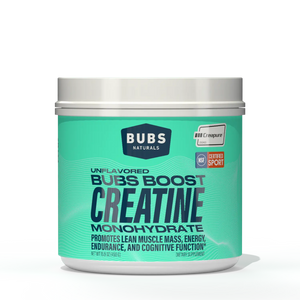
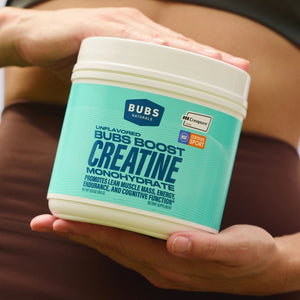
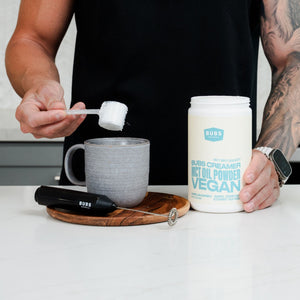
We believe in simplicity. Our Creatine Monohydrate is a single-ingredient formula. We do not add fillers, flavorings, or "flow agents" that some companies use to make the manufacturing process easier or cheaper.
We use a micronized form of creatine. As we discussed in the milling section, this means the particles are small enough to mix easily into your coffee, morning shake, or pre-workout drink. It doesn't feel like you are drinking sand.
By focusing on a clean, single-ingredient product, we ensure that you are getting the full benefit of the science without any unnecessary additives. Our goal is to provide a supplement that fits into your active lifestyle and supports your recovery without compromise.
How to Check the Quality of Your Creatine
You do not need a chemistry degree to verify if your creatine is high-quality. Here are a few things you can look for at home:
-
The "Visual" Test: Pure creatine should be a bright, snow-white powder. If it looks yellowish or off-white, it may contain impurities or have been exposed to moisture.
-
The Dissolve Test: Stir a scoop into a glass of water. While it may take a minute, it should eventually settle or dissolve without leaving large, gritty clumps.
-
The Label Test: Look for "Creatine Monohydrate" as the only ingredient. Avoid "creatine blends" that do not disclose the exact amount of each type of creatine.
-
Third-Party Logos: Look for marks of quality control. These indicate that the manufacturer has allowed an outside lab to verify their claims.
Realistic Expectations and Usage
Knowing how it is made is one thing, but using it correctly is another. Creatine works by increasing your body's stores of phosphocreatine. This is a molecule that helps your cells quickly regenerate ATP, which is the primary energy currency of your body.
When you start taking a high-quality creatine supplement, it takes time to saturate your muscles. Some people choose a "loading phase" by taking 20 grams a day for a week, while others prefer a steady 5 grams a day. Both methods work; the 5-gram daily dose just takes a few weeks longer to reach full saturation.
Because of the way it is made—using that monohydrate bond—it is best absorbed when your insulin levels are slightly elevated. This is why many people take it with a post-workout meal or a shake that contains some carbohydrates.
Summary of the Journey
The path from a reaction vessel to your kitchen cabinet is a feat of modern chemistry. By starting with simple organic compounds and using high-pressure reactions, purification, and micronization, we are able to create a supplement that is safe, effective, and pure.
By choosing a brand that prioritizes these manufacturing standards, you are not just buying a powder; you are investing in your long-term health and performance. You are ensuring that every scoop supports your goals without introducing unwanted chemicals into your system.
The Mission Behind the Molecule
At BUBS Naturals, our commitment to quality is rooted in something deeper than just fitness. We were founded to honor the legacy of Glen "BUB" Doherty, a Navy SEAL and hero who lived a life of adventure and service. This mission drives us to maintain the highest standards in everything we produce.
Our products are designed for those who work hard and play hard. Whether you are training for a marathon, hitting a new personal record in the gym, or just trying to stay active, we provide the tools to help you get there.
We also believe in giving back. We donate 10% of all our profits to veteran-focused charities in Glen's honor. Every time you choose our clean, science-backed supplements, you are helping us support those who have served. We are proud to offer products that are not only effective but also carry a purpose. Learn more in our story and our giving back commitment.
One scoop at a time, we help you feel the difference that high-quality, ethically made supplements can make in your life.
FAQ
Is creatine monohydrate a steroid?
No, creatine is not a steroid and has no relationship to performance-enhancing drugs. It is a naturally occurring compound made of amino acids that your body produces every day and that is found in foods like beef and fish.
Why is my creatine powder clumpy?
Clumping usually happens if moisture gets into the tub. Because creatine monohydrate is designed to bond with water, it will easily soak up humidity from the air. Always keep your tub tightly sealed and store it in a cool, dry place to maintain its fine texture.
Does the manufacturing process make creatine vegan?
Yes, the synthetic process used to make modern creatine monohydrate does not involve any animal tissues or byproducts. This makes it a 100% vegan-friendly supplement, which is especially helpful since vegans often have lower natural creatine stores due to the absence of meat in their diet.
What is the difference between micronized and regular creatine?
The only difference is the particle size. Micronized creatine has been milled into a much finer powder. This does not change how the creatine works in your body, but it makes it much easier to mix into liquids and reduces the "gritty" texture often found in non-micronized versions.