Table of Contents
- Introduction
- The Architectural Blueprint: What is Collagen?
- The Specialized Builders: Fibroblasts and Beyond
- Stage One: The Intracellular Phase
- Stage Two: Packaging and Export
- Stage Three: The Extracellular Phase
- Where Does Collagen Synthesis Take Place? A Summary Table
- The Impact of Lifestyle on Collagen Synthesis
- Why Quality Matters: The BUBS Difference
- Integrating Collagen Into Your Daily Adventure
- The Significance of the Extracellular Matrix
- Collagen and the Aging Process
- Conclusion
- FAQ
Introduction
Did you know that collagen is the most abundant protein in the human body, accounting for nearly one-third of your total protein composition? It is the biological "glue" that holds us together, providing the structural scaffolding for our skin, bones, tendons, and ligaments. Yet, despite its massive presence, many people are unaware of the intricate biological machinery required to produce a single fiber of this vital protein. The question of where does collagen synthesis take place is not answered by pointing to a single spot on a map of the human body; rather, it is a complex, multi-stage journey that begins deep within the nucleus of specialized cells and finishes in the vast "open spaces" between those cells.
At BUBS Naturals, we are obsessed with the science of how the body maintains itself, especially for those who live a life of adventure and high-performance. Our foundation is built on the legacy of Glen "BUB" Doherty—a Navy SEAL, adventurer, and friend who lived life to the fullest. In his honor, we strive to provide the cleanest, most effective tools to support your body's natural functions. This includes understanding the delicate process of collagen production. Whether you are scaling a mountain, hitting a personal best in the gym, or simply looking to support your joints as you age, knowing how your body builds its structural foundations is the first step toward optimizing your wellness.
By the end of this article, you will have a comprehensive understanding of the cellular and extracellular environments where collagen is born. We will explore the specialized cells known as fibroblasts, the role of the endoplasmic reticulum and Golgi apparatus, and the critical post-translational modifications that require specific vitamins and minerals. We will also look at how lifestyle choices and high-quality supplementation, like our Collagen Peptides, can play a supportive role in this complex biological dance. Our goal is to move beyond simple definitions and dive into the mechanics of human resilience.
The Architectural Blueprint: What is Collagen?
Before we can pinpoint exactly where does collagen synthesis take place, we must understand what is being built. Collagen is a fibrous protein characterized by its incredible tensile strength. Gram for gram, certain types of collagen are stronger than steel. This strength comes from its unique structure: a triple helix composed of three polypeptide chains wound tightly around one another.
This structure is built primarily from three amino acids: glycine, proline, and hydroxyproline. Glycine is particularly important because it is the smallest amino acid. In the collagen triple helix, glycine appears at every third position. Its small size allows the three chains to pack together incredibly tightly, creating a dense, resistant fiber that can withstand significant mechanical stress. Without this precise arrangement, our tendons would snap, our skin would lose its elasticity, and our bones would become brittle.
While there are at least 28 known types of collagen, the vast majority of the collagen in your body (over 90%) consists of Types I, II, and III. Type I is primarily found in skin, tendons, and bone; Type II is the main component of cartilage; and Type III provides structure to muscles, arteries, and internal organs. Each type is synthesized through a similar pathway, but the specific "blueprint" is determined by the genes expressed within the cell.
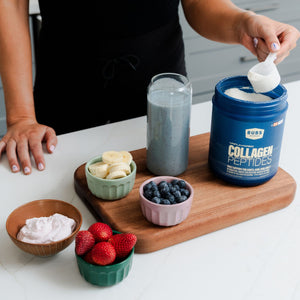
Supporting this "blueprint" requires a steady supply of high-quality amino acids. This is why we developed our Collagen Peptides Collection. By providing the body with hydrolyzed collagen—collagen already broken down into smaller, easily absorbable peptides—we ensure that the "construction site" has the raw materials it needs to support the body's natural structural maintenance.
The Specialized Builders: Fibroblasts and Beyond
When asking where does collagen synthesis take place, the most direct answer is: within specialized cells. The "lead architects" of collagen production are the fibroblasts. These are the most common cells found in connective tissue and are specifically designed to synthesize the extracellular matrix and collagen.
However, fibroblasts aren't the only cells on the job. Depending on the tissue being built, other specialized cells take over:
-
Chondroblasts: Responsible for producing collagen in cartilage.
-
Osteoblasts: The cells that build the collagen matrix in our bones.
-
Odontoblasts: Cells that create the collagen found in the dentin of our teeth.
These cells are biological powerhouses. To support the high demand for protein synthesis, they contain an extensive network of rough endoplasmic reticulum (rER) and a well-developed Golgi apparatus. You can think of the fibroblast as a factory; the nucleus holds the blueprints, the rER is the assembly line, and the Golgi apparatus is the packaging and shipping department.
For those of us leading active lifestyles, these cells are constantly working to repair the micro-trauma that occurs during exercise. To keep these "builders" energized and focused, many in the BUBS community start their day with a focused ritual. Mixing our MCT Oil Creamer into your morning coffee provides clean, coconut-derived fats that support mental clarity and sustained energy, ensuring you have the drive to tackle the day's "construction" projects.
Stage One: The Intracellular Phase
The first half of collagen synthesis happens entirely inside the cell. It is a highly regulated, multi-step process that ensures the protein is formed correctly before it is sent out into the body.
Transcription and Translation
The process begins in the cell nucleus, where specific genes (typically named with the "COL" prefix, such as COL1A1) are transcribed into messenger RNA (mRNA). This mRNA carries the genetic instructions for a specific type of collagen. Once the mRNA is created, it leaves the nucleus and enters the cytoplasm, where it attaches to ribosomes on the rough endoplasmic reticulum.
Here, the mRNA is translated into long chains of amino acids called pre-pro-polypeptides. These chains are the very first iteration of what will eventually become a collagen fiber. At this stage, they contain a "signal peptide" that directs them into the lumen (the inner space) of the rER for further processing.
Hydroxylation: The Role of Vitamin C
Once inside the rER, the signal peptide is removed, and the chains are now called pro-alpha chains. This is where one of the most critical steps in collagen synthesis occurs: hydroxylation. Enzymes called prolyl hydroxylase and lysyl hydroxylase add hydroxyl groups to the amino acids proline and lysine.
This step is absolutely vital because these hydroxyl groups allow the collagen chains to form the hydrogen bonds that hold the triple helix together. Without hydroxylation, the collagen fibers would be unstable and unable to support the body’s weight. Crucially, these enzymes cannot function without a cofactor: Vitamin C.
This is why a deficiency in Vitamin C leads to scurvy, a condition where collagen synthesis fails, leading to fragile blood vessels and poor wound healing. To support this essential step, we offer our own Vitamin C supplement, providing 500mg of the antioxidant power needed to keep those hydroxylase enzymes working at peak efficiency.
Glycosylation and Triple Helix Formation
After hydroxylation, the pro-alpha chains undergo glycosylation, where glucose and galactose molecules are attached to specific hydroxylysine residues. Once this is complete, three of these processed pro-alpha chains begin to twist around each other, much like a rope, to form a procollagen triple helix.
This twisting starts at one end and moves through the chains like a "zipper," creating a stable, right-handed helix. This completed procollagen molecule is then transported to the Golgi apparatus.
Stage Two: Packaging and Export
The Golgi apparatus serves as the final quality control and shipping center within the cell. Here, the procollagen molecules are bundled into secretory vesicles. These vesicles move toward the cell membrane and, through a process called exocytosis, are released into the extracellular space—the area outside the cell.
It is a common misconception that the collagen "rope" is fully formed inside the cell. In reality, the cell produces a precursor that is soluble so it doesn't accidentally clog the cell's internal machinery. The final, high-strength assembly can only happen once the molecule is safely outside the cell wall.
As you can see, the body’s internal "logistics" are incredibly complex. Just as your cells need a system to export procollagen, your body needs a system to recover from the stresses of daily life. For the adventurer who pushes their limits, proper recovery is non-negotiable. Using a product like our Creatine Monohydrate can help support muscle performance and recovery, complementing the structural support provided by your body's natural collagen production.
Stage Three: The Extracellular Phase
Once the procollagen is secreted into the extracellular matrix, the final transformation begins. This is where the individual molecules turn into the massive, weight-bearing fibers that define our physical structure.
Cleavage of Propeptides
The procollagen molecule exported by the cell has "loose ends" called propeptides. These ends act as caps that prevent the collagen from fibers forming prematurely inside the cell. Once outside, specialized enzymes called collagen peptidases snip off these ends. The resulting molecule is now known as tropocollagen.
Fibril Assembly and Cross-Linking
Tropocollagen is the basic unit of a collagen fiber. These molecules spontaneously begin to align themselves in a staggered, parallel fashion to form collagen fibrils. Imagine a brick wall where the joints are offset to provide extra strength; tropocollagen molecules overlap in a similar way to ensure there are no weak points in the fiber.
The final and most important step for strength is covalent cross-linking. An enzyme called lysyl oxidase (which requires copper as a cofactor) creates strong chemical bonds between the lysine and hydroxylysine residues of adjacent tropocollagen molecules. This cross-linking is what gives collagen its incredible tensile strength and resistance to degradation.
As we age, or when we are exposed to high levels of oxidative stress (from things like UV rays or poor diet), this cross-linking can become damaged or inefficient. This is why we emphasize the "One Scoop. Feel the Difference." approach with our Collagen Peptides. By providing a consistent source of the amino acids used during this extracellular assembly, we support the body’s natural ability to maintain its connective tissues.
Where Does Collagen Synthesis Take Place? A Summary Table
To help visualize this journey, let's break down the locations and actions of collagen synthesis:
| Stage |
Location |
Primary Action |
Key Requirements |
| Transcription |
Nucleus |
DNA is copied to mRNA |
Genetic signals (COL genes) |
| Translation |
Rough ER (Ribosomes) |
mRNA is turned into pre-pro-peptide |
Amino acids (Gly, Pro, Lys) |
| Modification |
Rough ER (Lumen) |
Hydroxylation & Glycosylation |
Vitamin C, Iron |
| Assembly |
Rough ER / Golgi |
Triple helix (Procollagen) forms |
Proper amino acid sequence |
| Export |
Secretory Vesicles |
Procollagen is moved outside the cell |
Energy (ATP) |
| Maturation |
Extracellular Space |
Propeptides are cleaved; Tropocollagen forms |
Peptidase enzymes |
| Final Strength |
Extracellular Matrix |
Fibril formation & Cross-linking |
Copper, Lysyl Oxidase |
The Impact of Lifestyle on Collagen Synthesis
Understanding where does collagen synthesis take place is only half the battle; the other half is knowing how to protect the process. Since collagen is formed both inside and outside the cell, it is vulnerable to both internal metabolic issues and external environmental stressors.
The Danger of Sugar and UV Light
Two of the biggest enemies of collagen are sugar and sun. High sugar intake leads to a process called glycation, where sugar molecules attach to collagen fibers, forming "advanced glycation end products" (AGEs). These AGEs make the collagen brittle and less able to repair itself. Similarly, UV light from excessive sun exposure triggers the production of enzymes called matrix metalloproteinases (MMPs), which actively break down the collagen in your skin and connective tissues.
The Role of Hydration and Nutrition
Collagen synthesis is a metabolic process, meaning it requires water and nutrients to function. Proper hydration is essential for the health of the extracellular matrix where collagen fibrils assemble. If you are dehydrated, the environment where collagen "matures" becomes compromised.
This is where our hydration strategy comes in. For those who are out in the elements or pushing through a grueling workout, Hydrate or Die - Lemon provides the essential electrolytes needed to maintain fluid balance without the added sugars that can interfere with collagen health.
We also believe in the power of simple, gut-friendly habits. Our Apple Cider Vinegar Gummies are a great addition to a wellness routine, supporting digestive health so that your body can efficiently break down and absorb the nutrients required for collagen production.
Why Quality Matters: The BUBS Difference
When you choose a supplement to support your body's structural health, the source matters. Not all collagen is created equal. At BUBS Naturals, our Collagen Peptides are sourced from grass-fed, pasture-raised bovine hides. We utilize a rigorous hydrolysis process to ensure the collagen is broken down into low-molecular-weight peptides that are highly bioavailable.
But beyond the science, there is the mission. We don't just want to sell supplements; we want to fuel a legacy. Our commitment to the 10% Rule—donating 10% of all profits to veteran-focused charities—is our way of honoring Glen "BUB" Doherty and ensuring that our business serves a higher purpose. When you use BUBS, you aren't just supporting your own wellness; you're contributing to a community of givers and adventurers.
Our products are also NSF for Sport certified, which is the gold standard in the supplement industry. This means that every tub of our Collagen Peptides is tested for over 280 banned substances and verified for label accuracy. Whether you are a professional athlete or a weekend warrior, you can trust that what’s on the label is exactly what’s in the product—no BS, just clean, effective ingredients.
Integrating Collagen Into Your Daily Adventure
So, how do you take this knowledge of where does collagen synthesis take place and apply it to your life? It starts with consistency. Because collagen is constantly being broken down and rebuilt, providing your body with a steady stream of building blocks is key.
The Morning Ritual
A great way to ensure you never miss your collagen is to pair it with your morning coffee or tea. Our Collagen Peptides are unflavored and dissolve instantly in hot or cold liquids. For an extra boost of healthy fats, try adding a scoop of our Butter MCT Oil Creamer. This combination provides amino acids for your connective tissues and medium-chain triglycerides for your brain, setting you up for a productive, high-energy day.
Pre- and Post-Workout Support
If you’re heading out for a run or hitting the gym, your joints and tendons will be under increased stress. Hydration is paramount here. Sipping on Hydrate or Die - Mixed Berry during your session helps maintain the electrolyte balance necessary for cellular function. After your workout, a second scoop of collagen in a protein shake can help support the recovery process as your fibroblasts go to work repairing the tissues you've challenged.
On-the-Go Wellness
We know that adventure doesn't always happen in the kitchen. That’s why we offer travel-friendly options. Whether you’re on a plane or a trail, our MCT Oil Creamer – 14 ct Travel Pack makes it easy to maintain your wellness routine anywhere in the world.
The Significance of the Extracellular Matrix
We've talked a lot about the cells, but we must also emphasize the environment they live in: the extracellular matrix (ECM). The ECM is not just empty space; it is a dynamic, fluid-filled network that provides physical support and transmits mechanical signals to the cells.
When you move, lift, or stretch, those mechanical forces are felt by the fibroblasts through the ECM. This signal tells the fibroblasts to produce more collagen to reinforce the area. This is why weight-bearing exercise is so important for bone and joint health—it literally "tells" your cells where they need to build more collagen.
However, for this communication to happen effectively, the ECM must be healthy. This requires a balance of proteins, water, and minerals. By using a comprehensive approach—including Collagen Peptides for structure and Hydrate or Die for the fluid environment—you are supporting both the "builders" and the "building site."
Collagen and the Aging Process
As we age, our body's natural collagen production begins to slow down. Starting in our mid-20s, we lose about 1% of our collagen every year. For women, this decline can accelerate significantly during and after menopause. This loss isn't just about wrinkles; it manifests as stiffer joints, thinner skin, and a longer recovery time after physical activity.
Furthermore, the collagen we do produce as we get older tends to be of lower quality. The cross-linking becomes less organized, and the fibers become more brittle. This is why proactive support is so important. While we cannot stop the clock, we can provide our bodies with the best possible resources to maintain what we have.
Our Collagen Peptides Collection is designed specifically for this purpose. By consistently supplying the body with Type I and III collagen, you are helping to offset the natural decline and supporting the body's ongoing maintenance of the skin, hair, nails, and joints. It’s about maintaining your "bounce-back" so you can keep doing what you love for as long as possible.
Conclusion
Understanding where does collagen synthesis take place reveals the breathtaking complexity of the human body. From the initial genetic instructions in the nucleus to the final cross-linking of fibers in the extracellular matrix, every step is a testament to our body's resilience and capacity for renewal. This process is not passive; it is an active, nutrient-dependent cycle that we can support through our lifestyle, our nutrition, and our commitment to quality.
At BUBS Naturals, our mission is to provide you with the very best tools for this journey. Whether it’s our NSF for Sport certified Collagen Peptides or our performance-focused Hydrate or Die electrolytes, we believe in simple, clean ingredients that deliver tangible results. We are proud to carry on the legacy of Glen "BUB" Doherty by helping you live a life of adventure, wellness, and purpose.
As you move forward, we encourage you to think of your wellness as a long-term project—one that requires the right materials and the right mindset. Are you providing your fibroblasts with the amino acids they need? Are you supporting your metabolic pathways with the right vitamins and hydration? If you're ready to elevate your routine, we invite you to explore our full range of products and feel the BUBS difference for yourself.
Together, let's build a stronger, more resilient future—one scoop at a time. Explore our Collagen Peptides today and see how high-quality, science-backed nutrition can support your life of adventure.
FAQ
1. Which cells in the body are primarily responsible for collagen synthesis?
The primary cells responsible for collagen synthesis are fibroblasts, which are found throughout the body's connective tissues. However, other specialized cells also produce collagen depending on the tissue type: osteoblasts produce it in bone, chondroblasts in cartilage, and odontoblasts in the teeth. These cells are equipped with the specialized machinery, such as a robust rough endoplasmic reticulum and Golgi apparatus, required to assemble complex proteins like collagen.
2. Why is Vitamin C so important for the collagen synthesis process?
Vitamin C is an essential cofactor for the enzymes prolyl hydroxylase and lysyl hydroxylase. These enzymes are responsible for a process called hydroxylation, which occurs inside the cell during the early stages of collagen formation. Hydroxylation allows the collagen chains to form the stable hydrogen bonds necessary to create the signature triple helix structure. Without sufficient Vitamin C, the collagen produced is weak and unstable, which can lead to various wellness issues. For those looking to support this process, our Vitamin C provides an easy way to ensure your body has what it needs.
3. What is the difference between procollagen and tropocollagen?
Procollagen is the precursor molecule formed inside the cell; it contains "propeptides" or extra sequences at the ends that prevent it from forming large fibers prematurely within the cell. Once the procollagen is secreted into the extracellular space, enzymes called collagen peptidases remove these end caps. The resulting molecule is called tropocollagen, which is the basic building block that spontaneously assembles into the large collagen fibrils that provide structural support to the body.
4. Can I support my body's collagen synthesis through diet and supplements?
Yes, you can support the body’s natural collagen production by providing the necessary raw materials and cofactors. A diet rich in high-quality protein provides the amino acids (glycine, proline, and lysine) needed for synthesis. Supplementing with Collagen Peptides is an effective way to ensure a consistent supply of these specific amino acids in an easily absorbable form. Additionally, avoiding lifestyle factors that damage collagen, such as excessive sugar intake and unprotected UV exposure, helps preserve the collagen your body has already built.