Table of Contents
- Introduction
- What Is Collagen?
- The Different Types of Collagen
- Why Is Collagen Good for You?
- Why Your Collagen Levels Decline
- How to Boost Your Collagen Naturally
- The Power of Collagen Peptides
- Practical Tips for Your Collagen Routine
- The BUBS Mission: More Than Just Supplements
- Bottom Line
- FAQ
Introduction
You wake up, and your joints feel a little stiffer than they did five years ago. Maybe you notice that your skin doesn't bounce back quite as quickly after a long weekend, or your recovery time after a heavy lifting session is starting to lag. These are not just signs of getting older; they are often the first visible and physical signals that your body’s collagen production is slowing down.
Collagen is the most abundant protein in the human body, acting as the structural scaffolding for your skin, bones, tendons, and ligaments. At BUBS Naturals, we believe in providing the cleanest, most effective tools to help you stay in the game, whether that means hitting a new personal record or simply feeling better in your daily life. This guide will break down exactly what collagen is, why your body relies on it, and how you can support your natural levels with Collagen Peptides.
Understanding collagen is the first step toward better recovery and long-term vitality. We will explore the different types of collagen, the science behind supplementation, and the lifestyle habits that protect this vital protein. If you want to know why this "glue" is essential for an active lifestyle, you are in the right place.
What Is Collagen?
To understand what collagen is, think of it as the architectural framework of your body. It is a structural protein that makes up roughly 30% of your total protein composition. While other proteins like functional enzymes or hormones carry out specific chemical tasks, collagen provides the physical strength and elasticity required for your tissues to function under pressure.
At a microscopic level, collagen is made of amino acids—primarily glycine, proline, and hydroxyproline. These amino acids link together to form long, sturdy chains that twist into a triple helix. This triple helix structure is incredibly resilient, allowing your connective tissues to stretch and move without snapping.
Your body produces its own collagen by combining these amino acids with the help of specific "co-factors" like Vitamin C, zinc, and copper. Without these nutrients, your internal collagen factory cannot operate efficiently. This is why a balanced diet is just as important as supplementation when it comes to maintaining your structural health.
The Scaffolding of the Human Body
Collagen isn’t just in one place; it’s everywhere. It resides in your dermis (the middle layer of your skin), your bone matrix, the corneas of your eyes, and even the lining of your gut and blood vessels. When we talk about "the glue that holds you together," we mean it literally. Without collagen, your skin would lose its shape, your bones would become brittle, and your joints would lack the cushioning needed to absorb impact.
Key Takeaway: Collagen is a structural protein made of a unique triple-helix of amino acids. It provides the physical framework for nearly every tissue in the body, from your skin to your skeletal system.
The Different Types of Collagen
While there are at least 28 known types of collagen, the vast majority of the collagen in your body belongs to one of three categories. Understanding these types helps you identify which supplements or foods will best support your specific goals.
Type I: The All-Rounder
Type I collagen accounts for about 90% of your body’s total collagen. It consists of very densely packed fibers that provide structure to skin, bones, tendons, fibrous cartilage, connective tissue, and teeth. If you are looking for skin elasticity or bone strength, Type I is the primary player.
Type II: The Joint Support
This type is found in elastic cartilage, which cushions your joints. Type II is less densely packed than Type I and is specifically designed to absorb shock. This is the type most often associated with joint comfort and mobility, especially for those who put a lot of miles on their knees and ankles.
Type III: The Internal Support
Type III collagen supports the structure of muscles, organs, and arteries. It is often found alongside Type I in the skin and is vital for the health of your cardiovascular system.
| Collagen Type |
Primary Location |
Key Benefit |
| Type I |
Skin, Bones, Tendons |
Strength, Elasticity, Structure |
| Type II |
Cartilage |
Joint Cushioning, Shock Absorption |
| Type III |
Muscles, Organs, Arteries |
Tissue Repair, Cardiovascular Health |
Why Is Collagen Good for You?
The benefits of collagen extend far beyond vanity. While the beauty industry focuses on wrinkles, the real value for an active person lies in how collagen supports movement and resilience.
Joint Health and Mobility
Every time you run, jump, or lift, your joints take the brunt of the force. Collagen comprises about 60% of your cartilage—the firm, rubbery tissue that prevents your bones from rubbing together. As collagen levels decline, your cartilage thins, leading to the stiffness and discomfort often associated with osteoarthritis. Many athletes report that consistent collagen intake helps reduce joint pain and improves overall mobility.
Skin Elasticity and Hydration
Your skin is about 75% collagen. As you age, the collagen fibers in the deeper layers of your skin become unorganized and fragmented. This leads to sagging and the formation of fine lines. By supporting your collagen levels, you help your skin retain moisture and maintain its "snap." This isn't just about looking younger; it’s about maintaining the health of your body’s largest organ and its ability to protect you from the environment.
Bone Density
Bones are often thought of as hard, static objects, but they are living tissues made of a mix of minerals and collagen. Collagen provides the flexible framework that allows bones to absorb impact without breaking. Studies suggest that collagen supplementation may support bone mineral density, which is especially important as we age and the risk of brittleness increases.
Muscle Recovery
While collagen is not a "complete" protein (it lacks the essential amino acid tryptophan), it is rich in glycine and proline. These amino acids are necessary for the synthesis of Creatine Monohydrate and the repair of connective tissues that surround your muscle fibers. Adding collagen to your post-workout routine may support the repair of the tendons and ligaments that are strained during intense training.
Myth: Collagen is just like any other protein powder.
Fact: While all proteins provide amino acids, collagen has a unique concentration of glycine, proline, and hydroxyproline that other sources like whey or soy do not match. These specific amino acids are the primary building blocks for your body's connective tissues.
Why Your Collagen Levels Decline
Even if you are at the peak of your fitness, your body is constantly losing collagen. Starting in your mid-20s, natural production begins to drop by about 1% to 1.5% every year. By the time you reach 50, you may have lost up to half of your natural collagen.
While aging is unavoidable, certain lifestyle factors act like an accelerant, breaking down your existing collagen fibers and making it harder for your body to produce new ones.
1. High Sugar Consumption
Sugar doesn't just impact your energy levels; it physically damages your proteins. In a process called glycation, sugar molecules attach to collagen proteins and form harmful molecules known as Advanced Glycation End-products (AGEs). These AGEs make your collagen brittle, weak, and dry.
2. UV Exposure
Ultraviolet radiation from the sun is one of the biggest enemies of collagen. UV rays penetrate the dermis and cause collagen to break down more rapidly than it should. This "photoaging" is responsible for the majority of visible skin damage over time.
3. Smoking
Smoking reduces the amount of oxygen that reaches your tissues and introduces toxins that directly interfere with collagen synthesis. It also damages elastin, the protein that allows your skin to stretch.
4. Chronic Stress
When you are under constant stress, your body produces high levels of cortisol. Elevated cortisol can break down collagen and inhibit the cells (fibroblasts) responsible for creating it. Managing stress is not just good for your mind; it is vital for your physical structure.
How to Boost Your Collagen Naturally
You can support your body’s collagen levels through two main avenues: eating foods that provide the raw building blocks and taking high-quality supplements that deliver bioavailable peptides. For a deeper dive into the habits that matter most, see Essential Habits: What Helps Body Produce Collagen Naturally.
Collagen-Rich Foods
The best food sources for collagen come from the parts of animals we often throw away—skin, bones, and connective tissue.
-
Bone Broth: By simmering bones and connective tissue for several hours, you release the collagen and minerals into a liquid form that is easy for your body to process.
-
Fish with Skin: Marine collagen is highly regarded for its absorption rates. Leaving the skin on your salmon or snapper is a great way to get a natural dose.
-
Chicken and Tougher Cuts of Meat: Cuts like chuck steak or brisket are full of connective tissue, which breaks down into gelatin during slow cooking.
Nutrients That Support Synthesis
To turn amino acids into collagen, your body needs specific vitamins and minerals.
-
Vitamin C: Vitamin C is the most critical co-factor. Without it, your body cannot form the triple helix structure. Citrus fruits, bell peppers, and berries are excellent sources.
-
Zinc and Copper: These minerals help activate the enzymes that stabilize collagen. Look for them in shellfish, nuts, seeds, and whole grains.
Note: Eating collagen-rich foods is helpful, but your body must break that protein down into amino acids before it can use it. It doesn't "go" directly to your skin or joints; it goes into your body's amino acid pool to be used where it is needed most.
The Power of Collagen Peptides
If you’ve looked into supplements, you have likely seen the term "hydrolyzed collagen" or "collagen peptides." These are not just marketing buzzwords.
In its natural state, collagen is a large, tough molecule that is difficult for your digestive system to break down and absorb. Hydrolysis is a process that uses water to break these long protein chains into much smaller pieces called peptides.
These peptides are highly bioavailable, meaning they are easily absorbed through the gut lining and enter the bloodstream. Research suggests that these peptides can signal your body’s fibroblasts to ramp up its own natural collagen production. This is why many people prefer a clean supplement over just eating more meat.
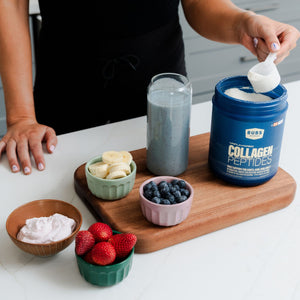
Our Collagen Peptides are designed with this science in mind. We use grass-fed, pasture-raised bovine collagen that is hydrolyzed for maximum absorption. It is unflavored and dissolves effortlessly into hot or cold liquids, making it a simple addition to your morning coffee or post-workout shake. Because we are committed to the highest standards, our collagen is third-party tested and NSF for Sport certified, ensuring that what is on the label is exactly what is in the tub—no fillers, no BS.
Practical Tips for Your Collagen Routine
Getting the most out of collagen isn't complicated, but consistency is key. You aren't likely to see a difference from one scoop, but you will feel it over weeks and months of steady use.
-
Make it a Habit: Pair your collagen intake with something you already do. Whether it’s your first cup of coffee or your daily Hydrate or Die routine, tying it to an existing habit ensures you don't forget.
-
Combine with Vitamin C: If your supplement doesn't already contain Vitamin C, try taking it with Vitamin C and Collagen Peptides or a piece of fruit to help your body process the amino acids.
-
Prioritize Purity: Because collagen is sourced from animals, the quality of their life matters. Always look for grass-fed and pasture-raised sources to avoid potential contaminants and ensure a cleaner nutrient profile.
-
Be Patient: Connective tissue takes longer to repair than muscle tissue. Most studies show that it takes about 4 to 8 weeks to notice improvements in skin hydration and 3 to 5 months to see significant changes in joint comfort.
The BUBS Mission: More Than Just Supplements
At BUBS Naturals, our commitment to quality is rooted in a deeper purpose. Our brand was founded to honor the legacy of Glen "BUB" Doherty, a Navy SEAL and hero who lived his life with adventure and a drive to help others. We carry that spirit into everything we do, from the clean ingredients we choose to the way we run our business.
One of the ways we honor Glen’s legacy is through our 10% Rule. We donate 10% of all our profits to veteran-focused charities, including the Glen Doherty Memorial Foundation. When you choose to support your own health with our products, you are also supporting the men and women who have served our country. It’s a way for us—and you—to live with purpose while pursuing a better, more active life.
Bottom Line
Collagen is the essential structural protein that keeps your body resilient, flexible, and strong. While your natural levels decline with age and lifestyle stressors, you are not helpless. By eating a nutrient-dense diet, protecting your skin, and using clean, bioavailable supplements like our Collagen Peptides, you can support your body’s ability to stay in motion.
"The quality of your life is determined by the quality of your habits."
Take the first step toward better recovery and long-term joint health today. Whether you are scaling a mountain or just keeping up with your kids, your body deserves the best possible foundation.
FAQ
How much collagen should I take every day?
Most research suggests that a daily dose of 10 to 20 grams of collagen peptides is effective for supporting skin and joint health. Consistency is more important than a massive dose; taking a single scoop daily is usually sufficient for most active adults.
Can I get enough collagen from my diet alone?
While it is possible to get collagen from foods like bone broth and fish skin, most modern diets are low in these specific sources. Supplementing with hydrolyzed collagen peptides ensures you get a consistent, bioavailable dose of the specific amino acids your body needs for connective tissue repair.
Does collagen help with hair and nail growth?
Many people report that their hair feels thicker and their nails grow faster and stronger with consistent collagen use. This is likely because the amino acids in collagen are used to produce keratin, the primary protein that makes up your hair and nails.
Is there such a thing as vegan collagen?
Collagen is an animal-based protein, so there is no such thing as "vegan collagen" in nature. However, there are vegan supplements that contain the building blocks (amino acids and Vitamin C) or use genetically modified yeast and bacteria to mimic collagen. For those seeking the most researched and effective form, grass-fed bovine or marine collagen remains the gold standard.