Table of Contents
- Introduction
- Anatomy of a Smile: Where Collagen Lives
- The Science of Gum Health and Recession
- Strengthening the Foundation: The Jawbone Connection
- Reducing Inflammation and Protecting the Barrier
- Nutrient Synergy: Beyond Just Collagen
- How to Use Collagen for Oral Wellness
- Lifestyle Factors That Affect Oral Collagen
- Why Quality Matters: The BUBS Difference
- Conclusion
- FAQ
Introduction
Your smile is often the first thing people notice, but its importance goes far deeper than aesthetics. For those of us who prioritize performance and longevity, oral health is a critical component of our overall wellness. You might already use Collagen Peptides to support your joints after a heavy lifting session or to keep your skin resilient against the elements, but a common question has emerged in the wellness community: is collagen good for gums and teeth?
The answer is complex because your mouth is a multifaceted environment of hard and soft tissues. While your tooth enamel is the hardest substance in your body and contains no collagen, the structures that hold those teeth in place—your gums, ligaments, and jawbone—are built almost entirely on a collagen foundation. At BUBS Naturals, we believe in looking at the science behind every supplement, and our Understanding What Collagen Does for Your Body and Wellness guide expands on that foundation to help you make informed decisions for your daily routine.
In this guide, we will break down the anatomy of your mouth, explore how collagen supports the integrity of your gums, and look at what the research says about protecting your smile as you age. Whether you are looking to prevent gum recession or simply want to fortify your body from the inside out, understanding the role of this vital protein is a great place to start.
Quick Answer: While collagen does not make up the hard outer enamel of your teeth, it is the primary structural protein in your gums, periodontal ligaments, and jawbone. Supplementing with hydrolyzed collagen may help support gum integrity, reduce inflammation, and maintain the bone density necessary to keep teeth securely anchored.
Anatomy of a Smile: Where Collagen Lives
To understand if collagen is beneficial, we first have to look at where it actually resides in the mouth. Many people assume teeth are just like bones, but they are anatomically distinct.
The Teeth
Your teeth are composed of four main tissues: enamel, dentin, cementum, and pulp.
-
Enamel: This is the visible outer layer. It is highly mineralized and contains no collagen. It is built from calcium and phosphate.
-
Dentin: Located just beneath the enamel, dentin makes up the bulk of the tooth's volume. Unlike enamel, dentin is a living tissue supported by a collagen matrix. Specifically, it is roughly 20% organic material, of which 90% is Type I collagen.
-
Pulp: This is the center of the tooth, containing nerves and blood vessels. It is a soft connective tissue that relies on collagen for its structural framework.
-
Cementum: This layer covers the root of the tooth and helps attach it to the periodontal ligament.
The Periodontium
The periodontium refers to the specialized tissues that surround and support the teeth. This is where collagen truly dominates.
-
Gingiva (Gums): Your gum tissue is roughly 60% collagen. This protein provides the "tightness" and resilience needed to protect the underlying bone and tooth roots from bacteria.
-
Periodontal Ligament (PDL): This is a group of connective tissue fibers that essentially act as shock absorbers for your teeth. The PDL is 70% to 80% collagen (mostly Type I and Type III).
-
Alveolar Bone: This is the part of the jawbone that contains the tooth sockets. Like other bones in your body, its organic matrix is about 90% collagen.
Key Takeaway: Collagen provides the "scaffolding" for almost every part of your oral anatomy except for the enamel. Without a strong collagen matrix, the structures that hold your teeth in place would lose their stability and protective function.
The Science of Gum Health and Recession
Gum recession occurs when the tissue surrounding the teeth wears away or pulls back, exposing more of the tooth or even the root. This can lead to sensitivity, decay, and eventually tooth loss. While aggressive brushing and poor hygiene are common culprits, the underlying issue is often the breakdown of collagen fibers within the gum tissue.
When your gums are healthy, the collagen fibers are densely packed and resilient. However, chronic inflammation—often caused by bacteria in plaque—triggers the production of enzymes called matrix metalloproteinases (MMPs). Specifically, an enzyme known as MMP-8 is notorious for attacking and degrading collagen. As these enzymes break down the structural protein, the gums lose their attachment to the tooth, leading to recession.
Recent research has explored how bovine collagen—the same kind we use in our products—can assist in oral tissue regeneration. If you want a broader look at how collagen fits into day-to-day support, our How Do You Know If Your Body Needs Collagen? article is a helpful place to start.
Myth: Taking collagen will immediately regrow receding gums.
Fact: While collagen is essential for gum structure, supplements are best used for maintenance and support rather than as a "cure" for existing recession. Professional dental care is still required to address severe gum issues, but collagen can help fortify the tissue you have.
Strengthening the Foundation: The Jawbone Connection
A tooth is only as strong as the bone that holds it. Many people forget that the jawbone is a dynamic tissue that undergoes constant remodeling. If the jawbone loses density, teeth can become loose, shift, or fall out. This is a common concern as we age, especially for those prone to bone density loss.
Bone is often compared to reinforced concrete. The minerals (calcium and phosphate) are the concrete, while the collagen is the rebar. The collagen matrix gives bone its tensile strength and flexibility, preventing it from becoming brittle.
Research into bone health has shown that hydrolyzed collagen peptides can support bone mineral density. By stimulating osteoblasts—the cells responsible for bone formation—collagen may help keep the alveolar bone strong. This provides a stable anchor for your teeth and helps maintain your facial structure, preventing the "sunken" look that often accompanies tooth and bone loss in the jaw.
Reducing Inflammation and Protecting the Barrier
The mouth is the gateway to the body. When your gums are inflamed (gingivitis) or infected (periodontitis), that inflammation can become systemic. Chronic oral inflammation doesn't just hurt your smile; it places a load on your entire immune system.
Collagen plays a role here by supporting the "barrier function" of your gums. Just as collagen is vital for the integrity of the gut lining and the skin, it helps ensure the gums form a tight seal around the teeth. This seal prevents pathogens and toxins from entering the bloodstream through the oral tissues.
Furthermore, some studies suggest that collagen peptides may have mild anti-inflammatory properties. By helping to modulate the body's inflammatory response, collagen may assist in reducing the bleeding and swelling associated with early-stage gum disease. This is particularly important for active individuals who may experience increased oxidative stress from intense training, which can sometimes manifest as increased gum sensitivity.
Nutrient Synergy: Beyond Just Collagen
While collagen is a powerhouse for oral health, it doesn't work in a vacuum. To maximize the benefits for your gums and teeth, you need to consider the supporting nutrients that facilitate collagen production and mineral absorption.
Vitamin C: The Essential Co-Factor
We always recommend pairing our collagen with Vitamin C-rich foods or the BUBS Boosts collection to ensure your body can actually use the protein you're consuming. A deficiency in Vitamin C leads to scurvy, a disease characterized primarily by bleeding gums and tooth loss—this is the ultimate proof of the collagen-oral health connection.
Vitamin D3 and K2
These two vitamins work together to manage calcium. Vitamin D helps you absorb calcium from your diet, while Vitamin K2 acts as a traffic cop, directing that calcium into your teeth and bones rather than your arteries. This synergy is crucial for maintaining the hardness of your dentin and the density of your jawbone.
Magnesium and Zinc
Magnesium is involved in the structural integrity of tooth enamel, while zinc helps fight plaque-forming bacteria and supports the immune defense of the gum tissue. Both minerals are essential for the hundreds of biochemical reactions that keep your mouth healthy.
Bottom line: Collagen is a foundational building block for oral health, but it works most effectively when supported by a diet rich in Vitamin C, D3, K2, and essential minerals.
How to Use Collagen for Oral Wellness
If you are looking to support your teeth and gums, consistency is key. Collagen is not a "quick fix" but rather a long-term investment in your body's structural health.
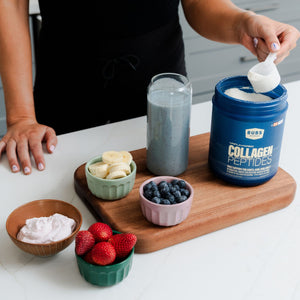
At BUBS Naturals, our Collagen Protein Benefits page shows how our Collagen Peptides are designed to fit effortlessly into any lifestyle. Because they are hydrolyzed, the protein is broken down into smaller peptides that are easier for your body to absorb and utilize. Our formula is single-ingredient, grass-fed, and pasture-raised, ensuring you get a clean product with no fillers or artificial additives.
Most people find success by adding one to two scoops of collagen to their morning coffee, a post-workout shake, or even a glass of water. Because it is flavorless and dissolves instantly, it doesn't require a major change to your routine. For oral health specifically, some people prefer to take it alongside their morning oral hygiene routine as a reminder that health starts from the inside.
Lifestyle Factors That Affect Oral Collagen
Supplements work best when they aren't fighting against your lifestyle choices. Several factors can actively destroy the collagen in your mouth, making it harder for your body to maintain healthy gums and teeth.
-
Sugar Consumption: Sugar leads to the formation of Advanced Glycation End-products (AGEs). These molecules "cross-link" with collagen fibers, making them stiff, brittle, and prone to breakdown. This is a double whammy for oral health, as sugar also feeds the bacteria that cause gum disease.
-
Smoking and Vaping: Tobacco use is one of the most significant risk factors for gum disease. It restricts blood flow to the gums and significantly impairs the body's ability to synthesize new collagen, which is why smokers often experience faster gum recession and slower healing after dental procedures.
-
UV Exposure: While we usually think of the skin, excessive sun exposure can affect the collagen in the lips and the delicate tissues around the mouth, leading to thinning and loss of definition.
-
Stress and Cortisol: High levels of cortisol can inhibit collagen production. If you are training hard or working in a high-stress environment, your body may prioritize other functions over maintaining the collagen in your gums.
Why Quality Matters: The BUBS Difference
Not all collagen is created equal. When you are taking a supplement for long-term wellness, you need to know exactly what is in the tub. Many brands use low-quality sources or include fillers that provide no benefit.
Our commitment at BUBS Naturals is to provide the cleanest, most effective supplements possible. We use pasture-raised, grass-fed bovine collagen because it is rich in Type I and Type III collagen—the exact types found in your dentin, gums, and jawbone. Our products are third-party tested and NSF Certified for Sport, meaning they meet the highest standards for purity and safety. We don't believe in "secret formulas" or hype; we believe in simple, science-backed nutrition that helps you stay in the game.
Conclusion
Is collagen good for gums and teeth? The evidence points to a resounding yes. While it won't replace your toothbrush or a visit to the dentist, collagen provides the essential structural support that your mouth needs to stay resilient. By fortifying your gums, supporting your jawbone density, and maintaining the integrity of your teeth's inner layers, collagen acts as a vital partner in your oral care routine.
As you look to optimize your health, remember that every choice you make has an impact. Choosing high-quality, clean supplements is a step toward a stronger, more capable version of yourself.
-
Support your structure: Collagen provides the framework for gums and jawbone.
-
Prioritize purity: Look for grass-fed, third-party tested sources.
-
Think long-term: Consistency in nutrition leads to lasting results in oral health.
At BUBS Naturals, we are driven by a sense of purpose. In honor of Glen "BUB" Doherty, we donate 10% of all profits to veteran-focused charities. When you choose to support your health with us, you are also supporting a legacy of service and adventure. One scoop at a time, we help you feel the difference and live a life without limits.
FAQ
Does collagen help with sensitive teeth?
Collagen may help reduce tooth sensitivity by supporting the integrity of the dentin and gums. When gums recede or dentin becomes exposed, teeth become more sensitive to temperature; by supporting the structural tissues that cover the nerves, collagen can play a role in long-term comfort.
Can collagen supplements regrow gums?
There is no evidence that oral supplements can completely regrow gums that have already receded significantly. However, collagen is essential for maintaining current gum thickness and may support the body's natural healing processes following dental treatments for recession.
Is bovine or marine collagen better for teeth?
Both bovine and marine collagen are effective, but bovine collagen is particularly rich in Type I and Type III collagen. These are the primary types found in the human periodontium (gums and ligaments) and jawbone, making bovine collagen an excellent choice for oral health.
How long does it take to see benefits for oral health?
Tissues like gums and bone have a slower turnover rate than skin. If you want a broader look at how collagen supports the body over time, How Important Is Collagen in the Body and How to Support It is a helpful next read. While some people report improvements in gum sensitivity or bleeding within a few weeks, it typically takes 3 to 6 months of consistent use to support the deeper structural integrity of the jawbone and periodontal ligaments.