Table of Contents
- Introduction
- The Foundation of Collagen Production
- The Necessary Raw Materials
- The Step-by-Step Synthesis Process
- Factors That Slow Down Production
- How to Support Your Internal Collagen Factory
- The Role of Supplementation in Synthesis
- Why Quality Matters for Results
- The Impact of Physical Activity
- The Science of Bioavailability
- Conclusion
- FAQ
Introduction
Collagen acts as the biological scaffolding for your entire body. It provides structure to your skin, strength to your tendons, and resilience to your joints. You might recognize it as a popular supplement, but your body is actually a highly efficient collagen-producing factory. Understanding how this internal process works is the first step toward optimizing your recovery and long-term health.
At BUBS Naturals, we believe that wellness should be grounded in clean science and a commitment to quality. Our goal is to help you move better and recover faster by providing the nutrients your body needs to perform its best. This guide explores the intricate biological steps your body takes to build its most abundant protein and how you can support that process naturally.
We will break down the specific amino acids, vitamins, and minerals required for synthesis. You will also learn about the lifestyle factors that can either speed up or slow down this vital internal production. By the end, you will have a clear understanding of the biological journey from the food you eat to the structural integrity of your connective tissues.
The Foundation of Collagen Production
To understand how the body makes collagen, you first have to look at the specialized cells responsible for the heavy lifting. These cells are called fibroblasts. They live within your connective tissues and act as the primary engineers of your internal structure. Fibroblasts are constantly monitoring the mechanical stress on your body and responding by producing new protein fibers.
Collagen is not a single "thing" but a family of proteins. While there are at least 28 known types, your body focuses most of its energy on Types I, II, and III. Type I is found in skin and bone, Type II is the primary component of cartilage, and Type III supports the structure of muscles and organs. Regardless of the type, the manufacturing process begins inside the cell with the assembly of specific amino acids. For a fuller explainer, see What Is Collagen and Collagen Peptides?.
Quick Answer: The body makes collagen through a multi-step process where fibroblasts combine amino acids like glycine and proline with the help of Vitamin C to create procollagen. This precursor is then modified and exported out of the cell, where it assembles into the strong, triple-helix fibers that support your skin, joints, and bones.
The Necessary Raw Materials
Your body cannot create collagen out of thin air. It requires a specific "recipe" of nutrients that must be present in sufficient quantities. If even one of these components is missing, the assembly line slows down or produces low-quality fibers that lack structural integrity.
The Role of Amino Acids
Collagen is unique because it has a very high concentration of three specific amino acids: glycine, proline, and hydroxyproline. Most other proteins in your diet have a more diverse amino acid profile, but collagen is specialized. Glycine is the smallest amino acid, and its tiny size allows it to fit into the tight center of the collagen triple helix.
You get these amino acids by breaking down dietary protein. When you consume protein, your digestive system dismantles it into individual amino acids, which are then sent to the "amino acid pool" in your bloodstream. From there, the fibroblasts pick up what they need to start building new collagen chains.
The Essential Role of Vitamin C
Vitamin C is the most critical cofactor in collagen synthesis. Without it, the entire process grinds to a halt. This is why a severe Vitamin C deficiency leads to scurvy—a condition where the body literally begins to fall apart because it can no longer maintain its connective tissues.
Vitamin C is required for a process called hydroxylation. This chemical reaction adds oxygen and hydrogen molecules to the amino acids proline and lysine. This step is what allows the collagen strands to bond together tightly. If you lack Vitamin C, the collagen your body produces will be weak and unstable, unable to support your joints or keep your skin firm.
Key Minerals: Zinc and Copper
While amino acids and Vitamin C are the main players, minerals like zinc and copper act as the support crew. Zinc is involved in protein synthesis and cell division, ensuring that fibroblasts can function at their peak. Copper activates an enzyme called lysyl oxidase, which is responsible for cross-linking collagen fibers. This cross-linking is what gives collagen its incredible tensile strength, making it harder to break or tear. If you want a deeper dive into the nutrients involved, our How to Get Body to Produce Collagen for Longevity and Vitality guide walks through the full picture.
The Step-by-Step Synthesis Process
The actual production of collagen is a complex, five-step biological dance. It starts deep inside your cells and finishes in the extracellular space—the area surrounding your cells.
Step 1: Ribosome Assembly
The process begins in the cell’s nucleus, where DNA provides the blueprints for collagen. These instructions are sent to the ribosomes, the cell's protein-building machines. Here, the cell begins stringing together long chains of amino acids. At this early stage, the material is called a pre-procollagen strand.
Step 2: Hydroxylation and Vitamin C
As the amino acid chain grows, it enters the endoplasmic reticulum, a specialized compartment in the cell. This is where Vitamin C enters the picture. It helps attach hydroxyl groups to the proline and lysine in the chain. This modification is what makes the strand "sticky" enough to eventually bind with other strands. This is the stage where the quality of the collagen is determined.
Step 3: Triple Helix Formation
Once the chains are modified, three of them wind around each other like the strands of a heavy-duty climbing rope. This structure is known as a triple helix. This specific shape is what makes collagen so strong and resistant to stretching. At this point, the molecule is called procollagen. It is still inside the fibroblast, waiting to be exported.
Step 4: Secretion and Cleavage
The fibroblast packages the procollagen into a small bubble called a vesicle and moves it to the cell membrane. The procollagen is then pushed out into the extracellular space. Once outside, specialized enzymes snip off the ends of the procollagen molecule. This "cleavage" turns procollagen into tropocollagen, which is the active building block ready for final assembly.
Step 5: Fibril Assembly and Cross-Linking
In the final step, these tropocollagen molecules spontaneously align themselves into long, organized rows. They stack together to form collagen fibrils. Finally, the mineral copper helps create chemical bonds between these fibrils, a process called cross-linking. These cross-linked fibrils then bundle together to form the thick collagen fibers that you can actually see under a microscope.
Key Takeaway: Collagen synthesis is a journey from individual amino acids to a complex triple helix. This process relies heavily on the presence of Vitamin C and minerals to ensure the resulting fibers are strong enough to handle the physical demands of an active lifestyle.
Factors That Slow Down Production
As we age, our internal collagen factory naturally begins to slow down. However, age isn't the only factor. Several lifestyle and environmental elements can actively damage the collagen you have and inhibit your body's ability to make more.
Excessive Sugar Consumption
When you eat too much sugar, it can bond with proteins in your blood to form harmful molecules called advanced glycation end products (AGEs). These AGEs make collagen brittle and weak. They essentially "gum up" the structural fibers, leading to less elasticity in the skin and more stiffness in the joints.
UV Radiation
Sunlight is a major enemy of collagen. UV rays penetrate deep into the skin and trigger the production of enzymes called matrix metalloproteinases (MMPs). These enzymes are designed to clean up old tissue, but UV overexposure makes them go into overdrive, causing them to break down healthy collagen faster than your body can replace it.
Smoking and Pollutants
Smoking reduces the amount of oxygen reaching your tissues and severely depletes your body's Vitamin C stores. Without enough oxygen and Vitamin C, your fibroblasts can't produce the high-quality collagen needed for wound healing and tissue maintenance.
Chronic Inflammation
When your body is in a state of constant high-level inflammation, it prioritizes immediate survival over long-term maintenance. This often means that collagen production is sidelined. Managing stress, getting enough sleep, and eating an anti-inflammatory diet can help keep the collagen factory running smoothly.
Myth: You can only get collagen from eating animal hides or bone broth.
Fact: While those are excellent sources, your body can synthesize collagen from any high-quality protein source, provided you have enough Vitamin C, zinc, and copper to fuel the conversion process.
How to Support Your Internal Collagen Factory
While you cannot stop the aging process, you can provide your body with the optimal environment for collagen synthesis. This involves a combination of smart nutrition and intentional lifestyle choices.
Prioritize High-Quality Protein
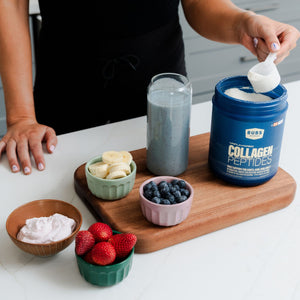
To build collagen, you need the right amino acids. Consuming a variety of protein sources ensures your body has a steady supply of glycine and proline. For those with active lifestyles, supplementation can be a practical way to ensure these specific building blocks are available. Our Collagen Peptides are sourced from grass-fed, pasture-raised bovine hides and are hydrolyzed, meaning the protein is already broken down into smaller, easy-to-absorb pieces. This makes it simpler for your body to transport those amino acids directly to the fibroblasts.
Optimize Your Vitamin C Intake
Since Vitamin C is the essential cofactor for synthesis, you should aim for consistent intake throughout the day. Because Vitamin C is water-soluble, your body doesn't store large amounts of it. Frequent, smaller doses are often better than one giant dose. We offer a clean Vitamin C supplement designed to support both immune health and the natural collagen formation process.
Support Your Gut Health
You are not just what you eat; you are what you absorb. If your digestive system isn't functioning correctly, you won't be able to break down proteins into the amino acids needed for collagen production. Supporting your gut with whole foods and potentially fermented options can improve the bioavailability of the nutrients you consume.
Protect What You Have
It is much easier to protect existing collagen than it is to build new fibers from scratch. Wearing sunscreen, avoiding smoking, and limiting processed sugars are the most effective ways to prevent premature collagen degradation. Think of it as a two-part strategy: fuel the production and defend the structure.
The Role of Supplementation in Synthesis
You might wonder why you should take a collagen supplement if your body already makes it. The reality is that as we age, our natural production drops by about 1% to 1.5% every year starting in our mid-20s. For someone living an active, high-impact life, the demand for collagen often outpaces the body’s declining supply.
Supplementing with hydrolyzed collagen provides an immediate "delivery" of the exact amino acids your fibroblasts are looking for. Research suggests that the presence of collagen peptides in the bloodstream may actually signal the body to ramp up its own production. It acts as a biological "nudge," telling the fibroblasts that it's time to get back to work.
Our BUBS Naturals Collagen Peptides are designed to fit into your existing routine without any friction. Because they are unflavored and dissolve easily, you can add them to your morning coffee or a post-workout shake. For a broader place to start, explore the Boosts collection.
Why Quality Matters for Results
When it comes to supporting biological processes, the quality of your inputs determines the quality of your outputs. Not all supplements are created equal. Many products on the market contain fillers, artificial sweeteners, or low-quality protein sources that don't provide the specific amino acid profile required for collagen synthesis.
We focus on transparency and purity. Every batch of our products undergoes third-party testing to ensure it meets the highest standards for safety and efficacy. Our NSF Certified & Whole30 Approved Quality is why our Collagen Peptides are trusted by professional athletes and members of the military who cannot afford to compromise on what they put in their bodies. When you use a clean product, you are giving your internal factory the best possible tools to succeed.
Bottom line: Supporting collagen synthesis requires a combination of the right amino acids, essential cofactors like Vitamin C, and a lifestyle that protects your existing fibers from damage.
The Impact of Physical Activity
Interestingly, exercise itself is a powerful trigger for collagen production. When you lift weights, run, or engage in any form of resistance training, you create mechanical tension in your tissues. This tension is "sensed" by the fibroblasts, which respond by strengthening the surrounding collagen matrix to better handle future stress.
This is why movement is medicine. However, this increased demand means your body needs more resources for repair. This is where the intersection of fitness and nutrition becomes critical. If you train hard but don't provide the necessary nutrients, you may find that your recovery slows down and your joints feel more "nagging" over time. For readers focused on training output, Creatine Monohydrate is another clean option to consider.
The Science of Bioavailability
One common concern is whether the collagen you consume actually makes it to your skin or joints. When you consume hydrolyzed collagen, it is broken down into small peptides—short chains of amino acids. These peptides are small enough to pass through the intestinal wall and enter the bloodstream.
Once in the blood, these peptides can be transported to the areas of the body where they are needed most. Scientists believe these peptides act as signaling molecules. When your fibroblasts detect an increase in collagen-specific amino acids in the surrounding fluid, they interpret it as a sign of tissue breakdown and begin the synthesis process to rebuild. It is a feedback loop that you can support through mindful supplementation.
Important: While collagen supplements are highly effective for many, they work best when part of a balanced diet rich in whole foods. Supplementation is meant to "fill the gaps" and provide concentrated doses of key nutrients, not replace a solid nutritional foundation.
Conclusion
Understanding how the body makes collagen reveals a complex and beautiful biological system designed to keep us strong and resilient. From the initial assembly of amino acids in your cells to the final cross-linking of fibers in your connective tissues, every step matters. By providing your body with the right raw materials—like the clean, grass-fed protein found in BUBS Naturals products—and protecting yourself from environmental damage, you can support your health for the long haul.
Key Takeaways:
- Collagen is built by fibroblasts using glycine, proline, and hydroxyproline.
- Vitamin C is an absolute requirement for the chemical reactions that stabilize collagen.
- The five-step synthesis process transforms simple amino acids into a strong triple helix.
- Aging, sugar, and UV rays are the primary factors that degrade your collagen supply.
We are committed to helping you live a life of adventure and purpose. This mission is personal to us, inspired by the legacy of Glen "BUB" Doherty. To see how that commitment shows up in practice, read Giving Back to Veterans & Our Communities. When you choose to support your own wellness, you are also helping us support those who have served.
Take the next step in supporting your body’s natural factory by browsing the Boosts collection.
FAQ
Can I make collagen without Vitamin C?
No, the body cannot successfully complete collagen synthesis without Vitamin C. It is a necessary cofactor for the hydroxylation process, which allows collagen fibers to bond together and gain structural strength. Without enough Vitamin C, the collagen produced is weak and breaks down quickly.
What foods help the body make collagen naturally?
Foods rich in protein, such as lean meats, fish, eggs, and beans, provide the amino acids needed for production. Additionally, citrus fruits, bell peppers, and leafy greens provide the Vitamin C necessary for the synthesis process. Trace minerals like zinc and copper, found in nuts and shellfish, also support the cross-linking of collagen fibers.
Does taking collagen supplements actually work?
Many people find that taking hydrolyzed collagen supplements helps support their skin, joints, and recovery. Hydrolyzed collagen is broken down into small peptides that are easily absorbed and may signal the body to increase its own natural production. Consistency is key, as the body needs a steady supply of these amino acids to maintain and repair connective tissues.
At what age does collagen production start to slow down?
Natural collagen production typically begins to decline in your mid-20s, decreasing by about 1% to 1.5% each year. Factors like sun exposure, smoking, and high sugar intake can accelerate this decline. Starting a proactive approach to nutrition and skin protection in your 20s and 30s can help maintain your collagen levels as you age.