Table of Contents
- Introduction
- Understanding the Body’s Most Abundant Protein
- The Science of Dosage: Finding Your Range
- Tailoring Intake to Your Specific Goals
- The Different Types of Collagen and Why They Matter
- Bioavailability: Why "Mix-Easy" is a Science, Not Just a Slogan
- Factors That Can Increase Your Collagen Needs
- Safety and Side Effects: The "No-BS" Reality
- The BUBS Mission: Quality With a Purpose
- How to Incorporate Your Daily Dose into an Active Lifestyle
- Evaluating Your Progress
- The Synergy of a Holistic Routine
- Conclusion
- FAQ
Introduction
By the time you reach your 30th birthday, your body has already begun a subtle, internal shift. It is a biological reality that often goes unnoticed until the first morning you wake up with a "mystery" ache in your knee or notice a new fine line mirroring the laugh you shared the night before. This shift is the gradual decline of collagen production, which drops by approximately 1% every single year starting in our mid-20s. For those of us living a life of adventure, chasing summits, or pushing through a demanding training block, that 1% starts to feel significant over time. We founded BUBS Naturals to help bridge that gap, honoring the legacy of Glen “BUB” Doherty by providing clean, functional fuel that supports a life well-lived.
But with the rise in popularity of supplementation, a specific question has become the centerpiece of the wellness conversation: how many collagen should i take a day to actually see a difference? Whether you are looking to support your joints for a weekend hike, improve the resilience of your skin, or aid in post-workout recovery, the answer isn’t a one-size-fits-all number. It depends on your unique physiology, your activity level, and your specific wellness goals.
In this guide, we are going to dive deep into the science of collagen dosage. We will explore the different types of collagen, the significance of bioavailability, and how to tailor your intake based on what your body needs most. We’ll also look at why the quality of your source matters—because at BUBS, we believe in a "no-BS" approach, using only simple, effective ingredients that are rigorously tested. By the end of this article, you will have a clear understanding of how to optimize your daily routine to feel the BUBS difference.
Understanding the Body’s Most Abundant Protein
To understand dosage, we first have to understand what we are dosing. Collagen is the most abundant protein in the human body, accounting for about one-third of our total protein composition. Think of it as the "glue" that holds everything together. It is a fibrous, structural protein that provides the framework for our skin, bones, muscles, tendons, ligaments, and even our blood vessels. Without it, our structural integrity would quite literally crumble.
At the molecular level, collagen is made up of long chains of amino acids, primarily glycine, proline, and hydroxyproline. These chains twist together to form a triple-helix structure, a shape that gives collagen its incredible tensile strength. This strength is what allows our skin to snap back into place and our tendons to withstand the force of a heavy lift or a long run. However, the body doesn't just "have" collagen; it is constantly in a cycle of breaking it down and rebuilding it.
As we age, or as we subject our bodies to the rigors of an adventurous lifestyle, the rate of breakdown begins to outpace the rate of synthesis. This is further accelerated by external factors like UV exposure, lack of sleep, and environmental stressors. When we supplement with Collagen Peptides, we aren't just adding "new" collagen directly into our skin or joints. Instead, we are providing the body with the specific amino acid building blocks and bioactive peptides it needs to trigger its own natural production. This is why the question of "how many" is so vital—you need enough of these building blocks to tip the scales back toward synthesis.
The Science of Dosage: Finding Your Range
When determining how many collagen should i take a day, the scientific literature generally points to a range between 2.5 grams and 15 grams of hydrolyzed collagen peptides. The "hydrolyzed" part is key. Raw collagen is a massive molecule that is incredibly difficult for the human gut to absorb. Through a process called hydrolysis, we break these large proteins down into smaller "peptides" that are highly bioavailable. This means they can pass through the intestinal wall and enter the bloodstream, where they can be sent to the tissues that need them most.
For most adults pursuing a general wellness routine, a baseline of 10 grams per day—roughly one scoop of our Collagen Peptides—is an excellent starting point. This amount provides a robust serving of the essential amino acids required to support the body's natural functions. However, if you are an athlete or someone with specific structural goals, you may find that increasing that dose provides more noticeable support.
It’s important to remember that collagen is a protein, and while it is excellent for structural support, it is not a "complete" protein because it lacks the essential amino acid tryptophan. This is why we recommend using collagen as a supplement to a balanced diet rich in varied protein sources. When you integrate our Collagen Peptides Collection, you are adding a targeted tool to your kit, not replacing your entire nutrition plan.
Tailoring Intake to Your Specific Goals
Your reason for taking collagen is the most important factor in deciding your daily dose. The body prioritizes where it sends nutrients based on need, and research suggests that different tissues respond to different concentrations of peptides.
Support for Skin, Hair, and Nails
If your primary focus is the health and appearance of your skin, hair, and nails, the research is very encouraging. Studies have shown that even smaller doses, ranging from 2.5 to 5 grams per day, can support skin elasticity and hydration. This is because Type I collagen, which makes up the vast majority of our skin, is highly responsive to supplemental peptides. By providing these building blocks, you help the dermis—the thick inner layer of the skin—maintain its density. For a comprehensive approach, many of our community members like to pair their daily collagen with Vitamin C, as Vitamin C is a critical co-factor in the body's natural collagen synthesis process.
Joint Mobility and Connective Tissue
For the adventurers and athletes who are hard on their joints, the dosage requirements are typically higher. When you are constantly pounding the pavement or climbing mountains, your tendons and cartilage undergo significant stress. Clinical studies focused on joint comfort and mobility often utilize doses in the 5 to 10-gram range. Some research specifically looking at athletes suggests that taking collagen approximately 30 to 60 minutes before a workout can be particularly effective, as the increased blood flow to the joints during exercise helps deliver the peptides to the targeted connective tissues.
Muscle Recovery and Body Composition
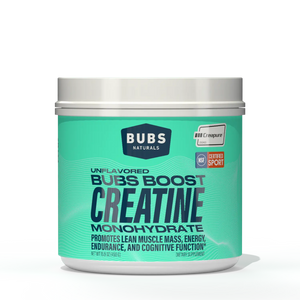
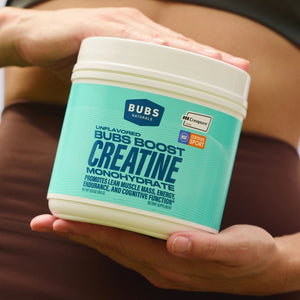
While collagen is not the primary protein used for muscle hypertrophy (that’s where your branched-chain amino acids come in), it plays a vital role in the "matrix" of the muscle. Every muscle fiber is wrapped in a sheath of collagen. For those looking to support muscle recovery and maintain lean body mass, especially as we age, doses as high as 15 grams per day have been used in research. When paired with a strength training program and other performance supporters like Creatine Monohydrate, collagen helps ensure that the structural components of your muscles are as strong as the fibers themselves.
The Different Types of Collagen and Why They Matter
While there are at least 28 known types of collagen in the human body, about 90% of what we have consists of Types I, II, and III. Understanding these types helps clarify why we choose certain sources for our supplements.
Type I is the powerhouse. It is found in almost every tissue in the body, including tendons, skin, bones, and cartilage. It is incredibly strong and is the primary type found in bovine-sourced collagen.
Type II is found almost exclusively in cartilage. If you are specifically targeting the "cushion" between your joints, Type II is often the focus.
Type III usually works alongside Type I. It is a major component of our organs and blood vessels. It provides the elasticity needed for tissues to stretch and return to their original shape.
Our Collagen Peptides are sourced from grass-fed, pasture-raised bovine hides, providing a rich supply of both Type I and Type III collagen. This combination offers a broad spectrum of support that aligns with our mission of providing versatile, clean nutrition. By choosing bovine collagen that is hydrolyzed into small peptides, we ensure that you are getting the most effective form of these specific types, allowing for easy mixing and rapid absorption.
Bioavailability: Why "Mix-Easy" is a Science, Not Just a Slogan
You might notice that we often talk about how our products "mix easy." This isn't just about convenience in your morning coffee; it’s a reflection of the quality and the science of the product. When a collagen powder clumps or fails to dissolve, it’s often an indicator of the particle size and the processing method.
We use a rigorous enzymatic process to break down the collagen into peptides. This not only makes the powder incredibly easy to stir into your favorite beverage but also ensures it is "pre-digested" for your gut. This high bioavailability means that when you are calculating how many collagen should i take a day, you can trust that the 10 or 20 grams you are consuming are actually being put to work by your body.
Compare this to getting collagen from food alone. While bone broth and slow-cooked meats are delicious and nutritious, the collagen in those foods is still in its large, complex form. Your body has to work much harder to break it down, and the absorption rate is significantly lower and less predictable. Supplementing with a high-quality, NSF for Sport certified product like our Collagen Peptides provides a consistent, measurable dose of those bioavailable building blocks.
Factors That Can Increase Your Collagen Needs
Life isn't lived in a vacuum, and our nutritional needs fluctuate based on our environment and our choices. Several factors can increase the rate at which your body "burns through" its collagen stores, potentially necessitating a higher daily dose.
-
High-Impact Activity: If you are a runner, a cross-fitter, or someone who spends hours on their feet, your connective tissues are under constant repair. This increased "turnover" means your body can utilize a higher volume of amino acids to keep up with the demand.
-
Sun Exposure: UV radiation is one of the most significant external "collagen killers." It triggers the production of enzymes that break down the collagen matrix in the skin. If you spend your days outside adventuring, your skin’s repair systems are working overtime.
-
Lifestyle Habits: Smoking and excessive alcohol consumption both create oxidative stress that damages collagen fibers. While the best solution is to mitigate these habits, those who are exposed to high levels of environmental pollutants or stress may require more structural support.
-
The Aging Process: As we move past 40 and into the menopausal years for women, the drop in estrogen can lead to a rapid decline in collagen density—sometimes as much as 30% in a few years. In these stages of life, a consistent, higher-end dose of 15 to 20 grams is often recommended to support bone density and skin health.
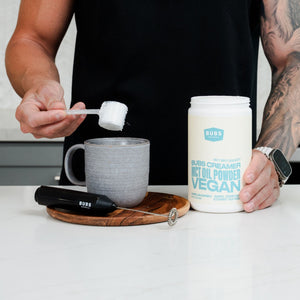
To combat these stressors, many of our community members adopt a "stacking" approach. For instance, pairing collagen with our MCT Oil Creamer in the morning provides sustained energy and structural support to start the day, while ensuring they stay hydrated throughout their adventures with Hydrate or Die - Lemon ensures that their cells are primed to utilize those nutrients.
Safety and Side Effects: The "No-BS" Reality
One of the reasons we love collagen is its incredible safety profile. Because it is a naturally occurring protein that our bodies already produce, it is generally very well tolerated. Most people can take 10 to 20 grams a day for years without ever experiencing a single issue.
However, we believe in being fully transparent. Occasionally, someone new to collagen might experience mild digestive symptoms like a feeling of fullness or slight bloating. This is usually the body adjusting to a new protein source. If this happens, we recommend starting with a half-dose—about 5 grams—and gradually working your way up over a week or two.
It is also vital to check the source. Because collagen is derived from animals, it is possible for lower-quality supplements to contain contaminants or heavy metals if the animals weren't raised in a clean environment. This is why we are so committed to our sourcing. Our Collagen Peptides are single-ingredient, gluten-free, dairy-free, and non-GMO. We don't use fillers, sweeteners, or artificial "junk." We also go the extra mile with third-party testing, including NSF for Sport certification, which is the gold standard for purity in the supplement industry.
The BUBS Mission: Quality With a Purpose
When you choose BUBS, you aren't just buying a tub of protein; you are joining a mission. BUBS Naturals was founded to honor Glen “BUB” Doherty, a Navy SEAL, adventurer, and humanitarian who was tragically killed in Benghazi, Libya, in 2012. Glen lived his life with a "work hard, play hard, give back" mentality, and we strive to infuse that into everything we do.
This is why we have our 10% Rule: we donate 10% of all our profits to veteran-focused charities, primarily through the Glen Doherty Memorial Foundation. This foundation helps special operations veterans and their families transition to civilian life through traditional and vocational education.
We believe that wellness should have a purpose. When you are standing in your kitchen in the morning, stirring a scoop of Collagen Peptides into your coffee, you are taking care of your body so that you can go out and do good in the world. Whether that’s being a better parent, a better athlete, or a more present friend, your health is the foundation of your impact. By keeping our ingredients simple and our quality standards high, we make it easy for you to fuel that mission.
How to Incorporate Your Daily Dose into an Active Lifestyle
The best supplement is the one you actually take. Consistency is the most critical factor in seeing results from collagen. It typically takes 4 to 12 weeks of daily use to notice changes in skin hydration or joint comfort. To make this easy, we’ve designed our products to fit seamlessly into any part of your day.
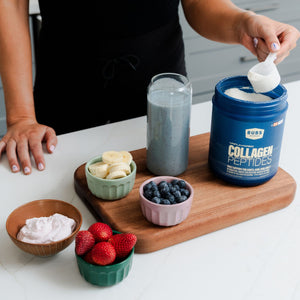
The Morning Ritual: Most of our community starts their day with collagen in their coffee. Because our peptides are flavorless and heat-stable, they won't change the taste of your favorite brew. If you want to level up your morning, try adding a scoop of Butter MCT Oil Creamer. The healthy fats provide a creamy texture and sustained mental clarity, while the collagen provides the structural support your body needs for the day ahead.
The Post-Adventure Shake: After a long bike ride or a session at the gym, your body is in a state of repair. Adding collagen to a post-workout smoothie is a great way to provide those specific amino acids to your connective tissues while you are also taking in other proteins for muscle repair. If it was a particularly grueling session, don't forget to rebalance your electrolytes with Hydrate or Die - Mixed Berry.
On-the-Go Support: We know that life happens outside the kitchen. That’s why we offer our Collagen Peptides in convenient 20-count travel packs. You can toss them in your gym bag, keep them in your desk at work, or pack them for your next camping trip. No matter where your adventure takes you, you don't have to miss your daily dose.
Evaluating Your Progress
Since there is no "official" RDA for collagen, you are the best judge of your ideal dose. After you have decided how many collagen should i take a day—let's say you start with the standard 10-gram scoop—give it time.
Keep a simple log of how you feel. Are your knees feeling a bit more resilient during your morning run? Does your skin feel less "tight" or dry in the winter months? Are your nails growing faster or breaking less? If after two months you feel like you need more support, try increasing your dose to 20 grams (two scoops). Many athletes find that 20 grams is their "sweet spot" for recovery.
On the flip side, if you are just looking for a maintenance dose to support healthy aging and you already eat a very high-protein diet, you may find that 5 to 7 grams is plenty for you. Listen to your body—it’s the most sophisticated feedback loop you have.
The Synergy of a Holistic Routine
While collagen is a heavy hitter, it works best as part of a comprehensive approach to wellness. Think of your body as a high-performance vehicle. Collagen provides the structural frame, but you still need the right fuel, the right hydration, and the right maintenance.
If your goal is better digestion and gut health, you might consider adding our Apple Cider Vinegar Gummies to your daily routine. They provide the benefits of ACV with "the Mother" in a convenient, tasty form that supports overall digestive wellness.
If you are pushing your physical limits, the combination of Creatine Monohydrate and Collagen Peptides provides a one-two punch for both muscle power and connective tissue resilience. And of course, never underestimate the power of hydration. Using a performance-focused electrolyte like Hydrate or Die ensures that your cells have the water and minerals they need to facilitate protein synthesis and keep your joints lubricated.
Conclusion
Determining how many collagen should i take a day is an empowering step in taking ownership of your health. Whether you land on 5 grams for a glowing complexion or 15 grams to support your joints through a marathon training cycle, the key is quality and consistency. By choosing Collagen Peptides, you are ensuring that your body receives the cleanest, most bioavailable building blocks possible, all while supporting a legacy of service and adventure.
We believe that a life of purpose requires a body that is ready for anything. Collagen is a foundational part of that readiness. It’s the "extra mile" in your nutrition that helps you keep going when the terrain gets tough. We invite you to explore the full Collagen Peptides Collection and see how easy it is to make this powerful protein a part of your daily ritual.
Remember, at BUBS Naturals, we aren't just selling supplements; we are fueling a community of people who refuse to settle. We are here to help you feel better, live longer, and give back. So, grab a scoop, stir it in, and get back out there. The adventure is waiting.
FAQ
Can I take more than one scoop of collagen per day?
Yes, you certainly can. While one scoop (roughly 10 grams) of our Collagen Peptides is a standard serving for general wellness, many people, especially athletes or those with specific joint concerns, find that taking two scoops (20 grams) daily provides better support. Since collagen is a natural protein with a high safety profile, increasing your intake is generally safe. We recommend listening to your body and adjusting based on your specific recovery needs and goals.
Does it matter what time of day I take my collagen?
Consistency is more important than timing. Whether you prefer to mix your collagen into your morning coffee with some MCT Oil Creamer or stir it into a glass of water before bed, the most important thing is that you take it every day. Some athletes prefer taking it 30-60 minutes before a workout to capitalize on increased blood flow to the connective tissues, but for general health, any time that fits your schedule is perfect.
Can I get enough collagen from food alone?
While you can certainly get collagen from foods like bone broth, fish skin, and tougher cuts of meat, it is difficult to consume enough to match the concentrated, bioavailable dose found in supplements. The collagen in food is often in its large, un-hydrolyzed form, which is harder for your body to break down and absorb. Supplementing with our Collagen Peptides provides a reliable, pre-digested source of amino acids that ensures your body has exactly what it needs for synthesis.
Are there any side effects to taking collagen daily?
Collagen is generally considered safe and non-toxic for daily use. Most people experience no side effects at all. Occasionally, some individuals may feel a sense of heaviness or mild bloating when first starting, as their digestive system adjusts to the extra protein. If you have a sensitive stomach, we recommend starting with half a scoop of Collagen Peptides and gradually increasing to a full serving. As always, if you have specific medical concerns or allergies to bovine products, it is a good idea to consult with a healthcare professional.