Table of Contents
- Introduction
- The Bioavailability Debate: Can You Absorb Collagen?
- The Importance of Hydrolyzed Collagen
- How Your Body Uses Absorbed Collagen
- The Role of Amino Acids: Proline, Glycine, and Hydroxyproline
- Maximizing Collagen Uptake and Synthesis
- Factors That Impact Your Natural Collagen Levels
- Choosing an Effective Collagen Supplement
- How to Use Collagen Peptides for Performance and Recovery
- Conclusion
- FAQ
Introduction
There is a long-standing debate in the fitness and wellness world regarding whether the body can actually absorb collagen when you take it as a supplement. Some skeptics argue that the stomach simply breaks it down like any other protein, rendering the specific benefits for skin, joints, and recovery useless. However, modern nutritional science and advancements in how we process these supplements tell a much more interesting story.
At BUBS Naturals, we believe in providing products that are backed by transparency and real-world results. Understanding how your body processes Collagen Peptides is the first step in realizing why the quality of your supplements matters so much. In this guide, we will break down the science of collagen absorption, the importance of hydrolysis, and how you can ensure you are getting the most out of every scoop.
You will learn exactly how these proteins move through your system and what you can do to support your body’s natural production. Our goal is to move past the hype and look at the actual biological mechanisms that make collagen a staple for active lifestyles.
The Bioavailability Debate: Can You Absorb Collagen?
The primary question most people have is whether the collagen they swallow actually makes it to their connective tissues. Bioavailability is the term used to describe the proportion of a substance that enters the circulation when introduced into the body and so is able to have an active effect. For a long time, the common belief was that collagen was too large a molecule to be absorbed intact. For a deeper look, see our Can the Body Absorb Collagen Peptides?.
When you consume a whole protein, like a piece of steak, your digestive system uses enzymes to break those long chains of amino acids into smaller pieces. Traditionally, scientists thought that because collagen is broken down into individual amino acids, the body just treats it like any other protein source. If this were true, collagen wouldn't be any more beneficial than a standard whey shake or a chicken breast.
However, research has shown that collagen supplements are different, provided they are processed correctly. Hydrolyzed collagen—also known as collagen peptides—consists of very short chains of amino acids, as explained in What’s Collagen Peptides?. These small chains are often absorbed through the intestinal wall and enter the bloodstream still intact. Once in the blood, they don't just act as fuel; they act as signals to your body to start its own repair processes.
Quick Answer: Yes, the body can absorb collagen, but only if it is in the form of hydrolyzed peptides. These smaller molecules are small enough to pass through the digestive tract and enter the bloodstream, where they support the body's natural collagen production.
The Importance of Hydrolyzed Collagen
The key to collagen absorption lies in a process called hydrolysis. In its raw state, such as in the skin or bones of an animal, collagen is a massive, complex molecule. It is a triple helix of long protein chains that are incredibly tough and difficult for the human gut to break down efficiently. This is why you can’t just eat raw hide and expect to see improvements in your joint health.
Hydrolysis uses water and enzymes to "pre-digest" these massive proteins into much smaller units called peptides. We measure the size of these molecules in Daltons, a unit of molecular weight. While raw collagen can be 300,000 Daltons in size, hydrolyzed collagen peptides are typically between 2,000 and 5,000 Daltons.
Smaller molecular weight means the collagen is more soluble and easier for your body to transport across the gut lining. Because these peptides are already broken down, they require very little effort from your digestive system. This is a major reason why high-quality collagen powders mix so easily into liquids—they are literally designed to be more accessible to your body.
Myth: Collagen is just another protein and is broken down into single amino acids just like meat or eggs.
Fact: Hydrolyzed collagen peptides are small enough to be absorbed as short chains (di-peptides and tri-peptides), which allows them to trigger specific biological responses that standard proteins cannot.
How Your Body Uses Absorbed Collagen
Once the collagen peptides are absorbed into your bloodstream, they perform two distinct roles. First, they provide the specific building blocks necessary for your body to create its own collagen. Collagen is unique because it contains high concentrations of specific amino acids like glycine, proline, and hydroxyproline. These aren't found in high amounts in other protein sources.
Second, and perhaps more importantly, these peptides act as a messenger. When your body detects a high concentration of collagen peptides in the blood, it interprets this as a sign that collagen breakdown has occurred somewhere in the body. This triggers specialized cells called fibroblasts in the skin and chondrocytes in the joints to increase their own production of new collagen.
This dual action—providing the raw materials and signaling the manufacturing plants—is why collagen supplementation is viewed as a supportive tool for recovery. Instead of just adding more protein to your diet, you are essentially "reminding" your body to maintain its structural integrity. That’s also why Why Take Collagen Daily is such an important part of the bigger picture. This is particularly vital as we age and our natural production of these proteins begins to slow down.
Key Takeaway: Collagen absorption isn't just about digestion; it’s about signaling. By providing the body with specific peptides, you stimulate internal production while providing the exact amino acids needed to build the structure.
The Role of Amino Acids: Proline, Glycine, and Hydroxyproline
To understand why your body prioritizes collagen absorption, you have to look at the amino acid profile. Glycine makes up about one-third of the collagen molecule. It is the smallest amino acid, allowing it to fit into the tight spaces of the collagen triple helix. While your body can produce some glycine, the demands of an active lifestyle often exceed what you can make on your own.
Proline and hydroxyproline are also essential for the stability of your connective tissues. Hydroxyproline, in particular, is almost exclusively found in collagen. When you consume hydrolyzed collagen, you are giving your body a concentrated dose of these specific tools. For a closer look at collagen types, see What Type of Collagen is Collagen Peptides?.
Think of it like a specialized construction site. While you can use general-purpose wood for many parts of a house, you need specific steel bolts for the foundation. Collagen peptides are those specific bolts. If you only provide general protein, the body has to work harder to convert those materials into what it needs for your joints and skin.
Maximizing Collagen Uptake and Synthesis
Absorption is only half the battle. Once the peptides are in your system, your body needs specific co-factors to actually build the new collagen fibers. The most critical of these is Vitamin C. Without Vitamin C, the enzymes responsible for cross-linking collagen fibers cannot function. This is why a deficiency in Vitamin C leads to issues like scurvy, where the body’s connective tissues literally begin to fall apart.
To ensure your body is actually using the collagen you absorb, you should consider the following factors:
-
Timing: While you can take collagen any time, many athletes prefer taking it about 30 to 60 minutes before a workout. This timing may help the peptides circulate in the blood while the mechanical stress of exercise signals the joints to utilize those nutrients.
-
Consistency: Collagen synthesis is a slow, ongoing process. You aren't likely to see a difference from a single dose. Most people report noticing changes in joint comfort or skin health after 6 to 12 weeks of daily use.
-
Dosage: Most studies suggest that a dose of 10 to 20 grams per day is the "sweet spot" for supporting connective tissue health.
Note: Taking your collagen with a source of Vitamin C, such as a squeeze of lemon in your water or a dedicated supplement, can significantly support the synthesis of new fibers after absorption. For a deeper dive into the pairing, read BUBS BOOST Vitamin C: The Ultimate Collagen Companion and Immune Defender.
Factors That Impact Your Natural Collagen Levels
While absorbing supplemental collagen is helpful, it is equally important to protect the collagen you already have. Several lifestyle factors can cause your body to break down collagen faster than you can replace it. If you are constantly degrading your structural proteins, even the best absorption rates won't be able to keep up.
UV Exposure is one of the biggest culprits. Sunlight triggers enzymes called matrix metalloproteinases (MMPs) that specifically target and break down collagen in the skin. This is why long-term sun damage leads to wrinkles and loss of elasticity. Similarly, a high-sugar diet can lead to a process called glycation, where sugar molecules attach to collagen fibers, making them brittle and prone to breaking.
Aging is the factor we can't avoid. Starting in our mid-20s, natural collagen production drops by about 1% every year. By the time you reach your 40s or 50s, the deficit can become noticeable in the form of stiffer joints and thinner skin. This biological reality is why many people turn to supplementation to bridge the gap between what their body can produce and what it needs to stay functional and resilient.
| Factor |
Impact on Collagen |
Mitigation Strategy |
| Aging |
1% annual decrease starting in mid-20s |
Daily collagen supplementation |
| UV Rays |
Breaks down collagen fibers in skin |
Wear sunscreen and protective gear |
| Sugar Intake |
Causes fibers to become brittle (glycation) |
Focus on a clean, whole-food diet |
| Vitamin C Deficiency |
Prevents new collagen from forming |
Supplement with Vitamin C or eat citrus |
Choosing an Effective Collagen Supplement
Because absorption depends so heavily on the size and quality of the peptides, not all supplements are created equal. When you are looking for a product that your body can actually use, you need to look past the marketing and check the sourcing and processing methods. If you want to compare formats, browse the Collagen Peptides collection.
Grass-fed and pasture-raised bovine sources are generally considered the gold standard for Type I and Type III collagen. These types are the most abundant in the human body, found in everything from your skin and hair to your tendons and bones. At BUBS Naturals, we prioritize these clean sources because we know that the quality of the starting material dictates the quality of the final peptide.
You should also look for third-party testing. Products that are NSF for Sport certified have undergone rigorous testing to ensure they contain exactly what is on the label and are free from contaminants. This level of transparency is essential for athletes and anyone else who is serious about what they put into their bodies. If a product doesn't mix easily or has a strong chemical taste, it may not have been hydrolyzed correctly, which could hinder absorption.
Our BUBS Naturals Collagen Peptides are designed with this science in mind. We use a single-ingredient, grass-fed formula that is highly bioavailable. By focusing on a clean, hydrolyzed product, we ensure that the peptides are small enough for your gut to handle, giving you the best possible chance to support your recovery and long-term health.
How to Use Collagen Peptides for Performance and Recovery
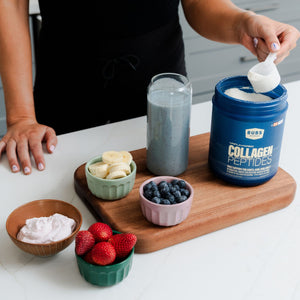
The most effective way to integrate collagen into your life is to make it a friction-free habit. Because high-quality hydrolyzed collagen is flavorless and dissolves in both hot and cold liquids, you aren't limited in how you take it.
You've likely seen people stirring it into their morning coffee, which is a great way to start the day. The heat from the coffee doesn't damage the peptides, as they are already broken down and heat-stable. For those who train hard, adding a scoop to a post-workout shake is a smart move. After a heavy lifting session or a long trail run, your body is in a state of repair. Providing the amino acids and signaling peptides during this window can be highly beneficial.
Consistency is the foundation of wellness. We suggest picking one time of day—whether it's with your morning caffeine or your evening tea—and sticking to it. Over time, providing your body with a steady supply of these building blocks allows for the gradual strengthening of your connective tissues. It’s not a quick fix; it’s a long-term investment in your ability to keep moving and doing the things you love. If you’re building out a broader routine, explore the Boosts collection.
Bottom line: To maximize the benefits of collagen, choose a high-quality hydrolyzed peptide powder and take it consistently alongside a source of Vitamin C to support internal synthesis.
Conclusion
The science is clear: your body can absorb collagen, provided it is in the form of hydrolyzed peptides. These smaller molecules bypass the limitations of whole proteins, entering your bloodstream to act as both a building material and a biological signal. By understanding the roles of hydrolysis, amino acid profiles, and co-factors like Vitamin C, you can make informed decisions about your supplementation.
At BUBS Naturals, our mission is to provide you with the cleanest, most effective tools to fuel your adventures. We are inspired by the legacy of Glen "BUB" Doherty, a man who lived a life of purpose and high performance. We carry that spirit into everything we do, which is why we donate 10% of all our profits to veteran-focused charities in his honor. Learn more in our BUBS Naturals Keeps Giving Back story and keep that mission in mind as you choose what you put into your body.
Start your journey toward better recovery and structural health today. Keep your routines simple, your ingredients clean, and your sights set on the next challenge. You can also learn more about the brand behind the product in BUBS Naturals Preserves Glen ‘BUB’ Doherty's Heroic Legacy.
FAQ
Does the stomach acid destroy collagen before it can be absorbed?
No, stomach acid does not destroy the benefits of collagen. While the acid begins the process of breaking down proteins, hydrolyzed collagen is already broken into small peptides that are designed to survive digestion and move into the small intestine for absorption. These peptides are then transported into the bloodstream where they can support your body's tissues. If you want the deeper breakdown, revisit Can the Body Absorb Collagen Peptides?.
How long does it take for the body to absorb collagen?
Once consumed, hydrolyzed collagen peptides are typically absorbed quite quickly, with levels in the blood peaking within about 30 to 60 minutes. However, the actual process of utilizing those peptides to build new tissue in the skin or joints takes much longer, which is why consistent daily use for several weeks is necessary to see results. That’s also why Why Take Collagen Daily matters so much.
Is it better to get collagen from food or supplements?
While foods like bone broth contain collagen, the molecules are often large and difficult to absorb efficiently. Supplements use a controlled hydrolysis process to ensure the collagen is broken down into small, bioavailable peptides. Using a supplement provides a more concentrated and predictable dose that your body can easily utilize. If you want a buying guide, see Where Can I Buy Collagen Protein?.
Can you take too much collagen?
For most healthy adults, taking a standard dose of 10 to 20 grams of collagen per day is perfectly safe and effective. Because collagen is a protein, your body will simply process any excess like other amino acids. However, it is always best to stick to the recommended serving sizes and listen to your body's needs as part of a balanced diet.