Table of Contents
- Introduction
- Understanding the Creatine Cycle
- The Difference Between Blood Clearance and Muscle Washout
- How Your Body Processes and Eliminates Creatine
- Factors That Influence the Clearance Timeline
- Loading vs. Maintenance: How Dosing Affects the Exit
- Creatine and Blood Work: What You Need to Know
- What to Expect When You Stop Supplementing
- Choosing the Right Form for Proper Absorption
- Conclusion
- FAQ
Introduction
If you have ever integrated a supplement into your training routine, you eventually ask about the exit strategy. Whether you are prepping for a medical check-up, pivoting your nutrition plan, or simply curious about how your body processes what you put into it, understanding the timeline of creatine clearance is essential. At BUBS Naturals, we believe that knowing how a supplement leaves your system is just as important as knowing why it should be there in the first place.
This article breaks down the biological journey of creatine, from the moment you mix a scoop into your morning coffee to the final stages of excretion. We will look at the half-life of the compound, the factors that slow down or speed up its removal, and what you can expect when you decide to stop supplementation. Our goal is to provide a clear, science-backed timeline so you can manage your performance and health with confidence.
Understanding the Creatine Cycle
Creatine is not a foreign substance to your body. It is a nitrogenous organic acid that occurs naturally in vertebrates. You produce it in your liver, kidneys, and pancreas, and you also ingest it through red meat and fish. Your body stores about 95% of its creatine in your skeletal muscle. It exists there as phosphocreatine, which is a form of stored energy.
When you engage in high-intensity movement—think sprinting, heavy lifting, or jumping—your muscles need energy immediately. They use a molecule called adenosine triphosphate, or ATP. However, your muscles only hold a few seconds' worth of ATP. Phosphocreatine steps in to "recharge" those energy molecules, allowing you to push through those last few reps or maintain a sprint for a few seconds longer.
When you supplement with a high-quality product like our Creatine Monohydrate, you are essentially topping off these internal tanks. By increasing your muscle stores, you provide your body with a larger reservoir of quick-burn energy. Because your body is used to managing this compound, it has a very specific, efficient method for breaking it down and moving it out when it is no longer needed.
The Difference Between Blood Clearance and Muscle Washout
To answer how long it takes for creatine to leave your body, we have to look at two different timelines. There is the time it takes for a single dose to leave your bloodstream, and there is the "washout period," which is the time it takes for your muscle stores to return to their baseline levels.
Quick Answer: A single dose of creatine has a half-life of about three hours and is usually cleared from the blood within 24 hours. However, if you have been supplementing regularly, it can take anywhere from two to six weeks for your muscle stores to return to their pre-supplementation levels.
The three-hour half-life refers to the time it takes for the concentration of creatine in your blood to be reduced by half. If you take five grams, your blood levels will spike and then steadily drop as the creatine is either pushed into your muscles for storage or processed by your kidneys for excretion. If your muscles are already "full" or saturated, your body will simply move the excess through the urinary tract.
For a deeper look at the supplement itself, the Creatine Monohydrate: The Unrivaled Standard article covers how BUBS approaches this ingredient.
The "washout" is what most athletes care about. When you stop taking creatine daily, your body begins to use up the extra stores you have built over time. Since you are no longer replenishing those stores, the levels slowly tick back down. This process is gradual, which is why you don't lose the performance benefits the very next day after a missed dose.
How Your Body Processes and Eliminates Creatine
The elimination process is a three-step journey. Understanding this path helps explain why certain factors, like hydration or kidney health, play such a large role in the timeline.
Absorption and Transportation
When you ingest a supplement, it passes through the gastrointestinal tract and enters the bloodstream. From there, it is distributed to the tissues with the highest energy demands, primarily your skeletal muscles. Transporter proteins move the creatine across cell membranes, where it is converted into phosphocreatine.
Breakdown into Creatinine
Creatine does not stay in its original form forever. Over time, both naturally occurring creatine and supplemented creatine break down into a byproduct called creatinine. This is a spontaneous process that happens at a relatively constant rate—usually about 1% to 2% of your total muscle stores per day.
Renal Excretion
Once creatine has converted to creatinine, it serves no further purpose in the body. It enters the bloodstream and travels to the kidneys. The kidneys act as a filtration system, pulling the creatinine out of the blood and sending it to the bladder to be excreted through urine. This is a one-way street; once it becomes creatinine and enters the kidneys, your body is finished with it.
If hydration is a priority while you train, Hydrate or Die® Electrolytes can help support the routine you build around it.
Key Takeaway: Your body naturally degrades a small percentage of its total creatine stores every day into creatinine. This byproduct is then filtered by the kidneys and removed through urine, making kidney efficiency a primary driver of how fast the supplement leaves your system.
Factors That Influence the Clearance Timeline
Not every person processes supplements at the same speed. Several individual variables determine whether you clear creatine in two weeks or six weeks.
Muscle Mass
Because 95% of your body's creatine is stored in your muscles, your total muscle mass is the biggest factor in the "washout" period. A larger individual with significant muscle mass can store more phosphocreatine than someone smaller or less active. Consequently, the person with more muscle will take longer to "empty" those stores once they stop supplementing.
Metabolism and Age
Your metabolic rate influences how quickly your body converts phosphocreatine into creatinine. Generally, younger individuals with higher activity levels process these compounds faster than older adults. As we age, our natural kidney function and muscle mass tend to decrease, which can slightly extend the time it takes for byproducts to be cleared from the system.
Hydration Levels
Since the kidneys are responsible for the final stage of elimination, hydration is vital. Water acts as the transport medium for your kidneys to filter waste. If you are chronically dehydrated, your kidneys may work less efficiently, potentially leading to a slower clearance of creatinine. Maintaining proper hydration—something we support through our Hydration Collection—ensures that your body can move waste products out on schedule.
Activity Level and Intensity
How hard you train matters. If you are performing high-intensity interval training (HIIT) or heavy strength sessions daily, your body is constantly tapping into those phosphocreatine stores to create ATP. Frequent, intense usage of these stores means you will burn through your "topped-off" levels faster than someone who is sedentary.
Loading vs. Maintenance: How Dosing Affects the Exit
The way you started your creatine journey often dictates how it ends. Most people follow one of two protocols: the loading phase or the maintenance phase.
The Loading Phase
A loading phase typically involves taking 20 grams of creatine per day, split into four doses, for five to seven days. The goal is to saturate the muscles as quickly as possible. If you stop supplementation immediately after a loading phase, your blood levels will be very high, and your muscles will be fully saturated. This often results in a longer washout period because you are starting from a state of 100% saturation.
The Maintenance Phase
Others skip the loading phase and take a steady three to five grams per day. This approach takes about three to four weeks to reach full muscle saturation. If you have only been on a maintenance dose for a short time, your muscles may not be fully saturated yet. In this case, the supplement would leave your body much faster than it would for someone who had been "loaded" for months.
If you want to explore the category that includes this formula, start with the Boosts collection.
Creatine and Blood Work: What You Need to Know
One of the most common reasons people want to know how long it takes for creatine to leave their system is for medical testing. Standard blood panels often measure "Serum Creatinine" as a marker for kidney health.
When your kidneys are not functioning correctly, they struggle to filter creatinine out of the blood, causing levels to rise. However, if you are supplementing with creatine, your body is naturally producing more creatinine as a byproduct of that supplement. This can lead to a "false positive" or a slightly elevated creatinine reading on a blood test, even if your kidneys are perfectly healthy.
If you have a blood test scheduled, many practitioners suggest stopping creatine supplementation for at least one to two weeks prior. This allows the excess creatinine to clear your bloodstream, giving your doctor a more accurate picture of your natural kidney function. Always inform your healthcare provider about any supplements you are taking before they interpret your lab results.
Myth: High creatinine levels from supplementation mean your kidneys are being damaged.
Fact: While supplementation can raise creatinine levels in the blood, this is usually just a reflection of increased turnover from the supplement, not a sign of kidney stress or damage in healthy individuals.
What to Expect When You Stop Supplementing
If you decide to stop taking creatine, you won't notice a change overnight. Because the washout period is gradual, your performance will likely remain stable for several days.
Water Weight Changes
Creatine is "osmolytic," meaning it draws water into the muscle cells. This is part of why muscles look fuller and stay hydrated during use. When you stop, and your stores begin to deplete, that extra intracellular water will also leave. Many people notice a drop of one to three pounds of "water weight" within the first week or two of stopping.
Strength and Recovery
You might notice a slight decrease in your "top-end" power. If you were used to hitting five reps at a specific weight, you might find that the fifth rep feels a bit heavier after a few weeks off the supplement. Additionally, the speed of your recovery between sets or between workouts might feel slightly slower.
Energy Levels
Creatine supports brain health and cognitive function as well as muscle performance. While the effects are subtle, some people report feeling a bit less "sharp" during intense mental tasks once the supplement has fully left their system.
Choosing the Right Form for Proper Absorption
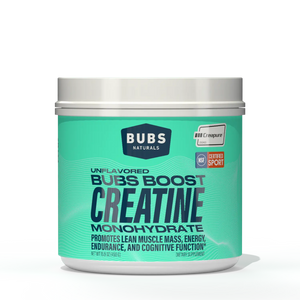
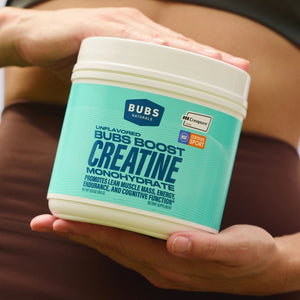
The efficiency with which your body uses and then clears a supplement depends on its purity. Our Creatine Monohydrate is a single-ingredient formula. We don't add fillers, flavorings, or unnecessary additives because we believe your body should only have to process what actually helps it perform.
By using a pure monohydrate, you ensure that the absorption rate is high and the workload on your kidneys is manageable. When the ingredient list is clean, your body knows exactly what to do with it. This leads to a more predictable cycle of use and elimination. We prioritize third-party testing and NSF for Sport certification so that athletes can trust that what goes in will work hard—and leave clean.
If you want to understand the brand behind the formula, you can read more in BUBS Naturals’ story.
Bottom line: Expect a full washout of muscle stores to take between two and six weeks, while blood levels will normalize within 24 to 48 hours after your last dose.
Conclusion
Understanding how long it takes for creatine to leave your body helps you take control of your fitness journey. Whether you are cycling off for a medical test or simply changing your goals, the timeline is predictable. For most people, the blood clears within a day, and the muscles return to baseline within a month. Individual factors like muscle mass, hydration, and activity level will always play a role, but the process remains a natural part of your body’s metabolic function.
At BUBS Naturals, we are committed to providing the cleanest, most effective tools for your lifestyle. We were founded to honor the legacy of Glen "BUB" Doherty, a Navy SEAL who lived a life of adventure and purpose. In his honor, we donate 10% of all our profits to veteran-focused charities. You can learn more in our giving back story. We believe that when you feel your best, you can do more for the world around you.
If you are looking for a supplement that supports your strength without the BS, our pure Creatine Monohydrate is designed to fit your routine and your body's natural cycles perfectly.
FAQ
How long does it take for creatine water weight to go away?
Most people see a reduction in water weight within one to two weeks after stopping supplementation. As the phosphocreatine levels in your muscles drop, the extra water stored inside the cells is naturally released and excreted through urine.
Can I speed up the process of creatine leaving my body?
The best way to support the natural elimination process is by staying well-hydrated and maintaining an active lifestyle. Drinking plenty of water helps your kidneys filter the byproduct creatinine more efficiently, while high-intensity exercise helps use up the remaining phosphocreatine stores.
Will stopping creatine cause muscle loss?
Stopping creatine does not cause the loss of actual muscle tissue. You may see a slight decrease in muscle volume due to the loss of intracellular water, and your strength might dip slightly, but the muscle fibers you built through training remain.
Does creatine show up on a drug test?
No, creatine is not a banned substance and is not something that drug tests for sports or employment look for. It is a legal, safe, and naturally occurring compound that is widely accepted in both professional and amateur athletics.
"The only way to find your limits is to push them." — Glen "BUB" Doherty