Table of Contents
- Introduction
- Understanding the Basics of MCT Oil
- C8: The Rapid Energy Specialist
- C10: The Slow Burn and Gut Guardian
- C8 vs. C10: A Performance Comparison
- What About C12 and C6?
- Why Sourcing Matters: Coconut vs. Palm
- How to Incorporate MCTs Into Your Routine
- Avoiding "Disaster Pants": A Warning on Dosing
- The Role of MCTs in a Non-Keto Diet
- Choosing the Best Form: Powder vs. Liquid
- Sourcing and Quality: The "No BS" Check
- Conclusion
- FAQ
Introduction
If you have ever explored the world of keto, fasting, or high-performance nutrition, you have likely run into the term "MCT oil." These fats are a staple for anyone looking to sharpen their mental edge or find a cleaner source of fuel for long days on the trail. However, once you start shopping, things get technical fast. You see labels for C8, C10, and C12, and suddenly, a simple supplement choice feels like a chemistry quiz. At BUBS Naturals, we believe that understanding your fuel is the first step toward better performance, and our MCT Oil Creamer is built around that idea.
Not all medium-chain triglycerides (MCTs) are created equal. While they all come from similar sources, like coconut or palm oil, the way your body processes them changes based on their molecular structure. Some provide an immediate spark for your brain, while others offer a slower burn that supports your immune system and gut health. This guide will break down the differences between the two most popular versions to help you decide which fits your lifestyle. By understanding the metabolic differences between C8 and C10, you can tailor your supplementation to meet your specific physical and cognitive demands, or compare the full lineup in our MCT Oil Powder Creamers collection.
Quick Answer: C8 (caprylic acid) is generally considered the "best" for rapid energy and ketone production because it converts to fuel almost instantly. C10 (capric acid) offers slightly slower energy but provides unique antifungal and immune-supporting benefits, making a blend of C8 and C10 the ideal choice for most people seeking balanced wellness.
Understanding the Basics of MCT Oil
To understand which MCT oil is best, we first have to look at what they are. MCT stands for Medium-Chain Triglycerides. In plain English, these are fats with a chemical "tail" that is a specific length. Most of the fats we eat in a standard diet, like olive oil or butter, are Long-Chain Triglycerides (LCTs). These have long tails that require a lot of work for your body to break down. They have to go through your stomach, get broken down by bile, and travel through your lymphatic system before they can be used for energy.
MCTs take a shortcut. Because their tails are shorter, they bypass the traditional digestive process. They go straight from your gut to your liver. Once they reach the liver, your body can quickly turn them into ketones. Ketones are molecules that serve as an alternative fuel source to glucose (sugar). This "liver shortcut" is why MCT oil is so popular for people who need energy right now, without the lag or the crash.
The numbers—C6, C8, C10, and C12—refer to how many carbon atoms are in that fatty acid tail. The shorter the tail, the faster the liver can process it. However, speed isn't everything. Each "length" offers a slightly different profile of benefits for your body and brain.
C8: The Rapid Energy Specialist
C8, also known as caprylic acid, is the undisputed king of the MCT world when it comes to speed. It has eight carbon atoms, making it one of the shortest chains your body can effectively use. Because it is so short, it is the most "bioavailable" MCT. Bioavailability is a fancy way of saying how much of a substance your body can actually absorb and use.
When you take C8, it converts into ketones almost immediately. This makes it a favorite for athletes who want a pre-workout boost or professionals who need to clear "brain fog" during a long afternoon of meetings. Because C8 bypasses the typical fat digestion process so efficiently, it provides a clean, stable energy source that doesn't rely on insulin or sugar.
Mental Clarity and Brain Fuel
Your brain is a hungry organ, and it usually runs on glucose. However, many people find that ketones provide a more stable, focused feeling. C8 is particularly effective at crossing the blood-brain barrier. This is a protective "filter" that controls what enters your brain. Because C8 turns into ketones so quickly, it provides your neurons with an immediate alternative fuel source. Many users report that C8 feels like a "light switch" for their focus.
Digestive Efficiency
Because C8 is processed so quickly, it is often easier on the stomach than lower-quality MCT blends. However, it is still a potent fat. If you are new to MCTs, even the high-quality C8 in our products should be introduced slowly. We always suggest starting with a small amount to let your gut adjust to this highly efficient fuel source.
Key Takeaway: C8 is the fastest MCT for ketone production. It is the best choice if your primary goal is immediate mental focus, athletic performance, or staying in deep ketosis.
C10: The Slow Burn and Gut Guardian
C10, or capric acid, has ten carbon atoms. While those two extra carbons might not sound like much, they change how the oil behaves in your body. C10 takes a little longer to turn into ketones than C8. This isn't a bad thing; it just means C10 provides a more "sustained" release of energy. If C8 is a shot of espresso, C10 is more like a well-brewed cup of coffee that keeps you going for the long haul.
Immune and Antifungal Support
One of the standout features of C10 is its antimicrobial properties. Research suggests that capric acid is particularly effective at fighting certain types of yeast and fungi, such as Candida albicans. This makes it a great addition for anyone looking to support their gut microbiome. A healthy gut is the foundation of a strong immune system, and C10 helps keep the "bad" bacteria and fungi in check.
Metabolic Support
C10 is still highly ketogenic compared to long-chain fats. It supports your metabolism by encouraging your body to stay in a fat-burning state. While it might not give you the instant "kick" that C8 does, it is an excellent tool for general wellness and long-term metabolic health.
Myth: C10 is just a "filler" for cheaper MCT oils.
Fact: C10 provides distinct health benefits that C8 doesn't, specifically regarding gut health and immune support. A high-quality MCT oil should intentionally include C10 for a more balanced profile.
C8 vs. C10: A Performance Comparison
When deciding which is best, you have to look at your specific goal for the day. Are you about to hit a personal best in the gym, or are you packing for a three-day backpacking trip where sustained health and energy matter most?
| Feature |
C8 (Caprylic Acid) |
C10 (Capric Acid) |
| Carbon Atoms |
8 |
10 |
| Conversion Speed |
Near-instant |
Moderate/Steady |
| Primary Goal |
Brain power & Ketones |
Gut health & Sustained energy |
| Antimicrobial |
Strong |
Very Strong (specifically antifungal) |
| Digestion |
Easiest for most |
Generally well-tolerated |
If you only used pure C8, you would get a massive spike in ketones, which is great for short-term tasks. However, by including C10, you ensure that your body has a "follow-up" source of energy as the C8 is used up. This is why many of the best MCT products, including our Butter MCT Oil Creamer, use a balanced blend. It gives you the best of both worlds: the mental spark of C8 and the gut-supporting, sustained energy of C10.
What About C12 and C6?
You might occasionally see C6 (caproic acid) or C12 (lauric acid) mentioned in discussions about MCTs. Usually, these are the ones you want to avoid in a pure MCT supplement, but for very different reasons.
C6: The "Smelly" MCT
C6 is the shortest MCT, but it has two major downsides: it tastes terrible and it often causes immediate stomach upset. It has a pungent, "goaty" smell and flavor. Most high-quality manufacturers, including us, filter out C6 entirely to ensure the product is flavorless and easy on your digestion. If your MCT oil tastes "off," it might have too much C6.
C12: The "Long" MCT
C12, or lauric acid, makes up about 50% of the fat in raw coconut oil. While it is technically classified as a medium-chain fat, it behaves much more like a long-chain fat in your body. It has to go through the slower digestive process and doesn't provide the rapid ketone boost that C8 or C10 offers.
C12 is still a healthy fat—it is famous for its antimicrobial properties—but it isn't what you are looking for if you want the specific benefits of MCT oil. If you want C12, you can just eat regular coconut oil. When you buy a refined MCT oil, you are paying for the "distilled" versions (C8 and C10) that offer more potent metabolic benefits.
Why Sourcing Matters: Coconut vs. Palm
When you are looking for the best MCT oil, you have to look at where it comes from. Most MCTs are sourced from either coconut oil or palm kernel oil.
We choose to source our MCTs exclusively from coconuts. Palm oil production is a major driver of deforestation and habitat loss in many parts of the world. Coconut-sourced MCT oil is generally more sustainable and offers a cleaner end product. We ensure that our MCTs are extracted using a steam distillation process rather than harsh chemical solvents. This keeps the oil pure, flavorless, and consistent with our "no BS" philosophy.
How to Incorporate MCTs Into Your Routine
The "best" oil only works if you actually use it. One of the reasons people love MCTs is their versatility. Because high-quality C8 and C10 are flavorless and odorless, you can add them to almost anything.
The Morning Kickstart
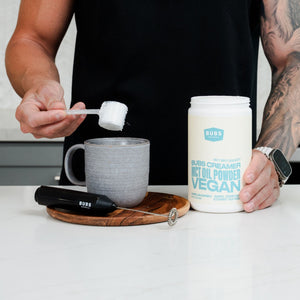
The most popular way to use MCT oil is in coffee. Mixing it with your morning brew creates what many call "bulletproof" coffee. The fats help slow the absorption of caffeine, which provides a smoother, longer-lasting energy curve without the typical caffeine jitters. Using a powder, like our MCT Oil Creamer, makes this even easier because it stirs in without needing a blender and adds a creamy texture.
Pre-Workout Fuel
If you train fasted or on a low-carb diet, your body needs a reliable energy source that won't spike your insulin. Taking a scoop of MCT powder or a tablespoon of oil 30 minutes before a workout can provide your muscles and brain with the ketones they need to push through a tough session.
Travel and Adventure
When you are on the move—whether that is a literal mountain or just a mountain of work—portability matters. Liquid MCT oil can be messy and hard to transport. This is where MCT powder shines. It is shelf-stable, won't leak in your bag, and mixes easily into a water bottle or a quick cup of tea. If you want a broader look at the category, the MCT Oil Powder Creamers collection is a useful place to start.
Bottom line: Use C8/C10 blends when you need a combination of immediate focus and long-term energy. Liquid is great for the kitchen, but powder is the superior choice for convenience and digestive comfort.
Avoiding "Disaster Pants": A Warning on Dosing
If there is one piece of advice we give every new user, it is this: start slow. Because MCTs bypass the normal digestive process and go straight to the liver, they can be a bit of a shock to your system if you aren't used to them. Taking too much too fast can lead to what the keto community affectionately calls "disaster pants"—urgent, loose stools.
Start with a small amount—perhaps half a serving—and see how your body reacts. Most people find that their digestive system "learns" how to handle MCTs within a few days. Once you are comfortable, you can move up to a full serving. Using an MCT powder can also help, as the carrier fibers (like the acacia fiber we use) often make the fat easier for the gut to process.
Note: If you have a sensitive stomach, always take your MCT oil or powder with a little bit of food or mixed into a beverage rather than on an empty stomach. This slows down the initial hit to your digestive system.
The Role of MCTs in a Non-Keto Diet
You do not have to be in a strict state of ketosis to benefit from C8 and C10. While they are a "must-have" for the keto crowd, they are also useful for anyone following a standard balanced diet.
Even if you eat carbohydrates, your body can still use the ketones produced from MCT oil as a supplemental fuel source. This can help with satiety (feeling full) and reduce the "afternoon slump" that often follows a carb-heavy lunch. By providing your brain with a secondary fuel source, you may find that your cravings for sugary snacks decrease throughout the day.
Choosing the Best Form: Powder vs. Liquid
Once you have settled on a C8/C10 blend, the final choice is the delivery method.
Liquid MCT Oil
-
Pros: Pure fat, usually the most concentrated form, great for making salad dressings or "finishing" a soup.
-
Cons: Can be greasy, requires a blender to mix into coffee properly, can cause more digestive upset for beginners, messy to travel with.
MCT Oil Powder
-
Pros: Much easier to mix (no blender required), portable, gentler on the stomach due to the fiber content, adds a creamy texture to drinks.
-
Cons: Slightly fewer grams of fat per scoop compared to pure liquid because of the carrier fiber.
At BUBS Naturals, we lean toward the powder. We designed our MCT Oil Creamer to be the ultimate companion for an active life. It uses high-quality C8 and C10, mixed with organic acacia fiber. This combination supports gut health while giving you the energy boost you expect from a premium MCT, and you can see the category reflected in our Creamers collection.
Sourcing and Quality: The "No BS" Check
The supplement industry is full of shortcuts. When you are looking for the best MCT oil, check for these three things:
-
Transparency: Does the label tell you the ratio of C8 to C10?
-
Purity: Is it free from fillers like maltodextrin or corn syrup? (Many powders use these as cheap carriers).
-
Testing: Is it third-party tested? We ensure our products are NSF for Sport certified because we believe athletes and veterans deserve to know exactly what they are putting in their bodies. For more on the broader lineup, take a look at our Boosts collection.
Conclusion
Choosing between C8 and C10 doesn't have to be a "one or the other" decision. While C8 is the "speedster" that provides that immediate mental clarity and ketone boost, C10 is the "steady hand" that supports your gut health and provides lasting energy. For most of us—whether we are training for a marathon, heading into a high-stakes meeting, or exploring a new trail—a blend of both is the most effective way to fuel our potential.
We took these lessons to heart when creating our products. We wanted something that was simple, clean, and actually worked. That is why our MCT Oil Creamer focuses on the synergy of C8 and C10. It is fuel designed for the way you actually live, and the details are laid out in our post on what MCT oil powder can do for you and our guide on how to choose the best MCT oil for your lifestyle.
Everything we do is inspired by the legacy of Glen "BUB" Doherty—a man who lived for adventure and service. In his honor, we donate 10% of all our profits to veteran-focused charities, which is part of the story on our About BUBS page and our giving back to veterans and communities post. When you choose your supplements, you aren't just fueling your own journey; you are helping us support the men and women who serve our country.
Ready to see the difference for yourself? Start with one scoop, stay consistent, and feel the impact that high-quality C8 and C10 can have on your day.
FAQ
Is C8 or C10 better for weight loss?
Both can support weight management by increasing satiety and helping your body stay in a fat-burning state. However, C8 is slightly more effective at boosting ketone production, which many people find helpful for appetite control and maintaining energy during a calorie deficit.
Can I take MCT oil every day?
Yes, most people can take MCT oil daily once their digestive system has adjusted. It is best used as a replacement for other less-healthy fats or as a supplement to help you reach your daily energy and macro goals.
Does MCT oil break a fast?
MCT oil contains calories, so technically, it does break a fast. However, because it does not spike insulin levels, many people use it during intermittent fasting to stay focused and full without losing the metabolic benefits of the fast.
Why does some MCT oil make my stomach hurt?
This is usually caused by taking too much too quickly, or by using a low-quality oil that contains C6. To avoid this, start with a small dose (half a teaspoon or half a scoop) and gradually increase it over a week. Choosing a powder with acacia fiber can also help with digestion.