Table of Contents
- Introduction
- Vitamin C and Iron Absorption: The Primary Benefit
- Managing Heavy Periods and Capillary Health
- Hormone Support and the Menstrual Cycle
- The Myth of Inducing or Delaying Your Period
- Supporting Your Skin and Recovery
- How to Effectively Supplement with Vitamin C
- Holistic Support: Beyond Vitamin C
- The BUBS Approach to Menstrual Wellness
- Conclusion
- FAQ
Introduction
Managing your monthly cycle involves more than just tracking dates and keeping ibuprofen nearby. For many active women, the fluctuations in energy, mood, and physical comfort lead to questions about which supplements can actually help. You might find yourself wondering if your daily vitamins need to change when your period arrives or if specific nutrients can make the week more manageable.
At BUBS Naturals, we believe in providing clean, science-backed information that helps you navigate your wellness routine without the guesswork. Vitamin C is a staple in most supplement cabinets, but its role during menstruation is often misunderstood or buried in old myths. This guide explores how Vitamin C interacts with your body during your period, from its impact on iron levels to its role in tissue repair and hormone support.
Understanding the relationship between Vitamin C and your menstrual health can help you fine-tune your recovery and performance. While many focus on the immune-boosting properties of this antioxidant, its benefits for menstruating women go much deeper. Taking Vitamin C during your period is not only safe but can be a strategic move for maintaining your energy and supporting your body's natural processes.
Quick Answer: Yes, you can safely take Vitamin C during your period. It is often recommended because it significantly improves iron absorption, which is vital when you are losing blood, and it may help support blood vessel integrity to manage heavy flow.
Vitamin C and Iron Absorption: The Primary Benefit
The most significant reason to maintain or increase Vitamin C intake during your period is its relationship with iron. When you menstruate, you lose blood, and with that blood goes iron. For some women, especially those with heavy flows, this can lead to a temporary dip in iron levels, resulting in the "period fatigue" many of us recognize.
There are two types of iron: heme iron (from animal sources) and non-heme iron (from plant sources). Non-heme iron is notoriously difficult for the body to absorb on its own. Vitamin C acts as a facilitator, breaking down iron into a form that the body can more easily move across the intestinal wall.
By taking Vitamin C alongside iron-rich foods or supplements, you increase the bioavailability of the iron. This means your body can actually use the nutrients you are consuming. This synergy is essential for maintaining healthy red blood cell production and preventing the sluggishness that often accompanies the start of your cycle.
Key Takeaway: Vitamin C is the essential partner for iron; without it, your body struggles to absorb the iron needed to replace what is lost during menstruation, which can lead to increased fatigue and decreased recovery capacity.
Managing Heavy Periods and Capillary Health
Heavy menstrual bleeding, medically known as menorrhagia, can be more than just an inconvenience; it can be physically draining. Some research suggests that Vitamin C may play a role in managing the intensity of your flow. This is largely due to how Vitamin C supports the health of your capillaries and blood vessel walls.
Vitamin C is a primary requirement for the synthesis of collagen, which is the "glue" that holds your tissues together. Stronger, more resilient blood vessels in the uterine lining may help regulate the shedding process. When blood vessels are fragile, bleeding can be more profuse.
Some older studies and clinical observations have noted that women who increase their Vitamin C and bioflavonoid intake report a reduction in the heaviness of their periods. While it is not a cure for underlying medical conditions like fibroids or PCOS, supporting the structural integrity of your vascular system is a foundational step in menstrual health.
Bottom line: By supporting collagen production and strengthening capillary walls, Vitamin C may help manage the intensity of menstrual bleeding for some women.
Hormone Support and the Menstrual Cycle
Your hormones—specifically estrogen and progesterone—undergo massive shifts throughout the month. Vitamin C may influence these levels in subtle but important ways. Some evidence indicates that Vitamin C can help support progesterone production, which is the dominant hormone in the second half of your cycle (the luteal phase).
Low progesterone is often linked to more intense PMS symptoms and irregular cycles. By providing the adrenal glands and ovaries with the nutrients they need to function optimally, Vitamin C helps maintain a more balanced hormonal environment. It also helps manage cortisol, your primary stress hormone. Since high stress can often cause periods to be late or more painful, keeping cortisol in check is a win for your overall cycle health.
Antioxidant Protection and Inflammation
Menstruation is naturally an inflammatory process. The body releases prostaglandins, which are compounds that cause the uterine muscles to contract. These contractions are necessary, but when prostaglandin levels are too high, they lead to painful cramps.
As a potent antioxidant, Vitamin C helps neutralize oxidative stress and may lower systemic inflammation. While it might not replace a targeted pain reliever for severe cramps, reducing the overall inflammatory load on your body can make the physical experience of your period feel less taxing.
The Myth of Inducing or Delaying Your Period
There is a long-standing rumor in some wellness circles that high doses of Vitamin C can "jumpstart" a late period or even delay one if timed correctly. This idea largely stems from the vitamin’s potential effect on estrogen levels. Some believe that Vitamin C can raise estrogen and lower progesterone, causing the uterine lining to shed.
However, there is very little modern clinical evidence to support the idea that Vitamin C can be used as a reliable tool to manipulate the timing of your cycle. While nutrition certainly impacts hormonal health over the long term, taking a massive dose of Vitamin C is unlikely to induce a period overnight.
Myth: Taking high doses of Vitamin C can safely and reliably induce a late period or delay an upcoming one.
Fact: While Vitamin C supports overall hormonal health, there is no scientific proof that it can be used to manipulate the specific timing of your menstrual cycle.
Supporting Your Skin and Recovery
Many women experience "period skin"—breakouts or dullness that occur due to hormonal shifts. Because your skin depends on collagen to stay clear and resilient, Vitamin C remains an essential part of your beauty-from-within routine during your cycle. Since Vitamin C is water-soluble, your body doesn't store it; you need a fresh supply every day to keep those repair processes moving.
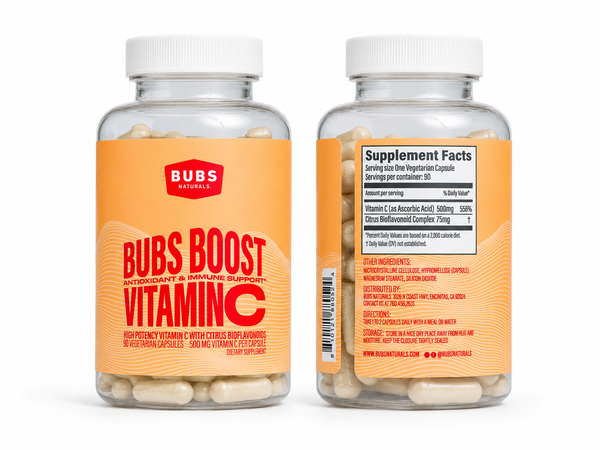
Furthermore, if you are training through your period, your recovery needs are higher. The stress of the cycle combined with the stress of exercise requires efficient tissue repair. We design our products to fit into these demanding schedules. Using BUBS Naturals Vitamin C provides a clean, 500 mg dose that includes citrus bioflavonoids. These bioflavonoids aren't just fillers; they are included to help your body better absorb and utilize the Vitamin C, mirroring how it is found in nature.
Our Vitamin C is designed to be easy on the stomach and effective, making it a simple addition to your morning routine, whether you are on your period or hitting a new PR in the gym.
How to Effectively Supplement with Vitamin C
When taking Vitamin C during your period, consistency matters more than a single high dose. Because the body can only absorb so much Vitamin C at one time, spreading your intake throughout the day or taking a moderate, highly bioavailable dose is often more effective than "megadosing."
Timing and Dosage
For most active adults, a dose of 500 mg to 1,000 mg per day is sufficient to support immune function, iron absorption, and collagen synthesis. If you are taking it specifically to help with iron, try to take your Vitamin C at the same time as your iron-rich meal (like grass-fed beef, spinach, or lentils).
Dietary Sources
In addition to supplementation, you can boost your levels through whole foods. Good options include:
- Citrus fruits (oranges, lemons, grapefruits)
- Strawberries and bell peppers
- Broccoli and kale
- Kiwi and papaya
Note: If you have a sensitive stomach during your period, choose a Vitamin C supplement that is buffered or includes bioflavonoids to reduce the risk of digestive upset.
Holistic Support: Beyond Vitamin C
While Vitamin C is a powerhouse, it works best when part of a broader strategy. During your period, your body’s demands for several nutrients increase.
Hydration and Electrolytes
Dehydration can worsen headaches and fatigue during your cycle. Our Hydrate or Die electrolyte formula is designed for fast, effective hydration without added sugar. Maintaining proper sodium, potassium, and magnesium levels helps support muscle function and may reduce the severity of cramps.
Collagen and Joints
Your ligaments can actually become more lax during certain phases of your cycle due to hormonal changes. This can sometimes lead to a feeling of "heavy" or "achy" joints. Our Collagen Peptides support joint health and recovery, providing the amino acids necessary to maintain connective tissue strength when your hormones are in flux.
Magnesium
Magnesium is often cited as the "holy grail" for period support. It helps relax smooth muscles, which can directly alleviate the intensity of uterine contractions (cramps). It also supports a calm mood and better sleep, both of which can be hard to come by during your period.
The BUBS Approach to Menstrual Wellness
At BUBS Naturals, we don't believe in "quick fixes" or hype-filled promises. We believe in providing your body with the cleanest, highest-quality building blocks so it can do its job. Whether it's our single-ingredient Creatine Monohydrate for maintaining strength or our Vitamin C for antioxidant support, every product we make is third-party tested and NSF for Sport certified.
If you want a deeper look at creatine beyond performance, Fueling Focus: Does Creatine Help with ADHD? is a useful next read.
This commitment to quality is rooted in our heritage. We were founded to honor Glen "BUB" Doherty, a Navy SEAL who lived a life of adventure and peak performance. You can learn more in Our Story. We carry that legacy forward by ensuring our supplements are something you can trust every day of the month.
When you choose us, you are also contributing to a greater cause. We donate 10% of all our profits to veteran-focused charities. It’s wellness with a mission—helping you feel your best so you can show up for the things that matter.
Conclusion
Taking Vitamin C during your period is a smart, safe way to support your body's increased nutritional needs. By boosting iron absorption, supporting capillary health, and providing antioxidant protection, this simple vitamin helps you maintain your energy and resilience. There is no need to stop your routine when your cycle starts; in fact, staying consistent with your supplements may be exactly what your body needs to recover faster.
- Prioritize Vitamin C to help with iron absorption and combat fatigue.
- Support your vascular health to potentially manage heavy flow.
- Focus on clean, bioavailable supplements like the Boosts collection.
- Stay hydrated and maintain your Electrolytes balance to minimize discomfort.
Living an active, adventurous life means listening to your body and giving it the support it deserves. One scoop or one capsule at a time, you can stay on track and keep moving forward.
FAQ
Does Vitamin C make your period heavier or lighter?
Vitamin C may help make a heavy period more manageable by strengthening the capillary walls and supporting collagen production in the uterine lining. While it is not a medical treatment for heavy bleeding, many find that improved vascular health helps regulate their flow. It does not typically make a normal period heavier.
Can Vitamin C induce a late period?
There is no significant scientific evidence that Vitamin C can reliably induce a late period. While it may influence estrogen and progesterone levels over time, it is not an effective or recommended method for manipulating the timing of your menstrual cycle. If your period is late, it is best to consult with a healthcare provider.
Is it okay to take 1000mg of Vitamin C during my period?
Yes, taking 1000mg of Vitamin C is generally considered safe for most adults. Since Vitamin C is water-soluble, your body will typically excrete any excess it cannot use. However, if you have a sensitive stomach, you might prefer a 500mg dose or a buffered formula to avoid digestive discomfort.
Should I take Vitamin C and iron together during my period?
Yes, taking Vitamin C and iron together is highly recommended. Vitamin C significantly increases the absorption of non-heme iron, which is the type of iron found in plants and many supplements. This combination is particularly beneficial during your period to help replenish iron lost through bleeding and to maintain energy levels.