Table of Contents
- Introduction
- What Exactly Is Collagen?
- Why Drink Collagen Instead of Eating It?
- The Core Benefits of Drinking Collagen
- How Your Body Actually Uses Collagen
- Practical Ways to Incorporate Collagen into Your Routine
- Who Should Be Drinking Collagen?
- Choosing the Right Collagen
- Supporting Your Collagen Naturally
- Conclusion
- FAQ
Introduction
You feel it in your knees after a long trail run. You notice it in the mirror when your skin looks a little less resilient than it did five years ago. These aren't just signs of getting older. They are signs that your body’s natural protein "scaffold" is starting to thin out. This scaffold is collagen. It is the most abundant protein in your body, acting as the literal glue that holds your skin, joints, and connective tissues together.
At BUBS Naturals, we believe that staying active requires a proactive approach to recovery. We don't believe in magic pills or overnight fixes. We believe in high-quality, clean ingredients that support your body's natural ability to repair itself. This guide explores why drinking collagen is good for you, how it works within your biological systems, and why it has become a staple for everyone from elite athletes to weekend warriors.
By the end of this article, you will understand the science behind collagen peptides and how they can help you maintain your edge. Drinking collagen is not just a trend. It is a functional way to supply your body with the specific amino acids it needs to stay strong, mobile, and resilient.
What Exactly Is Collagen?
To understand why drinking collagen is good for you, you first need to know what it is. Collagen is a structural protein. While most people think of protein as the fuel for building large muscles, collagen serves a different purpose. It provides the framework for your "soft" tissues. It makes up roughly 30% of the total protein in your human body and about 70% of the protein in your skin.
Think of it like the rebar in a concrete building. The concrete provides the bulk, but the rebar provides the tensile strength. Without it, the structure becomes brittle and prone to cracking. In your body, collagen provides that same strength to your tendons, ligaments, bones, and skin.
There are at least 28 different types of collagen, but three types do most of the heavy lifting:
-
Type I: This is the strongest type. It is found in your skin, bones, and tendons. It is built to handle pressure and stretching.
-
Type II: This is primarily found in your cartilage. It is the padding between your joints that absorbs shock.
-
Type III: This supports the structure of your muscles, organs, and arteries.
Your body creates its own collagen by combining amino acids like glycine, proline, and hydroxyproline. However, this production starts to slow down significantly as early as your mid-20s. By the time you reach your 40s or 50s, you are losing collagen faster than you can replace it. This is where supplementation comes into play.
Why Drink Collagen Instead of Eating It?
The question often arises: why not just eat more steak or chicken? While animal proteins contain amino acids, they are not always the most efficient way to specifically target collagen production.
Whole collagen molecules are large. If you were to consume them in their raw form, your digestive system would have a hard time breaking them down into something your bloodstream can actually use. This is why we use hydrolyzed collagen.
The Science of Hydrolysis
Hydrolyzed collagen, also known as collagen peptides, has undergone a process called hydrolysis. This process uses water and enzymes to break the long, complex protein chains into shorter chains called peptides. These peptides are much smaller and have a lower molecular weight.
Because they are smaller, they are highly bioavailable. This means your body can absorb them through the gut lining and move them into the bloodstream quickly. When you drink collagen, these peptides act as both the "bricks" to build new tissue and the "signal" to tell your body to start producing more of its own collagen.
Key Takeaway: Drinking hydrolyzed collagen is more efficient than eating whole proteins because the smaller peptides bypass heavy digestion and enter the bloodstream quickly to support tissue repair.
The Core Benefits of Drinking Collagen
Drinking collagen provides several targeted benefits that are particularly useful for people who push their bodies hard. It is not just about aesthetics; it is about functional longevity.
1. Joint Health and Mobility
For many, the primary reason to start drinking collagen is joint comfort. Every time you jump, run, or lift, your joints absorb the impact. The cartilage in your joints—the rubbery tissue that prevents bone-on-bone contact—is made mostly of Type II collagen.
As we age or undergo heavy training, this cartilage can wear thin. Research suggests that supplemental collagen peptides may accumulate in the cartilage. This may help stimulate your tissues to produce more collagen, potentially leading to lower inflammation and better joint support. Many athletes report that a daily collagen dose helps their joints feel "greased" and ready for movement.
2. Skin Elasticity and Hydration
Your skin is your largest organ and your primary shield against the environment. Collagen is what gives skin its bounce and firmness. When collagen levels drop, skin becomes thinner, drier, and more prone to wrinkles.
Studies have shown that taking 5 to 10 grams of collagen daily for roughly 8 to 12 weeks can improve skin hydration and elasticity. By drinking collagen, you are providing the dermis—the thick inner layer of the skin—with the nutrients it needs to maintain its structure. This can help the skin look more resilient and better able to recover from sun exposure or environmental stress.
3. Bone Density and Strength
Bones are not just made of calcium. They are a complex matrix of minerals and collagen. While minerals give bones their hardness, collagen gives them flexibility. Without collagen, bones would be as brittle as glass.
As you age, your bone mineral density naturally decreases. Research has indicated that daily collagen supplementation may help inhibit the bone breakdown that leads to conditions like osteoporosis. By supporting the collagen matrix within the bone, you may help maintain overall skeletal strength, which is vital for long-term health.
4. Connective Tissue Repair
Muscles get most of the attention in recovery, but your tendons and ligaments are what actually connect those muscles to your bones. These tissues are made almost entirely of collagen.
When you recover from a workout, your muscles might feel fine after 48 hours, but your tendons often take longer to adapt. Drinking collagen provides a concentrated source of glycine and proline, the specific amino acids your body needs to repair these high-stress connective tissues. This is especially important for anyone dealing with nagging tendon issues or those who participate in high-impact sports.
Myth: Collagen is a complete protein that can replace your post-workout whey or plant protein shake.
Fact: Collagen is an incomplete protein because it lacks the essential amino acid tryptophan. It is designed to support connective tissues, not to maximize muscle protein synthesis like whey or beef protein.
How Your Body Actually Uses Collagen
When you drink collagen peptides, they don't just magically travel to your left knee and start fixing it. The process is a bit more systematic.
Once the peptides are absorbed into your bloodstream, they circulate throughout the body. Your body is smart; it prioritizes repair based on where the need is greatest. If you have a high level of inflammation in your joints, the body may direct those amino acids there. If your skin is damaged from UV exposure, it may use them to repair the dermal layer.
However, for your body to turn those peptides back into functional collagen, it needs co-factors. The most important of these is Vitamin C.
The Role of Vitamin C
Vitamin C acts as the "on switch" for collagen synthesis. Without it, your body cannot effectively link the amino acids together to form the triple-helix structure of a collagen fiber. This is why many people choose to mix their collagen with a supplement from our Boosts collection or a glass of orange juice.
In addition to Vitamin C, minerals like Zinc and Copper play a supporting role in the enzymatic reactions that build and maintain your collagen framework. This is a big reason why we advocate for a balanced, nutrient-dense diet alongside supplementation.
Practical Ways to Incorporate Collagen into Your Routine
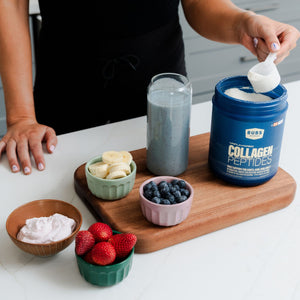
One of the best things about collagen is its versatility. Unlike many protein powders that are thick and flavored, BUBS Naturals Collagen Peptides are unflavored and dissolve easily. This makes it simple to add to your existing habits without having to overhaul your routine.
-
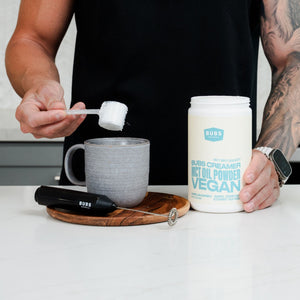
In Your Coffee: This is the most popular way to use it. Our peptides are heat-stable, meaning they won't lose their effectiveness in hot liquids. They mix in without changing the taste or texture of your morning brew.
-
In a Post-Workout Shake: Add a scoop to your favorite protein shake. While the collagen doesn't replace the muscle-building protein, it adds a layer of joint and tendon support to your recovery.
-
In Your Hydration: If you are using our Hydrate or Die electrolytes during a long hike or workout, you can easily stir in a scoop of collagen for added nutritional support.
-
In Food: You can stir collagen into oatmeal, yogurt, or even soups. It is a "no-excuse" supplement because it fits into almost anything you are already eating or drinking.
Dosage and Consistency
Results from collagen don't happen overnight. Because collagen turnover is a slow biological process, consistency is the key. If you want an easier way to stay consistent, the Collagen Club makes monthly deliveries simple.
A standard dose is usually one scoop, which provides roughly 10 to 20 grams of collagen. Some people who are in a heavy training phase or recovering from a specific injury may choose to take two scoops per day. Listen to your body and find a rhythm that works for you.
Note: Collagen is generally very well tolerated. However, because it is a protein, taking excessive amounts at once might cause mild bloating in some individuals. Start with one scoop and see how you feel.
Who Should Be Drinking Collagen?
While collagen is beneficial for almost everyone, certain groups may see the most significant impact from daily supplementation.
The Aging Athlete
As production slows down after age 30, athletes may find that they don't "bounce back" as quickly as they used to. Joints may feel stiffer in the morning, and minor aches may linger longer. For this group, drinking collagen is a preventative measure to keep the "machinery" running smoothly.
Those Recovering from Injury
If you are dealing with a ligament tear, a tendon strain, or even a bone fracture, your body is working overtime to build new structural tissue. Supplementing with collagen provides an abundance of the raw materials needed for that repair process.
The Wellness-Minded Individual
Even if you aren't training for a marathon, collagen supports the fundamental structures of your body. If you are interested in maintaining healthy skin, strong nails, and vibrant hair as you age, collagen is one of the simplest tools in your kit.
Choosing the Right Collagen
Not all collagen is created equal. When you are looking for a supplement to put into your body every day, quality matters. You want something that is clean, ethically sourced, and free from fillers.
Our BUBS Naturals Collagen Peptides are sourced from grass-fed, pasture-raised cattle. This ensures that you are getting a clean product without the baggage of industrial farming. We also take the extra step to be NSF for Sport certified. This is the gold standard for athletes, as it guarantees that the product is free from banned substances and that what is on the label is exactly what is in the tub.
We believe in keeping things simple. One ingredient. No BS. Just pure hydrolyzed collagen that does what it says it will do.
Supporting Your Collagen Naturally
While supplementation is powerful, it works best when supported by a healthy lifestyle. You can protect your existing collagen and encourage your body to produce more by following a few basic principles:
-
Protect Your Skin: UV radiation from the sun is one of the fastest ways to break down collagen. Wear sunscreen and protective clothing when you’re out on the trails.
-
Manage Sugar Intake: High sugar consumption can lead to a process called glycation. This is where sugar molecules attach to collagen fibers, making them stiff and brittle.
-
Don’t Smoke: Smoking significantly impairs the body’s ability to produce collagen and speeds up its destruction.
-
Eat Your Micro-nutrients: Ensure you are getting enough Vitamin C from citrus, peppers, and leafy greens to support the synthesis of the collagen you are drinking.
Bottom line: Drinking collagen is a highly effective way to provide your body with the specific building blocks needed for joint, skin, and bone health, especially when combined with a lifestyle that protects your existing protein structures.
Conclusion
Drinking collagen is a simple, science-backed way to support your body's structural integrity. Whether you are looking to ease joint discomfort, improve your skin’s resilience, or support your long-term bone health, collagen peptides offer a bioavailable solution that fits effortlessly into your daily routine. By providing the specific amino acids your body needs, you are equipping yourself for a life of adventure and movement.
At BUBS Naturals, we are driven by more than just supplements. We are driven by a legacy of service and excellence. This is why we donate 10% of all our profits to veteran-focused charities in honor of Glen "BUB" Doherty through our 10% Rule. When you choose to support your health with our products, you are also supporting a larger mission.
Stay active. Stay resilient. And keep moving forward.
FAQ
Does drinking collagen actually work?
Yes, scientific research suggests that drinking hydrolyzed collagen peptides increases the levels of specific amino acids in the bloodstream. These peptides can then be used by the body to repair connective tissues, improve skin hydration, and support joint health. Consistency over 8 to 12 weeks is typically required to see noticeable results.
When is the best time of day to drink collagen?
There is no "perfect" time to take collagen, as the benefits come from consistent daily use rather than immediate timing. Many people prefer taking it in the morning with coffee to establish a habit, while others add it to a post-workout shake to aid in recovery. The most important thing is that you take it every day.
Can I get enough collagen from food alone?
While you can get collagen from foods like bone broth and organ meats, these sources aren't always convenient or consistent in their amino acid profiles. For a broader look at collagen basics, start with our All About Collagen hub.
Are there any side effects to drinking collagen?
Collagen is a natural protein and is generally considered safe for most people. Some individuals may experience mild digestive symptoms like bloating or a feeling of fullness if they take a large dose on an empty stomach. If you have concerns or existing medical conditions, it is always best to consult with your healthcare provider.