Table of Contents
- Introduction
- Understanding Collagen: The Backbone of Our Bodies
- When Should We Take Collagen Powder?
- Tips for Maximizing Collagen Absorption
- Conclusion
- FAQ
Introduction
Have you ever noticed how the skin of a child appears so plump and radiant, while our own skin seems to sag or develop wrinkles as we age? The secret behind that youthful glow often lies in collagen, the most abundant protein in our bodies, responsible for maintaining the structure and elasticity of our skin, joints, and other connective tissues. As we age, our natural collagen production begins to decline, leading many of us to seek out collagen supplements to help restore that youthful vitality. But a common question arises: when should I have collagen powder to reap its full benefits?
Understanding the optimal timing for collagen intake is crucial as it can significantly impact its effectiveness. Whether we are looking to enhance our skin health, support joint function, or promote muscle recovery, knowing when to take collagen can help us achieve our wellness goals. In this blog post, we will explore the science behind collagen, the best times to take collagen powder based on individual health goals, and how to incorporate it seamlessly into our daily routines.
By the end of this article, we hope to provide clarity on collagen timing and arm you with the knowledge to optimize your supplement regimen. We’ll also touch on BUBS Naturals’ commitment to clean, high-quality collagen products that embody our mission of wellness and adventure. So, let's dive into the world of collagen, its benefits, and the best times to incorporate it into our lives!
Understanding Collagen: The Backbone of Our Bodies
Collagen is a vital protein that serves as the primary building block for our skin, bones, muscles, tendons, and ligaments. It makes up about 30% of the total protein in our bodies, playing a crucial role in maintaining the structure and integrity of our tissues. As we age, collagen production naturally declines—starting around the age of 25, our bodies produce about 1% less collagen each year. This decrease can lead to visible signs of aging such as wrinkles, sagging skin, and joint pain.
Types of Collagen
There are at least 16 types of collagen, but the three most commonly found in supplements are:
-
Type I: The most abundant collagen type in the body, found in skin, hair, nails, bones, and tendons. It is primarily associated with skin elasticity and hydration.
-
Type II: Predominantly found in cartilage, this type supports joint health and mobility, making it ideal for active individuals.
-
Type III: This type works alongside Type I and is often found in skin, blood vessels, and muscles, contributing to skin elasticity and overall structural integrity.
Understanding these types can help us choose the right collagen supplement based on our specific health goals.
The Benefits of Collagen Supplementation
Collagen supplementation offers a multitude of benefits, including:
-
Improved Skin Health: Regular intake can enhance skin hydration, elasticity, and reduce the appearance of wrinkles.
-
Joint Support: Collagen can help maintain cartilage health and reduce joint pain and stiffness.
-
Muscle Recovery: It plays a role in muscle protein synthesis, making it beneficial for athletes and those engaging in regular physical activities.
-
Nail and Hair Strength: Collagen can improve nail thickness and strength while promoting hair growth.
As we can see, incorporating collagen powder into our wellness journey can yield significant benefits.
When Should We Take Collagen Powder?
The timing of collagen intake can depend on various factors such as individual wellness goals, daily routine, and personal preferences. Here’s a breakdown of when to take collagen for optimal benefits:
1. Morning Intake: Kickstart Your Day
Taking collagen powder in the morning can be particularly beneficial for those looking to enhance skin health. When consumed on an empty stomach, collagen may be more readily absorbed by the body. Here’s why morning might be the best time for you:
-
Enhanced Absorption: A study suggests that consuming collagen in the morning can provide a steady supply of amino acids throughout the day, supporting skin repair and hydration.
-
Routine Building: Integrating collagen into your morning routine—such as adding it to your coffee, smoothie, or oatmeal—helps ensure consistency in your supplementation.
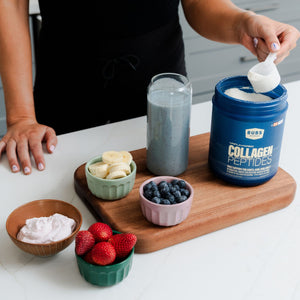
We recommend trying our Collagen Peptides for a quick and easy morning boost that mixes effortlessly into your favorite beverages.
2. Post-Workout: Optimal Recovery
For those who lead an active lifestyle or engage in strength training, taking collagen after a workout can be advantageous. Here’s why:
-
Muscle Repair: Collagen provides essential amino acids that support muscle recovery. Consuming it within 30-45 minutes post-exercise can help replenish what your body needs to rebuild and recover.
-
Joint Health: Regular intake may also help reduce muscle soreness and support joint function, which is vital for preventing injuries during workouts.
Mixing collagen powder into a post-workout protein shake or smoothie can maximize its effectiveness while making your recovery process enjoyable.
3. Evening Intake: Wind Down and Repair
Taking collagen at night can also be beneficial, especially for those seeking to improve sleep quality and promote recovery:
-
Sleep Support: Collagen contains glycine, an amino acid that may help promote better sleep quality by reducing sleep disturbances and improving relaxation.
-
Nighttime Repair: Our bodies undergo repair and recovery processes while we sleep. Taking collagen in the evening can support these natural functions, aiding skin, joint, and muscle restoration.
Consider mixing collagen into a calming evening drink, such as warm milk or a herbal tea, to enhance your bedtime routine.
Tips for Maximizing Collagen Absorption
To ensure we get the most out of our collagen powder, here are some practical tips to enhance absorption:
-
Combine with Vitamin C: Consuming collagen alongside vitamin C-rich foods (like citrus fruits and leafy greens) can promote collagen synthesis in the body. Many of our collagen products include vitamin C to support this process.
-
Stay Hydrated: Proper hydration is essential for overall skin and joint health. Drinking plenty of water can help your body utilize collagen effectively.
-
Avoid Excessive Sugar and Processed Foods: High sugar intake can damage collagen through a process called glycation. Maintaining a balanced diet rich in whole foods can optimize collagen benefits.
-
Consistency is Key: Regardless of the timing, taking collagen consistently daily is vital for achieving desired results. Aim for a daily intake of 2.5 to 15 grams, depending on your health goals.
Conclusion
Incorporating collagen powder into our daily routine can significantly enhance our wellness journey, from improving skin elasticity to supporting joint health and muscle recovery. Whether we choose to take it in the morning, post-workout, or at night, the key is to find a timing that fits our personal lifestyle and health goals.
At BUBS Naturals, we’re committed to providing high-quality, clean collagen products to support your active lifestyle while honoring the legacy of Glen “BUB” Doherty. As part of our mission, we proudly donate 10% of all profits to veteran-focused charities, ensuring that every scoop of collagen not only supports your health but also contributes to a greater cause.
Now that you’re equipped with the knowledge about when to take collagen, consider how you can seamlessly integrate it into your daily routine. Remember, the best time to take collagen is the time that works best for you—consistency is what truly matters.
FAQ
Can I take collagen powder on an empty stomach?
Yes, taking collagen powder on an empty stomach can enhance absorption. Many people find that it mixes well in beverages like water, coffee, or smoothies.
What is the recommended daily dose of collagen?
A typical daily dose ranges from 2.5 to 15 grams, depending on your health goals. For skin health, aim for 5 to 10 grams, while joint health may benefit from 10 to 15 grams.
Is there a best time to take collagen for muscle recovery?
For muscle recovery, it’s best to take collagen within 30 to 45 minutes post-workout to provide your body with the necessary amino acids for repair.
Can I mix collagen powder with hot drinks?
Absolutely! Collagen powder is heat-stable and can be mixed into hot beverages like coffee or tea without losing its benefits.
Can collagen help improve sleep quality?
Yes, collagen contains glycine, which is associated with improved sleep quality. Taking it before bedtime may contribute to better rest and recovery.
What makes BUBS Naturals collagen different?
Our collagen is sourced from grass-fed, pasture-raised cattle and is rigorously tested for quality and purity, aligning with our no-BS philosophy and commitment to clean, effective ingredients.
Explore our Collagen Peptides and join us in our mission to support wellness and give back to the veteran community. Together, let’s embrace a life of adventure and purpose!