Table of Contents
- Introduction
- Understanding the "Bad Knee" Problem
- How Collagen Works in Your Joints
- What the Science Says About Collagen and Knee Pain
- Type I and III vs. Type II Collagen
- Why Consistency is the Secret Ingredient
- Practical Tips for Managing Knee Health
- Choosing the Right Supplement
- The BUBS Difference: Purpose-Driven Wellness
- Conclusion
- FAQ
Introduction
Waking up with stiff, creaky knees can change the way you approach your entire day. Whether it is a dull ache after a morning run or a sharp pinch when you stand up from your desk, knee discomfort is one of the most common hurdles for active adults. You want to stay moving, but your joints seem to have a different plan. This often leads to the question: is collagen good for bad knees, or is it just another wellness trend?
At BUBS Naturals, we believe in providing clear, science-backed information so you can make the best choices for your recovery and long-term health. Understanding how your body uses protein—and how our Collagen Peptides fit into that process—to protect its "hinges" is the first step toward feeling better.
This guide covers the biological role of collagen in joint health, the differences between supplement types, and practical tips for supporting your knees. By the end, you will understand how collagen may help support joint integrity and why consistency is the most important factor in seeing results.
Quick Answer: Research suggests that collagen supplementation may help reduce joint pain and stiffness, particularly for those with mild to moderate osteoarthritis or activity-induced knee discomfort. It works by supporting the cartilage matrix and stimulating the body’s own collagen production, though it typically takes 3 to 6 months of consistent use to see noticeable benefits.
Understanding the "Bad Knee" Problem
When people talk about "bad knees," they are usually describing one of two things: structural wear and tear or acute inflammation. The knee is a complex hinge where the thigh bone (femur) meets the shin bone (tibia). To keep these bones from grinding together, your body uses cartilage—a slippery, rubbery tissue that acts as a shock absorber.
Cartilage is incredibly tough, but it has a weakness. It does not have its own blood supply. This means it heals much slower than muscle or skin. Over time, due to age, repetitive stress, or past injuries, this cartilage can thin out. This condition, known as osteoarthritis, leads to the pain and stiffness many of us recognize.
Collagen is the primary structural protein that makes up this cartilage. Think of it as the "glue" or the "scaffolding" that keeps the tissue resilient and flexible. When your body’s natural collagen production slows down—which starts happening in your late 20s—the scaffolding begins to weaken. This is often when the first signs of knee discomfort appear.
How Collagen Works in Your Joints
Collagen is not just one thing; it is a family of proteins. While there are dozens of types, your joints primarily rely on a few specific versions to stay healthy.
Type II collagen is the most famous for joints because it makes up about 90% of the collagen in your cartilage. However, Type I and Type III are also vital. These types are found in the tendons and ligaments that surround the knee. If the cartilage is the shock absorber, the tendons and ligaments are the "cables" that hold the hinge together. If those cables are weak, the knee joint becomes unstable, leading to more wear on the cartilage.
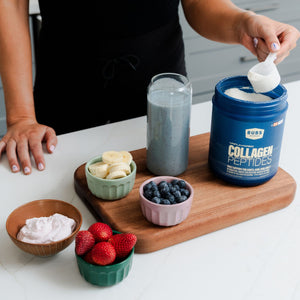
When you take a supplement like our Collagen Peptides, you are providing your body with the raw materials—specifically amino acids like glycine, proline, and hydroxyproline—to support these tissues.
The Role of Chondrocytes
Inside your cartilage, there are specialized cells called chondrocytes. Their job is to maintain the extracellular matrix—the "house" the cartilage lives in. Studies suggest that when you ingest hydrolyzed collagen, it may signal these chondrocytes to get to work.
By stimulating these cells, you are essentially telling your body to repair and reinforce its own cushioning. While this process does not happen overnight, it can help slow down the degradation of the joint over time.
Key Takeaway: Collagen supplements provide the specific amino acids needed to support the cartilage, tendons, and ligaments of the knee. By stimulating the cells responsible for tissue repair, collagen may help maintain joint cushioning and stability.
What the Science Says About Collagen and Knee Pain
It is easy to get lost in the marketing of supplements, but the data on collagen is quite promising for those dealing with knee issues. Researchers have looked at how collagen affects both clinical patients (those with diagnosed osteoarthritis) and active individuals who just have sore joints.
Research on Osteoarthritis
In one significant study, people with collagen for knee repair took collagen supplements daily for six months. The results showed a significant reduction in pain and stiffness compared to a placebo group. Another trial compared collagen to other popular joint supplements like glucosamine and chondroitin. In that specific study, the collagen group reported better functional mobility and less discomfort during daily activities like climbing stairs.
Research on Active Adults and Athletes
You do not need a medical diagnosis to benefit from joint support. A study of 97 athletes who experienced activity-related knee pain found that taking collagen peptides for 24 weeks improved joint comfort significantly. The participants reported less pain while walking, standing, and lifting heavy objects.
This is particularly relevant for the BUBS Naturals community. Whether you are training for a ruck, hitting the gym, or just staying active outdoors, your knees take the brunt of the force. Supporting the connective tissue before it breaks down is a proactive way to stay in the game.
Myth: Collagen will regrow cartilage in a "bone-on-bone" knee.
Fact: Collagen cannot "cure" advanced, end-stage arthritis where the cartilage is completely gone. However, it can help support remaining tissue, reduce inflammation, and improve comfort in mild to moderate cases.
Type I and III vs. Type II Collagen
There is a common debate in the wellness world: should you only take Type II collagen for joints?
Type II is definitely important for the internal structure of cartilage. However, we focus on Type I and III Collagen Peptides because they are the most versatile for the whole body. Type I and III make up the vast majority of the collagen in your body, including your skin, bones, and—crucially—your tendons and ligaments.
If you have "bad knees," the problem is rarely just the cartilage. It is often the stability of the entire joint. By supporting the ligaments (which connect bone to bone) and tendons (which connect muscle to bone) with Type I and III collagen, you help create a more stable environment for the knee. A stable knee is a less painful knee.
Our Collagen Peptides are hydrolyzed, meaning the protein is broken down into small "peptides" that your body can actually use. This high bioavailability ensures that the amino acids reach the tissues where they are needed most.
Why Consistency is the Secret Ingredient
One of the biggest mistakes people make with collagen is stopping too soon. Unlike a typical pain reliever that works in 30 minutes, collagen is a nutritional building block. It takes time for your body to incorporate these amino acids into your tissues.
Most clinical studies show that the real benefits of collagen for knees start to appear between 8 and 24 weeks of consistent use.
-
Month 1: You are saturating your system with the necessary amino acids.
-
Month 2: Your body begins using these tools to support connective tissues and reduce minor inflammation.
-
Month 3 and beyond: You may start to notice less "crunching" in the joints and better mobility during exercise.
If you only take it once or twice a week, you aren't giving your body the steady supply it needs to maintain the repair process. Make it a non-negotiable part of your morning routine.
Practical Tips for Managing Knee Health
Collagen is a powerful tool, but it works best when paired with a lifestyle that respects the joint. If you are dealing with "bad knees," consider these supporting strategies to maximize your results.
Focus on Quad and Glute Strength
Your muscles are the primary stabilizers for your knees. If your quadriceps (front of the thighs) and glutes (buttocks) are weak, your knee joint has to absorb all the impact of walking or running. By strengthening these surrounding muscles, you take the pressure off the joint itself. Low-impact exercises like swimming, cycling, or controlled lunges can make a massive difference.
Pair with Vitamin C
Your body cannot actually synthesize new collagen without Vitamin C. It is a mandatory co-factor in the process. While many people get enough through their diet, adding a supplement like our Vitamin C ensures your body has everything it needs to turn those collagen peptides into functional tissue.
Stay Hydrated
Cartilage is about 60% to 80% water. When you are dehydrated, your joints lose some of their "slickness" and cushioning ability. Proper hydration is essential for keeping the joint lubricated. For those who train hard, we recommend using our Hydration Collection to ensure your electrolyte balance is on point, which supports overall muscle and joint function.
Manage Your Weight
It is simple physics: the more weight you carry, the more pressure is placed on the knee joint with every step. Some estimates suggest that every extra pound of body weight puts four pounds of pressure on the knees. Even a modest reduction in weight can significantly decrease joint pain and slow down the degradation of cartilage.
Bottom line: Collagen is a marathon, not a sprint. To see the best results for knee health, take 10–20 grams of hydrolyzed peptides daily for at least three months and pair it with strength training and proper hydration.
Choosing the Right Supplement
Not all collagen is created equal. If you are taking a supplement to help with knee discomfort, you want to ensure it is clean, effective, and easy to use.
We designed our Collagen Peptides to be as simple as possible. It is a single-ingredient product: grass-fed, pasture-raised bovine collagen. There are no fillers, no flavorings, and no BS. This matters because you want your body focused on processing the protein, not filtering out additives.
Furthermore, we take quality seriously. Our products are third-party tested and NSF for Sport certified. This is the gold standard for athletes and military personnel who need to know exactly what is going into their bodies. When you are trying to fix a "bad knee," the last thing you want is a supplement contaminated with heavy metals or low-quality fillers.
The BUBS Difference: Purpose-Driven Wellness
At BUBS Naturals, we don't just sell supplements; we follow a legacy of excellence and service. Our brand was founded to honor Glen "BUB" Doherty, a Navy SEAL and hero who lived life at full throttle. He was a champion of fitness, adventure, and looking out for his teammates.
We carry that spirit into every tub of collagen we produce. We believe that if you are going to do something, you should do it right—whether that is training for a mission or recovering from a nagging injury. This is why we stick to clean, science-backed ingredients that actually work.
Our commitment to service doesn't stop with the product. We follow the 10% Rule: we donate 10% of all our profits to veteran-focused charities in Glen's honor. When you choose us to support your knee health, you are also supporting the men and women who have served our country. It is wellness with a mission.
Conclusion
So, is collagen good for bad knees? The evidence points to a resounding "yes," provided you have realistic expectations and a consistent routine. It isn't a "miracle cure" for destroyed joints, but it is a vital nutritional tool for maintaining cartilage, supporting tendons, and reducing the daily discomfort of stiff knees.
By providing your body with the building blocks it needs, you are giving your joints a fighting chance against the wear and tear of an active life. Combine your daily scoop of BUBS Naturals Collagen Peptides with smart strength training, plenty of water, and Hydrate or Die. Your knees have carried you this far; it's time to give them the support they deserve.
Take the first step toward better mobility today. Commit to a 90-day protocol and listen to what your body tells you.
FAQ
How much collagen should I take daily for knee pain?
Most clinical studies that show benefits for joint health use a dosage between 5 and 15 grams per day. At BUBS Naturals, we generally recommend one to two scoops of our collagen supplement daily, which provides 10 to 20 grams of high-quality protein to support your connective tissues.
How long does it take for collagen to help my knees?
You likely won't feel a difference in a few days. Most people report noticing improvements in joint stiffness and pain after 8 to 12 weeks of consistent use. For more significant structural support, a 6-month window is often the most effective timeframe seen in research.
Can I get enough collagen from food alone?
While you can get collagen from foods like bone broth, slow-cooked meats, and fish skin, most modern diets are quite low in these sources. Supplementing with hydrolyzed peptides is often more practical because the protein is already broken down into smaller, more bioavailable pieces that are easier for your body to absorb and utilize.
Does collagen work for "bone-on-bone" knee pain?
If your cartilage has completely worn away (often called Stage 4 osteoarthritis), collagen cannot regrow that missing tissue. However, it may still help by supporting the surrounding ligaments and tendons, which can improve joint stability and potentially reduce some of the associated discomfort.