Table of Contents
- Introduction
- Understanding Hand Arthritis and Your Joints
- The Role of Collagen in the Human Body
- How Collagen Supports Hand Joints
- Hydrolyzed Collagen vs. Undenatured Collagen
- What the Science Says About Collagen and Arthritis
- How to Take Collagen for Hand Health
- Beyond Supplements: A Holistic Approach to Hand Arthritis
- Why Quality Matters
- Conclusion
- FAQ
Introduction
If you feel stiffness when you grip a coffee mug or a sharp ache when you type, you know how hand arthritis changes your day. It turns simple movements into frustrating challenges. Many people looking for relief turn to supplements like collagen peptides to support their joint health. We want to help you understand if this protein actually makes a difference for the small, complex joints in your fingers and wrists.
At BUBS Naturals, we believe in using clean, science-backed ingredients to help you stay active. This guide looks at the different types of collagen and how collagen absorbs in the body in your hands. We will cover what the research says about pain reduction, how long it takes to see results, and how to choose the right supplement for your needs.
Collagen may support joint function and reduce the discomfort associated with arthritis by providing the structural building blocks your body needs to maintain cartilage.
Quick Answer: Research suggests that collagen supplements, particularly hydrolyzed collagen peptides and undenatured type II collagen, can help reduce pain and stiffness in people with osteoarthritis. While it is not a cure, consistent use for 12 to 24 weeks may improve hand mobility and grip strength by supporting the cartilage and connective tissues.
Understanding Hand Arthritis and Your Joints
Arthritis is not just one condition. It is a general term for joint inflammation. In the hands, this most commonly manifests as either osteoarthritis (OA) or rheumatoid arthritis (RA). Both conditions impact the way your hands move, but they do so in different ways.
Osteoarthritis is often called "wear and tear" arthritis. It occurs when the protective cartilage on the ends of your bones wears down over time. In your hands, this usually affects the base of the thumb, the joints closest to the fingertips, and the middle joints of the fingers. When that cartilage thins, bones rub against each other. This leads to pain, swelling, and a loss of flexibility.
Rheumatoid arthritis is an autoimmune condition. Your immune system attacks the lining of your joints, called the synovium. This causes chronic inflammation that can eventually destroy cartilage and bone. RA usually affects the same joints on both hands. It often results in significant morning stiffness that lasts for hours.
Your hands contain 27 bones and dozens of joints. Each joint is held together by ligaments and supported by tendons. These tissues are almost entirely made of collagen. When arthritis strikes, these structures lose their integrity. Supplementing with collagen is designed to provide the body with the raw materials it needs to support these hard-working joints.
The Role of Collagen in the Human Body
Collagen is the most abundant protein in your body. It makes up about 30% of your total protein mass. Think of it as the glue that holds everything together. It provides structure to your skin, bones, muscles, tendons, and ligaments.
There are at least 28 different types of collagen, but three types are the most relevant for your health:
-
Type I: This is found in your skin, bones, tendons, and ligaments. It provides tensile strength, meaning it helps tissues stretch without breaking.
-
Type II: This is the primary component of joint cartilage. It acts as a shock absorber for your joints.
-
Type III: This is found in your muscles and blood vessels. It often works alongside Type I to provide structure and elasticity.
As you age, your body produces less collagen. This decline usually starts in your mid-20s. By the time you reach 40, you lose about 1% of your collagen every year. For people with arthritis, this natural decline is compounded by the damage caused by the disease. This is why many people look to external sources like supplements to bridge the gap.
How Collagen Supports Hand Joints
When you take a collagen supplement, your body breaks it down into amino acids like glycine, proline, and hydroxyproline. These amino acids are then transported through the bloodstream to the areas that need them most. In the case of hand arthritis, those areas are the joints and the surrounding connective tissues.
Supporting Cartilage Health
Cartilage is a firm, slippery tissue that allows for near-frictionless joint motion. It is made mostly of Type II collagen. In osteoarthritis, this cartilage becomes ragged and thin. Studies suggest that taking collagen can stimulate chondrocytes. These are the cells responsible for making new cartilage. By supporting the cartilage matrix, collagen may help cushion the small joints in your fingers.
Improving Tendon and Ligament Strength
Your hands rely on a complex system of tendons to move your fingers. These tendons are made primarily of Type I collagen. Arthritis often leads to secondary issues like tendonitis or ligament laxity. By providing Type I and Type III collagen, you help maintain the strength and elasticity of these supporting structures. This can lead to a more stable grip and less pain during daily activities.
Reducing Inflammation
Some forms of collagen, specifically undenatured Type II collagen, may work through a process called oral tolerance. When you ingest small amounts of this collagen, it may train your immune system to stop attacking its own joint collagen. This is particularly relevant for those with rheumatoid arthritis or inflammatory joint pain. While more research is needed for RA specifically, many users report a decrease in overall joint sensitivity.
Key Takeaway: Collagen works by providing the specific amino acids required for tissue repair and by potentially signaling the body to increase its own collagen production. For hand arthritis, this means supporting both the "cushion" (cartilage) and the "cables" (tendons) of the hand.
Hydrolyzed Collagen vs. Undenatured Collagen
When shopping for supplements, you will encounter two main forms: hydrolyzed collagen and undenatured collagen. Understanding the difference is vital for managing hand pain.
Hydrolyzed Collagen (Collagen Peptides)
Hydrolyzed collagen has been broken down into very small molecules called peptides. This process makes it much easier for your body to absorb. These peptides are highly "bioavailable," meaning they get into your bloodstream quickly. Most research on skin and general joint health uses this form. It typically requires a larger dose, often between 10 and 20 grams per day.
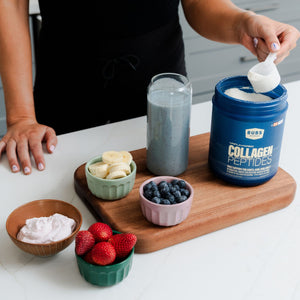
Our Collagen Peptides are hydrolyzed and pasture-raised. This ensures they mix easily into your coffee or smoothie without changing the flavor. Because they contain Type I and Type III collagen, they are excellent for supporting the tendons and ligaments that move your fingers and wrists.
Undenatured Type II Collagen (UC-II)
This form of collagen is not broken down. Instead, it is kept in its whole form. It is specifically targeted at joint cartilage. Because it works through the immune system (oral tolerance), the dose is much smaller—usually only about 40 milligrams per day. Some studies have shown that UC-II can be more effective than the combination of glucosamine and chondroitin for reducing joint pain.
What the Science Says About Collagen and Arthritis
Research into collagen and arthritis has grown significantly over the last decade. Several clinical trials have looked at how these supplements affect pain and physical function.
One study involving 250 subjects with knee osteoarthritis showed that taking 10 grams of hydrolyzed collagen daily for six months led to a significant decrease in joint pain. While this study focused on the knee, the biological mechanisms are the same for the hands. The subjects who had the most severe symptoms and the lowest protein intake saw the greatest improvements.
Another study compared undenatured Type II collagen to a placebo. After 180 days, the participants taking the collagen reported significantly less pain and stiffness. They also showed improved physical function. This suggests that for chronic "wear and tear," collagen can be a valuable part of a long-term management plan.
It is important to have realistic expectations. Collagen is not an instant pain reliever like ibuprofen. It works by supporting the structure of the joint over time. Most studies show that benefits begin to appear around the 12-week mark, with the most significant changes occurring after 24 weeks of consistent use.
Myth: Collagen is just another form of protein, so eating more chicken or steak will provide the same benefits.
Fact: While meat contains protein, it does not have the same concentration of the specific amino acids (glycine and proline) found in collagen. Furthermore, hydrolyzed collagen is much easier for your body to absorb and utilize specifically for connective tissue repair.
How to Take Collagen for Hand Health
To get the most out of your supplement, you need to be consistent and patient. Here are the best practices for using collagen to support your hands.
Choose the Right Dose
For hydrolyzed collagen peptides, aim for 10 to 20 grams per day. This is usually one or two scoops of powder. If you are using undenatured Type II collagen, follow the label instructions, which usually suggest a much smaller dose of 40mg. Many people find that a combination of both forms provides the best results.
The Importance of Vitamin C
Your body cannot synthesize collagen without Vitamin C. This vitamin acts as a cofactor in the enzymatic process that links amino acids together to form collagen fibers. If you are deficient in Vitamin C, your collagen supplement will be much less effective. We recommend taking our Vitamin C alongside your collagen to ensure your body has everything it needs to rebuild tissue.
Mixing and Timing
Hydrolyzed collagen is very versatile. You can mix it into hot coffee, cold water, or protein shakes. It does not matter what time of day you take it. The most important factor is making it a habit. Many people prefer to take it in the morning to start their day with a boost of amino acids.
Monitor Your Progress
Keep a simple log of your hand pain and mobility. Rate your stiffness on a scale of 1 to 10 every morning. Since the changes happen slowly, you might not notice the improvement day-to-day. Comparing your week 1 notes to your week 12 notes will give you a clearer picture of whether the supplement is working for you.
Beyond Supplements: A Holistic Approach to Hand Arthritis
While collagen is a powerful tool, it works best when part of a larger strategy. Managing hand arthritis requires looking at your overall lifestyle and nutrition.
Hydration and Electrolytes
Your cartilage is about 70% to 80% water. Dehydration can make joint pain feel worse because the "cushion" in your joints becomes less effective. Staying hydrated is essential. For those who are active, plain water isn't always enough. Our Hydrate or Die electrolyte formula helps maintain the fluid balance in your tissues, ensuring your joints stay lubricated.
Movement and Exercise
It may seem counterintuitive, but movement is medicine for arthritic hands. "Motion is lotion" is a common phrase in physical therapy for a reason. Gentle hand exercises help circulate synovial fluid, which nourishes the cartilage. Try making a soft fist, finger lifts, or thumb stretches. Always listen to your body and avoid movements that cause sharp pain.
Anti-Inflammatory Diet
What you eat impacts the level of inflammation in your body. Focus on whole foods like fatty fish, leafy greens, and berries. Avoid highly processed sugars and seed oils, which can trigger inflammatory responses. Some people also find relief by adding turmeric or ginger to their diet, both of which have natural anti-inflammatory properties.
Note: Always consult with your healthcare provider before starting a new supplement regimen, especially if you have an underlying medical condition or are taking prescription medications for arthritis.
Why Quality Matters
The supplement industry is not always transparent. When you are taking something every day to improve your health, you need to know exactly what is in the bottle. Low-quality collagen can contain heavy metals or fillers that do more harm than good.
We take quality seriously at BUBS Naturals. Our products are third-party tested and NSF Certified for Sport. This means they are free from banned substances and contain exactly what is listed on the label. We use grass-fed, pasture-raised sources because we believe the best results come from the cleanest ingredients. We don't use artificial sweeteners, flavors, or "BS" fillers. You get pure collagen that does its job so you can get back to yours.
Bottom line: For collagen to support hand arthritis, it must be high-quality, bioavailable, and taken consistently for at least three months alongside a healthy diet and adequate Vitamin C.
Conclusion
Hand arthritis can feel like a constant barrier to the activities you love, but you are not helpless against it. While collagen isn't a "silver bullet" that works overnight, the science shows it can be a valuable ally. By supporting your cartilage, tendons, and ligaments, you may experience less stiffness and more freedom in your daily movements.
Our mission is to provide you with the tools to live a better, more adventurous life. We named our company after Glen "BUB" Doherty, a Navy SEAL who lived with purpose and intensity. To honor his legacy, we donate 10% of all our profits to veteran-focused charities. When you choose our products, you aren't just supporting your own health—you're supporting a greater cause.
Start with one scoop a day. Be patient with your body. Give it the building blocks it needs, and stay moving. Whether you're gripping a barbell, a steering wheel, or a grandchild's hand, we want you to do it with less pain and more confidence. If you want the hydration side of your routine dialed in too, explore our Electrolytes collection.
FAQ
Does collagen work for both osteoarthritis and rheumatoid arthritis?
Most research shows a clear benefit for osteoarthritis because collagen directly supports the repair of worn-down cartilage. For rheumatoid arthritis, which is an autoimmune condition, some studies suggest that undenatured Type II collagen may help the immune system become less reactive to joint tissue. However, anyone with RA should work closely with a rheumatologist when adding supplements to their plan.
How long does it take for collagen to help hand pain?
Collagen is a long-term support strategy, not a quick fix for acute pain. Most clinical trials show that it takes between 12 and 24 weeks of daily use to see a significant reduction in pain and stiffness. Consistency is the most important factor in seeing results, and how collagen absorbs in the body helps explain why that timeline matters.
Are there any side effects to taking collagen for arthritis?
Collagen is generally considered very safe because it is a protein derived from food sources. Some people may experience mild digestive upset or a feeling of heaviness in the stomach when they first start. If this happens, try splitting your dose into smaller amounts throughout the day.
Can I get enough collagen from bone broth instead of supplements?
While bone broth contains collagen, the levels can vary wildly depending on how it was prepared. Commercial bone broths often lack the concentration of amino acids found in a dedicated supplement. Hydrolyzed collagen peptides provide a consistent, concentrated dose that is much easier for your body to absorb and use.