Table of Contents
- Introduction
- Understanding the Psoriasis-Inflammation Connection
- What Exactly Is Collagen?
- How Collagen May Support Psoriasis Patients
- Types of Collagen: What Should You Look For?
- Practical Ways to Incorporate Collagen
- Safety, Side Effects, and Important Considerations
- The Lifestyle Synergy: Beyond Supplements
- Conclusion
- FAQ
Introduction
Managing psoriasis is a daily battle that goes far beyond the surface of the skin. If you live with this condition, you know the routine: the itching, the visible scales, and the search for anything that provides real relief. It’s a systemic inflammatory issue that requires a multi-pronged approach to keep flare-ups at bay.
At BUBS Naturals, we focus on providing clean, functional tools to help you navigate your wellness journey with confidence. Many people in the psoriasis community are now looking at BUBS Naturals Collagen Peptides not just as a beauty supplement, but as a potential way to support skin health and manage internal inflammation. While it isn’t a medical cure, its unique amino acid profile may offer significant benefits for those dealing with autoimmune skin challenges.
This article explores the relationship between collagen and psoriasis, the science behind how it works in the body, and how you can incorporate it into your routine safely. We’ll look at why this "glue" of the body might be a helpful addition to your existing wellness protocol.
Quick Answer: While collagen is not a cure for psoriasis, its anti-inflammatory amino acids like glycine may help reduce the severity of flare-ups and improve skin hydration. It also supports joint health, which is vital for the 30% of psoriasis patients who develop psoriatic arthritis.
Understanding the Psoriasis-Inflammation Connection
To understand if collagen helps, you first have to understand what psoriasis actually is. It is a chronic autoimmune condition where your immune system becomes overactive. Instead of the typical 28-day cycle for skin cell turnover, a person with psoriasis might see new cells reach the surface in just three to seven days. This rapid buildup is what creates the characteristic red patches and silvery scales.
This process is driven by systemic inflammation. It isn't just a skin problem; it’s an internal "fire" that can affect other parts of the body. Research suggests that reducing overall inflammation is one of the most effective ways to manage the frequency and intensity of flare-ups. This is why many people look for anti-inflammatory supplements and diets to complement their prescribed medical treatments, a topic we explore further in How Taking Collagen Peptides Helps for Psoriasis.
When the body is under constant inflammatory stress, it uses up nutrients faster than it can replace them. This can lead to a breakdown in the structural integrity of your skin, making it more prone to cracking, bleeding, and dryness. Finding ways to support the skin’s barrier from the inside out is a key strategy for long-term management.
What Exactly Is Collagen?
Collagen is the most abundant protein in your body, accounting for about 30% of your total protein content. Think of it as the "glue" that holds everything together—it provides structure to your skin, hair, nails, bones, ligaments, and tendons. Without it, our bodies would essentially lose their shape and structural strength.
Our bodies produce collagen naturally, but this production starts to slow down as early as our mid-20s. External factors like stress, poor sleep, and environmental toxins can speed up this decline. For a deeper look at collagen synthesis, see Understanding the Science of How the Body Produces Collagen.
Collagen is made up of specific amino acids: glycine, proline, and hydroxyproline. These aren't just building blocks; they serve functional roles in how our cells communicate and how our body manages its immune response. When you take a collagen supplement, your body breaks these proteins down into smaller "peptides" that are easily absorbed and sent to the areas that need them most.
Key Takeaway: Collagen is a structural protein that declines with age; for those with psoriasis, its specific amino acids may help reinforce the skin barrier and modulate the body's inflammatory response.
How Collagen May Support Psoriasis Patients
While clinical research specifically targeting collagen for psoriasis is still growing, the existing science on collagen’s role in inflammation and skin health is very promising. For a related look at joint support, see How Collagen Can Support Your Joints and Recovery This Spring.
1. Reducing Systemic Inflammation
The star of the show here is glycine. This amino acid makes up about one-third of the collagen molecule. Glycine is known for its potent anti-inflammatory and antioxidant properties. It helps inhibit the production of pro-inflammatory cytokines, which are the signaling molecules that tell your immune system to attack your own skin cells. By helping to calm this internal "storm," collagen may help reduce the redness and irritation associated with plaques.
2. Improving Skin Elasticity and Hydration
Psoriasis often leaves the skin feeling tight, dry, and brittle. Collagen has been shown to improve skin hydration and elasticity by stimulating the production of hyaluronic acid. Hyaluronic acid is a molecule that can hold up to 1,000 times its weight in water. When your skin is better hydrated from the inside, it is less likely to crack or peel, which can significantly reduce the discomfort of a flare-up.
3. Supporting Joint Health (Psoriatic Arthritis)
Roughly one out of every three people with psoriasis will eventually develop psoriatic arthritis. This involves painful inflammation in the joints, particularly in the fingers, toes, and lower back. Type II collagen is a major component of joint cartilage. Supplementing with collagen can help maintain the integrity of these tissues, potentially reducing joint stiffness and improving mobility for those dealing with both skin and joint symptoms.
4. Strengthening the Gut-Skin Axis
There is a well-documented link between gut health and skin health, often called the "gut-skin axis." Many psoriasis patients also deal with gut permeability, often referred to as "leaky gut," where toxins and undigested food particles leak into the bloodstream and trigger an immune response. Collagen contains the amino acids necessary to "seal" and repair the lining of the digestive tract. By improving gut health, you may notice a secondary improvement in your skin’s appearance.
Bottom line: Collagen provides the raw materials to fight inflammation, hydrate the skin, protect joints, and repair the gut—all of which are critical for managing psoriasis symptoms.
Types of Collagen: What Should You Look For?
There are at least 28 different types of collagen in the body, but Types I, II, and III are the most important for general wellness and skin health. When choosing a supplement, it’s important to know which one aligns with your specific goals.
| Collagen Type |
Primary Location |
Benefit for Psoriasis Patients |
| Type I |
Skin, tendons, bones, organs |
Best for skin elasticity, wound healing, and structure. |
| Type II |
Cartilage |
Best for joint pain and psoriatic arthritis support. |
| Type III |
Skin, muscles, blood vessels |
Works with Type I to provide skin firmness and gut support. |
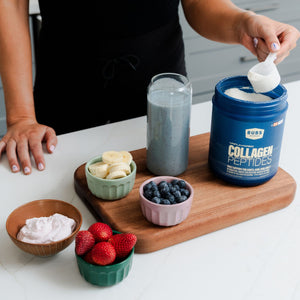
Our BUBS Naturals Collagen Peptides focus on Types I and III. We source our collagen from grass-fed, pasture-raised cattle to ensure you are getting the cleanest, most bioavailable protein possible. Because it is hydrolyzed, the protein is already broken down into small peptides, which means it dissolves easily in your morning coffee or post-workout shake without changing the flavor or texture.
Note: If your primary concern is joint pain associated with psoriatic arthritis, look for a supplement that includes Type II collagen. However, for skin-focused support and general anti-inflammatory benefits, Types I and III are usually the preferred choice.
Practical Ways to Incorporate Collagen
Consistency is the most important factor when using supplements for a chronic condition like psoriasis. It takes time for the body to rebuild its internal stores and for you to see visible changes on the surface. Most people begin to notice a difference in skin hydration and joint comfort after 4 to 8 weeks of daily use, and our How Quickly Does Collagen Take to Work for Real Results? guide breaks down the timeline in more detail.
Here are a few ways to make collagen a natural part of your day:
-
Morning Coffee: Stir a scoop into your first cup of the day, or pair it with MCT Oil Creamer if that’s your routine.
-
Smoothies: Add it to a blend of anti-inflammatory berries (like blueberries or raspberries) and healthy fats.
-
Post-Workout: Use it alongside your protein shake to support recovery and joint health after a training session.
-
Soups and Broths: If you prefer savory options, collagen mixes perfectly into warm liquids without clumping.
At BUBS Naturals, we believe in the "one scoop" philosophy. One scoop a day, every day, is better than five scoops once a week. We design our products to mix effortlessly because we know that if it’s a hassle to use, you won’t stick with it.
Safety, Side Effects, and Important Considerations
Collagen is generally considered safe for most people, but there are a few specific things psoriasis patients should keep in mind. As with any new supplement, it is always a good idea to speak with your dermatologist or healthcare provider before making it a permanent part of your routine, and to review our NSF Certified for Sport standards.
Myth: Collagen is a "miracle cure" that can replace your psoriasis medication.
Fact: Collagen is a functional food supplement that supports the body's natural processes. It should be used as a complementary tool alongside your doctor-prescribed treatment plan, not as a replacement for it.
Kidney Stone Risk
One specific amino acid in collagen, hydroxyproline, can be converted by the body into oxalates. If you have a history of calcium oxalate kidney stones, you should be cautious with high doses of collagen and consult your doctor first.
Allergies
Most collagen supplements are derived from bovine (cow), marine (fish), or porcine (pig) sources. If you have a known allergy to any of these, you must check the label carefully. Our collagen is bovine-sourced, which is the most common and widely studied form for skin and gut health.
Realistic Expectations
Everyone’s body reacts differently. Some people report significant clearing of their skin, while others only notice that their nails are stronger or their joints feel better. Collagen isn't a "quick fix" for a flare-up. It is a long-term strategy to provide your body with the building blocks it needs to function better over time.
Bottom line: While side effects are rare and mild (like slight bloating), it’s important to monitor how your body responds and maintain open communication with your medical team.
The Lifestyle Synergy: Beyond Supplements
Collagen works best when it’s part of a broader lifestyle focused on reducing inflammation. For a psoriasis patient, this means looking at the "big three" of lifestyle management: diet, stress, and sleep.
-
Anti-Inflammatory Diet: Pair your collagen with foods rich in Vitamin C, like citrus fruits or bell peppers. Vitamin C is a necessary co-factor for your body to actually produce its own collagen. Focus on Omega-3 fatty acids from wild-caught fish to further dampen inflammation.
-
Stress Management: Stress is one of the most common triggers for a psoriasis flare-up. Whether it’s through exercise, meditation, or spending time outdoors, finding ways to lower your cortisol levels will help your skin heal faster.
-
Hydration: Supplementing with collagen can improve skin hydration, but you still need to drink enough water. Proper hydration keeps the skin barrier resilient and helps flush out metabolic waste, and Hydrate or Die can help make consistency easier.
If you’re out there pushing your limits—whether that’s on a hiking trail or just navigating a busy workday—you need your body to be as resilient as possible. We build our products for people who refuse to be sidelined by physical setbacks.
Conclusion
Is collagen good for a psoriasis patient? While it isn't a cure-all, the evidence suggests it can be a valuable part of a comprehensive management plan. By supporting the skin’s structural integrity, providing anti-inflammatory amino acids, and aiding in joint health, collagen helps address several of the most challenging aspects of living with psoriasis.
At BUBS Naturals, we are driven by more than just making clean supplements. We are a mission-first company, inspired by the life of Glen "BUB" Doherty. We believe in living with purpose and helping others do the same. That’s why we donate 10% of all our profits to veteran-focused charities. If you want the fuller story, read About Bubs. When you choose our products, you aren't just investing in your own health—you’re contributing to a larger legacy of service and adventure.
If you’re ready to see how high-quality, NSF for Sport certified collagen can support your skin and joint health, we encourage you to start with our Collagen Peptides. It’s a simple, no-BS way to give your body the "glue" it needs to stay strong.
Take it one day at a time, stay consistent, and keep moving forward.
FAQ
Can collagen help with the itching caused by psoriasis?
Many people find that collagen helps reduce itching indirectly by improving the skin’s internal hydration levels. When the skin is more hydrated and the barrier is stronger, it is less likely to become dry, cracked, and irritated, which are the primary triggers for the "itch-scratch" cycle.
Is bovine or marine collagen better for psoriasis?
Bovine collagen is typically rich in Types I and III, which are the primary types found in human skin and are excellent for structural support. Marine collagen is also a good source of Type I. Both can be effective, but bovine collagen is often preferred for its additional support of the gut lining and its more extensive amino acid profile.
How long does it take to see results from collagen for skin conditions?
Because collagen works by rebuilding tissues from the inside out, it is not an overnight solution. Most users report noticeable improvements in skin texture and hydration after 4 to 8 weeks of consistent, daily use. For joint-related symptoms, it may take up to 12 weeks to see significant changes.
Can I take collagen if I am on psoriasis medication?
In most cases, collagen is considered a safe dietary supplement that does not interact with standard psoriasis medications like topical steroids or biologics. However, because psoriasis is an immune-mediated condition, you should always consult your dermatologist before adding any new supplement to your regimen to ensure it fits your specific treatment plan.