Table of Contents
- Introduction
- Understanding Collagen and Its Role in the Body
- The Difference Between Collagen Peptides and Boosters
- Is Collagen Booster Good for Skin Health?
- Support for Joints and Connective Tissues
- Why Bioavailability and Hydrolysis Matter
- How to Maximize the Benefits of Collagen
- Common Lifestyle Factors That Damage Collagen
- How BUBS Naturals Approaches Quality
- Potential Side Effects and Considerations
- Practical Ways to Use Your Booster
- Conclusion
- FAQ
Introduction
You may have noticed the growing conversation around collagen boosters in the fitness and wellness world. As we get older, our bodies naturally slow down the production of this essential protein, often leading to signs of aging in the skin and a slower recovery time after a tough workout. Many people look to supplements to fill this gap, but the question remains: is collagen booster good, or is it just another trend?
At BUBS Naturals, we believe in providing clear, science-backed information so you can make the best choices for your lifestyle. Understanding how these products work is the first step in deciding if they deserve a place in your daily routine. This guide explores the benefits, the different types of boosters available, and what the research says about their effectiveness for skin, joints, and overall performance.
Ultimately, a high-quality collagen booster can be a valuable tool for supporting your body’s structural integrity and long-term vitality.
Quick Answer: Yes, collagen boosters are generally effective when they contain hydrolyzed peptides or essential nutrients like Vitamin C. While they are not a magic fix, high-quality supplements can support skin elasticity, joint comfort, and connective tissue recovery in active adults.
Understanding Collagen and Its Role in the Body
Collagen is the most abundant protein in the human body, making up about 30% of our total protein content. It acts as the "scaffolding" or "glue" that holds everything together. You can find it in your skin, bones, muscles, tendons, ligaments, and even your blood vessels and gut lining. Without it, our bodies would lack the structural strength needed to move and function efficiently.
There are several types of collagen, but the most common are Types I, II, and III. Type I is primarily found in the skin, tendons, and bones, providing immense tensile strength. Type II is the main component of cartilage, which cushions your joints. Type III supports the structure of muscles, organs, and arteries. Together, these proteins ensure that your tissues remain resilient under stress.
As we age, specifically starting in our mid-20s, our natural collagen production begins to decline by about 1% every year. This decline is why we start to see fine lines, feel stiffer joints, and notice that our hair and nails may become more brittle. External factors like sun exposure, high sugar intake, and smoking can speed up this process, making internal support even more important. If you want a deeper primer on the ingredient itself, What Are Collagen Peptides and Their Benefits? is a helpful next read.
The Difference Between Collagen Peptides and Boosters
When people ask if a collagen booster is good, they are often referring to two different types of products. It is important to distinguish between direct collagen supplements and nutrient-based boosters. Both aim to increase the amount of collagen in your body, but they do so through different mechanisms.
Collagen Peptides, also known as hydrolyzed collagen, are the most direct form of supplementation. These are animal-based proteins that have been broken down into very small chains of amino acids. Because they are already partially digested, your body can absorb them more easily. Once in the bloodstream, these peptides provide the raw building blocks your body needs to manufacture its own collagen.
On the other hand, some products labeled as "collagen boosters" do not contain any actual collagen. Instead, they contain the vitamins and minerals that stimulate your body’s natural production. These are often marketed to those following a vegan diet, and you can compare related formulas in our Boosts collection. While these nutrients are vital, they do not provide the specific amino acids—like proline, glycine, and hydroxyproline—that are found in high concentrations in animal-sourced collagen.
| Feature |
Collagen Peptides |
Nutrient-Based Boosters |
| Main Ingredients |
Hydrolyzed animal collagen |
Vitamin C, Zinc, Copper, Biotin |
| Primary Function |
Provides direct building blocks |
Supports internal synthesis process |
| Source |
Bovine, Marine, or Poultry |
Plant-based or Synthetic |
| Best For |
Joint support and skin elasticity |
Long-term maintenance and vegans |
Key Takeaway: Collagen peptides provide the specific amino acids required to build tissue, while nutrient boosters provide the "labor force" to help the body put those building blocks together.
Is Collagen Booster Good for Skin Health?
One of the most common reasons people turn to collagen is for its potential skin benefits. Your skin’s middle layer, the dermis, is made mostly of collagen and elastin. This combination gives your skin its firmness and the ability to "snap back" into place. As collagen levels drop, the skin loses its thickness and moisture-retaining ability, which leads to wrinkles and sagging.
Research into oral collagen supplementation has shown promising results for skin hydration and elasticity. Several studies suggest that taking the best collagen peptides on the market regularly may help increase skin density. This does not happen overnight. Most participants in these studies noticed improvements after consistently taking the supplement for eight to twelve weeks.
It is also worth noting that collagen works from the inside out. While many topical creams claim to "boost" collagen, the collagen molecule is actually too large to penetrate the skin's surface effectively. Consuming a booster or supplement allows the amino acids to reach the deeper layers of the dermis through the bloodstream, where they can actually support the structural matrix.
Support for Joints and Connective Tissues
For athletes and active individuals, the health of your joints, tendons, and ligaments is often more important than the appearance of your skin. Every time you run, lift, or jump, your connective tissues absorb significant stress. Cartilage, which protects the ends of your bones, is heavily dependent on collagen to maintain its smooth, cushioning properties.
When you experience joint discomfort or "creaky" knees, it may be a sign that the cartilage is thinning or that the tendons are becoming less flexible. Many athletes report that a daily collagen booster helps them manage joint stiffness and supports faster recovery after high-impact training. Recent studies have even explored how collagen peptides can support tendon health, which is one reason people keep collagen in their routine. By providing the body with the specific amino acids used in cartilage repair, you may help your body stay more resilient.
Recent studies have even explored how collagen peptides can support tendon health. Tendons connect muscle to bone and are made almost entirely of Type I collagen. Supplementing with collagen before or after exercise may help strengthen these tissues, potentially reducing the risk of common overuse injuries like tendonitis. This makes it a functional tool for anyone looking to stay active well into their later years.
Myth: Collagen supplements are just expensive protein powders that your body treats like any other meat or eggs.
Fact: While the body does break down all protein, collagen has a unique amino acid profile with high levels of glycine and proline. Hydrolyzed peptides also contain bioactive molecules that can signal the body to increase its own production.
Why Bioavailability and Hydrolysis Matter
If you are going to use a supplement, you want to make sure your body can actually use it. This is where the term "bioavailability" comes in. Raw collagen, like the kind found in a tough piece of steak, is a very large, complex molecule. Your digestive system has a hard time breaking it down into a form that can enter the bloodstream efficiently.
Hydrolysis is the process of using water and enzymes to break these large molecules into smaller "peptides." These peptides are much easier for the gut to absorb. When you take a hydrolyzed collagen booster, the amino acids are quickly transported to the tissues that need them most. This is why we focus on using only hydrolyzed, grass-fed bovine collagen in our formulas.
Another factor in effectiveness is the source. Grass-fed and pasture-raised sources are generally considered superior because they are free from the hormones and antibiotics often found in factory-farmed animals. For those concerned about purity, looking for a product that is NSF Certified for Sport ensures that you are getting exactly what is on the label without any hidden fillers or contaminants.
How to Maximize the Benefits of Collagen
Taking a supplement is only one part of the equation. To get the most out of your collagen booster, you need to provide your body with the right environment to use it. Certain nutrients act as co-factors, meaning they are required for the chemical reactions that create collagen in your body.
Vitamin C is perhaps the most important co-factor. Without sufficient Vitamin C, your body cannot cross-link the amino acids to form a stable collagen fiber. This is why we often recommend pairing a collagen supplement with a high-quality Vitamin C source. Zinc and copper also play supporting roles in the enzymatic reactions that maintain the structural integrity of your connective tissues.
Timing can also play a role, especially for those focused on performance. Some evidence suggests that taking collagen about an hour before exercise may help the amino acids circulate in the blood just as the tissues are being stimulated by physical activity. This may help the body direct those nutrients toward the tendons and joints that are being worked.
Bottom line: To get the best results, choose a hydrolyzed peptide formula and ensure you are getting plenty of Vitamin C to support the synthesis process.
Common Lifestyle Factors That Damage Collagen
No amount of supplementation can fully overcome a lifestyle that actively destroys collagen. If you want to see real results, you must also protect the collagen you already have. Several external factors are known as "collagen killers" because they trigger the breakdown of these proteins at an accelerated rate.
-
UV Exposure: The sun's ultraviolet rays are the primary cause of skin aging. They break down the collagen fibers in the dermis and interfere with the production of new ones. Wearing sunscreen is one of the best things you can do to preserve your natural collagen.
-
High Sugar Intake: Sugar molecules can attach to proteins in a process called glycation. This creates harmful molecules known as advanced glycation end products (AGEs). These molecules make collagen fibers brittle, dry, and prone to breaking.
-
Smoking: Tobacco smoke reduces the amount of oxygen that reaches your tissues and introduces toxins that directly damage collagen and elastin.
-
Lack of Sleep: Your body does most of its repair work while you sleep. Chronic sleep deprivation can increase cortisol levels, which can lead to the breakdown of skin and muscle tissue over time.
By managing these factors, you allow your collagen booster to work more effectively. It is much easier to maintain your existing collagen levels than it is to try and rebuild them after significant damage has occurred.
How BUBS Naturals Approaches Quality
We founded BUBS Naturals with a clear mission: to create the cleanest, most effective supplements possible while honoring a legacy of service and adventure. We know that our community of athletes, veterans, and active adults doesn't have time for products that don't perform. That is why our approach to collagen is simple and transparent.
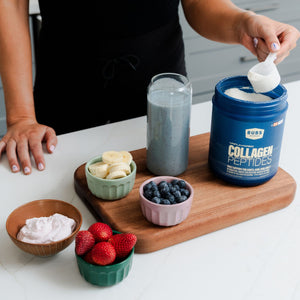
Our Collagen Peptides are sourced from grass-fed, pasture-raised cattle to ensure a clean amino acid profile. To shop the direct formula, visit our Collagen Peptides collection. We make sure our powder is unflavored and easy to mix into your morning coffee, a post-workout shake, or even a glass of water. We don't use fillers, sugars, or artificial ingredients because we believe that what you put in your body should be as pure as possible.
To give you complete peace of mind, our products are NSF for Sport certified. This means they have been rigorously tested to ensure they are free from banned substances and that the label accurately reflects the contents. Whether you are a professional athlete or a weekend warrior, you can trust that we are providing you with a product that meets the highest standards of safety and quality.
Key Takeaway: Quality matters more than quantity. A clean, third-party-tested hydrolyzed peptide will always be more effective than a cheaper alternative filled with additives.
Potential Side Effects and Considerations
For most people, collagen boosters are safe and well-tolerated. Because collagen is a protein naturally found in the body and in many foods we eat, adverse reactions are rare. However, there are a few things to keep in mind before starting any new supplement regimen.
Some people may experience mild digestive symptoms, such as bloating or a feeling of heaviness in the stomach, when they first start taking collagen. This often goes away as the body adjusts. If you have a known allergy to bovine, marine, or poultry products, you should be careful to choose a collagen source that is safe for you.
Additionally, those with chronic kidney disease should consult their healthcare provider before significantly increasing their protein intake, including collagen. While protein is essential, the kidneys are responsible for processing the byproducts of protein metabolism, and an underlying condition may require a more controlled intake. Always listen to your body and start with a smaller dose if you have a sensitive system.
Practical Ways to Use Your Booster
The best supplement is the one you actually remember to take. One of the reasons collagen has become so popular is its versatility. Unlike some protein powders that have a chalky texture or a strong aftertaste, high-quality peptides should be virtually tasteless and dissolve completely in both hot and cold liquids.
Many of our customers start their day by adding a scoop to their coffee. It is an easy way to get a jump start on your protein goals without changing the flavor of your favorite brew. You can also mix it into oatmeal, yogurt, or smoothies. For a closer look at the ingredient profile, What Ingredients Are in Collagen Peptides? breaks it down clearly. Because it is heat-stable, you can even use it in baking or cooking, adding a protein boost to soups or homemade energy bars.
Consistency is key. You won't see a change in your skin or joints after a single dose. Think of it like training at the gym; the results come from showing up day after day. Most people find that setting a specific time for their collagen—like with breakfast or right after a workout—helps them build a lasting habit.
Conclusion
Determining if a collagen booster is good for you comes down to your personal health goals and your commitment to a consistent routine. While it is not a "magic pill," the science supports its role in maintaining skin elasticity, supporting joint comfort, and helping the body recover from the daily stresses of an active life. By choosing a high-quality, hydrolyzed peptide and protecting your existing collagen through healthy lifestyle choices, you are setting yourself up for long-term success.
At BUBS Naturals, we are proud to offer products that help you live a life full of adventure and purpose. Our commitment to quality is matched by our commitment to our community. We donate 10% of all our profits to veteran-focused charities in honor of Glen "BUB" Doherty, and you can read more about that commitment in our giving back blog, ensuring that every purchase you make supports a larger mission.
Whether you are looking to support your joints for your next marathon or simply want to feel better as you age, we are here to provide the clean, effective tools you need. Start with one scoop a day, stay consistent, and feel the difference that high-quality nutrition can make.
FAQ
Does a collagen booster really work for skin?
Many studies show that oral collagen peptides can improve skin hydration and elasticity over a period of eight to twelve weeks. While results vary, providing the body with the specific amino acids used in the dermis helps maintain the skin’s structural integrity from the inside out.
What is the best time to take a collagen booster?
There is no "wrong" time, but consistency is the most important factor. Many athletes prefer taking it about an hour before exercise to support their joints, while others find it easiest to incorporate into their morning coffee or a post-workout shake.
Can I get enough collagen from my diet alone?
While you can get collagen from foods like bone broth and organ meats, these are not always part of a modern diet. A supplement provides a concentrated, hydrolyzed dose that is much easier for your body to absorb than the whole proteins found in food.
Are there any side effects to taking collagen every day?
Collagen is generally considered safe for daily use with very few reported side effects. Some people may experience minor digestive bloating when they first start, but this usually resolves quickly. If you have a specific medical condition like kidney disease, consult your doctor before increasing your protein intake.