Table of Contents
- Introduction
- The Biological Blueprint: How Collagen Is Made
- Essential Nutrients for Collagen Synthesis
- Lifestyle Habits That Protect Your Collagen "Bank"
- The Role of Supplementation: Why Hydrolyzed Collagen Matters
- Creating a Collagen-Boosting Routine
- The BUBS Difference: Quality and Purpose
- Beyond the Surface: Why Internal Production Matters
- Navigating the Path to Long-Term Wellness
- FAQ
Introduction
Did you know that collagen makes up roughly 30% of the total protein in your body and a staggering 70% of the protein found in your skin? It is the biological scaffolding that holds us together, providing structure to everything from your bones and tendons to your hair, nails, and the very lining of your gut. However, once we cross the threshold of our mid-twenties, our natural collagen production begins a slow, steady decline—dropping by about 1% every single year. By the time we reach our 40s and 50s, that "collagen bank" we relied on in our youth starts to dwindle, leading to common signs of aging like less flexible joints and thinner skin.
The question of how do you get your body to produce more collagen is not just about aesthetics; it is about maintaining a body that is ready for adventure. Whether you are hitting the trails, pushing for a new personal record in the gym, or simply looking to support your long-term wellness, understanding the mechanics of collagen synthesis is vital. Historically, humans consumed much more collagen through traditional diets rich in bone broths and organ meats. In the modern era, these nutrient-dense sources have largely fallen out of our daily routines, leaving a gap that we need to bridge through intentional nutrition and lifestyle choices.
In this post, we will explore the science behind collagen synthesis, the specific micronutrients your body requires to build these protein fibers, and the lifestyle habits that either protect or destroy your existing collagen stores. We will also dive into why high-quality, hydrolyzed Collagen Peptides are a game-changer for those looking to support their body’s natural processes. By the end of this article, you will have a clear, actionable roadmap for optimizing your internal collagen production.
At BUBS Naturals, we believe that wellness should be simple, effective, and rooted in a greater purpose. Inspired by the legacy of Glen “BUB” Doherty—a Navy SEAL, adventurer, and hero—we are committed to providing clean, NSF for Sport certified supplements that help you live a life of impact. As part of our mission, we donate 10% of all profits to veteran-focused charities. This post isn’t just about biology; it’s about giving you the tools to stay strong, stay active, and live the BUBS life.
The Biological Blueprint: How Collagen Is Made
To understand how to stimulate production, we first have to look at the "factory" inside your body. Collagen isn’t something you just eat and move directly into your skin; it is a complex protein that your body assembles from scratch. This process primarily takes place in specialized cells called fibroblasts, which are found in the connective tissues.
The assembly of collagen begins with the creation of "pro-collagen." Think of this as the raw material. Your body combines two main amino acids—glycine and proline—using Vitamin C as a catalyst to kickstart the reaction. These amino acids form long chains that eventually twist together into a triple helix structure. This triple helix is what gives collagen its incredible tensile strength, making it stronger, gram for gram, than steel.
As we age, these fibroblasts become less efficient. They don't respond as quickly to signals, and the rate at which they churn out new collagen fibers slows down. Furthermore, environmental stressors can cause the existing collagen to become fragmented and "clumped," making it less effective at providing structural support. This is why supporting the body with the right raw materials, like our Collagen Peptides, is so critical. By providing the body with hydrolyzed peptides, you are essentially delivering the "pre-cut" building blocks that the fibroblasts can easily recognize and utilize.
Essential Nutrients for Collagen Synthesis
If your body is a construction site, then nutrients are the workers and the materials. Without the right supply chain, production grinds to a halt. When people ask how do you get your body to produce more collagen, the first answer is always nutritional optimization.
Vitamin C: The Indispensable Cofactor
You cannot produce collagen without Vitamin C. Period. This vitamin acts as a cofactor for the enzymes prolyl hydroxylase and lysyl hydroxylase, which stabilize the collagen molecule. Without sufficient Vitamin C, the collagen fibers your body tries to build will be weak and unstable. This is why we developed our Vitamin C supplement with citrus bioflavonoids—to ensure your body has the antioxidant support and the specific building blocks required for collagen formation.
The Role of Amino Acids
Collagen is unique because it is exceptionally high in three specific amino acids: glycine, proline, and hydroxyproline. While the body can produce some of these on its own, they are considered "conditionally essential," meaning that during times of high stress, injury, or aging, the body’s internal production may not meet its needs. Consuming a diverse range of proteins is helpful, but Collagen Peptides offer a concentrated source of these specific "pro-collagen" building blocks that you won't find in high amounts in a standard chicken breast or whey protein shake.
Minerals: Copper and Zinc
Copper is required for the activation of lysyl oxidase, an enzyme that cross-links collagen and elastin, giving your tissues their elasticity and strength. Zinc, meanwhile, is essential for cell division and protein synthesis. A deficiency in either can lead to sluggish collagen production and slower recovery times. Ensuring your diet includes nuts, seeds, and legumes—or supporting your gut health with Apple Cider Vinegar Gummies to improve nutrient absorption—can make a significant difference.
Lifestyle Habits That Protect Your Collagen "Bank"
It is one thing to increase production, but it is equally important to stop the "leaks" in your collagen bank. Several lifestyle factors can accelerate the breakdown of collagen, a process known as collagen degradation.
Shielding from UV Radiation
Excessive sun exposure is perhaps the number one external cause of collagen loss. UV rays penetrate deep into the dermis and trigger the production of enzymes called matrix metalloproteinases (MMPs). These enzymes are designed to break down old collagen, but UV light causes them to go into overdrive, destroying healthy collagen and elastin. Wearing sun protection and seeking shade aren't just for avoiding burns; they are essential for preserving the structural integrity of your skin and tissues.
The Danger of Glycation
When you consume high amounts of refined sugar, the sugar molecules in your blood attach to proteins (like collagen) in a process called glycation. This forms "Advanced Glycation End-products," appropriately shortened to AGEs. These AGEs make collagen fibers brittle, stiff, and prone to breaking. By keeping your blood sugar stable—perhaps by swapping sugary snacks for a clean energy source like our MCT Oil Creamer—you can protect your collagen from this chemical hardening.
Sleep and Stress Management
Your body does its heaviest repair work while you sleep. During deep sleep stages, growth hormone levels rise, stimulating fibroblasts to produce more collagen. Conversely, chronic stress leads to high levels of cortisol, which is known to break down collagen fibers. A lifestyle that prioritizes recovery and mental clarity isn't just a luxury; it's a biological necessity for tissue maintenance.
The Role of Supplementation: Why Hydrolyzed Collagen Matters
While you can get some collagen-boosting nutrients from food, supplementation offers a level of precision and bioavailability that is hard to match. This is where the Collagen Peptides Collection comes into play.
Regular collagen (like the kind in a piece of steak) is a very large molecule that is difficult for the body to break down and absorb efficiently. Hydrolyzed collagen, however, has undergone a process called enzymatic hydrolysis. This breaks the long protein chains into smaller "peptides" with a lower molecular weight. These peptides are highly "bioavailable," meaning they are easily absorbed through the intestinal wall and enter the bloodstream quickly.
Once in the blood, these peptides do two things. First, they provide the raw building blocks (amino acids) needed for synthesis. Second, and perhaps more importantly, they act as signaling molecules. When your body detects a high concentration of these peptides, it "thinks" that collagen breakdown has occurred and signals the fibroblasts to ramp up production. It’s a natural feedback loop that you can leverage by consistently using Collagen Peptides.
Creating a Collagen-Boosting Routine
Knowing how do you get your body to produce more collagen is the first step; the second is turning that knowledge into a daily habit. Consistency is the key to seeing results in your skin, hair, and joint health. Here is how we recommend integrating these elements into a seamless wellness routine.
The Morning Kickstart
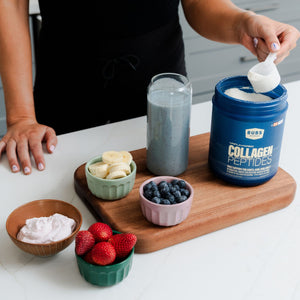
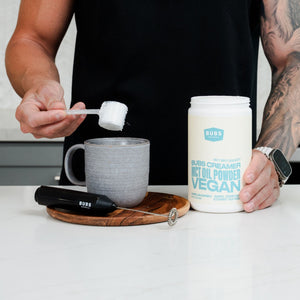
Start your day by supporting both your brain and your body. Many members of the BUBS community stir a scoop of Collagen Peptides into their morning coffee. Because our collagen is flavorless and dissolves instantly, it won't change the taste of your brew. To add a creamy texture and a dose of healthy fats for mental clarity, add our MCT Oil Creamer. This combination provides protein and sustained energy without the sugar crash that leads to glycation.
Mid-Day Support
If you are active, your body is constantly breaking down and rebuilding tissue. Support this process by staying hydrated. Our Hydrate or Die - Lemon electrolyte formula ensures that your cells have the fluid balance necessary for metabolic processes, including protein synthesis. Proper hydration also helps maintain the "plumpness" of the extracellular matrix where collagen resides.
Post-Workout Recovery
After a hard session, your body is primed for nutrient uptake. This is the perfect time for another serving of collagen or to support your muscle power with Creatine Monohydrate. While creatine supports the energy needs of your muscles, collagen supports the tendons and ligaments that work just as hard during your lifts or runs.
The BUBS Difference: Quality and Purpose
In a world full of "BS" and complicated labels, BUBS Naturals stands apart. We don't believe in shortcuts. When you are looking for ways to boost your collagen, the quality of the source matters immensely. Our Collagen Peptides are sourced from grass-fed, pasture-raised bovine hides. We utilize a rigorous third-party testing process, and our products are NSF for Sport certified, which is why professional athletes and high-performers trust us.
But beyond the science, there is the soul of the company. BUBS Naturals was founded to honor Glen “BUB” Doherty. Glen was the kind of person who lived every day to the fullest, whether he was serving as a SEAL or skiing down a mountain. He believed in being a "better you," and we carry that torch by ensuring our products are as clean and effective as possible. When you choose BUBS, you aren't just buying a supplement; you are contributing to a legacy. Our 10% pledge means that every scoop of Collagen Peptides you take helps support veterans and their families. It is wellness with a mission.
Beyond the Surface: Why Internal Production Matters
It is common to see topical creams and lotions promising to deliver collagen directly to your skin. However, the reality is that the collagen molecule is far too large to penetrate the surface of the skin effectively. While these creams might offer some surface-level hydration, they don't address the root cause of collagen loss.
True change happens from the inside out. When you focus on how do you get your body to produce more collagen internally, you are supporting the entire systemic network. You aren't just targeting the wrinkles on your forehead; you're supporting the cartilage in your knees, the strength of your bones, and the health of your digestive tract. This holistic approach is what leads to long-term vitality.
By combining the structural support of our Collagen Peptides Collection with the antioxidant protection of Vitamin C, you are giving your body a comprehensive toolkit for maintenance and repair. This is how you stay in the game longer, recover faster, and feel better in your own skin.
Navigating the Path to Long-Term Wellness
Maintaining high collagen levels is a marathon, not a sprint. It requires a multifaceted approach that addresses nutrition, lifestyle, and high-quality supplementation. We have seen how the decline of collagen is a natural part of the aging process, but it is not a process that we are helpless to influence.
By prioritizing Vitamin C, essential minerals, and specific amino acids, you provide the raw materials. By protecting yourself from UV damage, limiting refined sugars, and managing stress, you preserve the collagen you already have. And by incorporating a clean, highly bioavailable supplement like Collagen Peptides, you provide the necessary signals and building blocks to keep your internal "factory" running smoothly.
Remember, the goal isn't just to look younger; it's to be stronger and more resilient. Whether your adventure is a grueling Spartan race or a weekend hike with your family, your body's structural integrity is the foundation of your performance. At BUBS Naturals, we are here to support that foundation with products that are as dedicated to excellence as you are.
Explore our full Collagen Peptides Collection and start your journey toward a better you today. Feel the BUBS difference, support a great cause, and give your body the "glue" it needs to stay together through every adventure life throws your way.
FAQ
How long does it take to see results from increasing collagen production?
Collagen synthesis is a slow, steady process. While every body is different, most people begin to notice changes in skin hydration and joint comfort after about 4 to 8 weeks of consistent lifestyle changes and supplementation with Collagen Peptides. For benefits related to hair and nail strength, it may take 3 to 6 months, as these tissues take longer to grow and show outward signs of internal health.
Can I get enough collagen from my diet alone?
While you can certainly support your body by consuming bone broth, egg whites, and Vitamin C-rich fruits, it can be challenging to get a consistent, concentrated dose of the specific amino acids (glycine, proline, and hydroxyproline) needed for collagen synthesis through modern diets. Supplementing with Collagen Peptides ensures you are receiving a precise, bioavailable amount of these building blocks every day without the hassle of simmering bones for 24 hours.
Does Vitamin C really make a difference for collagen?
Absolutely. Vitamin C is a mandatory cofactor for the enzymes that stabilize and cross-link collagen fibers. Without it, your body simply cannot complete the process of collagen synthesis correctly. To ensure your body has what it needs, we recommend pairing your collagen intake with a high-quality Vitamin C supplement, especially if your diet is low in fresh fruits and vegetables.
Why should I choose BUBS Naturals over other brands?
At BUBS, we prioritize three things: quality, transparency, and legacy. Our Collagen Peptides are NSF for Sport certified, meaning they are rigorously tested for purity and banned substances. We use only one ingredient—no fillers, no "BS." Most importantly, we donate 10% of our profits to charity in honor of Glen “BUB” Doherty, so your purchase supports the veteran community while supporting your own wellness.