Table of Contents
- Introduction
- Understanding the Basics of Collagen
- The Case for Collagen Powder
- The Case for Collagen Pills
- Comparing the Stats: Pills vs. Powder
- The Problem of Pill Fatigue
- Identifying Your Goals
- Quality Matters More Than Format
- How to Get the Most Out of Your Collagen
- The BUBS Naturals Way
- Bottom Line on Pills vs. Powder
- Conclusion
- FAQ
Introduction
Choosing a supplement usually comes down to one thing: does it fit into your life? When you look at the options for collagen, you are often faced with a choice between a tub of powder and a bottle of pills. Both claim to support your joints, skin, and recovery. However, the experience of taking them is very different. You might prefer the speed of a capsule or the versatility of a scoop in your morning coffee.
At BUBS Naturals, we believe in keeping your wellness routine simple and effective. Whether you are hitting the trails or heading to the gym, your supplements should work as hard as you do. This guide breaks down the differences between collagen pills and powder to help you decide which is truly better for your goals. We will look at dosage, absorption, and cost to give you the full picture.
The reality is that while both forms contain the same basic ingredient, the delivery method changes how much benefit you actually get.
Understanding the Basics of Collagen
Collagen is the most abundant protein in your body. It acts like the glue that holds your skin, bones, and connective tissues together. As we age, our natural production of this protein starts to slow down. This decline often begins in your 20s. Many people turn to supplements to help maintain joint comfort and skin elasticity.
Most supplements on the market use hydrolyzed collagen. This is also known as collagen peptides. Hydrolysis is a process that breaks down large collagen molecules into smaller chains called peptides. These smaller chains are easier for your body to absorb.
When you compare pills and powder, you are usually looking at the same hydrolyzed peptides. The primary difference is the packaging. A pill is just a small amount of powder tucked inside a gelatin or vegetable-based shell. Because the core ingredient is often identical, the "pills versus powder" debate is mostly about quantity and convenience.
The Case for Collagen Powder
Collagen powder is the most popular form of the supplement for a reason. It offers a level of versatility that pills cannot match. You can stir it into hot coffee, blend it into a protein shake, or even mix it into a bowl of oatmeal.
Higher Dosage Per Serving
The biggest advantage of powder is the dose. A standard scoop of high-quality collagen powder usually provides around 10 to 20 grams of collagen peptides. This is a significant amount of protein. For those using collagen to support muscle recovery or joint health, this higher dose is often necessary to see real results.
Better Value for Your Money
When you buy powder, you are usually getting more "bang for your buck." Manufacturing capsules requires extra steps. The machines have to fill each individual shell, and the shells themselves add to the production cost. Powder bypasses these extra costs. You get more actual collagen per dollar spent.
Zero Fillers
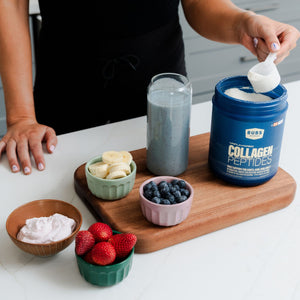
Because powder is sold in bulk, there is less need for flow agents or binders. These are ingredients used in pill manufacturing to keep the powder from sticking to the machinery. Our Collagen Peptides focus on purity. We provide grass-fed, pasture-raised hydrolyzed collagen without any added BS. This means you are only putting what you need into your body.
Key Takeaway: Collagen powder is generally more cost-effective and provides a much higher dose of protein per serving than capsules.
The Case for Collagen Pills
Pills have a dedicated following because they are incredibly convenient. If you are someone who is always on the go, a bottle of capsules is easy to throw into a gym bag or carry-on.
No Mixing Required
One of the biggest hurdles with supplements is the preparation. Some people do not like the ritual of stirring powder into a drink. Pills allow you to get your collagen in seconds with a quick gulp of water. There is no cleanup and no need for a blender or shaker bottle.
Portability for Travel
If you travel often, carrying a large tub of powder is not always practical. Pills are compact and mess-free. You do not have to worry about powder spilling in your suitcase. For a short weekend trip, a small pill organizer can hold your entire supply.
No Taste Concerns
High-quality collagen powder is usually tasteless, but some people are extremely sensitive to textures or subtle flavors. Pills bypass the taste buds entirely. If you have a very picky palate, the "shield" of a capsule ensures you never taste the supplement at all.
Comparing the Stats: Pills vs. Powder
To understand which is better, we have to look at the numbers. The most common mistake people make with collagen pills is under-dosing.
The Dosage Gap
Most collagen capsules contain about 500 to 1,000 milligrams of collagen. That sounds like a lot, but remember that 1,000 milligrams is only 1 gram. If your goal is to hit 10 grams of collagen per day, you would need to swallow 10 to 20 large pills.
Compare that to powder. One scoop of our Collagen Peptides provides roughly 18 grams of collagen. To get that same amount from pills, you would be taking a handful of capsules every single morning. Most people find this "pill fatigue" difficult to maintain over time.
Bioavailability and Absorption
A common myth is that powder absorbs faster than pills. In reality, your stomach acid breaks down a gelatin capsule in just a few minutes. Once the capsule dissolves, the powder inside is treated the same way as the powder you drink.
The bioavailability—how much of the nutrient your body can actually use—is essentially the same for both. The real issue is the volume. Your body can only use what you give it. If you take two pills and get only 1 gram of collagen, you are not giving your body much to work with compared to a full scoop of powder.
| Feature |
Collagen Powder |
Collagen Pills |
| Typical Dose |
10g - 20g per scoop |
0.5g - 1g per pill |
| Cost per Gram |
Lower |
Higher |
| Ingredients |
Usually pure collagen |
Often includes binders/fillers |
| Convenience |
Requires mixing |
Ready to swallow |
| Portability |
Bulky |
Compact |
The Problem of Pill Fatigue
Consistency is the most important factor in any supplement routine. You will not see benefits from collagen if you only take it once a week. "Pill fatigue" is a real phenomenon where people get tired of swallowing multiple large capsules every day.
If you choose pills, you have to be honest about your habits. Are you actually willing to swallow 10 capsules a day? For most active adults, it is much easier to make a single scoop of powder part of a morning coffee routine. We designed our products to mix effortlessly. This removes the friction that often leads people to quit their supplement routines.
Myth: Collagen pills are more concentrated than powder.
Fact: Pills are simply powder in a shell. Because shells have a very limited capacity, you actually get much less collagen per serving in pill form.
Identifying Your Goals
The right choice depends on what you want to achieve. Not every person needs the same amount of collagen.
For Skin and Hair Support
Many studies suggesting benefits for skin elasticity and hydration use doses between 2.5 and 5 grams. If this is your only goal, pills might be a viable option. You would still need to take about 5 to 6 capsules a day, which is manageable for some.
For Joint Health and Muscle Recovery
If you are an athlete or someone who lives an active lifestyle, your needs are higher. Research into joint comfort and muscle support often uses doses of 10 to 20 grams. For this level of intake, powder is the only practical choice. It provides the high-protein punch your connective tissues need to recover after a long run or a heavy lifting session.
For Travel and Emergencies
Many people find a "hybrid" approach works best. They use powder at home for their daily dose and keep a bottle of pills for when they are away. This ensures they never miss a day, even when they are stuck in an airport or a hotel room without a shaker bottle.
Quality Matters More Than Format
Whether you choose pills or powder, the source of the collagen is what determines the results. Not all collagen is created equal.
Grass-Fed and Pasture-Raised
Look for collagen sourced from grass-fed and pasture-raised cattle. This ensures the animals were raised in a healthy environment without unnecessary hormones or antibiotics. This leads to a cleaner final product. We prioritize these sourcing standards at BUBS Naturals because we know that clean fuel leads to better performance.
Third-Party Testing
The supplement industry is not strictly regulated by the FDA. This means you have to trust the brand. Look for products that are third-party tested. Our products are NSF for Sport certified. This is one of the highest standards in the industry. It ensures that what is on the label is exactly what is in the container. It also guarantees the product is free from banned substances. This level of trust is essential for professional athletes and weekend warriors alike.
How to Get the Most Out of Your Collagen
Once you have chosen your format, you can take steps to make it work better.
Combine with Vitamin C
Vitamin C is a vital coworker for collagen. Your body needs it to synthesize and repair collagen fibers. If you are taking collagen without enough Vitamin C, you might not be getting the full benefit. You can get this from fruit, or you can use a supplement like our Vitamin C to ensure you are covered.
Watch for Added Sugars
Some flavored powders and many collagen gummies are loaded with sugar. Sugar can actually damage collagen through a process called glycation. Always check the label. A clean supplement should not require a massive amount of sweeteners to be palatable.
Stay Consistent
Collagen is not an overnight fix. It takes time for your body to rebuild its stores. Most people report seeing or feeling a difference after 4 to 8 weeks of daily use. Pick the format that you are most likely to stick with every single day.
The BUBS Naturals Way
We started this journey to honor a legacy of adventure and service. Our approach to supplements is simple: no fillers and no shortcuts. We chose to focus on powder because it offers the highest quality and the best dosage for our community.
Our Collagen Peptides are designed to dissolve instantly in any liquid. They are unflavored, so you can add them to your morning coffee without changing the taste. This makes it easy to get a full 20-gram dose without thinking twice. We believe that wellness should be a natural part of your day, not a chore.
Bottom Line on Pills vs. Powder
If you want the most collagen for your money and the most flexibility in your diet, powder is the winner. It allows for higher dosages that are better suited for joint health and recovery. Pills are a great backup for travel, but they often fall short on the actual amount of protein they provide.
Bottom line: Powder is the superior choice for most people because it provides a meaningful dose of collagen that pills simply cannot match without requiring you to swallow dozens of capsules.
Conclusion
The choice between collagen pills and powder comes down to your personal lifestyle and your physical goals. If you value a high-protein dose and better value, powder is the clear choice. If you absolutely cannot stand mixing drinks and only want a small amount for skin maintenance, pills can work. However, most people find that the convenience of a scoop in their coffee outweighs the hassle of swallowing a handful of capsules.
At the end of the day, we want you to feel empowered to take charge of your recovery. Our mission is to provide the cleanest tools possible to help you live a life of purpose and adventure. We are proud to donate 10% of our profits to veteran-focused charities in honor of Glen "BUB" Doherty. Every scoop you take supports your body and a greater cause.
Find a routine that sticks. Whether you are prepping for a marathon or just trying to stay mobile for your kids, consistency is your best friend. Start with a single scoop, stay the course, and feel the difference that clean nutrition makes.
FAQ
Is collagen powder absorbed better than pills?
The absorption rate is virtually the same because pills are simply encapsulated powder. Once the capsule dissolves in your stomach, which takes only a few minutes, the body processes the collagen the same way. The real difference is that powder allows you to ingest a much larger quantity of collagen in a single serving.
How many collagen pills equals one scoop of powder?
A typical scoop of collagen powder contains about 10 to 20 grams of protein. Most collagen pills contain only 0.5 to 1 gram per capsule. This means you would need to take between 10 and 20 pills to match the dosage found in a single scoop of powder.
Can I take collagen pills and powder together?
Yes, you can combine both forms if it helps you stay consistent. Some people use powder in their morning routine and take a few pills later in the day if they missed their full dose. Just be sure to track your total daily intake to ensure you are meeting your specific wellness goals.
Are there any downsides to taking collagen pills?
The main downsides are the cost and the presence of additives. Pills are often more expensive per gram of collagen because of the manufacturing costs of the capsules. Additionally, some capsules contain flow agents like magnesium stearate or fillers to help with the machine-filling process, which you generally won't find in pure powder.