Table of Contents
- Introduction
- The Science of Muscle Energy: ATP and ADP
- Recharging the Battery: The Role of Creatine Phosphate
- Why Phosphocreatine Matters for Performance
- Secondary Benefits of Creatine Phosphate in Muscles
- Where Does Creatine Phosphate Come From?
- Maximizing Stores Through Supplementation
- Creatine Phosphate and the Brain
- Common Myths About Creatine Phosphate
- How to Optimize Your Use
- Summary
- FAQ
Introduction
If you have ever been in the middle of a heavy set of squats or a max-effort sprint and felt your power suddenly drop off a cliff, you have experienced the limit of your cellular energy. That "wall" isn't just mental; it is a hard biological boundary. Your muscles rely on a very specific fuel source for those explosive moments, and when that fuel runs out, movement slows down.
At BUBS Naturals, we focus on supplements that actually do what they say, backed by real science and no unnecessary fillers, and Creatine Monohydrate is a good example. Understanding how your body creates and uses energy is the first step toward better performance and faster recovery. This article will explain exactly how creatine phosphate works as a high-speed energy reserve to keep your muscles firing when the intensity is at its peak.
Creatine phosphate acts as a rapid-response battery for your muscle cells, ensuring that you can maintain maximum power for those crucial first few seconds of a workout.
QUICK ANSWER BOX
Quick Answer: Creatine phosphate, also known as phosphocreatine, serves as a rapidly mobilizable reserve of high-energy phosphates in your muscles. Its primary job is to "recharge" adenosine triphosphate (ATP), the main energy source for muscle contractions, allowing you to sustain short bursts of high-intensity activity.
The Science of Muscle Energy: ATP and ADP
To understand what creatine phosphate does, you first have to understand the molecule that actually powers your body: Adenosine Triphosphate, or ATP. Think of ATP as the "energy currency" of your cells. Every time your muscle fibers slide against each other to create a contraction, they "spend" a bit of ATP.
ATP consists of an adenosine molecule attached to three phosphate groups. When your body needs energy, it breaks the bond of the third phosphate group. This release of energy allows your muscles to flex. Once that phosphate bond is broken, the molecule is no longer ATP; it becomes Adenosine Diphosphate (ADP), which has only two phosphate groups.
The problem is that ADP cannot be used for energy. It is like a spent battery. Your muscle cells only store enough "charged" ATP to last for about two to three seconds of maximum effort. If you didn’t have a way to quickly turn that ADP back into ATP, your muscles would essentially stop working almost immediately during a heavy lift or a sprint.
Recharging the Battery: The Role of Creatine Phosphate
This is where creatine phosphate, or phosphocreatine, comes into play. It is a molecule stored in your muscles that carries its own high-energy phosphate group. Because it is already present in the muscle tissue, it is the fastest possible way to get that third phosphate group back onto an ADP molecule.
When you start a high-intensity movement, an enzyme called creatine kinase steps in. It takes the phosphate from the creatine phosphate and hands it over to the waiting ADP. This reaction happens almost instantly, turning the ADP back into fully charged ATP.
This process is called the ATP-CP system, or the phosphagen system. It doesn't require oxygen, and it doesn't involve breaking down sugar or fat, which are slower processes. It is the body’s most immediate way to produce energy for "quick burst" activities.
Key Takeaway: Creatine phosphate acts as a spatial and temporal buffer. It keeps the concentration of ATP stable in your muscles during the first 5 to 10 seconds of intense activity by donating its phosphate group to "recharge" spent ADP molecules.
Why Phosphocreatine Matters for Performance
Because your body can only store a finite amount of creatine phosphate, the system has a very short shelf life. Most people have enough stored phosphocreatine to fuel about 8 to 12 seconds of all-out effort. After that, the stores are largely depleted, and your body must switch to other energy systems, like glycolysis (burning glucose), which cannot produce energy as quickly.
This is why your performance drops after the first few reps of a heavy set or the first 50 meters of a sprint. You haven't run out of "willpower"—you have literally run out of the immediate chemical energy needed to maintain that level of output.
By increasing the amount of creatine phosphate stored in your muscles through diet and supplementation, you can effectively "size up" your cellular battery. Instead of running out of gas at eight seconds, you might have enough for ten or twelve. In the world of training, that is the difference between getting two extra reps or finishing a sprint with more power.
Secondary Benefits of Creatine Phosphate in Muscles
While energy production is its most famous job, creatine phosphate does more for your muscles than just recharging ATP. It influences how your muscles grow, how they recover, and even how they look.
Cell Hydration and Volumization
Creatine is "osmotically active," meaning it pulls water into the muscle cells where it is stored. This is not the same as "water retention" that happens under the skin (bloating). Instead, it increases the volume of the muscle cell itself. This hydration is a signal for the cell to increase protein synthesis, which helps with long-term muscle growth.
Satellite Cell Signaling
Creatine phosphate may also influence "satellite cells," which are essentially muscle stem cells. These cells are responsible for repairing damaged muscle fibers and creating new ones. When you lift weights, you create micro-tears in the muscle. Some research suggests that having higher levels of creatine in the muscle helps these satellite cells communicate more effectively, potentially speeding up the repair process.
Reducing Protein Breakdown
There is evidence that higher levels of creatine phosphate can help reduce the rate of muscle protein breakdown. By providing an easy source of energy, it may prevent the body from breaking down muscle tissue for fuel during intense sessions, helping you preserve the lean mass you have worked hard to build.
Lowering Myostatin
Myostatin is a protein in the body that acts as a "brake" on muscle growth. It literally tells your muscles when to stop getting bigger. Some studies have shown that supplementing to increase creatine stores can lead to a decrease in myostatin levels, which effectively "lifts the brake" and allows for more growth potential over time.
Where Does Creatine Phosphate Come From?
Your body gets creatine from two main sources: internal production and external intake.
Natural Production
Your liver, kidneys, and pancreas are the primary factories for creatine. They use three specific amino acids—arginine, glycine, and methionine—to synthesize about one to two grams of creatine every day. This is enough for basic survival and low-intensity movement, but it isn't enough to saturate your muscles for high-level performance.
Dietary Sources
About half of the average person's creatine stores come from the food they eat. Since creatine is stored in the muscles of animals, the best sources are red meat (beef, bison, lamb), seafood (salmon, herring, tuna), and poultry. If you eat a diet high in these proteins, your creatine phosphate stores will be higher than someone on a plant-based diet.
Storage Locations
Once creatine is produced or eaten, it travels through your bloodstream to your tissues. About 95% of your body’s creatine is stored in your skeletal muscles. The remaining 5% is found in your brain, heart, and testes. In the muscles, roughly 60% is stored as creatine phosphate, while the other 40% is "free" creatine waiting to be phosphorylated (charged with a phosphate group).
Maximizing Stores Through Supplementation
For most active people, diet and natural production only fill the "tank" to about 60-80% of its capacity. To reach 100% saturation—where you get the full performance benefits—supplementation is usually necessary.
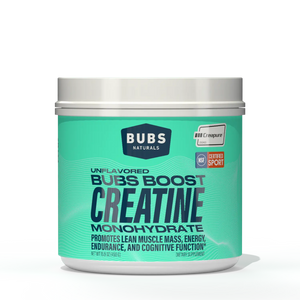
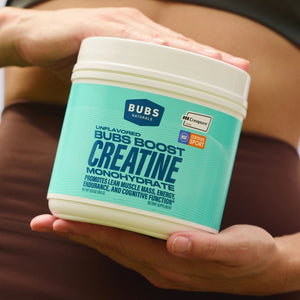
When we developed our Creatine Monohydrate, we focused on providing a single-ingredient, high-purity product from our Boosts collection. There are many "fancy" versions of creatine on the market, but the science consistently shows that creatine monohydrate is the most effective form for increasing muscle phosphocreatine levels.
Loading vs. Maintenance
There are two ways to increase your stores. You can "load" by taking 20 grams a day for five to seven days, which quickly saturates the muscles. Alternatively, you can take a maintenance dose of 3 to 5 grams daily. The loading phase gets you to full saturation faster, but the maintenance approach will get you to the same place within about 30 days.
| Strategy |
Daily Dosage |
Duration |
Result |
| Loading Phase |
20g (4 doses of 5g) |
5–7 Days |
Rapid saturation of muscle stores |
| Maintenance |
3–5g |
Indefinite |
Maintains full saturation levels |
| No Loading |
3–5g |
28+ Days |
Gradual saturation without high initial dose |
Note: If you choose the loading phase, you might notice a slight, temporary increase in body weight. This is almost entirely water being pulled into the muscle cells—this is a positive sign that the creatine is being stored where it belongs.
Creatine Phosphate and the Brain
While 95% of creatine is in your muscles, that final 5% in your brain is incredibly important. Just like your muscles, your brain is an "electrically active" tissue that requires huge amounts of ATP to function. Thinking, processing information, and maintaining consciousness are all energy-intensive tasks.
Research suggests that increasing creatine phosphate stores in the brain can help with short-term memory, mental fatigue, and even reasoning. This is particularly noticeable in people who are sleep-deprived or under high stress. Vegetarians and vegans also tend to see a significant "brain boost" from supplementation because they often have lower baseline levels due to the lack of meat in their diets.
Common Myths About Creatine Phosphate
Because it is one of the most studied supplements in history, there is a lot of misinformation surrounding creatine. Let’s clear up a few of the most common myths using the actual science.
Myth: Creatine is a steroid or an artificial chemical.
Fact: Creatine is a natural compound made by your body and found in common foods like steak and salmon. It has nothing to do with hormones or synthetic performance enhancers.
Myth: Creatine causes kidney damage.
Fact: For healthy individuals with no pre-existing kidney disease, long-term studies (some lasting up to four years) have shown no negative impact on kidney or liver function. Creatine does increase levels of creatinine (a waste product), but in this case, it is simply because you have more creatine in your system, not because your kidneys are struggling.
Myth: Creatine causes dehydration and muscle cramps.
Fact: Research actually suggests the opposite. Because creatine pulls water into the muscle cells, it can help protect against dehydration and cramping during exercise in the heat.
How to Optimize Your Use
To get the most out of what creatine phosphate does in your muscles, consistency is more important than timing. You do not need to take it immediately before a workout to "feel" the energy. Creatine works by building up a reserve in your tissues over time. As long as your stores are saturated, the phosphate will be there when you need it.
We recommend mixing 5 grams of creatine into a drink you enjoy every single day. Some people prefer mixing it into their morning coffee with our MCT Oil Creamer for a combination of mental clarity and physical readiness.
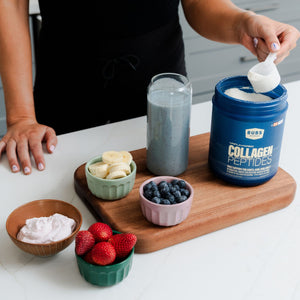
Others prefer it post-workout with our Collagen Peptides to support both the energy stores and the connective tissues used during the session.
Regardless of when you take it, make sure you stay hydrated. Since creatine moves water into the cells, your body needs an adequate supply of fluids and Hydrate or Die to maintain total balance.
Summary
The role of creatine phosphate is simple but essential: it is the primary backup system for your body's energy. By keeping your ATP levels stable during high-intensity work, it allows you to push harder, lift heavier, and move faster.
Beyond the immediate energy burst, it supports muscle hydration, cellular repair, and even brain function. It is a foundational piece of the wellness and performance puzzle, and our Hydration Collection fits right alongside it for active lifestyles.
At BUBS Naturals, we believe in the power of simple, effective tools. Our mission is built on the legacy of Glen "BUB" Doherty—a man who lived for adventure and served with purpose. That is why we donate 10% of all our profits to veteran-focused charities. We make products that work, so you can focus on the mission at hand.
"The only way to find your limits is to push them."
Next Step: If you are ready to maximize your energy reserves, start with a high-quality Creatine Monohydrate. Stay consistent, stay hydrated, and notice the difference in your next high-intensity session.
FAQ
Does creatine phosphate work for endurance athletes?
While its primary role is in short-burst, high-intensity activity, endurance athletes can still benefit. Creatine phosphate helps with "kicks" at the end of a race, improves recovery between training sessions, and helps maintain muscle mass during high-volume aerobic training.
How long does it take to feel the effects of creatine?
If you use a loading phase (20g/day), you may notice an increase in strength and "pop" in your muscles within 5 to 7 days. If you take a standard 3 to 5g dose daily, it typically takes about 3 to 4 weeks to fully saturate your muscles and feel the full benefits of Creatine Monohydrate.
Should I stop taking creatine on rest days?
No, you should take creatine every day, including rest days. The goal of supplementation is to keep your muscle stores of phosphocreatine fully saturated at all times, and skipping days will cause those levels to slowly decline.
Can women benefit from increasing creatine phosphate stores?
Absolutely. Research shows that women can experience significant improvements in strength, lean mass, and even bone density when using creatine. While some older studies suggested it might be less effective for women, more recent research confirms it is a safe and highly effective tool for female athletes of all ages.