Table of Contents
- Introduction
- What is MCT Oil and Why Does it Belong in Coffee?
- The Science of C8 vs. C10 MCTs
- How to Add MCT Oil to Coffee: Three Methods
- MCT Oil vs. MCT Oil Powder
- Dosage: Starting Small to Avoid Discomfort
- Enhancing Your Brew: Recipes and Add-ins
- Timing Your MCT Coffee
- Frequently Asked Questions
- Conclusion
- FAQ
Introduction
Getting out of bed for a 6:00 AM workout or a long day at the office often requires more than just a standard cup of black coffee. While caffeine provides the initial spark, it often leaves you searching for another fix by mid-morning. Many of us have turned to adding healthy fats to our brew to bridge that energy gap.
At BUBS Naturals, we focus on supplements that support a life of adventure and purpose, and few tools are as versatile as MCT Oil Creamer. Adding this specific type of fat to your coffee is designed to help you stay focused and satiated without the typical caffeine jitters. This guide covers the best methods for mixing, the science behind the benefits, and how to build a routine that works for your lifestyle.
Adding MCT oil to your coffee is a straightforward process that may support sustained energy levels and metabolic health when done correctly.
What is MCT Oil and Why Does it Belong in Coffee?
MCT stands for medium-chain triglycerides. These are a type of fatty acid found naturally in coconut oil, palm kernel oil, and some dairy products. Unlike the long-chain triglycerides (LCTs) found in most of the fats we eat—like olive oil or butter—MCTs have a shorter chemical structure. This shorter length means your body processes them differently.
Most fats go through a long digestion process involving the pancreas and gallbladder. MCTs bypass much of this. They go straight to your liver, where they are quickly converted into ketones. Ketones are an efficient fuel source for your brain and muscles.
When you add MCT oil to coffee, you are essentially combining a stimulant (caffeine) with a fast-acting fuel source. All About MCT Oil Creamers covers more ways to make that morning cup work harder.
Quick Answer: The most effective way to add MCT oil to coffee is by using a blender or handheld frother for 20–30 seconds. This process, called emulsification, prevents the oil from sitting on top of the liquid and creates a creamy, latte-like texture.
The Science of C8 vs. C10 MCTs
Not all MCT oils are created equal. They are categorized by the number of carbon atoms in their chain. The most common ones you will see are C8 (caprylic acid) and C10 (capric acid).
C8 is widely considered the highest quality because it converts to ketones faster than C10 or C12 (lauric acid). It provides the quickest source of mental and physical energy. C10 is also beneficial but takes a bit longer to process. Many people find that a blend of C8 and C10 provides a good balance of immediate and sustained fuel. If you want a deeper dive into the chain lengths, our Which MCT Oil is Best: C8 or C10? guide breaks it down.
| Feature |
C8 (Caprylic Acid) |
C10 (Capric Acid) |
| Speed of Absorption |
Fastest conversion to ketones |
Moderate conversion speed |
| Primary Benefit |
Mental clarity and quick energy |
Sustained fuel and gut support |
| Digestive Ease |
Generally easier on the stomach |
Can be slightly more sensitive for some |
| Common Source |
Coconut or Palm Kernel Oil |
Coconut or Palm Kernel Oil |
Key Takeaway: While both C8 and C10 offer benefits, C8 is the primary driver for the rapid energy and mental focus most people seek when adding MCT oil to their morning routine.
How to Add MCT Oil to Coffee: Three Methods
You cannot simply pour oil into a mug and expect it to mix. Because oil is hydrophobic (water-fearing), it will separate and float in a greasy layer on top of your coffee. To get the best results, you need to emulsify the mixture.
1. The Blender Method (Best Texture)
This is the gold standard for making creamy keto coffee. Using a high-speed blender breaks the oil into tiny droplets (microdroplets) that stay suspended in the coffee.
- Brew your coffee (8–12 oz).
- Pour the hot coffee into your blender.
- Add 1 teaspoon to 1 tablespoon of MCT oil.
- Blend on high for 20–30 seconds until a thick, frothy foam forms on top.
2. The Handheld Frother Method (Most Convenient)
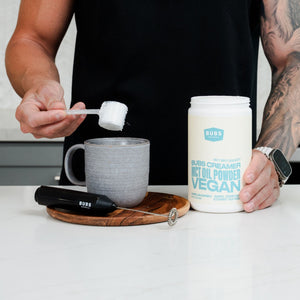
If you don't want to wash a blender every morning, a small battery-powered milk frother like the BUBS Mix Wand is your best friend.
- Brew your coffee directly into a tall mug (leave some room at the top).
- Add your MCT oil.
- Submerge the frother and turn it on, moving it up and down for about 30 seconds.
- Watch as the coffee changes from black to a creamy tan color.
3. The Stir Method (Emergency Only)
If you are traveling and have no tools, you can stir the oil in with a spoon. Be prepared to stir constantly. If you stop, the oil will separate. This method is the least effective for absorption and mouthfeel, but it still gets the healthy fats into your system.
Bottom line: Mechanical blending or frothing is necessary to create a stable emulsion that improves the taste and helps your body absorb the oil more effectively.
MCT Oil vs. MCT Oil Powder
If you find that liquid MCT oil is too greasy or causes digestive discomfort, MCT oil powder is a fantastic alternative. We designed our Butter MCT Oil Creamer to provide all the benefits of the oil in a more convenient, gut-friendly format.
MCT oil powder is made by a process called spray drying, where the liquid oil is turned into a powder by combining it with a carrier fiber. This fiber acts as a prebiotic, which may help support gut health while making the fat easier to digest.
Why choose powder?
-
Texture: It mimics the creaminess of dairy creamer without the lactose.
-
Portability: It is much easier to carry a pouch of powder in a gym bag or on a plane than a bottle of oil.
-
Stomach Tolerance: Many people report less "rumbly" stomachs when using powder compared to liquid oil.
-
Ease of Use: You can often mix the powder with just a spoon, although a frother still provides the best results.
Dosage: Starting Small to Avoid Discomfort
A common mistake is jumping straight to a full tablespoon of MCT oil. Because your body processes these fats so quickly, taking too much too soon can lead to digestive distress—often referred to in the fitness community as "disaster pants."
If you are new to MCTs, follow this progression:
-
Week 1: Start with 1 teaspoon per day. Monitor how your stomach feels.
-
Week 2: Increase to 2 teaspoons if you are feeling good.
-
Week 3: Move up to 1 tablespoon (3 teaspoons).
Most people find that 1 to 2 tablespoons per day is the sweet spot for focus and satiety. Listen to your body and adjust as needed. If you experience cramping or urgency, scale back the dose for a few days.
Myth: You should only use MCT oil if you are on a strict ketogenic diet.
Fact: While MCTs are a staple for keto, anyone can benefit from the quick energy and satiety they provide, regardless of their total carbohydrate intake.
Enhancing Your Brew: Recipes and Add-ins
Once you have mastered the basic addition of MCT oil, you can customize your coffee to support specific goals like muscle recovery or improved flavor.
The Recovery Brew
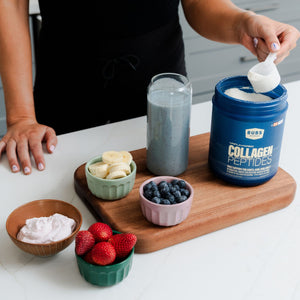
Adding Collagen Peptides to your MCT coffee is a great way to support your joints, skin, and hair while getting your morning energy. Our Collagen Peptides are hydrolyzed, meaning they are broken down for better absorption and mix effortlessly into hot liquids.
- 1 cup hot coffee
- 1 scoop BUBS Naturals Collagen Peptides
- 1 scoop MCT Oil Creamer (or 1 tbsp oil)
- Blend until frothy.
The Classic Butter Coffee
This is the traditional butter coffee style recipe. The addition of grass-fed butter or ghee provides fat-soluble vitamins and a rich, savory flavor.
- 1 cup hot coffee
- 1 tbsp MCT oil
- 1 tbsp grass-fed unsalted butter or ghee
- A pinch of sea salt (to reduce bitterness)
- Blend on high for 30 seconds.
The Flavor Upgrade
If you prefer a sweeter or more aromatic coffee, skip the sugary syrups and use natural ingredients:
-
Cinnamon: Supports blood sugar balance and adds warmth.
-
Vanilla Bean Powder: Provides a rich scent without the alcohol found in extracts.
-
Stevia or Monk Fruit: Use these if you need sweetness without the insulin spike.
Timing Your MCT Coffee
When you choose to drink your MCT-infused coffee can change how it affects your day.
For a deeper look at the coffee ritual itself, see our Why Do You Put MCT Oil in Coffee? Unpacking the Benefits and Uses.
For Intermittent Fasting:
Many people use MCT oil coffee as a way to extend their fast. Because MCTs are pure fat, they do not cause a significant spike in insulin. This can help you stay in a fasted state while suppressing hunger hormones like ghrelin. It allows you to push your first meal later into the day without feeling "hangry."
For Pre-Workout:
If you train early in the morning, a cup of MCT coffee can provide the fuel you need without the heaviness of a full meal. The caffeine provides the drive, while the MCTs provide the endurance.
For Mid-Day Focus:
If you hit a wall around 2:00 PM, a small cup of decaf with MCT oil can help clear the mental fog and keep you from reaching for a sugary snack.
Frequently Asked Questions
Does MCT oil in coffee break a fast?
In a strict "water-only" fast, anything with calories breaks the fast. However, for the purposes of weight management and metabolic health, many people find that MCT oil does not disrupt the primary benefits of fasting because it does not trigger an insulin response. It helps keep you in ketosis while providing energy to get through the morning.
Can I add MCT oil to cold brew or iced coffee?
Yes, but it is more difficult to mix. In cold liquids, the oil can clump or solidify slightly. For iced coffee, it is best to blend the MCT oil into a small amount of warm coffee first to create an emulsion, then pour that mixture over ice and the rest of your cold brew.
Should I use MCT oil if I have high cholesterol?
MCTs are a form of saturated fat. While some studies suggest MCTs can actually help improve cholesterol profiles by increasing HDL (the "good" cholesterol), everyone’s body reacts differently to fats. If you have concerns about your heart health or cholesterol levels, you should consult with your healthcare provider before making significant changes to your diet.
How should I store my MCT oil?
MCT oil is shelf-stable and does not need to be refrigerated. Keep it in a cool, dark place away from direct sunlight to prevent the oil from degrading. For a deeper dive on shelf life, see our How Long Does MCT Oil Last Once Opened? guide.
Conclusion
Adding MCT oil to your coffee is more than just a trend; it is a functional way to upgrade your morning routine. By using a blender or frother and starting with a small dose, you can transform a standard cup of joe into a tool for better focus, sustained energy, and improved satiety.
Whether you choose liquid oil for its purity or a powder like BUBS Naturals MCT Oil Creamer for its convenience and taste, the key is consistency. At BUBS, we are committed to providing clean, high-quality ingredients that help you perform at your best. We are also committed to a larger purpose. If you want the story behind that mission, visit About Bubs.
Next time you reach for the coffee pot, try adding a splash of MCTs. Start small, blend thoroughly, and see how it changes the trajectory of your morning.
FAQ
How much MCT oil should I put in my coffee?
Start with one teaspoon to allow your digestive system to adjust. Over the course of two to three weeks, you can gradually increase your intake to one or two tablespoons per day.
What does MCT oil taste like in coffee?
Pure MCT oil is virtually tasteless and odorless. When properly blended, it adds a rich, creamy mouthfeel to coffee, making it taste similar to a latte without the need for dairy or sugar.
Can I use a spoon to mix MCT oil into my coffee?
While you can stir it with a spoon, the oil will not emulsify and will float on top of the liquid. For the best taste and absorption, use a blender or a handheld frother to create a smooth, frothy mixture.
Is MCT oil better than coconut oil for coffee?
MCT oil is a concentrated source of medium-chain triglycerides, whereas coconut oil contains a mix of MCTs and long-chain fats. MCT oil is generally more effective for quick ketone production and energy than standard coconut oil.