Table of Contents
- Introduction
- Understanding the Different Forms of Vitamin C
- Bioavailability: Why More Isn't Always Better
- What to Look for on the Supplement Label
- Why Vitamin C Matters for the Active Lifestyle
- Practical Tips for Taking Vitamin C
- Common Myths About Vitamin C
- The BUBS Naturals Difference
- Conclusion
- FAQ
Introduction
You’ve likely reached for a bottle of vitamin C when you felt a scratchy throat coming on or after an exhausting week of training. It is the go-to supplement for a reason. As an essential nutrient, your body cannot produce it on its own, meaning you have to get it from your diet or a high-quality supplement to stay in the game. But as you stand in the supplement aisle or scroll through pages of options, the variety can be overwhelming. From powders and gummies to liposomal formulas and "buffered" versions, not every bottle is created equal.
At BUBS Naturals, we focus on the "no BS" approach to wellness. We know that if you are training hard, working long hours, or spending time in the great outdoors, you need supplements that actually do what they say. Our Vitamin C is designed with that exact mindset—pure, effective, and easy to integrate into a busy life. This guide will help you navigate the noise so you can understand exactly what to look for when buying vitamin C supplement.
We will break down the different forms of ascorbic acid, explain the importance of bioavailability, and show you why third-party testing is a non-negotiable for anyone serious about their health. The goal is to help you choose a supplement that supports your immune system and recovery without wasting money on fillers or marketing hype.
Quick Answer: When buying a vitamin C supplement, look for "L-ascorbic acid" for proven effectiveness, a dosage between 500mg and 1,000mg for optimal absorption, and the inclusion of bioflavonoids to support antioxidant activity. Always prioritize third-party tested products to ensure purity and label accuracy.
Understanding the Different Forms of Vitamin C
When you look at a supplement label, you might see several different names for vitamin C. Most people assume they are all the same, but the form of the vitamin can affect how your stomach feels and how well your body uses the nutrient.
Ascorbic Acid
Ascorbic acid is the most common and most studied form of vitamin C. In the world of science, it is often called L-ascorbic acid. It is the form found naturally in food and is highly bioavailable, meaning your body can absorb and use it efficiently. For most people, a pure ascorbic acid supplement is the gold standard. It is simple, effective, and usually the most affordable option.
Buffered Vitamin C (Mineral Ascorbates)
Standard ascorbic acid is slightly acidic. For some people, especially those with sensitive stomachs or history of acid reflux, taking high doses can cause a bit of gastrointestinal upset. To solve this, some manufacturers "buffer" the vitamin by attaching it to minerals like calcium, magnesium, or sodium. This creates calcium ascorbate or sodium ascorbate. These forms are less acidic and are often gentler on the digestive tract. If you find that regular vitamin C makes you feel queasy, a buffered version might be your best bet.
Liposomal Vitamin C
This is a newer delivery method that has gained popularity among athletes and those looking for maximum absorption. In a liposomal formula, the vitamin C is encapsulated in tiny spheres of fat called liposomes. These lipids (fats) protect the vitamin C as it travels through the harsh environment of your stomach. Because the cell membranes in your body are also made of lipids, the theory is that these liposomes can merge with your cells more easily, potentially delivering more of the vitamin directly into your bloodstream.
Food-Based or "Natural" Vitamin C
Some supplements derive their vitamin C from whole foods like acerola cherry, camu camu, or rose hips. While these are excellent sources, the total amount of vitamin C per serving is often lower than what you would find in an isolated L-ascorbic acid supplement. However, these food-based options naturally contain co-factors like bioflavonoids, which we will discuss later.
Key Takeaway: While L-ascorbic acid is the most research-backed and effective form for most users, those with sensitive stomachs should look for buffered mineral ascorbates (like calcium ascorbate) to avoid digestive irritation.
Bioavailability: Why More Isn't Always Better
One of the biggest misconceptions about vitamin C is that you should take as much as possible. You might see supplements offering 2,000mg or 3,000mg in a single serving. However, your body has a "saturation point" for vitamin C.
Because vitamin C is water-soluble, your body does not store it in fat cells like it does with vitamins A or D. Instead, your intestines use specific transporters to pull the vitamin into your blood. Once those transporters are full, any extra vitamin C simply passes through your system and is excreted in your urine.
Studies show that when you take a moderate dose, such as 500mg, your body absorbs a very high percentage of it. When you jump to doses over 1,000mg or 2,000mg, the percentage of absorption drops significantly. For many, a mega-dose is literally just expensive waste. Taking a moderate amount, like the 500mg found in our Vitamin C, ensures you get what you need without overloading your system.
The Role of Bioflavonoids
When you eat an orange, you aren't just getting isolated ascorbic acid. You are also getting bioflavonoids. These are plant-derived compounds that give fruits their vibrant colors and act as antioxidants themselves. In nature, vitamin C and bioflavonoids always work together.
Research suggests that bioflavonoids may help stabilize vitamin C and support its antioxidant activity within the body. When shopping for a supplement, look for one that includes citrus bioflavonoids. This mimics how the nutrient is found in nature and helps you get the most out of every capsule. We include citrus bioflavonoids in our formula specifically to provide that natural balance.
Myth: Taking 5,000mg of vitamin C will boost your immune system faster than a smaller dose.
Fact: Your body has a limited capacity to absorb vitamin C at one time. Doses over 1,000mg often result in significantly lower absorption rates and may cause digestive upset. Smaller, consistent doses are more effective.
What to Look for on the Supplement Label
The supplement industry can be a bit like the Wild West. Not every company is honest about what is inside their bottles. To make sure you are getting a high-quality product, you need to look past the marketing claims and check the fine print.
Third-Party Testing and Certifications
This is the most important factor in choosing any supplement. Third-party testing means an independent lab has verified that the product contains exactly what the label says it does and is free from contaminants like heavy metals or mold.
For athletes or those in the military, look for "NSF for Sport" or "Informed Sport" certifications. These labels ensure that the product has been tested for banned substances. At BUBS Naturals, we take this seriously. We prioritize transparency and third-party testing because trust is the foundation of our brand. If a company won't show you their testing results, you should probably look elsewhere.
The "No BS" Ingredient List
Check the "Other Ingredients" section. A high-quality vitamin C supplement should have a very short list. You want to avoid:
-
Artificial Colors: There is no reason for a vitamin C pill to be bright orange or neon yellow.
-
Artificial Sweeteners: These are common in gummies and chewables but can cause bloating.
-
Fillers and Flow Agents: Ingredients like magnesium stearate or silicon dioxide are often used to keep machines running smoothly during production, but they don't add any value to your health.
If the label is full of words you can’t pronounce, it probably isn't a clean product. We believe in simple, science-backed ingredients—nothing more, nothing less.
Serving Size and Capsule Type
Look at the serving size. Some brands require you to take three or four capsules to reach the advertised dosage. This makes the bottle run out much faster than you expected. Also, check if the capsule is plant-based (vegan) or made from bovine gelatin if you have dietary restrictions.
| Feature |
What to Look For |
Why It Matters |
| Form |
L-Ascorbic Acid or Buffered |
Highest absorption and gentlest on the gut. |
| Dosage |
500mg - 1,000mg |
Prevents "waste" and maximizes uptake. |
| Add-ons |
Citrus Bioflavonoids |
Supports antioxidant activity and mimics nature. |
| Testing |
NSF for Sport / Third-Party |
Ensures no banned substances or contaminants. |
| Purity |
No artificial colors or fillers |
Keeps the product clean and easy to digest. |
Why Vitamin C Matters for the Active Lifestyle
Vitamin C isn't just for avoiding a cold. If you are someone who hits the gym, runs trails, or lives an active life, this vitamin plays a massive role in how your body recovers and performs.
Collagen Synthesis
One of the most critical roles of vitamin C is its involvement in collagen production. Collagen is the "glue" that holds your body together—it is the primary protein in your skin, joints, tendons, and ligaments. Your body cannot physically produce collagen without vitamin C.
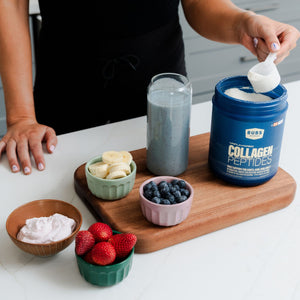
When you supplement with collagen, your body needs vitamin C to turn those amino acids into new, functional tissue. This is why many athletes pair our Vitamin C with our Collagen Peptides. It is a one-two punch for joint health and recovery. If you are trying to bounce back from a tough training session or want to keep your joints resilient as you age, vitamin C is your best friend.
Antioxidant Support and Recovery
Exercise, while good for you, creates oxidative stress in the body. This produces free radicals—unstable molecules that can damage your cells. Vitamin C is a powerful antioxidant that helps neutralize these free radicals. By reducing oxidative stress, it can help you feel less run down after high-intensity training. It supports your body's natural defense systems so you can get back to your next adventure sooner.
Iron Absorption
If you follow a plant-based diet or don't eat much red meat, you might be at risk for low iron levels. Iron from plants (non-heme iron) is much harder for the body to absorb than iron from meat. Vitamin C significantly improves the absorption of plant-based iron. Taking your supplement with a meal can help ensure you are getting the most out of the nutrients in your food.
Bottom line: Vitamin C is essential for collagen production and neutralizing the oxidative stress caused by hard training, making it a staple for anyone focused on recovery and performance.
Practical Tips for Taking Vitamin C
Once you’ve found the right supplement, how you take it can make a difference in its effectiveness.
Timing and Consistency
Because vitamin C is water-soluble and cleared from the body relatively quickly, consistency is more important than timing. You don't necessarily need to take it at 8:00 AM sharp, but you should aim to take it every day. Some people prefer taking it with a meal to further reduce any chance of stomach upset and to help with the absorption of iron from their food.
Stacking for Performance
If your goal is joint health and recovery, consider "stacking" your vitamin C. Take it alongside your morning coffee or smoothie containing Collagen Peptides. This ensures that when the collagen peptides enter your system, the vitamin C is right there to act as the necessary catalyst for collagen synthesis.
Storage Matters
Vitamin C is sensitive to light, heat, and air. This is why most high-quality supplements come in dark or opaque bottles. Keep your bottle in a cool, dry place—not on a sunny windowsill or in a damp bathroom. If your capsules start to change color (turning dark orange or brown), it’s a sign that the vitamin has oxidized and lost its potency.
Common Myths About Vitamin C
There is a lot of "bro-science" surrounding vitamin C. Let’s clear up a few of the most common myths so you can make an informed decision.
Myth: You should take extra vitamin C only when you feel sick.
Fact: While vitamin C supports the immune system, it works best when it is already present in your system. Research suggests that taking it regularly may shorten the duration of a cold, but starting it only after you are symptomatic has a much smaller impact.
Myth: All vitamin C is sourced from oranges.
Fact: Most vitamin C in supplements is produced through a fermentation process. While it is chemically identical to what you find in an orange, it doesn't always come directly from the fruit unless specified as "food-based." This is why looking for added bioflavonoids is so important to get the full-spectrum benefit.
Myth: Synthetic vitamin C is bad for you.
Fact: L-ascorbic acid, whether made in a lab or found in a piece of fruit, is the exact same molecule. Your body cannot tell the difference. What matters more is the purity of the supplement and the absence of junk fillers.
The BUBS Naturals Difference
We didn't start BUBS Naturals just to put more bottles on a shelf. Our brand was built to honor the legacy of Glen "BUB" Doherty—a Navy SEAL, an adventurer, and a friend who lived life to the fullest. We believe that to live a life of purpose and adventure, you need a body that can keep up.
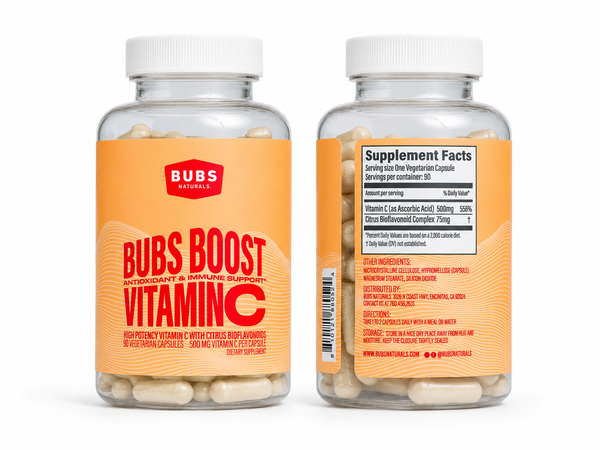
That is why we don't cut corners. Our Vitamin C provides 500mg of pure ascorbic acid combined with citrus bioflavonoids. It is a clean, simple formula designed to support your immune system and your recovery. We avoid the artificial junk because we know you don't need it.
When you choose us, you are also choosing a brand with a mission. We donate 10% of all our profits to veteran-focused charities in honor of Glen. It’s our way of making sure that every scoop and every capsule contributes to something bigger than just a wellness routine.
Conclusion
Choosing the right vitamin C supplement doesn't have to be complicated. By focusing on the form of the vitamin, the presence of bioflavonoids, and the transparency of the brand, you can ensure you are getting a product that supports your active lifestyle. Avoid the mega-dose hype and stick to a clean, moderate dose that your body can actually use.
- Look for L-ascorbic acid or buffered forms for the best results.
- Prioritize third-party testing (like NSF for Sport) to ensure purity.
- Check for bioflavonoids to support natural antioxidant activity.
- Avoid artificial colors, sweeteners, and unnecessary fillers.
Whether you are prepping for a marathon, recovery from a heavy lifting session, or just trying to stay healthy through the winter months, a solid vitamin C supplement is a foundational tool.
Take the next step in your wellness journey and check out our Boosts collection to see how a clean, mission-driven supplement can make a difference in your daily routine.
FAQ
What is the best time of day to take vitamin C?
There is no "perfect" time, but taking it with a meal is often recommended to help with absorption and prevent stomach upset. The most important thing is consistency—taking it at the same time every day helps maintain steady levels in your system.
Can I take too much vitamin C?
Yes, though it is difficult to reach toxic levels since it is water-soluble. However, taking more than 2,000mg a day (the tolerable upper limit for adults) can lead to side effects like diarrhea, nausea, and stomach cramps. Most people find that 500mg to 1,000mg is the ideal range for daily support.
What are bioflavonoids and why are they in my supplement?
Bioflavonoids are plant compounds found in citrus fruits that work alongside vitamin C in nature. They help stabilize the vitamin and provide additional antioxidant support, helping to neutralize free radicals and support healthy circulation.
Should I choose a capsule, powder, or gummy?
Capsules and powders are generally better than gummies because they are less likely to contain added sugars and artificial dyes. Capsules are convenient for travel and precise dosing, while powders can be easily mixed into your morning smoothie or Hydrate or Die drink.