Table of Contents
- Introduction
- Understanding Natural vs. Synthetic Vitamin C
- The Role of Whole-Food Sources
- Why Bioflavonoids Matter for Absorption
- Bioavailability: How Your Body Uses the Nutrient
- Identifying Clean Labels
- The Benefits of Natural Supplementation
- How to Integrate Vitamin C Into Your Routine
- Comparing Supplement Forms
- The BUBS Approach to Quality
- Conclusion
- FAQ
Introduction
You’ve likely reached for a bottle of orange juice or a bright orange pill the moment you felt a scratchy throat or noticed your recovery times lagging after a heavy training session. Vitamin C is perhaps the most recognized nutrient in the world for its role in supporting the immune system and helping the body repair itself. However, as you stand in the supplement aisle, you might notice that not all Vitamin C is created equal. Many products on the shelf are lab-synthesized, often derived from processed cornstarch rather than the vibrant fruits pictured on the label. If you want a cleaner daily option, our Vitamin C is built around that straightforward approach.
At BUBS Naturals, we believe that what you put into your body should be as close to nature as possible. If you are looking for a way to support your health without the fluff, understanding the difference between synthetic additives and whole-food sources is essential. This guide covers how to identify the most natural forms of Vitamin C, why bioflavonoids matter for absorption, and how to choose a supplement that aligns with a clean, active lifestyle.
Choosing the right supplement means looking beyond the "all-natural" marketing and digging into the ingredient list to find true, food-based sources.
Quick Answer: The most natural Vitamin C supplements are those derived from whole-food sources like acerola cherry, camu camu, or rose hips, rather than synthetic ascorbic acid. These versions often include naturally occurring bioflavonoids, which may support better absorption and provide a more balanced nutrient profile similar to eating whole fruit.
Understanding Natural vs. Synthetic Vitamin C
When you look at a supplement label, you will most likely see "ascorbic acid" listed as the primary ingredient. This is the chemical name for Vitamin C. In a laboratory setting, synthetic L-ascorbic acid is chemically identical to the Vitamin C found in an orange. Because of this, many people assume there is no difference between a lab-made pill and a piece of fruit. If you want a deeper breakdown of how to compare formulas, start with our How to Choose the Best Vitamin C Supplement.
However, the "naturalness" of a supplement often refers to its source and its complexity. Most synthetic ascorbic acid is produced through a multi-step chemical process that often starts with glucose derived from cornstarch. If you are trying to avoid GMOs or heavily processed ingredients, this "identical" molecule might not meet your standards for a clean supplement.
The most natural supplements skip the industrial corn processing. Instead, they use concentrated extracts from fruits that are naturally high in the nutrient. When you get your nutrients from these sources, you aren't just getting a single isolated molecule. You are getting the plant’s natural co-factors, which can change how your body interacts with the vitamin.
The Role of Whole-Food Sources
If you want the most natural option, you should look for specific plants on the ingredient list. Some fruits contain significantly higher concentrations of Vitamin C than the standard citrus fruits we know.
Acerola Cherry
The acerola cherry is often considered the gold standard for natural Vitamin C. This small, tart fruit from Central and South America can contain up to 50 to 100 times more Vitamin C by weight than an orange or a lemon. Because it is so potent, manufacturers can dry the fruit and grind it into a powder that provides a high dose of the vitamin without needing to add synthetic boosters.
Camu Camu
Native to the Amazon rainforest, the camu camu berry is another powerhouse. It is frequently used in premium "natural" supplements because it offers one of the highest recorded botanical sources of Vitamin C in the world. Like acerola, it provides the vitamin alongside a complex profile of amino acids and minerals.
Rose Hips
Rose hips are the round portion of the rose flower just below the petals. They have been used for centuries as a traditional source of nutrition. Many high-quality supplements include rose hips because they are naturally rich in Vitamin C and polyphenols, which are plant compounds that support overall wellness.
Key Takeaway: While synthetic ascorbic acid provides the same chemical molecule as fruit, whole-food supplements provide the vitamin in a complex matrix of plant compounds that your body is designed to recognize and process.
Why Bioflavonoids Matter for Absorption
In nature, Vitamin C never exists in isolation. If you eat a bell pepper or a grapefruit, you are consuming Vitamin C alongside a group of compounds called bioflavonoids. These are the pigments that give many fruits and vegetables their vibrant colors, and they play a critical role in how the vitamin functions. If you want to see how we pair those compounds in a real formula, take a look at our BUBS BOOST Vitamin C: The Best Supplement to Pair with Collagen for Joint & Immune Health.
Bioflavonoids act as natural partners to Vitamin C. They may help protect the vitamin from oxidation, potentially keeping it stable for longer within your body. Some evidence suggests that bioflavonoids can improve the bioavailability of the vitamin, meaning your body can use more of what you ingest rather than simply flushing it out.
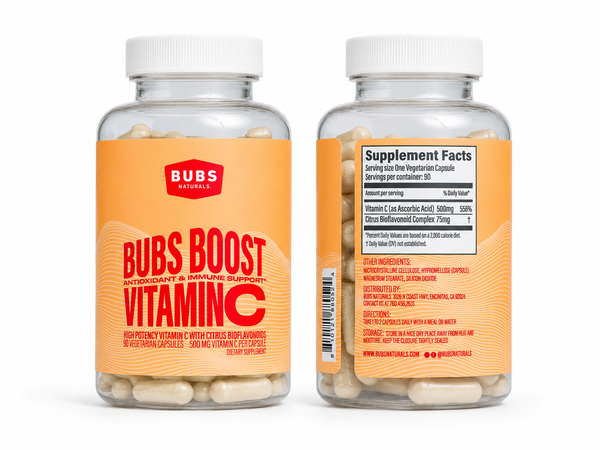
When you choose a natural supplement, you often get these bioflavonoids as part of the fruit extract. Even in high-quality formulations that use purified ascorbic acid, like our Vitamin C, we include citrus bioflavonoids to mimic the nutrient profile found in nature. This ensures that even a concentrated dose is supported by the co-factors that help it work effectively. The broader formulas in our Boosts collection follow the same no-BS approach.
Bioavailability: How Your Body Uses the Nutrient
Vitamin C is water-soluble, which means your body does not store it in fat cells for long-term use. You have to replenish your supply daily. Because the body can only absorb a certain amount at once, the form of the supplement matters for how much actually makes it into your bloodstream.
The Saturation Point
If you take a massive dose of 2,000mg of synthetic Vitamin C at once, your body's "transporters" become overwhelmed. Most of that dose will end up in your urine. Natural sources or moderate doses of 500mg are often more efficient because they don't hit that saturation point as aggressively, allowing for more steady absorption.
Buffered Vitamin C
For some people, standard ascorbic acid is too acidic and can cause stomach upset or heartburn. This is where "buffered" versions come in. These are created by attaching the Vitamin C molecule to minerals like calcium, magnesium, or potassium. While these are slightly more "processed" than a raw fruit powder, they are often preferred by those with sensitive digestions who still want a potent supplement.
Myth: The higher the dose of Vitamin C, the better it is for your immune system.
Fact: Your body has a limit on how much Vitamin C it can absorb at one time. Taking 500mg to 1,000mg in a form that includes bioflavonoids is often more effective than taking a massive, isolated synthetic dose that your body cannot fully process.
Identifying Clean Labels
When you are looking for the most natural Vitamin C supplement, the marketing on the front of the bottle is less important than the "Supplement Facts" on the back. To find a truly clean product, you need to be a bit of a detective.
Look for these markers of a high-quality, natural supplement:
-
Source Identification: Does it say "Ascorbic Acid" or "Acerola Cherry Extract"? If it only lists ascorbic acid without mentioning a food source, it is likely synthetic.
-
No Fillers: Clean supplements should not contain "magnesium stearate," "silicon dioxide," or artificial colors. You want the active ingredient and perhaps a simple plant-based capsule.
-
Third-Party Testing: This is non-negotiable for anyone who takes their training seriously. Because the supplement industry is loosely regulated, you want to see that an independent lab has verified that what is on the label is actually in the bottle.
-
No Added Sugar: Many "natural" gummies are loaded with cane sugar or glucose syrup. A truly natural wellness product shouldn't come with a sugar crash.
Our Vitamin C is designed with these principles in mind. It provides 500mg of the nutrient—a dose that supports health without overwhelming your system—and includes citrus bioflavonoids to ensure it behaves like the version found in whole foods. It is a simple, clean formula without any of the "BS" fillers that clutter up the market.
The Benefits of Natural Supplementation
Why go through the effort of finding a natural source? For most active people, it comes down to how your body feels and performs. Vitamin C is a heavy hitter in several key areas of wellness.
Collagen Formation
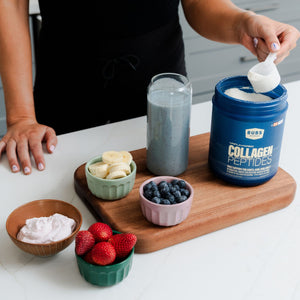
If you are already using a collagen supplement for your joints or skin, you need Vitamin C. It is a mandatory co-factor for the enzymes that stabilize and cross-link collagen fibers. Without adequate Vitamin C, your body cannot effectively produce or repair the connective tissues in your knees, shoulders, and skin. That’s part of why we built Collagen Peptides to fit naturally into an active routine.
Antioxidant Protection
Hard training creates oxidative stress. Vitamin C is a powerful antioxidant that helps neutralize free radicals produced during intense exercise. By protecting your cells from this "rusting" effect, it supports a healthy inflammatory response and helps you get back to your next workout faster.
Immune Resilience
While it won't prevent you from ever getting sick, many athletes report that consistent Vitamin C intake helps them maintain their training volume during the winter months or during periods of high stress. It supports the function of white blood cells, which are your body's primary line of defense.
Bottom line: Natural Vitamin C supplements provide the nutrient alongside the co-factors your body expects, supporting everything from joint health to immune defense without the need for synthetic additives.
How to Integrate Vitamin C Into Your Routine
For those living an active lifestyle, consistency is more important than megadosing. Since Vitamin C is water-soluble, taking it as part of your daily morning routine is the best way to ensure your levels stay steady.
If you are a coffee drinker, you might enjoy mixing a powdered form into your morning brew or taking a capsule alongside your breakfast. Because Vitamin C enhances iron absorption, taking your supplement with a meal containing plant-based iron (like spinach or lentils) can provide a double benefit.
If you are training for a marathon, a tactical competition, or just trying to keep up with a busy family life, your body’s demand for antioxidants increases. During these times of high physical stress, ensuring you have a clean, natural source of Vitamin C can help bridge the gap between what you eat and what your body requires to recover. For a related recovery angle, see Does Electrolyte Water Work? Your Guide to Smart Hydration.
Comparing Supplement Forms
When choosing a natural supplement, the physical form can influence how you use it and how well it works for you.
| Supplement Form |
Common Source |
Best For |
Pros/Cons |
| Whole-Food Powder |
Acerola, Camu Camu |
Smoothies, Shakes |
Most natural; lower potency per gram |
| Capsules |
Ascorbic Acid + Bioflavonoids |
Daily Routine |
Convenient; high potency; easy to travel with |
| Liposomal |
Synthetic (Encapsulated) |
Maximum Absorption |
High bioavailability; usually more expensive |
| Gummies |
Various |
Kids or those who hate pills |
Tasty; often contains high sugar and additives |
For most people, a high-quality capsule that combines a potent dose with natural bioflavonoids strikes the best balance between convenience and effectiveness. It avoids the sugar found in gummies and the mess of loose powders while still providing the biological complexity that your body needs.
The BUBS Approach to Quality
We didn't start this brand to create just another line of supplements. We started it to honor the legacy of Glen "BUB" Doherty, a man who lived his life with purpose, energy, and a commitment to excellence. That same spirit goes into every product we develop. You can read more about that mission in Our Story.
When we look for the most natural ways to support health, we don't take shortcuts. Whether it's our grass-fed collagen or our clean electrolytes, the goal is always the same: simple, effective ingredients that work. Our Vitamin C supplement is a reflection of that mission. We use a formula that is third-party tested and designed for those who demand the best from their bodies. We don't use fillers or "BS" ingredients because we know that real performance requires real fuel.
When you choose a supplement, you are making an investment in your future self. We want to make sure that investment pays off with a product you can trust.
Conclusion
Finding the most natural Vitamin C supplement doesn't have to be a confusing process. By focusing on whole-food sources like acerola cherry or choosing formulations that include natural bioflavonoids, you can support your body with a nutrient profile that mimics nature. Avoid the high-sugar gummies and the synthetic fillers that serve the manufacturer more than they serve you.
At BUBS Naturals, we are driven by more than just wellness. We are driven by a mission to give back. That is why we donate 10% of all our profits to veteran-focused charities in BUB’s honor, a commitment you can explore in our Giving Back to Veterans & Our Communities story. Every time you choose a cleaner supplement to support your own health, you are also supporting those who have served.
Focus on the fundamentals: eat whole foods, train hard, and supplement where it counts with clean, tested products. Your body—and your performance—will thank you for it.
"The best way to find yourself is to lose yourself in the service of others." — In the spirit of Glen "BUB" Doherty.
Take the next step in your wellness journey by choosing a Vitamin C that fits your lifestyle. Our Vitamin C with bioflavonoids is ready to help you push through your next challenge.
FAQ
Is synthetic Vitamin C the same as natural Vitamin C?
Chemically, synthetic L-ascorbic acid is identical to the Vitamin C found in plants. However, natural sources like acerola cherry come with bioflavonoids and other co-factors that may improve stability and absorption. Many people prefer natural sources to avoid synthetic chemicals derived from GMO corn.
How can I tell if my Vitamin C is natural?
Check the ingredient label for whole-food sources such as acerola cherry extract, camu camu, or rose hips. If the only active ingredient listed is "ascorbic acid" without any mention of a plant source, it is likely a synthetic version. High-quality natural supplements will also be free from artificial colors, flavors, and unnecessary fillers.
Does natural Vitamin C absorb better?
Some studies suggest that Vitamin C paired with bioflavonoids—which are naturally present in fruit-based supplements—has a higher bioavailability than isolated synthetic ascorbic acid. This means your body may absorb the vitamin more slowly and keep it in your system longer. Natural sources also tend to be gentler on the stomach for people with high acidity sensitivity.
What is the best dose for a Vitamin C supplement?
While the minimum daily requirement is around 75-90mg, many active individuals find that 500mg is an ideal dose for supporting immune health and recovery. Taking massive doses of 2,000mg or more often leads to poor absorption, as the body can only process so much at once. Smaller, consistent doses are generally more effective for maintaining steady levels in the body.