Table of Contents
- Introduction
- The Science of the Antioxidant Network
- Why This Pairing Matters for Athletes
- The Role of Solubility: Water vs. Fat
- Benefits Beyond the Gym
- Practical Dosing: How Much and When?
- Avoiding Common Pitfalls
- How BUBS Naturals Fits Your Routine
- Conclusion
- FAQ
Introduction
In the world of nutrition and supplements, we often look for that one missing piece of the puzzle—the single ingredient that will help us recover faster, think clearer, or feel more energized. But real-world results often come from how nutrients work as a team rather than how they perform in isolation. When it comes to protecting your body from the wear and tear of an active life, few pairings are as well-studied or effective as Vitamin C and Vitamin E.
At BUBS Naturals, we focus on clean, high-performance ingredients that actually do what they say. We know that if you are pushing your body in the gym or on the trail, you are also creating oxidative stress. This isn't a bad thing; it’s a byproduct of hard work. However, managing that stress is the key to longevity and consistent performance. If you want a simple place to start, our Vitamin C is designed to fit right into a daily routine.
This guide will explain exactly why taking Vitamin E and Vitamin C together is not just safe, but highly recommended. We will break down the science of how they "recharge" each other, how they support your skin and joints, and the best way to incorporate them into your daily routine. By the end, you will understand how this antioxidant duo works to keep you moving forward.
Quick Answer: Yes, you can and should take Vitamin E and Vitamin C together. Vitamin C helps regenerate Vitamin E after it has neutralized a free radical, creating a more effective and sustainable antioxidant defense system in your body.
The Science of the Antioxidant Network
To understand why these two vitamins are better together, we first need to look at what they do individually. Both are antioxidants, which means their primary job is to neutralize free radicals. Free radicals are unstable molecules that can damage cells, leading to inflammation and slower recovery. They are produced by everything from sunlight and pollution to the very oxygen you breathe while running a 5K.
Vitamin C is water-soluble. It moves through the watery environments of your body, like your blood and the fluid inside your cells. Vitamin E is fat-soluble. It lives in the fatty parts of your body, specifically the lipid membranes that surround every single one of your cells. For a deeper dive into how collagen fits into the bigger picture, our article on what collagen peptides are and their benefits is a useful companion read.
If you only take one, you are only protecting half the fortress. Vitamin C guards the interior and the "hallways," while Vitamin E guards the "walls" themselves. When you take them together, you create a 360-degree shield that protects your cells from every angle.
The "Recharge" Effect
The most impressive part of this relationship is how Vitamin C supports Vitamin E. Think of Vitamin E as a front-line soldier. When it encounters a free radical, it neutralizes it by giving up an electron. Once that happens, the Vitamin E molecule is "spent." It can no longer fight until it is reset.
This is where Vitamin C enters the picture. Vitamin C can donate an electron back to the spent Vitamin E molecule, effectively "recharging" it so it can go back to work. Without Vitamin C, your Vitamin E levels would deplete much faster during periods of high stress or intense physical activity. This synergy ensures that your body stays protected for longer periods without needing massive doses of either vitamin.
Key Takeaway: Vitamin C and Vitamin E function as a tag-team. Vitamin C acts as a battery charger for Vitamin E, allowing your body to maintain a more efficient defense against cellular damage during exercise and daily life.
Why This Pairing Matters for Athletes
If you live an active lifestyle, your body is a high-performance machine. Like any machine, high output leads to more exhaust. In the human body, that "exhaust" is oxidative stress. While some oxidative stress is necessary to signal your muscles to grow stronger, too much of it can lead to prolonged soreness, joint discomfort, and a weakened immune system.
If hydration is part of your training stack, our Hydration Collection is built for exactly that kind of active recovery support.
Muscle Recovery and Inflammation
Intense training creates micro-tears in muscle fibers and triggers an inflammatory response. This is part of the growth process, but if inflammation stays too high for too long, your recovery stalls. Studies have shown that the combination of Vitamin C and Vitamin E may help modulate this response.
By neutralizing the free radicals produced during heavy lifting or endurance sports, this duo helps protect the integrity of your muscle cell membranes. This doesn't mean you won't feel a pump or a little soreness, but it can help ensure that your body moves out of the "damage" phase and into the "repair" phase more efficiently.
Collagen Synthesis and Joint Health
Vitamin C is a non-negotiable cofactor for collagen synthesis. This means your body cannot physically build the protein that makes up your tendons, ligaments, and skin without it. It acts on specific enzymes (prolyl and lysyl hydroxylases) that stabilize the collagen molecule.
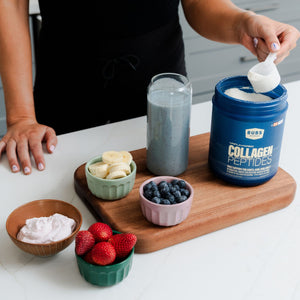
While Vitamin C does the heavy lifting for collagen production, Vitamin E protects the existing collagen from being broken down by oxidative stress. If you are using something like our Collagen Peptides to support your joints, adding Vitamin C and E is like adding a security team to a construction site. One builds the structure, while the other ensures the materials aren't damaged before they can be used.
The Role of Solubility: Water vs. Fat
A common mistake in supplementation is ignoring how a vitamin is absorbed. Because Vitamin C is water-soluble, your body doesn't store it for very long. Anything your body doesn't use usually gets flushed out within a few hours. This is why consistent, daily intake is more important than taking one massive dose once a week.
Vitamin E is different. Because it is fat-soluble, it is stored in your liver and fatty tissues. It stays in the system longer, which means you don't need as much of it to maintain a steady state. However, this also means you have to be more mindful of your dosage. While it is very hard to "overdose" on Vitamin C, taking extremely high amounts of Vitamin E over a long period can lead to accumulation in the body.
Why Quality and Form Matter
Not all vitamins are created equal. Many mass-market supplements use synthetic versions that the body doesn't recognize as easily. For Vitamin E, you want to look for "d-alpha-tocopherol" (the natural form) rather than "dl-alpha-tocopherol" (the synthetic form).
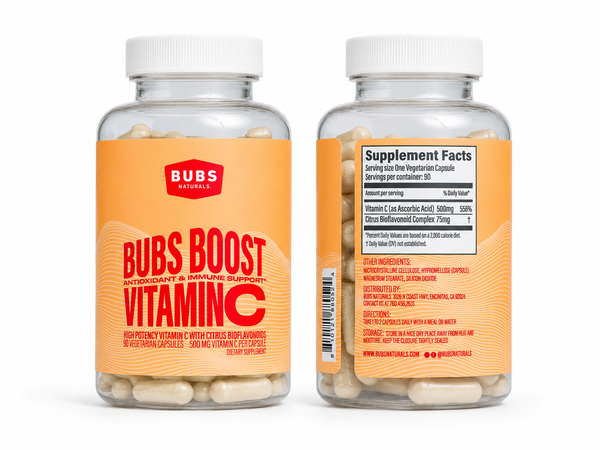
For Vitamin C, we believe in keeping it simple and effective. Our Boosts collection includes our Vitamin C supplement, which provides 500 mg per serving. It also includes citrus bioflavonoids, which are natural compounds found in fruit that help improve the absorption and effectiveness of the vitamin. It’s about making sure your body actually uses what you’re putting into it.
Myth: You should take as much Vitamin C as possible when you feel a cold coming on.
Fact: Your body has a "ceiling" for how much Vitamin C it can absorb at one time. Excessively high doses (like 2,000mg+) often lead to digestive upset rather than better immunity. Consistent, moderate doses are more effective for long-term health.
Benefits Beyond the Gym
While we often focus on performance, the Vitamin C and E combination offers significant benefits for general wellness and aging.
Skin Health and UV Protection
Your skin is your largest organ and your primary barrier against the outside world. It is constantly bombarded by UV rays from the sun, which create free radicals that break down skin elasticity and lead to premature aging.
When you take Vitamin C and E together, they work from the inside out to bolster your skin's natural defenses. Vitamin C helps keep the skin firm by supporting collagen, while Vitamin E keeps the skin hydrated and protected. Many people find that this combination leads to a more resilient complexion and a faster recovery from sun exposure.
Cardiovascular Support
Your blood vessels are lined with a delicate layer of cells called the endothelium. Maintaining the health of this lining is crucial for healthy blood pressure and overall heart health. Oxidative stress is one of the primary enemies of endothelial function.
Vitamin C helps support the production of nitric oxide, which allows your blood vessels to relax and dilate properly. Vitamin E protects the fats in your blood (like LDL cholesterol) from becoming oxidized. Oxidized fats are much more likely to contribute to arterial issues than "clean" fats. By taking both together, you are supporting both the structure of the vessels and the quality of the fluid moving through them.
Practical Dosing: How Much and When?
Knowing that you can take them together is the first step. Knowing how to do it effectively is the second. Because one is water-soluble and the other is fat-soluble, the timing of your dose matters.
The Ideal Routine
-
With a Meal: Because Vitamin E requires fat for absorption, you should always take this duo with a meal that contains some healthy fats. This could be eggs for breakfast, an avocado at lunch, or a spoonful of MCT oil in your coffee.
-
Morning vs. Evening: Most people find the best results by taking their antioxidants in the morning. This provides your "shield" for the day ahead when you are most likely to encounter environmental stressors and physical activity.
-
Post-Workout: Some athletes prefer to wait 1-2 hours after a workout to take high-dose antioxidants. This allows the body’s natural inflammatory signal to trigger muscle adaptation before the antioxidants come in to help with the "cleanup" phase.
Recommended Amounts
-
Vitamin C: For most active adults, 500 mg to 1,000 mg per day is the sweet spot. This is enough to saturate your tissues without causing the stomach discomfort often associated with "mega-dosing."
-
Vitamin E: The Recommended Dietary Allowance (RDA) for adults is roughly 15 mg (22.4 IU). Many supplements offer higher amounts, but it is generally wise to stay below the tolerable upper limit of 1,000 mg per day unless directed by a doctor.
Bottom line: Taking Vitamin C and E together with a fat-containing meal in the morning is the most effective way to maximize their synergistic benefits for recovery and long-term health.
Avoiding Common Pitfalls
Even with a "super-duo" like Vitamin C and E, you can still make mistakes that limit their effectiveness.
The Fillers Problem
Many supplements on the shelf today are packed with "flow agents," artificial colors, and cheap fillers like cornstarch or maltodextrin. These don't just take up space; they can interfere with how your body processes the actual vitamins. At BUBS Naturals, our philosophy is "no BS." We keep our formulas clean so your body doesn't have to work through a layer of junk to get to the nutrients it needs.
Thinking More is Always Better
In the supplement world, there is a tendency to think that if 500 mg of something is good, 5,000 mg must be ten times better. With antioxidants, this isn't the case. Your body works on a principle of balance. If you completely eliminate all oxidative stress with massive doses of vitamins, you might actually hinder your body’s ability to get stronger. The goal is to manage stress, not erase it.
Relying Only on Supplements
Supplements are designed to supplement a healthy lifestyle, not replace it. You should still aim to get Vitamin C from citrus, bell peppers, and strawberries, and Vitamin E from almonds, sunflower seeds, and spinach. Using a clean supplement like ours ensures you are hitting your baseline every single day, regardless of how busy life gets.
How BUBS Naturals Fits Your Routine
We believe that wellness should be simple. You shouldn't need a chemistry degree to understand what you're putting into your body. That’s why we created our Vitamin C with a focus on high bioavailability and zero fillers. If you want to see the broader lineup, start with the Boosts collection and build from there.
When you take our Vitamin C, you are getting 500 mg of pure ascorbic acid bolstered by citrus bioflavonoids. It is designed to mix into your daily routine—whether that’s alongside your morning coffee or as part of your post-run hydration. Our products are third-party tested and NSF for Sport certified, meaning they meet the highest standards for purity and safety. This is the same level of quality trusted by elite athletes and military professionals.
We take our ingredients seriously because we know you take your performance seriously. Whether you are looking to support your immune system during a long winter or you want to ensure your joints stay resilient during a heavy lifting cycle, the combination of Vitamin C and Vitamin E is a foundational piece of the puzzle. If you want more on the brand behind the product, read about BUBS Naturals and Glen “BUB” Doherty’s legacy.
Conclusion
Taking Vitamin E and Vitamin C together is a classic example of nutritional synergy. By protecting both the water-based and fat-based environments of your cells, this duo provides a level of protection that neither could achieve alone. From supporting collagen synthesis and joint health to helping your muscles recover from the stress of a hard workout, these two vitamins are essential for anyone living an active, high-purpose life.
-
Synergy: Vitamin C recharges Vitamin E, keeping your antioxidant defense active for longer.
-
Protection: Together, they shield cell membranes and internal cell structures from oxidative damage.
-
Performance: They support the collagen production necessary for strong joints and healthy skin.
-
Consistency: Daily, moderate doses are more effective than occasional mega-doses.
The BUBS Naturals mission is rooted in the idea of living a life full of adventure and purpose, inspired by the legacy of Glen "BUB" Doherty. To help others live that same way, we donate 10% of all our profits to veteran-focused charities. When you choose our products, you aren't just supporting your own health; you’re contributing to a larger cause. For more on that mission, visit our About BUBS Naturals page.
Ready to shore up your recovery and protect your cells? Start by adding a clean, effective Vitamin C to your daily stack and feel the difference that high-quality, mission-driven nutrition can make.
FAQ
Is it better to take Vitamin C and E in the morning or at night?
It is generally best to take Vitamin C and E in the morning with a meal that contains healthy fats. The fats help with the absorption of Vitamin E, and the morning timing provides your body with a protective antioxidant shield for the day's stressors.
Can taking Vitamin C and E together cause stomach upset?
While most people tolerate this combination well, taking high doses of Vitamin C on an empty stomach can occasionally lead to acidity or discomfort. To avoid this, take your supplements with food and stick to a moderate dose, such as the 500 mg found in BUBS Naturals Vitamin C.
Do I still need Vitamin E if I take a lot of Vitamin C?
Yes, because Vitamin C cannot protect the fatty parts of your cells, such as the cell membranes, where Vitamin E is specialized. While Vitamin C helps "recycle" the Vitamin E you already have, you still need an adequate supply of Vitamin E from food or supplements to maintain those defenses.
Can I get enough Vitamin C and E from food alone?
While it is possible to get these vitamins from a diet rich in fruits, nuts, and seeds, many people—especially highly active individuals—find it difficult to hit optimal levels consistently. Supplementing with a clean, bioavailable source ensures that you are meeting your body's increased demand for antioxidants during periods of heavy training or stress.