Table of Contents
- Introduction
- Understanding Collagen: The Basics
- Mechanism of Action: How Collagen Works in the Body
- Clinical Evidence Supporting Collagen for Joint Health
- Choosing the Right Collagen for Your Needs
- How to Incorporate Collagen into Your Routine
- Conclusion
Introduction
Did you know that collagen is the most abundant protein in your body, constituting about 30% of your total protein content? It's a crucial structural component found in skin, bones, tendons, ligaments, and cartilage—essentially the connective tissues that hold us together. As we age or engage in high-impact activities, the natural production of collagen declines, leading to joint pain and stiffness. This raises a vital question: which collagen is best for supporting joint health?
In this blog post, we will delve into the different types of collagen and how they can benefit joint health. We'll explore the mechanisms by which collagen works in the body, the clinical evidence supporting its use, and practical advice on how to incorporate collagen into your routine. By the end of this post, you will have a thorough understanding of collagen's role in joint health and how to make informed choices for your wellness journey.
At BUBS Naturals, our commitment to clean, science-backed supplements aligns perfectly with the exploration of collagen for joint health. We emphasize simple, effective ingredients designed to support an active lifestyle, and we aim to empower you with knowledge that can help you achieve your wellness goals.
Understanding Collagen: The Basics
Collagen is a structural protein that forms the foundation of connective tissues in the body. There are at least 28 different types of collagen, but the most common are Types I, II, and III:
-
Type I: Predominantly found in skin, bones, tendons, and ligaments, it provides tensile strength.
-
Type II: This type makes up about 90% of the collagen in cartilage, making it crucial for joint health.
-
Type III: Found in the skin's middle layer, muscles, and blood vessels, it supports the structure of various tissues.
The Role of Collagen in Joint Health
Collagen plays a vital role in maintaining the integrity of cartilage, which cushions the joints. As we age or engage in strenuous activities, the degradation of collagen in the cartilage can lead to conditions like osteoarthritis, resulting in pain, inflammation, and reduced mobility.
Research suggests that collagen supplementation may help support cartilage health by:
- Stimulating the production of new collagen in the body.
- Reducing inflammation in the joints.
- Supporting the hydration and elasticity of cartilage.
Types of Collagen Supplements
When considering collagen for joint health, you'll encounter various types of supplements, including:
-
Hydrolyzed Collagen: Also known as collagen peptides, this form is broken down into smaller amino acids for better absorption. It's commonly found in powders that can be mixed into drinks or smoothies.
-
Undenatured Type II Collagen (UC-II): This form is less processed and retains its natural structure. It's typically derived from chicken cartilage and is thought to promote oral tolerance, potentially reducing autoimmune responses.
-
Gelatin: This is a cooked form of collagen that can also provide benefits but may be less effective than hydrolyzed collagen.
-
Collagen-rich Foods: Bone broth, chicken skin, and certain cuts of meat are natural sources of collagen, but the concentration may not be sufficient for therapeutic effects.
Our Recommendation: BUBS Collagen Peptides
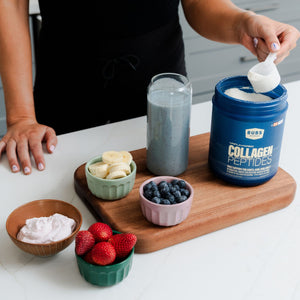
At BUBS Naturals, we offer Collagen Peptides derived from grass-fed, pasture-raised sources. Our collagen is hydrolyzed for optimal absorption and mixes effortlessly into your favorite beverages. As with all our products, we prioritize quality and transparency, ensuring that you receive a clean source of collagen that supports your active lifestyle.
Mechanism of Action: How Collagen Works in the Body
Collagen supplementation may exert its effects through several mechanisms:
-
Stimulating Collagen Synthesis: Collagen peptides can be absorbed and then utilized by the body to synthesize new collagen, particularly in joint tissues.
-
Reducing Inflammation: Some studies suggest that collagen has anti-inflammatory properties, which could help alleviate joint pain and swelling.
-
Enhancing Joint Lubrication: Proper collagen levels can support the production of synovial fluid, which lubricates the joints and reduces friction.
-
Promoting Cartilage Repair: Collagen may help preserve cartilage structure and promote repair mechanisms in damaged tissues.
By understanding these mechanisms, we can appreciate why collagen is a valuable addition to the wellness routines of those seeking to maintain healthy joints.
Clinical Evidence Supporting Collagen for Joint Health
Numerous studies have examined the effects of collagen supplementation on joint health, particularly in individuals with osteoarthritis and athletes. Here’s a summary of key findings:
-
Osteoarthritis: A randomized controlled trial found that participants taking 40 mg of UC-II collagen experienced significant reductions in pain and stiffness compared to those taking a placebo. Another study showed that hydrolyzed collagen improved joint function and reduced pain in patients with knee osteoarthritis after 24 weeks.
-
Athletic Performance: In athletes, collagen supplementation has shown promise in reducing joint pain and improving recovery times. A study indicated that athletes who consumed collagen experienced less joint pain during exercise compared to those who did not supplement.
-
Overall Joint Health: A meta-analysis of multiple clinical trials found that collagen supplementation could significantly improve joint pain and function, regardless of the specific type of collagen used.
While individual results may vary, the collective evidence suggests that collagen can be an effective means of supporting joint health.
Choosing the Right Collagen for Your Needs
Given the various types of collagen and forms available, how do we choose the right one for joint health? Here are some considerations:
-
Type of Collagen: For joint support, prioritize Type II collagen or hydrolyzed collagen, as these forms have been shown to be most effective.
-
Formulation: Look for products that include additional supportive ingredients like vitamin C, glucosamine, and hyaluronic acid. These can enhance collagen's efficacy.
-
Quality Assurance: Choose products that are third-party tested for purity and potency. At BUBS Naturals, we are committed to transparency and quality, ensuring our collagen meets high standards.
-
Personal Preferences: Consider your lifestyle and preferences. Powders can be added to smoothies or coffee, while capsules offer convenience for on-the-go lifestyles.
How to Incorporate Collagen into Your Routine
Incorporating collagen into your daily routine can be simple and enjoyable. Here are a few tips:
-
Morning Boost: Add a scoop of our Collagen Peptides to your morning coffee or smoothie for an easy start to your day.
-
Post-Workout Recovery: Mix collagen into your post-workout shake to support recovery and joint health.
-
Cooking: Use collagen powder in soups, sauces, or baked goods for a nutritious boost.
-
Consistency is Key: For best results, aim to incorporate collagen into your routine consistently, as benefits may take time to manifest.
Conclusion
Understanding which collagen is best for joint health can empower us to make informed choices in our wellness journey. Collagen plays a pivotal role in maintaining the integrity of our joints, and supplementation can offer significant benefits, particularly as we age or engage in high-impact activities.
At BUBS Naturals, we are dedicated to providing clean, effective supplements that enhance your active lifestyle while honoring the legacy of Glen “BUB” Doherty. Our Collagen Peptides are designed to support your joints, recovery, and overall well-being.
By making collagen a part of your daily routine, you're taking a proactive step towards maintaining joint health and promoting a vibrant, active life.
FAQ
1. How long does it take to see results from collagen supplementation?
Results can vary, but many individuals may start to notice improvements in joint pain and mobility within 6 to 12 weeks of consistent collagen use.
2. What is the recommended daily intake of collagen?
Studies suggest a daily intake of 10 to 15 grams of collagen, although individual needs may vary based on activity level and specific health goals.
3. Can vegetarians or vegans take collagen?
Collagen is naturally derived from animal sources. While there are plant-based supplements that promote collagen synthesis (like vitamin C-rich products), they do not contain collagen itself.
4. Are there any side effects associated with collagen supplementation?
Collagen is generally well-tolerated, but some individuals may experience mild gastrointestinal discomfort. It's always best to consult with a healthcare provider before starting any new supplement.
5. Can I get enough collagen from my diet alone?
While foods like bone broth and certain cuts of meat are rich in collagen, it may be challenging to consume sufficient quantities for therapeutic effects. Supplementation can be a convenient way to meet your needs.
By equipping ourselves with knowledge and high-quality supplements like those offered by BUBS Naturals, we can champion our joint health and enjoy an active, adventurous life.