Table of Contents
- Understanding Collagen: The Building Blocks of Our Body
- The Sources of Collagen: Where Does It Come From?
- Types of Collagen: A Diverse Family of Proteins
- Collagen and Aging: What Happens Over Time?
- Enhancing Collagen Production Naturally: Diet and Lifestyle Choices
- The Role of Collagen Supplements
- Conclusion: Embracing Collagen for a Healthy Life
- Frequently Asked Questions (FAQ)
Collagen protein has risen to prominence in recent years, finding its way into supplements and beauty products as the go-to solution for aging skin, joint health, and overall wellness. Yet, despite its popularity, there’s often confusion about what collagen is, where it comes from, and how it fits into our health regime. Given that collagen accounts for about 30% of our body's total protein, emerging questions include: What exactly is collagen? How do we produce it? And what role does nutrition play in maintaining healthy collagen levels?
In this post, we will explore these questions in depth while examining the origins of collagen and its societal impact. By the end, we aim to provide a comprehensive understanding of where collagen protein comes from, its diverse roles in the body, and how we can naturally boost our collagen levels through diet and supplementation.
Understanding Collagen: The Building Blocks of Our Body
Collagen is the most abundant protein in the human body, integral to the structure and integrity of various tissues. It is a primary component of skin, bone, muscles, tendons, and ligaments. Comprised predominantly of amino acids—specifically glycine, proline, and hydroxyproline—collagen assembles itself into triple helix structures, forming long fibrils that provide strength and elasticity to connective tissues.
Collagen serves several crucial functions, including:
-
Structural Support: It helps maintain the integrity and flexibility of joints, skin, and connective tissues.
-
Wound Healing: Collagen plays a vital role in the body’s healing processes by providing a scaffold for tissue regeneration.
-
Skin Elasticity: It is responsible for skin’s firmness and hydration, helping to combat signs of aging like wrinkles and sagging.
Despite its importance, it's noteworthy that as we age, our natural collagen production decreases due to several factors, including UV exposure, smoking, and lifestyle choices. This decline can result in less resilient skin, stiff joints, and compromised structural integrity throughout the body.
The Sources of Collagen: Where Does It Come From?
Collagen primarily originates from animal sources, with various types available depending on the source:
-
Bovine (Cow) Collagen: Typically derived from the hide and bones of cows, this type is rich in Types I and III collagen, which are essential for skin and joint health.
-
Marine (Fish) Collagen: Sourced from fish skin and scales, marine collagen is favored due to its high bioavailability and potential benefits for skin health. This is particularly beneficial for marine-based diets.
-
Poultry (Chicken) Collagen: Commonly extracted from chicken bones and skin, this type is particularly rich in Type II collagen, crucial for joint health and cartilage maintenance.
In recent years, collagen supplements have surged in popularity, taking the form of powders, pills, and drinks. Many of these supplements are hydrolyzed, meaning they are pre-broken down into smaller peptides to enhance absorption and efficacy.
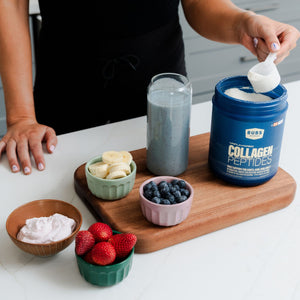
At BUBS Naturals, we stay committed to high-quality, clean ingredients in our products. Our focus on nature-inspired health means we utilize ingredients that reinforce our adventure-centered lifestyle, allowing optimal nutrition without compromise. To explore our range of collagen products, including our Collagen Peptides, feel free to check it out.
Types of Collagen: A Diverse Family of Proteins
More than 28 types of collagen have been identified, categorized based on their structure and function in the body. However, the five most prevalent types include:
-
Type I: The most abundant type, found in skin, bones, tendons, and ligaments.
-
Type II: Predominantly located in cartilage, providing support in joints.
-
Type III: Often found alongside Type I, present in reticular fibers and important for skin elasticity.
-
Type IV: Forms basal lamina and is crucial in filtering systems.
-
Type V: Found in cell surfaces, hair, and tissue of the placenta.
Each type plays distinct roles in maintaining structure across various body systems, making collagen essential for overall health and wellness.
Collagen and Aging: What Happens Over Time?
As we move through life, our body’s collagen production naturally declines, beginning as early as our 20s and accelerating post-menopause. Factors such as diet, exercise, and environmental stressors significantly influence the rate of collagen loss. Signs of reduced collagen levels can manifest as:
- Wrinkles and skin sagging.
- Joint pain and stiffness.
- Weakened hair and nails.
Awareness of these changes is important, as they encourage proactive measures—such as improved nutrition and potential supplementation—to combat the effects of aging.
Enhancing Collagen Production Naturally: Diet and Lifestyle Choices
While collagen supplements provide a direct source of collagen, various lifestyle measures can bolster the body’s natural production. The key nutrients for collagen synthesis include:
-
Vitamin C: Crucial in stabilizing collagen’s structure, found in citrus fruits, berries, and leafy greens.
-
Proline and Glycine: Found in protein-rich foods like meat, fish, eggs, and dairy.
-
Copper and Zinc: Important for the enzymes that facilitate collagen synthesis, present in nuts, shellfish, and whole grains.
At BUBS Naturals, we believe in harnessing the power of whole foods alongside our supplements. For instance, our Apple Cider Vinegar Gummies can complement a balanced diet that supports your body's natural collagen production.
The Role of Collagen Supplements
Collagen supplements have grown in popularity as people seek visible results in skin rejuvenation and joint support. Many studies suggest that hydrolyzed collagen may aid in improving skin elasticity, hydration, and joint mobility, but it's worth mentioning that the research is still evolving. While individual experiences vary, our belief at BUBS Naturals is grounded in supporting wellness initiatives through thoughtful supplementation.
One of our products that embodies this philosophy is our Hydrate Electrolytes collection, which plays a supporting role in hydration and can be included in a balanced lifestyle that promotes optimal wellness.
Conclusion: Embracing Collagen for a Healthy Life
Understanding where collagen comes from and its role in our bodies is key to appreciating its importance in our wellness journey. By incorporating collagen-rich foods, considering high-quality supplements, and adopting a balanced lifestyle, we can proactively manage our collagen levels and their benefits as we age.
Focusing on clean, effective ingredients aligns with our commitment at BUBS Naturals to promote both personal wellness and give back to the community through our mission of helping veterans and enhancing lives.
As we continue exploring the depths of collagen and its rich varieties, we find that choices we make—whether dietary or supplemental—can profoundly impact our overall well-being.
Frequently Asked Questions (FAQ)
1. What is collagen?
Collagen is a protein that plays a crucial role in maintaining the structure and integrity of connective tissues, such as skin, bones, muscles, and tendons.
2. How is collagen produced in the body?
Collagen production occurs naturally in the body, predominantly by fibroblast cells, utilizing a variety of amino acids and nutrients to create and repair collagen fibers.
3. Can I boost collagen levels through diet?
Yes! Food rich in vitamin C, proline, glycine, copper, and zinc can enhance collagen production. Aim to incorporate a variety of protein-rich foods, fruits, and leafy greens into your diet.
4. Are collagen supplements effective?
Research indicates that collagen supplements may aid skin hydration, elasticity, and joint mobility. However, the effectiveness may vary from person to person, and it’s always best to consult with a healthcare professional before starting any new supplement regimen.
5. Where can I find high-quality collagen supplements?
At BUBS Naturals, we pride ourselves on offering clean, effective collagen products that are rigorously tested. Check out our Collagen Peptides to see how we can support your wellness journey.