Table of Contents
- Introduction
- Understanding the Collagen Landscape
- What is Marine Collagen?
- What is Bovine Collagen?
- Bioavailability: Is Marine Actually Better?
- Performance and Recovery: The Athlete’s Perspective
- Skin Health and Anti-Aging
- Sourcing, Safety, and Sustainability
- Comparing the Amino Acid Profiles
- Practical Usage: Taste and Mixability
- Which One Should You Choose?
- The BUBS Perspective on Total Wellness
- Bottom Line: Is Marine as Effective as Bovine?
- FAQ
Introduction
You’ve probably seen the containers lining the shelves or appearing in your social media feed. One tub says bovine, the other says marine. Both promise to support your joints, skin, and overall wellness. If you are training hard or simply looking to age better, you want to know which one actually works. The question isn't just about which one is popular. It’s about which one is more effective for your specific goals.
At BUBS Naturals, we believe in keeping things simple and science-backed. If you’re ready to try our Collagen Peptides, it helps to know what sets them apart from other collagen sources. Collagen is the "glue" that holds your body together. It makes up a massive portion of your skin, bones, tendons, and ligaments. But as we age—starting as early as our 20s—our natural production slows down. This post will break down the differences between marine and bovine sources, their bioavailability, and which one belongs in your daily routine. We will help you decide if marine collagen is truly as effective as the gold-standard bovine version.
Quick Answer: Marine collagen is highly effective for skin elasticity and hydration due to its smaller particle size and high Type I content. However, bovine collagen is often considered more effective for full-body recovery because it contains both Type I and Type III collagen, supporting joints, gut health, and muscle tissue.
Understanding the Collagen Landscape
Collagen is not a single protein. It is a family of proteins, and your body contains at least 16 different types. However, about 90% of the collagen in the human body consists of Types I, II, and III. For a deeper breakdown of how this protein is sourced and processed, see our Collagen Protein Benefits page. When you compare marine and bovine sources, you are really comparing which of these types you are getting and how well your body can use them.
Type I collagen is found almost everywhere—skin, tendons, organs, and bones. It is the most abundant and is known for its incredible tensile strength. Type III collagen is usually found alongside Type I. It is a major component of our skin and organs, specifically helping with the structure of muscles and large blood vessels.
The effectiveness of any supplement depends on how well your body absorbs it. This is where the term "hydrolyzed" comes in. Whether it comes from a cow or a fish, the collagen must be broken down into smaller chains called peptides. These peptides are easier for your digestive system to process. Without this step, the protein molecules would be too large to cross into your bloodstream efficiently.
What is Marine Collagen?
Marine collagen is sourced from the skin, scales, and bones of fish. It is almost exclusively Type I collagen. Because Type I is the primary building block of our skin, marine collagen has become a favorite in the longevity and beauty space.
One of the standout features of marine collagen is its molecular structure. The peptides in marine collagen are often smaller than those found in bovine sources. In the world of supplements, smaller usually means faster. Some studies suggest that marine collagen is absorbed up to 1.5 times more efficiently than other types.
For the person focused on skin hydration, reducing fine lines, or strengthening brittle nails, marine collagen is a powerhouse. It is also an excellent option for pescatarians or those who avoid beef products for cultural or personal reasons. However, because it lacks Type III collagen, it may not provide the same broad-spectrum support for gut lining or muscle tissue that other sources offer.
What is Bovine Collagen?
Bovine collagen comes from cows, specifically the hides. It is the most common source of collagen on the market today. What makes it distinct is that it provides a combination of Type I and Type III collagen. This dual-profile approach is why many athletes and active adults prefer it.
Type III collagen is essential for the structure of our muscles and organs. It also plays a vital role in gut health. Many people use collagen to support the integrity of their intestinal lining. Since bovine collagen contains both types, it offers a more "full-body" approach to wellness. It supports the skin and hair just like marine collagen, but it adds that extra layer of support for the tissues that keep you moving during a workout.
Our Collagen Peptides and Muscle Recovery article goes deeper into why bovine collagen is such a strong fit for active routines. Our product is sourced from grass-fed, pasture-raised bovine hides. This ensures a clean, consistent amino acid profile without the use of hormones or unnecessary fillers. For those looking for a versatile supplement that covers everything from joint longevity to digestive support, bovine remains a heavy hitter.
Bioavailability: Is Marine Actually Better?
The word bioavailability refers to how much of a substance actually enters your circulation to have an active effect. You might hear people claim that marine collagen is superior because of its high bioavailability. While it is true that marine collagen has smaller molecules, this does not necessarily mean bovine collagen is "ineffective."
When bovine collagen is properly hydrolyzed—meaning it is broken down into low-molecular-weight peptides—it is also highly bioavailable. Most people will find that their body absorbs bovine peptides very well, especially when taken consistently.
The "speed" of absorption is often less important than the amino acid profile you are receiving. Both marine and bovine collagen are rich in three specific amino acids: glycine, proline, and hydroxyproline. These are the building blocks your body needs to create its own collagen. As long as you are using a high-quality, hydrolyzed product, your body will get the tools it needs to support your connective tissues.
Key Takeaway: Marine collagen may absorb slightly faster due to smaller peptide size, but bovine collagen provides a more diverse profile (Types I and III) that supports muscle and gut health alongside skin and joints.
Performance and Recovery: The Athlete’s Perspective
If your primary goal is performance and recovery, the choice becomes clearer. Athletes put immense stress on their tendons, ligaments, and joints. They also require a healthy digestive system to absorb the nutrients needed for fuel.
Bovine collagen is often the preferred choice here because of the presence of Type III collagen. When you are recovering from a grueling trail run or a heavy lifting session, your body needs to repair various types of connective tissue. Type III is a major player in the repair of muscle fibers and the maintenance of cardiovascular health.
Furthermore, bovine collagen is rich in the amino acid glycine. Glycine is not just a building block for collagen; it also helps support a healthy inflammatory response and can even help with sleep quality. For someone pushing their physical limits, these secondary benefits are just as important as the structural support.
If you want to round out your routine, our Hydration Collection is built for performance-focused electrolyte support alongside collagen.
Skin Health and Anti-Aging
If your focus is almost entirely on the "fountain of youth" aspects—skin elasticity, moisture, and hair thickness—marine collagen has a slight edge. Because it is so concentrated in Type I collagen, it mimics the collagen naturally found in the human dermis.
Regular intake of marine collagen may help increase skin hydration and protect against the visible effects of UV damage. Many users report that their skin feels "plumper" and that their nails grow faster when using a marine-sourced product.
However, don't count bovine out for skin health. Since it also contains a high amount of Type I collagen, it provides many of the same benefits. The difference is often subtle. If you are already taking bovine collagen for your joints and gut, you are likely already reaping significant skin benefits as well.
Sourcing, Safety, and Sustainability
In the supplement world, sourcing is everything. You want to know that what you are putting into your body is clean and ethically produced.
Marine Collagen Sourcing:
High-quality marine collagen should be sourced from wild-caught fish, rather than farmed fish. Farmed fish are often exposed to antibiotics and crowded conditions. Using the scales and skins of wild-caught fish is also a great example of upcycling, as these parts are often discarded by the food industry.
Bovine Collagen Sourcing:
The gold standard for bovine collagen is grass-fed and pasture-raised. This is important because it ensures the animals lived a natural life without being pumped full of hormones or grain-heavy diets that can alter the nutritional profile of the hides.
At BUBS Naturals, we prioritize these standards because we know that a clean product performs better. Our Hydrate or Die electrolyte mix reflects that same no-BS approach. We also ensure our products are third-party tested and NSF for Sport certified. This means athletes can trust that there are no banned substances or hidden junk in the tub.
Comparing the Amino Acid Profiles
To understand effectiveness, we have to look at the chemistry. Both sources are technically "incomplete" proteins because they lack tryptophan, one of the nine essential amino acids. You should not use collagen as your only source of protein. Instead, think of it as a specialized tool for connective tissue.
| Feature |
Marine Collagen |
Bovine Collagen |
| Primary Types |
Type I |
Type I & Type III |
| Best For |
Skin, Hair, Nails |
Joints, Gut, Muscles, Skin |
| Absorption |
Very High (Fast) |
High |
| Sourcing |
Wild-Caught Fish |
Grass-Fed Cows |
| Flavor Profile |
Can have a mild "sea" taste |
Neutral/Unflavored |
| Dietary Fit |
Pescatarian-friendly |
Beef-friendly |
Both types are incredibly high in glycine. Glycine is essential for the production of glutathione, the body's master antioxidant. They also both contain high levels of hydroxyproline, which is unique to collagen and helps stimulate the body's own natural collagen-producing cells (fibroblasts).
Practical Usage: Taste and Mixability
No matter how effective a supplement is, you won't take it if it tastes like a swamp or clumps at the bottom of your glass.
Marine collagen can sometimes have a faint fishy odor or aftertaste, though high-quality versions are usually filtered well enough to minimize this. It dissolves extremely well in both hot and cold liquids because of its small molecular size.
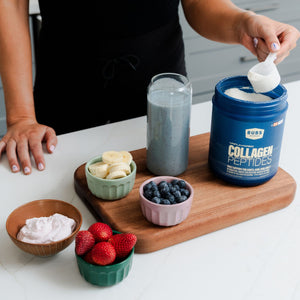
Bovine collagen is famous for being virtually tasteless and odorless. Our product is designed to disappear into your morning coffee, a post-workout shake, or even a bowl of oatmeal. This versatility makes it much easier to stay consistent. Consistency is the secret to seeing results with collagen. You won't see a change in your joints or skin overnight; it usually takes 4 to 8 weeks of daily use.
Which One Should You Choose?
The "better" collagen is the one that aligns with your lifestyle and dietary needs.
Choose Marine Collagen if:
- You are a pescatarian or avoid beef products.
- Your primary goal is skin aesthetics and hair growth.
- You want the fastest possible absorption rate.
- You are concerned about the environmental impact of land-based livestock.
Choose Bovine Collagen if:
- You want a versatile, "all-in-one" supplement for joints, gut, and skin.
- You are an athlete looking for muscle and tendon recovery support.
- You want a completely neutral taste that mixes into anything.
- You want a cost-effective way to support long-term wellness.
For many, bovine collagen is the starting point because it covers more bases. It provides the Type III collagen that is so helpful for the digestive tract and muscle structure.
The BUBS Perspective on Total Wellness
We don't believe in overcomplicating your health. Wellness isn't about a 20-step routine; it's about a few high-impact habits performed every single day. Adding a scoop of collagen to your morning routine is one of those habits.
Whether you choose marine or bovine, the goal is the same: to give your body the raw materials it needs to stay resilient. We built our brand to honor the legacy of Glen "BUB" Doherty, a man who lived a life of adventure and high performance. He didn't have time for fluff, and neither do we. That is why we focus on clean, single-ingredient products that do exactly what they say on the label.
Myth: Marine collagen is "more natural" than bovine collagen.
Fact: Both are natural proteins derived from animal sources. Their "naturalness" depends entirely on how the animals were raised (wild-caught vs. grass-fed) and how the protein was processed.
Bottom Line: Is Marine as Effective as Bovine?
Yes, marine collagen is just as effective as bovine collagen—but it is effective in different ways. Marine collagen is a specialized tool for skin and beauty with a slight edge in absorption speed. Bovine collagen is a broad-spectrum tool for total body structural health, including the gut and muscles.
If you are looking for the most versatile option that supports your active lifestyle from the inside out, bovine collagen is hard to beat. If you are strictly focused on your complexion or follow a pescatarian diet, marine is a fantastic alternative.
For the bigger picture on how our mission ties into performance, you can also read our Collagen Protein Benefits page and learn why we keep things simple. We are proud to provide products that help you push your limits. We also believe in giving back. That is why we follow the 10% Rule: we donate 10% of all profits to veteran-focused charities. When you invest in your health with us, you are also supporting the community of those who served.
Choose the collagen that fits your goals, stay consistent, and get back to the adventure.
FAQ
Does marine collagen contain different amino acids than bovine?
Both marine and bovine collagen contain the same 18 amino acids, including high amounts of glycine, proline, and hydroxyproline. The main difference is the ratio of collagen "types," with marine being purely Type I and bovine being a mix of Type I and Type III.
Can I take both marine and bovine collagen together?
Yes, you can absolutely take both. Some people choose to mix them or alternate days to get the widest range of collagen types (I and III). Since they both support connective tissue, there is no harm in combining them as long as you stay within a reasonable daily protein intake.
Is one type of collagen better for joint pain?
Bovine collagen is often cited as being better for joint support because it contains Type III collagen, which is prevalent in the connective tissues surrounding joints and muscles. However, because both are high in Type I, either source can help support joint health over time.
How do I know if my collagen is high quality?
Look for products that are "hydrolyzed," as this ensures the protein is broken down into absorbable peptides. Check for third-party certifications like NSF for Sport, and ensure the source is either wild-caught (for marine) or grass-fed and pasture-raised (for bovine).