Table of Contents
- Introduction
- Understanding the Collagen Basics
- The Case for Bovine Collagen Peptides
- The Case for Marine Collagen
- Comparing Bovine and Marine Collagen
- Quality Matters: What to Look For
- How to Incorporate Collagen into Your Routine
- Why We Do What We Do
- Conclusion
- FAQ
Introduction
Walking down the supplement aisle or scrolling through your favorite wellness site can feel like navigating a maze. You see bright tubs of "Collagen Peptides" and sleek bottles of "Marine Collagen," both promising stronger joints, better skin, and faster recovery. It is easy to get caught up in the marketing buzz, but when you are trying to decide which one to add to your morning routine, you want facts, not just a vibe.
At BUBS Naturals, we believe in keeping things simple and transparent. Whether you are an athlete looking to support your joints or someone focused on healthy aging, understanding the source of your supplements is the first step toward better results—and our Collagen Peptides are a simple place to start. This article will break down the differences in sourcing, nutrient profiles, and absorption rates to help you decide which one fits your lifestyle.
The choice between these two powerhouses typically comes down to your specific health goals, your dietary restrictions, and how your body responds to different protein sources. By the end of this guide, you will know exactly which collagen fits your personal mission.
Quick Answer: Neither is strictly "better" for everyone; bovine collagen (often labeled "collagen peptides") is usually better for overall structural support and joint health, while marine collagen is often preferred for skin health and pescatarian diets. Both should be hydrolyzed into peptides for maximum absorption.
Understanding the Collagen Basics
Before we compare the two, we need to define what collagen peptides are and their benefits. Collagen is the most abundant protein in your body. Think of it as the "glue" that holds everything together. It provides structure to your skin, strength to your bones, and elasticity to your tendons and ligaments.
As we age, our natural production of this protein starts to drop. Most people see a decline of about 1% per year starting in their mid-20s. Factors like sun exposure, high-sugar diets, and smoking can accelerate this process. This decline is why you might notice stiffer joints after a workout or fine lines on your face that weren't there a few years ago.
What are Peptides?
You will often see the word "peptides" or "hydrolyzed" on a label. This is a critical detail. In its raw form, a collagen molecule is too large for your body to absorb efficiently. Through a process called hydrolysis, we use enzymes to break those long protein chains into shorter ones called peptides. These "snack-sized" pieces are much easier for your gut to handle and your bloodstream to transport to where they are needed most.
Whether you choose bovine or marine, you want a product that is hydrolyzed. This ensures high bioavailability, which is just a fancy way of saying your body can actually use what you are swallowing. If you want a deeper look at the process, how the body produces collagen is worth a read.
The Case for Bovine Collagen Peptides
When most people talk about "collagen peptides" in a general sense, they are usually referring to bovine collagen. This is sourced from cows—specifically the hides. At BUBS Naturals, we prioritize grass-fed and pasture-raised sources because the quality of the animal's life directly impacts the quality of the supplement, just like our BUBS Collagen Peptides.
Nutrient Profile: Type I and Type III
Bovine collagen is unique because it is a rich source of both Type I and Type III collagen.
-
Type I: This is the most common type in the human body. It is found in skin, tendons, and bone tissue. It is incredibly strong and provides significant structural support.
-
Type III: This type is found in your muscles, organs, and blood vessels. It often works alongside Type I to help with tissue repair and gut health.
Because it contains both types, many people find bovine collagen to be a more "all-purpose" supplement. If you are a runner, a lifter, or someone with a physically demanding job, the combination of Type I and Type III supports the connective tissues that take the most beating.
Benefits for Joint and Gut Health
Many athletes report that bovine collagen helps with joint comfort. The amino acids found in this source, such as glycine and proline, are the building blocks your body uses to maintain cartilage. Furthermore, the amino acid profile in bovine sources is often linked to supporting the lining of the digestive tract. A healthy gut lining is essential for absorbing nutrients and keeping your immune system strong. If you want a broader look at training support, the best collagen for your active lifestyle is a helpful next step.
Key Takeaway: Bovine collagen is a versatile, multi-tasking supplement that provides a robust profile of Type I and Type III collagen, making it ideal for joint support, muscle recovery, and overall structural integrity.
The Case for Marine Collagen
Marine collagen is sourced from the skin and scales of fish. It has surged in popularity recently, especially among those who follow a pescatarian diet or those who are primarily focused on the cosmetic benefits of collagen.
High Bioavailability and Type I Focus
Marine collagen is almost exclusively Type I collagen. While it lacks the Type III found in bovine sources, it makes up for it with smaller particle sizes. Some research suggests that marine collagen peptides are absorbed up to 1.5 times more efficiently than bovine collagen. This is because the molecules are slightly smaller, allowing them to pass through the intestinal wall and into the bloodstream more quickly.
Benefits for Skin, Hair, and Nails
Because Type I collagen is the primary structural component of the skin, marine collagen is often marketed as a "beauty" collagen. It may support skin hydration and elasticity, helping to reduce the visible signs of aging. If your primary goal is to strengthen brittle nails or improve the thickness of your hair, what is the best collagen for skin tightening is a useful next read.
Sustainability and Dietary Choice
For those who do not eat red meat, marine collagen is the obvious choice. It is also often viewed as a more sustainable option, as it uses parts of the fish (scales and skin) that would otherwise be discarded during food production.
Myth: Marine collagen tastes and smells like fish.
Fact: High-quality marine collagen is processed to remove oils and impurities. When it is properly hydrolyzed, it should be virtually tasteless and odorless, mixing easily into coffee or water without changing the flavor.
Comparing Bovine and Marine Collagen
Choosing between the two depends on what you want to achieve. Neither is "better" in an absolute sense; they simply have different strengths.
| Feature |
Bovine Collagen Peptides |
Marine Collagen |
| Primary Source |
Grass-fed, pasture-raised cows |
Wild-caught or farmed fish |
| Collagen Types |
Type I and Type III |
Predominantly Type I |
| Best For |
Joints, gut health, muscle recovery |
Skin, hair, nails, fast absorption |
| Dietary Fit |
Keto, Paleo, Gluten-free |
Pescatarian, Keto, Paleo |
| Bioavailability |
High (when hydrolyzed) |
Very High (smaller molecules) |
| Flavor Profile |
Neutral |
Neutral (if high quality) |
Which One Should You Choose?
If you are an active individual who puts a lot of stress on your body through training, we often suggest starting with bovine collagen. The inclusion of Type III collagen offers a broader range of support for your muscles and organs. It is a foundational supplement that covers most bases.
However, if you are specifically looking to improve skin texture or if you follow a diet that excludes land animals, marine collagen is the way to go. Its rapid absorption makes it highly effective for targeted skin and hair support.
Quality Matters: What to Look For
Regardless of which source you choose, the quality of the supplement is what determines the results. The market is flooded with products that contain fillers, artificial sweeteners, or poorly sourced ingredients.
Third-Party Testing
You should always look for products that are third-party tested. This ensures that what is on the label is actually in the tub. At BUBS Naturals, our products are NSF for Sport certified. For a closer look at the testing, sourcing, and mixability, see Is BUBS Collagen Good? Quality, Benefits, and Results. This is one of the highest standards in the industry, meaning our supplements are tested for purity and are free from banned substances. Whether you are a professional athlete or a weekend warrior, you deserve to know your supplements are clean.
Solubility and Mixability
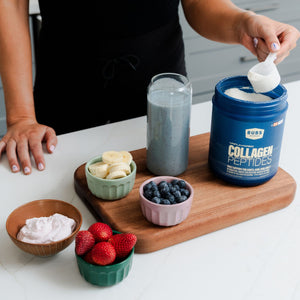
A common frustration with collagen is clumping. Low-quality powders often turn into a gummy mess at the bottom of your glass. High-quality peptides should dissolve effortlessly in both hot and cold liquids. You should be able to stir a scoop into your morning coffee, a post-workout shake, or even a glass of water without any grit or weird texture.
The "No BS" Ingredient List
Check the ingredient label. You should see one ingredient: Bovine Hide Collagen Peptides or Marine Collagen Peptides. If you see "natural flavors," "sweeteners," or a long list of chemical-sounding names, put it back. You want the pure protein, not the fillers.
How to Incorporate Collagen into Your Routine
Consistency is the most important factor when taking collagen. It is not a "one and done" solution. Most studies show that it takes about four to eight weeks of daily use to start noticing changes in joint comfort or skin elasticity.
Finding Your Dose
A standard serving is typically around 10 to 20 grams of collagen peptides.
-
Maintenance: 10 grams (one scoop) per day is usually sufficient for general wellness.
-
Performance and Recovery: If you are training hard or recovering from an injury, 20 grams per day may provide more significant support.
Timing Your Intake
There is no "wrong" time to take collagen, but many people find success by tethering it to an existing habit. How important collagen is in the body and how to support it can also help explain why consistency matters.
-
Morning Coffee: Stir it into your first cup of the day. It is heat-stable, so the hot coffee won't damage the proteins.
-
Pre-Workout: Some athletes take it 30-60 minutes before training to ensure the amino acids are available in the bloodstream during activity.
-
Evening Routine: If you use a non-caffeinated tea or a recovery drink at night, collagen can be a great addition to support repair while you sleep.
Bottom line: Whether you choose marine or bovine, the best collagen is the one you actually remember to take every day.
Why We Do What We Do
At our core, we are driven by more than just making clean supplements. We are a mission-based company built on the legacy of Glen "BUB" Doherty, a Navy SEAL who lived a life of adventure and service. If you want to learn more about the brand behind the product, visit About BUBS Naturals. Our products are designed to help you live your own life to the fullest, whether that means crushing a trail run or simply staying mobile as you age.
Our Collagen Peptides are made from the highest quality grass-fed, pasture-raised bovine sources. We chose this path because we believe in the comprehensive benefits of Type I and Type III collagen for the widest range of people. It is a clean, single-ingredient formula that mixes effortlessly into anything.
We also believe in giving back. We donate 10% of all our profits to veteran-focused charities in BUB’s honor, and Giving Back to Veterans & Our Communities shares more about that mission. When you choose our products, you aren't just investing in your own health—you are supporting a larger mission of service and sacrifice.
Conclusion
Deciding if collagen peptides or marine collagen is better comes down to your personal needs. Bovine-sourced collagen peptides offer a versatile mix of Type I and Type III collagen, making them the go-to for those focused on joint health, gut integrity, and total body recovery. Marine collagen provides a highly absorbable source of Type I collagen that is perfect for pescatarians and those prioritizing skin and hair health.
Whatever your choice, remember to:
- Prioritize hydrolyzed peptides for better absorption.
- Look for clean, single-ingredient labels.
- Ensure the product is third-party tested for purity.
- Stay consistent for at least 60 days to see real results.
Wellness isn't about finding a miracle cure; it's about making small, smart choices every day that add up over time. Grab a tub of Collagen Peptides, start your routine, and get back to the things you love doing most.
FAQ
Is marine collagen better for your skin than bovine collagen?
Marine collagen is often considered superior for skin health because it consists almost entirely of Type I collagen, which is the primary structural protein in the skin. Additionally, its smaller molecule size may allow for slightly faster absorption into the bloodstream. However, bovine collagen also contains Type I and provides excellent skin support as well.
Can I take both marine and bovine collagen together?
Yes, you can certainly mix the two. Some people choose to combine them to get the high bioavailability of marine collagen along with the Type III support found in bovine collagen. If you do this, just keep an eye on your total daily protein intake to ensure you are meeting your goals without overdoing it.
Does bovine collagen help with joint pain?
While we cannot claim that it cures joint pain, many athletes and active individuals report improved joint comfort after consistent use of bovine collagen. The amino acids in bovine collagen, specifically those found in Type I and Type III, are the building blocks your body uses to maintain and repair cartilage and connective tissue.
Is there a vegan version of collagen?
Technically, no. Collagen is an animal-derived protein found in connective tissues. While there are "vegan collagen boosters" on the market, these do not actually contain collagen. Instead, they contain vitamins and minerals, like Vitamin C and zinc, that help your body produce its own collagen naturally.