Table of Contents
- Introduction
- What Is Collagen and How Does It Support Hair?
- What Is Keratin and Why Does It Matter?
- Comparing Collagen vs. Keratin for Growth
- How to Maximize Your Results
- Choosing the Right Collagen Supplement
- The Role of Biotin and Other Nutrients
- Real Expectations for Hair Growth
- Summary: Making the Choice
- FAQ
- Section Summary
Introduction
If you have ever noticed more hair in your shower drain than usual, you are not alone. Hair thinning and slow growth are common frustrations that send many of us searching for the right supplement. In the world of wellness, two proteins dominate the conversation: collagen and keratin. Both are vital for a healthy mane, but they function in very different ways.
At BUBS Naturals, we believe in using clean, science-backed nutrition to help you look and feel your best. Choosing between these two proteins depends on whether you want to provide the raw materials for growth or protect the hair you already have. This guide will break down the science of both proteins to help you decide which is better for your specific goals.
We will look at how these proteins work within the body, their absorption rates, and how they contribute to a healthy scalp environment. By the end of this article, you will have a clear understanding of which supplement belongs in your daily routine. While both are important, one offers a distinct advantage for those looking to support growth from the inside out.
Quick Answer: For internal supplementation, collagen is generally better because it is highly bioavailable and provides the amino acids needed to build hair. Keratin is the primary protein in the hair shaft, but it is often more effective when applied topically rather than ingested.
What Is Collagen and How Does It Support Hair?
Collagen is the most abundant protein in the human body. Think of it as the "glue" that holds everything together. It is a structural protein found in your skin, bones, tendons, and ligaments. In the context of hair, collagen acts as a foundation rather than the hair itself.
Your hair grows out of the dermis, which is the middle layer of your skin. This layer is made up of about 70% collagen. When collagen levels are high, the dermis stays strong and elastic. This provides a healthy environment for hair follicles to anchor and grow. As we age, our natural collagen production slows down, which can lead to a thinner dermis and potentially more fragile hair.
The Role of Amino Acids
Collagen is made of three primary amino acids: proline, glycine, and hydroxyproline. Proline is particularly important because it is a main component of keratin. When you consume collagen, your body breaks it down into these amino acids. It then uses them to build new proteins where they are needed most. By providing a steady supply of proline, you are giving your body the raw materials it needs to produce its own hair protein.
Antioxidant Support for Follicles
Collagen may also act as an antioxidant. Free radicals are unstable molecules that can damage your cells, including the cells in your hair follicles. This damage is often caused by stress, pollution, and UV rays. Some research suggests that collagen can help neutralize these free radicals. This protection helps keep your hair follicles healthy and may even help prevent the premature graying associated with oxidative stress.
Key Takeaway: Collagen supports hair growth indirectly by strengthening the scalp's dermis and providing the specific amino acids, like proline, that the body uses to manufacture hair.
What Is Keratin and Why Does It Matter?
Keratin is a tough, fibrous protein that makes up roughly 90% of your hair shaft. It is also the primary component of your nails and the outer layer of your skin. Unlike collagen, which is found deep in the body’s connective tissues, keratin is what you actually see when you look in the mirror.
Keratin is produced by cells called keratinocytes. These cells move upward through the hair follicle, eventually hardening to form the hair strand. The strength of your hair depends on the sulfur-rich bonds between keratin molecules. When these bonds are strong, your hair is resilient, shiny, and less likely to snap.
The Bioavailability Challenge
One of the main differences between these two proteins is how your body absorbs them. Keratin in its natural state is very difficult for the human body to digest. If you were to simply eat keratin, most of it would pass through your system without being used. This is why many keratin supplements use "solubilized" or "functionalized" keratin, which is processed to be more absorbable.
Because of this absorption hurdle, keratin is most famous as a topical treatment. You have likely seen keratin-infused shampoos or professional "keratin blowouts." These treatments work by filling in the gaps and cracks in the hair cuticle. This makes the hair appear smoother and shinier, but it does not necessarily stimulate new growth from the follicle.
Comparing Collagen vs. Keratin for Growth
When deciding which is better for growth, we have to look at the "inside-out" vs. "outside-in" approach. Hair growth happens at the root, deep within the scalp. Once the hair leaves the scalp, it is technically dead tissue. You can protect it, but you cannot "grow" it further from the ends.
| Feature |
Collagen |
Keratin |
| Primary Role |
Structural support for skin/follicles |
Main component of the hair shaft |
| Best Form |
Internal (Powders/Capsules) |
Topical (Serums/Shampoos) |
| Absorption |
High (especially hydrolyzed peptides) |
Low (unless specially processed) |
| Focus |
Scalp health and building blocks |
Hair strength and shine |
| Main Benefit |
May support new growth and thickness |
Reduces breakage and frizz |
Why Collagen Often Wins for Supplements
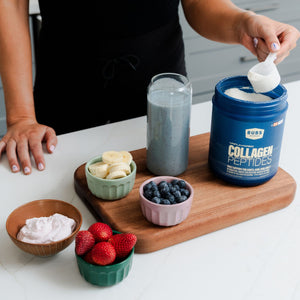
For most people looking for a supplement to add to their coffee or smoothie, collagen is the practical choice. We ensure our Collagen Peptides are hydrolyzed. Hydrolyzed means the large protein chains are broken down into smaller pieces called peptides. These peptides are highly bioavailable, meaning your body can absorb them easily and put them to work.
Keratin supplements exist, but they are often more expensive and less studied than collagen. If your goal is to provide your body with the nutrients it needs to create strong hair from the start, collagen provides a more comprehensive set of building blocks. If you want to go deeper on this topic, our guide on what’s the best collagen for hair is a helpful next step.
Myth: Eating more keratin will automatically make your hair grow faster.
Fact: Your body cannot easily digest raw keratin. It is more effective to eat the amino acids that allow your body to produce its own keratin naturally.
How to Maximize Your Results
Supplements work best when they are part of a broader wellness strategy. You cannot rely on a single scoop of powder to do all the heavy lifting if the rest of your routine is lacking. Here is how to make sure your body actually uses the protein you are taking.
The Importance of Vitamin C
Vitamin C is a non-negotiable partner for collagen. Your body cannot effectively produce or use collagen without it. Vitamin C acts as a co-factor for the enzymes that cross-link collagen fibers. If you are taking a collagen supplement, make sure you are also getting enough Vitamin C through citrus fruits, bell peppers, or a clean supplement like Vitamin C+. This ensures that the amino acids you ingest are actually being woven into the tissues of your scalp and skin.
Hydration and Scalp Health
A dehydrated scalp is not a productive scalp. Hair follicles need a steady supply of nutrients delivered through the blood. If you are chronically dehydrated, your circulation can suffer, and your skin—including your scalp—becomes dry and brittle.
Using an electrolyte formula like Hydrate or Die® Electrolytes can help maintain the fluid balance necessary for optimal cellular function. For a deeper dive into why that matters, our article on how electrolytes hydrate the body for peak performance breaks it down clearly. Proper hydration keeps the dermis supple, which in turn supports the life cycle of your hair.
Consistency Is Key
Hair growth is a slow process. On average, hair grows about half an inch per month. This means you will not see the effects of a new supplement routine overnight. Most people report seeing changes in their hair texture or growth rates after 60 to 90 days of consistent use. We recommend making your supplement a daily habit rather than an occasional boost.
Bottom line: Collagen is a more versatile and absorbable supplement for internal use, but it requires Vitamin C and consistent hydration to work effectively.
Choosing the Right Collagen Supplement
Not all collagen is created equal. If you are taking a supplement for hair growth, you want to ensure it is clean and effective. Many products on the market are filled with sugars, artificial flavors, and thickeners that provide no benefit to your hair.
We focus on providing a pure product. Our Collagen Peptides are sourced from grass-fed, pasture-raised bovine hides. This provides Type I and Type III collagen, which are the most important types for skin and hair health. It is also unflavored and dissolves easily. This matters because if a supplement is hard to use, you won't stay consistent with it.
Third-Party Testing
When you are looking for a supplement to support your health, trust is everything. Many athletes and health-conscious individuals look for NSF for Sport certification. This ensures that what is on the label is actually in the tub and that there are no banned substances or harmful contaminants. We prioritize this level of testing because we believe your supplements should be as clean as your training.
The Role of Biotin and Other Nutrients
While collagen and keratin are the stars of the show, they do not work in a vacuum. Biotin, also known as Vitamin B7, is another popular choice for hair growth. Biotin helps your body break down fats and proteins, which is essential for the production of keratin.
If you have a biotin deficiency, you will likely notice thinning hair and brittle nails. However, most people get enough biotin from a balanced diet of eggs, nuts, and whole grains. If you choose to supplement with biotin, it can work in tandem with collagen. Think of collagen as the bricks and biotin as the foreman overseeing the construction. If you are building out a broader daily routine, you may also want to look at Apple Cider Vinegar Gummies as another simple Boosts option.
Note: If you are experiencing sudden or extreme hair loss, it is always a good idea to consult with a healthcare provider. Hair loss can sometimes be a sign of underlying issues like thyroid imbalance or iron deficiency that supplements alone may not fix.
Real Expectations for Hair Growth
It is important to be realistic about what supplements can do. No powder or pill can change your genetics. If your family has a history of thin hair, supplements can help you achieve the healthiest version of your hair, but they won't give you a completely different hair type.
Wellness is a long-term investment. By taking a high-quality collagen supplement, you are supporting the internal structures that allow hair to thrive. You are also supporting your joints and skin along the way. Most users find that while they started for the hair benefits, the improved recovery and skin elasticity are what keep them coming back.
At BUBS Naturals, we are driven by the idea that small, daily actions lead to big results. Whether you are training for a marathon or just trying to feel more confident in your daily life, your nutrition is the foundation. To learn more about the broader benefits of collagen, our article on what collagen peptides are and their benefits is a great companion read.
Key Takeaway: Collagen provides the structural foundation and amino acids for growth, while keratin is the physical armor of the hair. For an internal supplement, collagen's bioavailability makes it the superior choice.
Summary: Making the Choice
The debate of collagen vs. keratin for hair growth comes down to how you want to treat the problem. If your hair is currently damaged from heat and bleach, a topical keratin treatment can provide immediate relief by smoothing the hair shaft and preventing further breakage.
However, if you want to support the growth of new, stronger hair from the follicle, collagen is the clear winner. By strengthening the dermis and providing the building blocks for your body to create its own keratin, collagen addresses the root of the issue.
Our mission is to provide the cleanest tools for your journey. Every time you choose our products, you are also supporting a larger cause. We donate 10% of all our profits to veteran-focused charities. This is our way of honoring the legacy of Glen "BUB" Doherty and ensuring that our work has a lasting impact beyond the bottom of a supplement tub. You can read more about that commitment in our Giving Back to Veterans & Our Communities story, or explore Our Story to see how adventure, wellness, and purpose shape everything we do.
Choose the supplement that fits your lifestyle, stay consistent with your hydration, and give your body the time it needs to rebuild.
"The best time to start was yesterday. The second best time is today."
FAQ
Does collagen or keratin work faster for hair?
Topical keratin can show results in terms of shine and smoothness almost instantly because it coats the hair shaft. Collagen takes longer, usually 2-3 months, because it works from the inside out to support the growth of new, healthier hair strands.
Can I take collagen and keratin together?
Yes, you can use both. Many people take a collagen supplement daily for its internal benefits and use keratin-infused hair products to protect their hair from external damage. There is no known conflict between the two, as they serve different functions in the body.
Are there any side effects to taking collagen?
Collagen is generally considered safe for most people. Some individuals may experience mild digestive upset, such as bloating, when starting a new protein supplement. To minimize this, start with a smaller dose and ensure you are using a clean product without artificial fillers.
Can men use collagen for hair growth?
Absolutely. While often marketed toward women for "beauty," collagen is equally beneficial for men. It supports the health of the scalp and follicles, which can be helpful for men experiencing general hair thinning or those looking to improve the overall strength and texture of their hair.
Is there a vegan version of collagen or keratin?
True collagen and keratin are animal-derived proteins. There are "vegan collagen boosters" that contain the vitamins and minerals (like Vitamin C and Zinc) your body needs to produce its own collagen, but they do not contain actual collagen peptides. Similarly, most keratin is derived from wool or feathers, though some synthetic plant-based alternatives exist for topical use.
Section Summary
Bottom line: Collagen is the preferred supplement for hair growth because it supports the scalp's structure and provides the amino acids needed for keratin production, whereas keratin is most effective as a topical treatment for surface-level strength and shine.