Table of Contents
- Introduction
- What is Collagen?
- What is Keratin?
- Comparing Collagen and Keratin
- Is Collagen or Keratin Better for Hair Growth?
- How to Use Collagen for Hair
- When to Choose Keratin
- The Role of Amino Acids in Both Proteins
- Environmental Protection for Your Hair
- Dietary Sources of Collagen and Keratin
- The BUBS Approach to Wellness
- Choosing the Right Path for Your Hair
- FAQ
Introduction
Healthy hair is often a direct reflection of what is happening inside your body. When you notice thinning, brittleness, or a lack of shine, it is rarely just a surface-level issue that a new shampoo can fix. Usually, it comes down to the structural proteins that provide your hair with its strength and elasticity.
Two names dominate the conversation around hair health: collagen and keratin. While they are often mentioned in the same breath, they perform distinct roles in the body. Choosing between them depends on whether you are looking to support the "soil" in which your hair grows or the "armor" that protects the strand itself.
At BUBS Naturals, we believe in using clean, science-backed nutrition to help you perform at your peak. This guide explores the differences between these two powerhouse proteins, how they affect your hair, and which one might be the right fit for your daily routine with products like our Collagen Peptides. We will break down the science of hair growth so you can make an informed decision for your wellness journey.
What is Collagen?
Collagen is the most abundant protein in the human body. Think of it as the "glue" that holds everything together. It is a structural protein found in your skin, bones, tendons, ligaments, and connective tissues. It is composed of a unique profile of amino acids, primarily glycine, proline, and hydroxyproline.
Unlike other proteins, collagen has a triple-helix structure. This specific shape gives it incredible tensile strength and flexibility. As we age, our bodies naturally produce less collagen, which is why we start to see signs of wear, such as skin wrinkles and joint discomfort.
In the context of hair, collagen does not actually make up the hair strand itself. Instead, it supports the environment where hair is created. It is a major component of the dermis, the middle layer of your skin that contains the root of every single hair.
How Collagen Supports Hair from Within
The health of your hair is deeply tied to the health of your scalp. Because collagen makes up a significant portion of the dermis, it helps maintain the elasticity and strength of the skin surrounding your hair follicles. When the dermis is healthy and hydrated, the follicles have a stable foundation to produce new hair.
Collagen also provides the body with the specific amino acids needed to build hair. One of the primary amino acids in collagen is proline. Proline is also a main component of keratin. By supplementing with collagen for hair growth, you provide your body with the raw materials it needs to manufacture the proteins that form the hair shaft.
Furthermore, collagen may act as an antioxidant. Hair follicles are susceptible to damage from free radicals—unstable molecules caused by stress, pollution, and UV rays. Some research suggests that collagen can help neutralize these free radicals, potentially protecting the follicles from premature damage or thinning.
What is Keratin?
If collagen is the glue, keratin is the armor. Keratin is a tough, fibrous protein that serves as the primary structural component of your hair, nails, and the outer layer of your skin. In fact, your hair is roughly 65% to 95% keratin by weight.
Keratin is incredibly durable. It contains high amounts of the amino acid cysteine, which is rich in sulfur. These sulfur atoms form "disulfide bonds" that create a rigid, insoluble structure. This is why your hair can withstand heat, friction, and environmental stress without immediately falling apart.
There are two main types of keratin: alpha-keratin and beta-keratin. Human hair is made of alpha-keratin. This protein is arranged in layers; the outer layer, known as the cuticle, looks like shingles on a roof. When these "shingles" lay flat, your hair looks smooth and shiny. When they are lifted or damaged, hair becomes frizzy and brittle.
The Role of Keratin in Hair Health
Keratin is responsible for the physical integrity of the hair strand. It provides the shape, strength, and resilience of your hair. When your hair has adequate keratin, it is less likely to break or develop split ends.
Environmental factors like sun exposure, chemical treatments, and high-heat styling can deplete the keratin in your hair. This depletion leads to "gaps" in the hair shaft, making the hair porous. Porous hair loses moisture quickly, leading to the dry, flyaway texture many people struggle with.
While many people use topical keratin treatments to "fill in" these gaps, the body also produces keratin internally. This internal production relies on a steady supply of protein and specific minerals like biotin and zinc to function correctly.
Comparing Collagen and Keratin
While both are proteins, their "jobs" are different. Understanding these differences helps you decide which one to prioritize in your supplement or hair care routine.
| Feature |
Collagen |
Keratin |
| Primary Location |
Dermis (skin), joints, bones |
Hair, nails, outer skin layer |
| Structure |
Flexible triple helix |
Rigid, sulfur-rich fibers |
| Role in Hair |
Supports scalp health and follicle environment |
Provides physical structure and strength to the strand |
| Absorption |
Highly bioavailable as "hydrolyzed" peptides |
Difficult to digest in raw form; best produced internally |
| Main Benefit |
May improve growth environment and provide raw materials |
May improve strand strength and reduce breakage |
Key Takeaway: Collagen is the foundation and the source of raw materials (amino acids), while keratin is the finished product that forms the visible hair strand.
Is Collagen or Keratin Better for Hair Growth?
When people ask "which is better," they are usually looking for one of two things: faster growth or better-looking hair.
If your goal is collagen and hair thickness, collagen is typically the better choice. Because collagen supports the dermis and provides the amino acids (like proline) necessary for keratin production, it addresses the root of the issue. By improving the health of the scalp, you are creating the best possible conditions for your hair to grow thick and strong.
If your goal is strand strength and smoothness, keratin is the primary player. Most people benefit from keratin through topical applications—shampoos, conditioners, or salon treatments—that physically bond to the hair shaft to smooth the cuticle. While internal keratin production is vital, supplementing with keratin is often less effective than supplementing with collagen because keratin is much harder for the human digestive system to break down and use.
Bioavailability Matters
One of the biggest reasons we prioritize collagen at BUBS Naturals is bioavailability. Bioavailability refers to how well your body can absorb and use a substance.
Raw collagen is a large molecule that is hard to absorb. However, when it is "hydrolyzed," it is broken down into smaller chains called peptides. These peptides are easily absorbed into the bloodstream. Our Collagen Peptides are hydrolyzed, meaning they mix easily and go to work quickly.
Keratin, on the other hand, is naturally very resistant to digestion. While "solubilized" keratin supplements exist, they are generally considered less bioavailable than collagen peptides. Most experts agree that it is more effective to give the body the amino acids found in collagen so it can build its own keratin.
How to Use Collagen for Hair
Supporting your hair with collagen is a long-game strategy. It is not an overnight fix, but rather a way to nourish your body so that the hair you grow over the next few months is of higher quality.
Consistency is Key
The hair growth cycle is slow. It can take several months for new, healthier hair to grow from the follicle to a visible length. For this reason, consistency with collagen supplementation is vital. Most people report noticing a difference in their hair, skin, or nails after 60 to 90 days of daily use.
Pairing with Vitamin C
Collagen production does not happen in a vacuum. Your body requires Vitamin C to synthesize collagen effectively. Vitamin C acts as a cofactor; without it, the enzymes that cross-link collagen fibers cannot function properly.
We recommend pairing your collagen intake with a high-quality Vitamin C source. This ensures your body can actually use the amino acids you are providing. Our Vitamin C supplement provides 500 mg alongside citrus bioflavonoids to support this natural process.
Easy Ways to Supplement
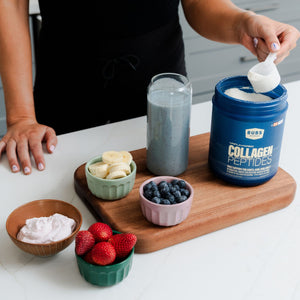
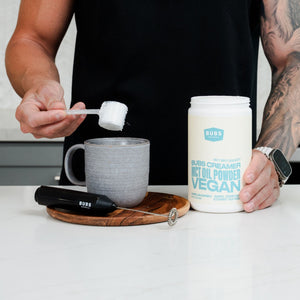
One of the best things about collagen is its versatility. Unlike some protein powders that have a chalky texture or strong flavor, high-quality Collagen Peptides collection should be virtually tasteless and dissolve completely.
-
In Coffee: Stir a scoop into your morning brew. It won't change the flavor, and it provides a functional boost to your morning routine.
-
In Smoothies: Add it to your post-workout shake. It pairs well with fruit, greens, and healthy fats.
-
In Oatmeal: Mix it into hot cereal for an easy way to get your daily dose.
When to Choose Keratin
While we emphasize collagen for internal support, keratin has its place—primarily in your external hair care routine. If you have hair that has been damaged by bleach, chemical straighteners, or excessive heat, topical keratin can be a lifesaver.
Myth: Eating more keratin will fix my split ends.
Fact: Split ends are physical damage to the hair strand that has already grown out of your head. No supplement can "weld" a split end back together. You must use topical treatments to temporarily smooth them or cut them off, while using supplements like collagen to ensure the new hair growing in is stronger.
Topical keratin treatments work by filling in the microscopic cracks in the hair cuticle. This makes the hair feel heavier, smoother, and less prone to tangling. If you are struggling with "mushy" or overly soft hair after a chemical process, a keratin-rich hair mask can help restore some of the lost rigidity.
The Role of Amino Acids in Both Proteins
To understand why collagen often wins the "is it better" debate for supplements, we have to look at the building blocks. Proteins are made of amino acids.
When you ingest collagen, your body breaks it down into individual amino acids and small peptide chains. These are then sent to where they are needed most. For hair, the body looks for:
-
Proline: The main building block of keratin. Collagen is rich in proline.
-
Glycine: Supports metabolic functions and helps protect the hair follicles from oxidative stress.
-
Arginine: An amino acid that helps support blood flow. Better blood flow to the scalp means more nutrients reach the hair follicles.
By providing these specific amino acids through a clean source like BUBS Naturals Collagen Peptides, you are effectively giving your body the "ingredients list" it needs to manufacture its own keratin.
Environmental Protection for Your Hair
Hair health isn't just about what you put in your body; it’s also about protecting what you already have. Both collagen and keratin play a role in defense.
As mentioned, collagen helps maintain the thickness of the dermis. As the dermis thins with age, hair follicles may become less productive. By supporting skin thickness, you are protecting the "machinery" of hair growth.
Keratin acts as a physical shield. The more intact the keratin layers of your hair are, the better they can reflect UV rays and resist moisture loss. If you spend a lot of time outdoors—hiking, surfing, or training—your hair takes a beating. Supporting your hair’s protein structure is essential for anyone living an active, outdoor lifestyle.
Dietary Sources of Collagen and Keratin
While supplements are an efficient way to get these proteins, you should also look to your diet.
To boost collagen naturally, focus on:
-
Bone Broth: Simmering bones and connective tissue releases natural collagen.
-
Egg Whites: Rich in proline and other amino acids.
-
Fish and Shellfish: The skin and scales are high in collagen (though we usually don't eat those, the meat still provides some support).
To boost keratin naturally, focus on:
-
Eggs: Contain biotin, which is essential for keratin synthesis.
-
Onions: High in N-acetylcysteine, which helps the body produce keratin.
-
Sweet Potatoes: Rich in Vitamin A, which supports the production of keratinocytes (the cells that make keratin).
-
Salmon: Provides protein and omega-3 fatty acids to keep the scalp healthy.
The BUBS Approach to Wellness
We didn't start BUBS Naturals just to sell supplements. We started it to honor a legacy. Our brand is named after Glen "BUB" Doherty, a Navy SEAL, adventurer, and friend who lived life to the fullest. Everything we do is built around the idea of "Self-Actualization through Service."
When we develop products like our grass-fed Collagen Peptides or our single-ingredient Creatine Monohydrate, we do it with the highest standards in mind. We know that if you’re out there training hard or adventuring, you don’t have time for fillers or low-quality ingredients.
Our products are third-party tested and NSF for Sport certified. This means you can trust that what is on the label is exactly what is in the tub. We keep it simple because we know that the best results come from clean, consistent habits.
Choosing the Right Path for Your Hair
So, is collagen or keratin better for hair? The answer depends on your specific needs.
If you are looking for an all-around wellness supplement that supports hair growth, scalp health, skin elasticity, and joint recovery, collagen is the clear winner. Its bioavailability and its role in supporting the dermis make it a foundational supplement for long-term health.
If you are dealing with immediate, surface-level damage and want to smooth your hair today, a topical keratin treatment is the way to go.
For most people, the best approach is a combination:
- Daily collagen peptides to provide the internal building blocks.
- A balanced diet rich in biotin and Vitamin C.
- Gentle external hair care that protects your natural keratin.
Taking care of your hair is an act of patience and discipline. It is about fueling your body correctly so it can perform its natural functions at the highest level.
"The best time to start supporting your hair was yesterday. The second best time is today."
By focusing on high-quality, clean proteins, you aren't just helping your hair look better. You are supporting your entire body’s structural integrity. This allows you to stay active, keep adventuring, and feel your best every day.
At BUBS Naturals, we are proud to support you in that mission. We also believe in a larger purpose. We give back by donating 10% of all our profits to veteran-focused charities in Glen’s honor. Every scoop of collagen you take helps us give back to the community that Glen loved so much.
FAQ
Can I take collagen and keratin together?
Yes, you can use both. Many people find success by taking a daily collagen supplement for internal support while using keratin-enriched shampoos or conditioners for external protection. Taking them together addresses both the growth environment and the physical strength of the hair strand.
Does collagen help with thinning hair?
Collagen may help with thinning hair by supporting the health of the scalp’s dermis and providing the amino acids needed for hair production. While it is not a cure for medical hair loss, many people report that their hair feels thicker and more resilient after consistent collagen supplementation.
How long does it take to see results from collagen for hair?
Hair grows slowly, typically about half an inch per month. Because collagen works from the inside out, it usually takes 2 to 3 months of daily use to see a noticeable change in hair texture or strength. Consistency is the most important factor in seeing results.
Is it better to use liquid or powder collagen for hair?
High-quality hydrolyzed collagen powder is generally preferred because it is versatile and provides a higher dose of protein per serving compared to many liquid supplements. Powdered Collagen Peptides, like those from BUBS Naturals, dissolve completely in any liquid and are easily absorbed by the body.