Table of Contents
- Introduction
- The Biological Connection Between Collagen and Performance
- Why the Pre-Workout Window Matters for Collagen
- Synergistic Ingredients: What to Mix with Your Collagen
- A "Day in the Life": Integrating Collagen into Your Routine
- The Science of Collagen Peptides and Joint Comfort
- Navigating the Myths: What Collagen Is Not
- The BUBS Naturals Commitment: Why Quality Matters
- How to Get Started With the Collagen Pre-Workout Stack
- Conclusion
- FAQ
Introduction
Picture the scene: you’re standing in your kitchen, the sun just beginning to peak over the horizon, and you’re staring down a challenging workout. You have your shaker bottle ready, your favorite pre-workout powder on the counter, and right next to it, a tub of collagen. You might find yourself wondering if these two can—or should—be friends. Is it more effective to keep them separate, or does the synergy of combining them offer a secret edge to your training? In the fitness community, we often talk about "stacking" supplements to maximize energy, focus, and muscle growth, but for a long time, collagen was relegated to the "beauty and skin" shelf. We’re here to tell you that it’s time to move that tub of collagen into your gym bag.
The question of whether you can take collagen with pre-workout isn’t just about convenience; it’s about understanding the fundamental biology of how your body moves and recovers. While your traditional pre-workout is designed to ignite your central nervous system and flood your muscles with blood, collagen works on a deeper, structural level. It provides the literal scaffolding for your joints, tendons, and ligaments. By exploring the timing, the science of absorption, and the practical application of this combination, we aim to help you build a more resilient body that’s ready for any adventure.
In this post, we’re going to dive deep into why taking collagen before you train might be the missing link in your performance routine. We’ll look at the specific amino acids that make collagen unique, how it interacts with typical pre-workout ingredients, and how we at BUBS Naturals approach supplementation with a "no-BS" philosophy inspired by the legacy of Glen “BUB” Doherty. Whether you’re a marathon runner, a weekend warrior, or someone just looking to stay mobile and active for years to come, understanding this combination is a game-changer. By the time we’re finished, you’ll know exactly how to integrate our Collagen Peptides into your pre-workout ritual for maximum impact.
The Biological Connection Between Collagen and Performance
To understand why taking collagen with your pre-workout makes sense, we first have to look at what collagen actually does. It is the most abundant protein in the human body, acting as the primary structural component of our connective tissues. When we talk about "connective tissue," we aren't just talking about a single thing—we’re talking about the ligaments that hold your bones together, the tendons that connect your muscles to those bones, and the fascia that wraps around your muscle fibers.
Traditional protein powders, like our Organic Grass-Fed Whey Protein, are fantastic for repairing muscle fibers after they’ve been torn down during a workout. However, muscle is only one part of the movement equation. If your muscles are strong but your tendons are brittle, or if your joints lack the necessary "cushion," your performance will eventually hit a wall. This is where collagen comes in. Collagen is rich in specific amino acids—glycine, proline, and hydroxyproline—that are not found in high concentrations in other protein sources. These amino acids are the specific building blocks your body needs to maintain the integrity of its "internal hardware."
The reason the pre-workout window is so interesting for collagen supplementation has to do with blood flow. When you exercise, your body prioritizes blood flow to the muscles and connective tissues you are currently using. By having these specific collagen amino acids present in your bloodstream during the workout, you are essentially "delivering the mail" to the parts of the body that need it most. When you pair this with the increased circulation provided by many pre-workout ingredients, you create an environment where your body can effectively support its structural health in real-time.
At BUBS Naturals, we believe in supporting the whole athlete. That’s why our Collagen Peptides Collection is focused on providing highly bioavailable, hydrolyzed peptides. Hydrolyzation is a process that breaks the collagen down into smaller chains, making it incredibly easy for your body to absorb and utilize. When you mix a scoop of Collagen Peptides into your pre-workout, you aren't just adding "extra protein"; you’re adding targeted support for the systems that keep you moving.
Why the Pre-Workout Window Matters for Collagen
There is a growing body of evidence suggesting that the timing of collagen intake relative to exercise can significantly influence how well the body utilizes it. While consistency is the most important factor—taking it every day is better than taking it at the "perfect" time only once a week—there is a unique benefit to the 30-to-60-minute window before you start moving.
When we exercise, the mechanical loading on our tendons and ligaments sends a signal to our cells to start the process of remodeling and strengthening those tissues. However, tendons and ligaments have notoriously poor blood supply compared to muscles. This is why a muscle strain might heal in a week, but a tendon injury can linger for months. By taking Collagen Peptides before your workout, you ensure that the necessary amino acids are peaking in your blood levels just as you begin to stress those tissues.
Furthermore, many people find that taking their supplements together helps them stay consistent. If you already have a ritual of mixing up a pre-workout drink, simply adding a scoop of unflavored collagen is an easy way to ensure you never miss a dose. Our collagen is designed to mix effortlessly, meaning you won’t have to deal with clumps or a gritty texture in your shaker bottle. It’s a seamless addition that supports joint comfort and long-term durability without changing the flavor of your favorite pre-workout.
To further support this process, consider the role of antioxidants. Collagen synthesis is heavily dependent on the presence of certain co-factors. For example, our Vitamin C supplement is a perfect companion to collagen. Vitamin C is essential for the enzymes that cross-link collagen fibers, making them strong and resilient. Taking your collagen with a source of Vitamin C—whether it's in your pre-workout or as a separate boost—can help maximize the benefits.
Synergistic Ingredients: What to Mix with Your Collagen
When you’re looking at your pre-workout stack, it’s helpful to understand how different ingredients work together. Collagen isn't a stimulant, and it doesn't provide the "tingle" or the "rush" that caffeine or beta-alanine might. Instead, it serves as the grounding element of your supplement routine.
One of our favorite ways to boost pre-workout energy without relying solely on heavy stimulants is by incorporating healthy fats. For those who prefer a "sustained energy" approach to their training—perhaps for a long hike, a surf session, or a heavy lifting day—mixing collagen with our MCT Oil Creamer can be incredibly effective. MCTs (medium-chain triglycerides) are quickly converted by the liver into ketones, providing a rapid source of energy for the brain and body. When you combine the structural support of Collagen Peptides with the mental clarity of MCTs, you’re fueling your workout from multiple angles.
Another critical component of pre-workout preparation is hydration. You cannot perform at your peak if your electrolyte balance is off. This is why we created Hydrate or Die - Lemon. It provides the essential minerals your muscles need to contract and relax properly. If you find that typical pre-workout formulas make you feel jittery or dehydrated, try mixing a packet of Hydrate or Die - Mixed Berry with a scoop of collagen. It’s a clean, sugar-free way to fuel your body with exactly what it needs for performance and recovery.
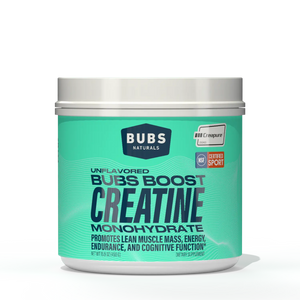
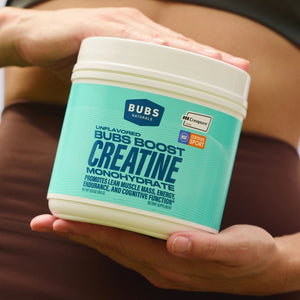
For those focused on power and strength, Creatine Monohydrate is another natural partner for collagen. While creatine helps your muscles produce more energy (ATP) during heavy lifting, collagen supports the tendons that have to transmit that force from the muscle to the bone. Together, they help ensure that your "engine" and your "chassis" are both up to the task of a heavy training session.
A "Day in the Life": Integrating Collagen into Your Routine
Let’s look at how this might look in practice. Imagine you have a busy day ahead, starting with a 7:00 AM CrossFit session or a trail run. You wake up and your joints feel a little stiff—common for those of us who live an active lifestyle.
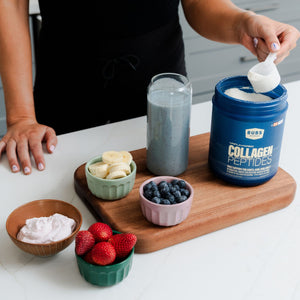
Around 6:15 AM, you start your ritual. You grab your shaker bottle and fill it with 12 ounces of cold water. You add a serving of your preferred pre-workout for that initial energy kick. Then, you add one scoop of BUBS Collagen Peptides. Because our collagen is hydrolyzed and pasture-raised, it dissolves instantly, leaving no trace of flavor or texture. If it’s a particularly hot day or you know you’ll be sweating heavily, you might also toss in a packet from the Hydration Collection to ensure your fluid balance stays on point.
By 6:45 AM, you’re at the gym or the trailhead. The caffeine and other pre-workout ingredients are starting to peak, giving you the focus you need. Meanwhile, the collagen peptides are already being broken down and absorbed, circulating through your bloodstream. As you begin your warm-up and your heart rate rises, that blood is pumped into your joints and connective tissues.
During the workout, you’re putting stress on your body—this is the "mechanical loading" phase. Your cells are responding to this stress by looking for the materials they need to adapt and grow stronger. Because you took your collagen pre-workout, those materials are right there, ready to be used. You finish your session feeling strong, and as you move into your recovery phase, you know you’ve already jump-started the repair process.
Later in the morning, you might follow up with a coffee blended with our Butter MCT Oil Creamer for sustained mental focus at work. This comprehensive approach to wellness—focusing on energy, structural support, and recovery—is what we call the "BUBS way." It’s about being prepared for whatever adventure comes next.
The Science of Collagen Peptides and Joint Comfort
Many athletes wonder if collagen can actually help with the "niggles" and minor discomforts that come with heavy training. While we don't make medical claims, the science behind collagen and joint support is fascinating. Connective tissues, unlike muscle, don't have a direct "pump" to move nutrients in and out. They rely largely on the movement of synovial fluid and the diffusion of nutrients from the surrounding blood vessels.
This is why "loading" the blood with collagen amino acids before movement is so logical. When you move a joint, you are essentially "squeezing" the cartilage and tendons, which helps move old fluids out and draw new, nutrient-rich fluids in. If that new fluid is packed with the amino acids found in our Collagen Peptides, you are providing the best possible environment for those tissues to maintain their health.
We often hear from members of our community who have struggled with joint discomfort during high-impact activities like running or jumping. Often, the missing piece isn't more rest, but better "structural nutrition." By providing the body with Type I and Type III collagen, you are giving it the specific tools it uses to maintain the integrity of those high-stress areas. Our Collagen Peptides are sourced from grass-fed, pasture-raised cattle, ensuring that you’re getting a clean, high-quality product that aligns with your wellness goals.
Navigating the Myths: What Collagen Is Not
It’s important to manage expectations and clear up some common misconceptions about taking collagen with a pre-workout. First, collagen is not a complete protein. It lacks the essential amino acid tryptophan. This means it shouldn't be your only source of protein for the day. While it’s excellent for connective tissue, you still need complete proteins—like those found in our Organic Grass-Fed Whey Protein—to support muscle protein synthesis.
Second, collagen is not a "magic pill" that will allow you to ignore overtraining or poor form. Supplementation is meant to enhance a foundation of smart training and solid nutrition. We believe in the "no-BS" approach: we provide the highest quality ingredients, but the hard work is still up to you. Whether you’re using our Collagen Peptides or grabbing some Apple Cider Vinegar Gummies for your daily wellness routine, these are tools to help you perform, not shortcuts to avoid the work.
Finally, some people worry that taking collagen with a pre-workout will "dilute" the effectiveness of the stimulants or other ingredients. There is no evidence to suggest this is the case. Collagen is a very "forgiving" supplement; it doesn't compete for the same receptors as caffeine or nitric oxide boosters. In fact, its easy-mixing nature makes it one of the most versatile supplements in your cabinet. You can add it to almost anything without worrying about negative interactions.
The BUBS Naturals Commitment: Why Quality Matters
When you decide to take collagen with your pre-workout, the quality of that collagen matters immensely. You don’t want a product filled with fillers, artificial sweeteners, or heavy metals. At BUBS Naturals, we take our commitment to quality very seriously. Our Collagen Peptides are NSF for Sport certified, which is the gold standard in the supplement industry. This means that what is on the label is exactly what is in the tub, and the product has been tested to ensure it’s free from banned substances. This is especially important for competitive athletes who need to be certain about what they are putting into their bodies.
Our story begins with the legacy of Glen “BUB” Doherty, a Navy SEAL, adventurer, and hero. Glen lived a life of purpose and high performance, and BUBS Naturals was founded to honor that spirit. We don’t just make supplements to make a profit; we make them to help people live better, more adventurous lives. This is why we have our "10% Rule." We donate 10% of all our profits to veteran-focused charities, ensuring that every purchase you make has a positive impact beyond just your own health.
When you choose BUBS, you’re choosing a brand that values transparency and simplicity. We don't hide behind "proprietary blends" or marketing jargon. We provide clean, functional ingredients that work. Whether you’re reaching for our Creamers Collection to start your day or mixing Collagen Peptides into your pre-workout, you can trust that you’re getting the very best.
How to Get Started With the Collagen Pre-Workout Stack
If you’re ready to try this for yourself, we recommend starting simple. You don't need a complicated 12-step supplement routine to see results. The key is consistency and quality.
-
Choose Your Base: Start with 10–16 ounces of water.
-
Add Your Pre-Workout: Whether it’s a stimulant-based powder or just a packet of Hydrate or Die - Lemon, get your hydration and energy base ready.
-
Scoop the Collagen: Add one scoop (about 10–20 grams) of BUBS Collagen Peptides.
-
Shake and Go: Give it a quick shake. Because our collagen is hydrolyzed, it will dissolve quickly and won't leave any lumps.
-
Timing: Drink this about 30 to 60 minutes before your session begins.
For those who are always on the go, our Collagen Peptides Travel Packs are a perfect solution. You can keep a few in your gym bag or car, ensuring that you always have your structural support ready, even if you’re heading straight from the office to the gym.
Conclusion
At the end of the day, the answer to the question "Can I take collagen with pre-workout?" is a resounding yes. More than that, it’s a smart, science-backed way to support your body’s longevity and performance. By combining the immediate energy of a pre-workout with the long-term structural support of collagen, you are treating your body like the high-performance machine it is. You are providing the fuel for the "now" and the building blocks for the "future."
We believe that a life well-lived is one full of adventure and purpose. To stay in the game for the long haul, you have to take care of your joints, your tendons, and your overall wellness. Our Collagen Peptides are designed to be an effortless part of that mission. They mix easily, they’re backed by the highest quality standards, and they support a cause that is near and dear to our hearts.
As you head into your next workout, think about the legacy of Glen “BUB” Doherty and the commitment we have to doing things the right way. One scoop at a time, you can feel the difference. We invite you to join our community, fuel your adventures, and see how the right supplements can change the way you move through the world.
Are you ready to elevate your training? Explore our Collagen Peptides Collection today and give your body the support it deserves. Whether you're chasing a new personal record or just enjoying a morning in the great outdoors, we’re here to help you do it with strength and integrity.
FAQ
Does taking collagen with pre-workout cause an upset stomach?
For the vast majority of people, collagen is very easy on the digestive system, especially when it is hydrolyzed like BUBS Collagen Peptides. However, if you have a very sensitive stomach, we always recommend starting with a half-scoop to see how your body reacts before moving to a full serving. Mixing it with a well-tolerated pre-workout or just water is usually perfectly fine for most athletes.
Can I take collagen if I’m already taking a whey protein post-workout?
Absolutely. In fact, we recommend it. Collagen and whey protein serve different purposes. While whey protein is rich in branched-chain amino acids (BCAAs) that are essential for muscle repair, collagen provides the specific amino acids (glycine, proline, hydroxyproline) needed for connective tissue health. Taking Collagen Peptides pre-workout and whey protein post-workout is a comprehensive "gold standard" approach to athletic nutrition.
Will collagen affect the taste of my pre-workout drink?
Not if you use BUBS Collagen Peptides. Our collagen is unflavored and unsweetened, and because it is highly purified and hydrolyzed, it is virtually tasteless and odorless. It won't compete with the fruit flavors or sweeteners in your pre-workout, making it a very "stealthy" addition to your shaker bottle.
Is it okay to take collagen with caffeine?
Yes, there is no known negative interaction between caffeine and collagen. Many of our customers enjoy our MCT Oil Creamer and collagen mixed directly into their morning coffee. If your pre-workout contains caffeine, the collagen will not interfere with the energy boost or focus you expect from your supplement. It simply adds a layer of structural support to your routine.