Table of Contents
- Introduction
- Understanding the Foundations of Collagen
- The Mechanics of Warfarin and Blood Clotting
- Can Collagen Be Taken With Warfarin? The Theoretical Connection
- The Importance of Ingredient Purity and "No-BS" Formulas
- How to Safely Integrate Supplements While on Warfarin
- The Role of Vitamin C and Other "Boosters"
- Lifestyle Alternatives for Joint and Skin Health
- The BUBS Naturals Mission: Why Your Safety Matters to Us
- Signs and Symptoms to Watch For
- Summary of Best Practices for Warfarin Users
- Conclusion
- FAQ
Introduction
If you have ever stood in front of your supplement cabinet, holding a scoop of protein powder in one hand and a prescription bottle in the other, you know the hesitation that comes with mixing wellness goals and medical necessities. The question of whether can collagen be taken with warfarin is a significant one for many in our community who are committed to both their cardiovascular health and their desire to age with strength and vitality. Navigating the intersection of science-backed supplements and anticoagulant therapy requires a thoughtful, informed approach.
At BUBS Naturals, we are driven by the legacy of Glen "BUB" Doherty—a man whose life was defined by peak performance, adventure, and the ultimate sacrifice as a Navy SEAL. We believe that wellness should be a tool that empowers your lifestyle, not one that complicates it. Because our products, like our signature Collagen Peptides, are designed for those who live life to the fullest, we want to ensure you have all the information necessary to maintain your health safely.
This guide is designed to bridge the gap between supplement benefits and medical considerations. We will dive deep into the biological roles of collagen and the specific mechanics of warfarin, an anticoagulant often referred to as a "blood thinner." Together, we will explore the theoretical concerns regarding their interaction, what the current scientific literature suggests, and how you can work with your healthcare provider to manage your routine effectively. By the end of this article, you will understand the nuances of this combination and how to maintain your commitment to a life of wellness while respecting the boundaries of your medical needs.
Our goal is to provide a comprehensive look at the clotting cascade, the impact of high-protein diets on medication efficacy, and the importance of choosing clean, third-party tested supplements. Whether you are seeking to support your joint mobility for your next hike or maintain the integrity of your skin and hair, understanding the synergy (or potential friction) between your supplements and prescriptions is the first step toward a safer, more adventurous life.
Understanding the Foundations of Collagen
To answer whether collagen can be taken with warfarin, we first need to understand what collagen actually is and why it has become a cornerstone of modern wellness. Collagen is the most abundant protein in the human body, acting as the literal "glue" that holds everything together. It is a structural protein that makes up roughly 30% of the body’s total protein content, forming the framework for our skin, bones, tendons, ligaments, and even our blood vessels.
There are at least 28 different types of collagen, but the vast majority of our body consists of Types I, II, and III. Type I is primarily found in the skin, bones, and connective tissues, while Type III often works alongside it to support the structure of muscles and organs. Our Collagen Peptides are specifically sourced to provide Types I and III, offering a comprehensive profile to support a wide range of natural bodily functions.
As we move through life, our natural production of collagen begins a slow decline, often starting as early as our mid-20s. This reduction is why we start to notice changes in skin elasticity, the emergence of fine lines, and perhaps a bit more "creaking" in our joints after a long run or a day spent outdoors. Supplementing with hydrolyzed collagen peptides—which are collagen molecules broken down into smaller, more easily absorbed chains—helps provide the body with the specific amino acids, like glycine, proline, and hydroxyproline, it needs to maintain these structures.
While many people view collagen through a cosmetic lens, we see it as a performance essential. Whether you are recovering from a grueling workout or simply want to stay mobile as you age, supporting your body’s structural integrity is vital. However, because collagen is so deeply integrated into the body’s tissues, including the walls of the cardiovascular system, its interaction with blood-modifying medications is a topic that deserves serious attention.
The Mechanics of Warfarin and Blood Clotting
Warfarin, commonly known by the brand name Coumadin, is a powerhouse in the world of cardiovascular medicine. It is an anticoagulant prescribed to prevent the formation of dangerous blood clots, which can lead to strokes, heart attacks, or pulmonary embolisms. For those of us living an active life, managing these risks is a top priority, but warfarin is a medication that requires a delicate touch.
The way warfarin works is by interfering with the body's use of Vitamin K. Vitamin K is a critical cofactor in the synthesis of several clotting factors in the liver. These factors are essentially the "building blocks" of a blood clot. By inhibiting an enzyme called Vitamin K epoxide reductase, warfarin slows down the production of these clotting factors. This doesn't "thin" the blood in a literal sense, but it does increase the time it takes for a clot to form, which is measured by a laboratory test called the International Normalized Ratio (INR).
Because warfarin works by blocking Vitamin K, anything that introduces more Vitamin K into the system—such as a sudden increase in leafy greens like kale or spinach—can "overpower" the medication and make it less effective. Conversely, taking something that further inhibits clotting could increase the risk of excessive bleeding. This "narrow therapeutic window" means that consistency is the name of the game. When you introduce a supplement like Collagen Peptides or even a daily dose of Vitamin C, your body’s metabolic environment can shift, potentially affecting how warfarin is processed.
Can Collagen Be Taken With Warfarin? The Theoretical Connection
The primary concern regarding whether can collagen be taken with warfarin stems from two different angles: the structural role of collagen in clotting and the metabolic impact of a high-protein supplement on drug absorption.
First, let’s look at the biochemistry of a clot. When a blood vessel is damaged, the body’s natural collagen fibers become exposed. These exposed fibers act as a signal to platelets in the blood, telling them to adhere to the site and begin forming a plug. This is a fundamental part of the hemostatic process. While supplemental collagen is broken down into amino acids before it reaches the bloodstream, some researchers and clinicians wonder if a high concentration of these specific amino acids could indirectly support the body’s clotting signaling pathways, potentially opposing the effects of an anticoagulant.
The second concern is the "protein effect." There is documented evidence suggesting that significant changes in dietary protein intake can alter the effectiveness of warfarin. High-protein diets have been shown in some clinical observations to decrease the INR, meaning the blood clots more quickly than the medication intended. This may be due to changes in how the liver metabolizes the medication or how the protein binds to the drug in the bloodstream.
However, it is important to note that most of these concerns are theoretical or based on general high-protein diets rather than specific studies on collagen peptides. In fact, a 2019 review indicated no direct reports of collagen peptides causing adverse interactions with anticoagulants. But because BUBS Naturals advocates for a "no-BS" approach to health, we believe in being transparent about these complexities. We always recommend that our community members who are on warfarin consult with their hematologist or primary care physician before adding Collagen Peptides to their routine.
The Importance of Ingredient Purity and "No-BS" Formulas
One of the biggest risks when combining supplements with prescription medication isn't always the main ingredient—it's the "extra" stuff. Many collagen products on the market are loaded with fillers, artificial sweeteners, or "boosters" that might contain hidden sources of Vitamin K or herbal extracts that interact with warfarin.
This is where the BUBS Naturals philosophy makes a difference. We are committed to using only simple, effective, and clean ingredients. Our Collagen Peptides are NSF for Sport certified, which is one of the highest honors in the supplement world. This certification ensures that what is on the label is exactly what is in the tub—no banned substances, no hidden contaminants, and no mystery fillers.
For someone on warfarin, this level of transparency is non-negotiable. If you were to take a collagen supplement that secretly included alfalfa or certain green tea extracts (both of which can be high in Vitamin K), you could unknowingly throw your INR out of balance. By choosing a pure, single-ingredient source like BUBS, you and your doctor can more accurately monitor how your body responds to the protein itself without worrying about "ghost" ingredients interfering with your medication.
To further support your wellness journey, we also offer products like our MCT Oil Creamer, which provides sustained energy through healthy fats without the need for added sugars or artificial ingredients. Just like with collagen, maintaining a steady, clean intake of nutrients is the best way to keep your body’s internal chemistry stable.
How to Safely Integrate Supplements While on Warfarin
If your doctor gives you the green light to take collagen while on warfarin, the strategy should be one of "low and slow." You want to introduce the supplement in a way that allows your medical team to monitor any shifts in your blood’s clotting ability.
-
Establish a Baseline: Before starting any new supplement, ensure your INR is within its target range. This gives you a clear starting point.
-
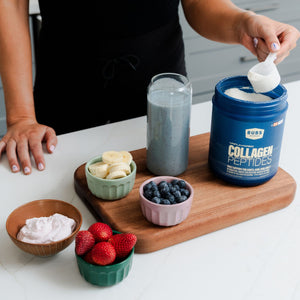
Start with a Half Dose: Instead of jumping into a full scoop of Collagen Peptides, try starting with half a serving. This allows your body to acclimate to the increased amino acid intake.
-
Consistency is Key: Warfarin management relies on a steady state. If you take collagen, take it at the same time every day and in the same amount. Do not be "on and off" with your supplements, as this can cause your INR to fluctuate.
-
Frequent Monitoring: Your doctor will likely want to check your INR more frequently during the first two to four weeks of your new supplement routine. This is the only way to know for certain how your unique body chemistry is handling the combination.
While you are focusing on your structural health, don't forget the importance of hydration. Maintaining proper fluid balance is essential for overall circulation. Our Hydrate or Die - Lemon provides performance-focused electrolytes that support your body’s natural functions without added sugar, making it a clean addition to an active lifestyle.
The Role of Vitamin C and Other "Boosters"
Many people take collagen in conjunction with other vitamins to maximize its benefits. For example, Vitamin C is an essential cofactor for collagen synthesis; without it, your body cannot effectively turn those amino acids into the structural fibers that support your joints and skin.
However, for those on warfarin, high doses of Vitamin C can be a double-edged sword. Some studies have suggested that very high doses of Vitamin C (typically much higher than a standard supplement) could potentially decrease the effectiveness of warfarin. On the other hand, a Vitamin C deficiency can actually increase the risk of bleeding. This highlights the importance of the "educated friend" approach: it's about balance, not excess.
If you are looking for a gentle way to support your digestive health and overall wellness, our Apple Cider Vinegar Gummies are a great option. They include "the Mother" for natural wellness support and are much easier on the system than drinking liquid ACV. As always, because these are part of your nutritional intake, they should be mentioned to your healthcare provider during your regular check-ups.
Lifestyle Alternatives for Joint and Skin Health
If, after consulting with your doctor, you decide that collagen supplementation isn't the right path for you right now, there are still plenty of ways to live a "BUBS-approved" life of adventure and wellness.
First, look at your plate. You can support your body’s natural collagen production by consuming a diet rich in high-quality proteins like wild-caught fish and pasture-raised poultry. These foods provide the building blocks of collagen in a way that is often more slowly metabolized than a concentrated powder. Additionally, staying active with low-impact exercises—like swimming, cycling, or yoga—can help maintain joint mobility without putting excessive strain on your connective tissues.
Hydration is another non-negotiable. Whether you prefer the Hydrate or Die - Mixed Berry or the lemon flavor, keeping your electrolytes in balance supports muscle function and skin health from the inside out. For those focused on maintaining strength and power, Creatine Monohydrate is a well-researched supplement for supporting training performance, though it should also be discussed with your doctor if you have any underlying kidney concerns, which can sometimes accompany cardiovascular issues.
The BUBS Naturals Mission: Why Your Safety Matters to Us
At BUBS Naturals, we don't just sell supplements; we carry forward a legacy. Glen "BUB" Doherty was a man who lived with purpose, and we believe in honoring that purpose by helping you live your best life. Our commitment to the "10% Rule"—donating 10% of all profits to veteran-focused charities—is our way of giving back to the community that Glen loved so much.
Because our mission is rooted in genuine care for the individual, we will never prioritize a sale over your safety. We know that the BUBS community is made up of people who want to push their limits, whether that’s in a CrossFit box, on a mountain trail, or simply in their daily lives as they age. But pushing limits requires a foundation of safety.
When you choose Collagen Peptides, you are choosing a product that has been rigorously tested. Our NSF for Sport certification means that athletes at the highest levels of competition trust us with their careers. We bring that same level of scrutiny to every tub of collagen, every stick of MCT Oil Creamer, and every packet of electrolytes. We want you to feel confident in your choices, knowing that we have done the hard work of sourcing the cleanest ingredients available.
Signs and Symptoms to Watch For
If you and your doctor decide to move forward with a combination of Collagen Peptides and warfarin, it is vital to be your own best advocate. You should be intimately familiar with the signs that your INR might be shifting.
-
Unusual Bruising: If you notice large bruises appearing without a clear cause, or if small bumps lead to significant purple marks, your blood may be "too thin" (INR too high).
-
Prolonged Bleeding: If a simple paper cut or a nick while shaving takes much longer than usual to stop bleeding, this is a sign to contact your doctor.
-
Gum Bleeding or Nosebleeds: These are common signs of an INR that has moved outside of the therapeutic range.
-
Dark Stools or Discolored Urine: These can be indicators of internal bleeding and require immediate medical attention.
By staying vigilant, you can enjoy the benefits of our Collagen Peptides Collection while ensuring that your cardiovascular health remains protected. Remember, the goal of wellness is to enhance your life, and that starts with a foundation of careful, informed self-care.
Summary of Best Practices for Warfarin Users
To wrap up our exploration of whether can collagen be taken with warfarin, let's summarize the key takeaways for anyone navigating this path. The interaction is largely theoretical, but the narrow therapeutic window of warfarin means that caution is always the best policy.
-
Doctor First: Never start collagen without a conversation with your healthcare provider.
-
Purity Over Everything: Use clean, NSF for Sport certified products like BUBS Collagen Peptides to avoid hidden ingredients.
-
Consistency Wins: Maintain a steady daily dose and avoid skipping days or varying the amount.
-
Monitor the Numbers: Work with your clinic to get frequent INR checks when starting or stopping any supplement.
-
Holistic Wellness: Don't forget the supporting players like Hydrate or Die and healthy fats from our Creamers Collection.
Conclusion
Navigating the complexities of your health shouldn't feel like a solo mission. Whether you are managing a prescription like warfarin or looking to optimize your recovery with Collagen Peptides, the key is knowledge and high-quality tools. We’ve explored how collagen supports the body’s structural integrity and how warfarin manages the delicate balance of blood clotting. While there is no definitive scientific evidence that prohibits the combination, the relationship between protein intake and anticoagulant efficacy means that a careful, monitored approach is essential.
At BUBS Naturals, we are here to support your journey with the cleanest, most effective supplements on the market. From our NSF for Sport certified Collagen Peptides to our sugar-free Hydration Collection, every product we create is designed to help you live a life of adventure and purpose, just like Glen Doherty did.
So, can collagen be taken with warfarin? With your doctor's guidance, a commitment to consistency, and a focus on pure ingredients, it is a goal that many can achieve safely. Take the next step in your wellness journey by choosing supplements that match your high standards. Explore the science-backed ingredients in our Collagen Peptides and feel the BUBS difference for yourself. Together, we can pursue a life of strength, mobility, and wellness—one scoop at a time.
FAQ
1. Does collagen contain Vitamin K?
Pure, high-quality collagen, such as BUBS Collagen Peptides, does not naturally contain Vitamin K. However, some multi-ingredient "beauty" or "joint" supplements may include herbal extracts or vitamins that do contain Vitamin K. This is why it is critical to choose a single-ingredient, third-party tested product to ensure you aren't unknowingly consuming something that could interfere with warfarin.
2. How often should I check my INR if I start taking collagen?
Most healthcare providers recommend checking your INR within 3 to 7 days of starting a new supplement like Collagen Peptides. This allows your doctor to see if the increased protein intake is causing any shifts in your blood's clotting time. Your doctor will determine the best schedule for follow-up testing based on your individual health history.
3. Can I use MCT oil or electrolytes with warfarin?
Generally, clean supplements like our MCT Oil Creamer or Hydrate or Die - Mixed Berry do not have known direct interactions with warfarin. However, maintaining a consistent diet is the most important factor for warfarin patients. Always inform your doctor of all the supplements you are taking, including healthy fats and hydration products, to ensure your overall routine is safe.
4. Why is NSF for Sport certification important for warfarin users?
NSF for Sport certification is vital because it guarantees that the product has been tested for purity and accuracy. For someone on a medication with a narrow therapeutic window like warfarin, a "hidden" ingredient or a contaminant could lead to serious medical complications. By using BUBS Collagen Peptides, you are ensuring that your supplement routine is as clean and transparent as possible.